
DRL26C Tree Stem Growth Monitor by VÚLHM – Czech-Made Precision Dendrometric Sensor
| Origin | Czech Republic |
|---|---|
| Manufacturer Type | Authorized Distributor |
| Origin Category | Imported Instrument |
| Model | DRL26C |
| Pricing | Available Upon Request |
| Measurement Principle | Contact-Based Linear Displacement Transduction via High-Resolution Capacitive Sensor |
| Resolution | 1 µm |
| Full-Scale Range | 64 mm |
| Accuracy | ±2% of full scale |
| Actuation Force | 15–20 N |
| Operating Temperature | −30 °C to +60 °C |
| Relative Humidity Range | 0–100% RH (non-condensing) |
| Temperature Sensor Accuracy | ±2 °C |
| Weight | 300 g |
| Data Storage Capacity | 50,000 timestamped records |
| Sampling Interval | Configurable from 10 minutes to 24 hours |
| Battery Life | Up to 5.5 years in standby |
| Power Source | Integrated rechargeable lithium battery |
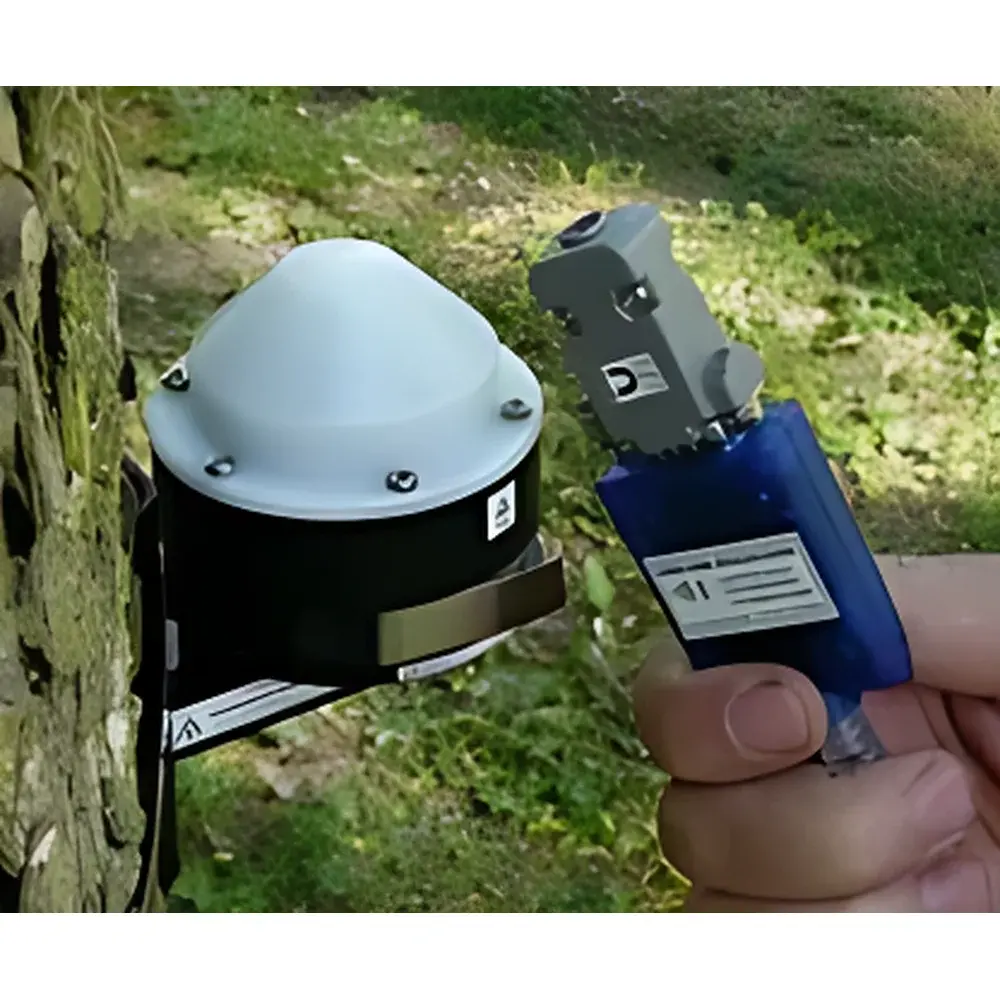
| Data Output | Wireless infrared (IR) interface compliant with ISO/IEC 15693 |
| Data Export Formats | Plain-text (.txt) and Microsoft Excel (.xlsx) |
| Software Platform | MicroLog Forestry Suite v4.2 (Windows-based, GLP-compliant) |
| Optional Integration | MicroLog Tri-Channel Soil Monitoring Unit (soil moisture, temperature, matric potential) |
| Compliance | Designed per EN 61326-1 (EMC for laboratory equipment), CE-marked, RoHS-compliant |
Overview
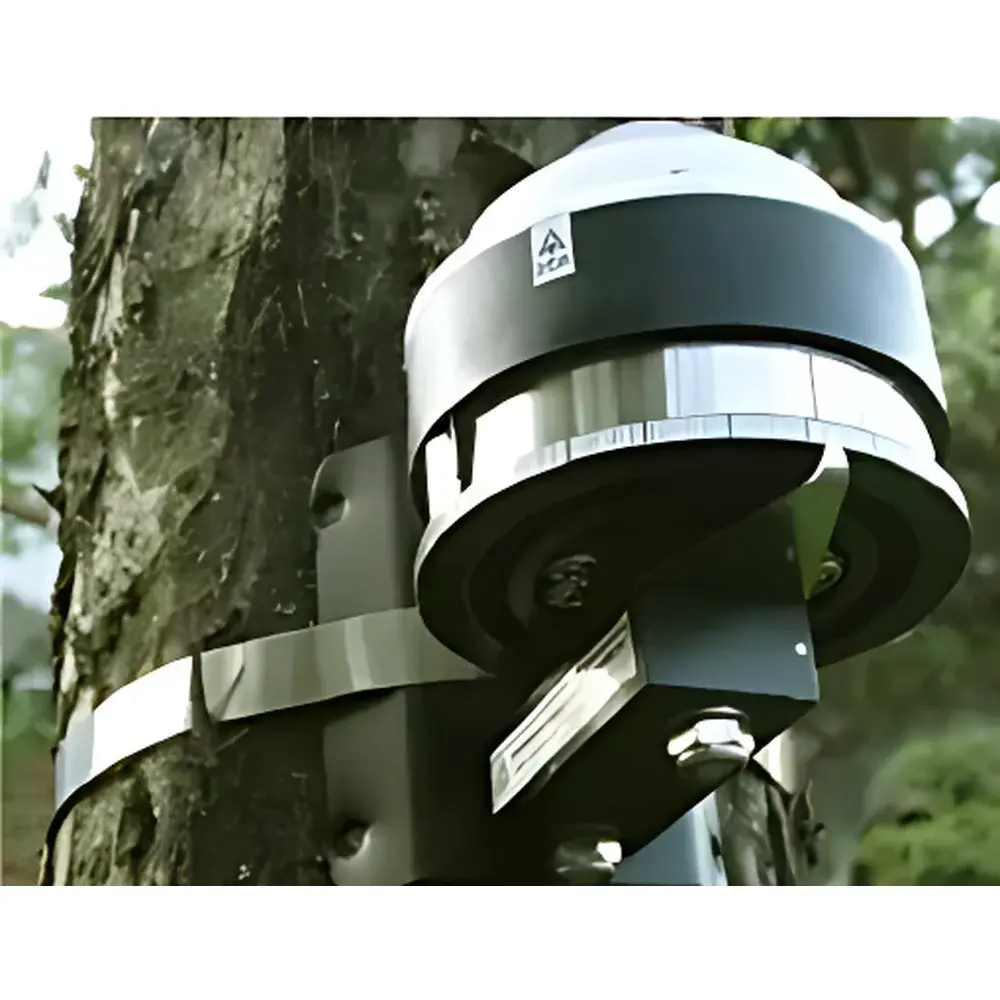
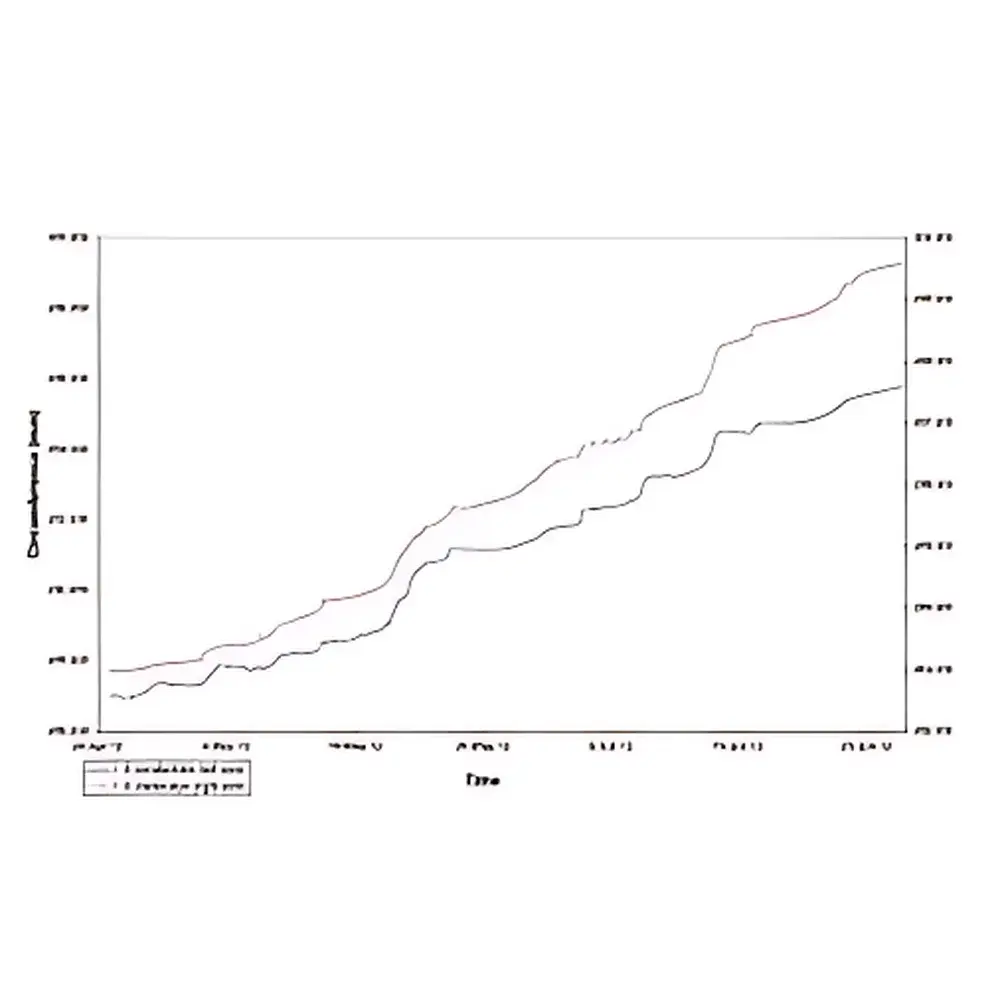
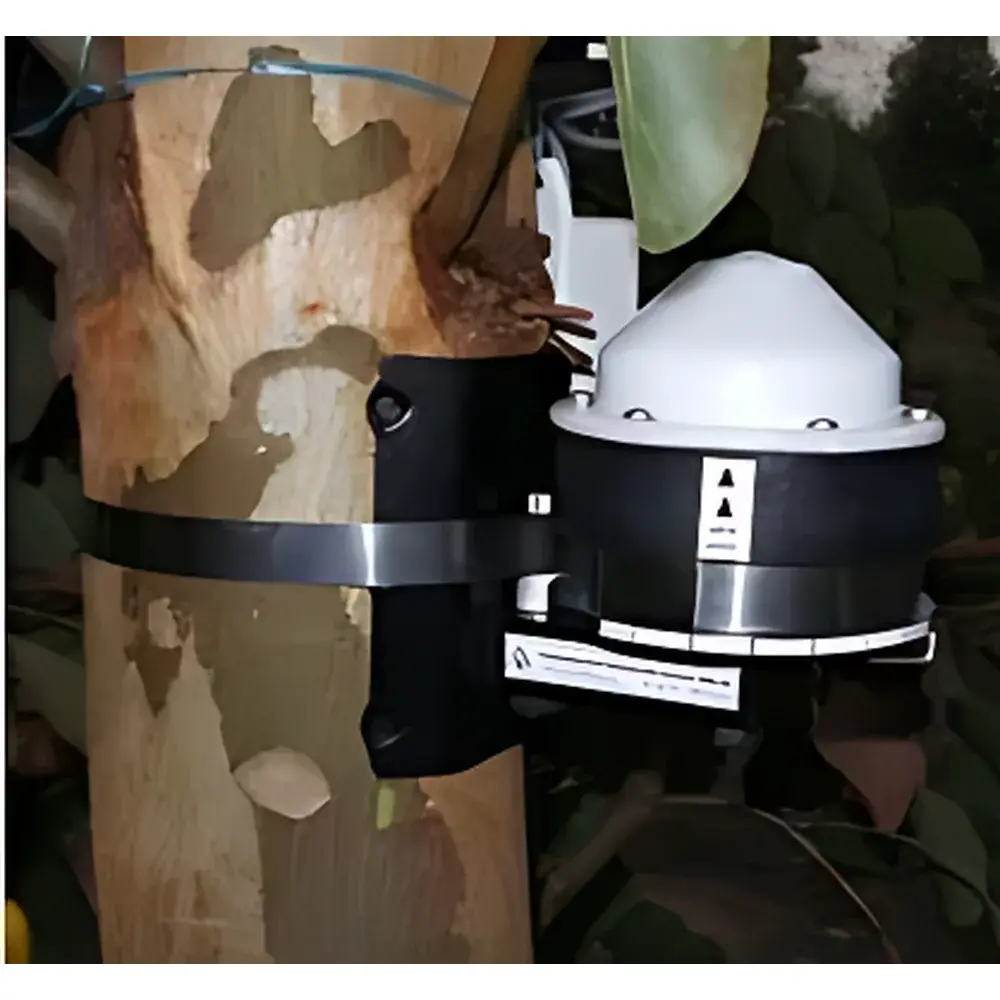
The DRL26C Tree Stem Growth Monitor is a field-deployable, high-resolution dendrometric sensor engineered for continuous, non-invasive measurement of diurnal and seasonal stem circumference dynamics in woody plants. Developed by VÚLHM (Research Institute of Forestry and Horticulture, Prague) and manufactured in the Czech Republic, the instrument operates on contact-based linear displacement transduction using a calibrated capacitive sensing element housed within a corrosion-resistant stainless-steel and UV-stabilized polymer frame. Unlike optical or strain-gauge alternatives, the DRL26C applies a controlled, consistent mechanical preload (15–20 N) to the tree surface via a spring-loaded arm, enabling direct quantification of radial expansion and contraction—phenomena tightly coupled to water status, turgor pressure, carbon allocation, and phenological phase transitions. Its 1 µm resolution permits detection of sub-micron-scale stem movements associated with nocturnal rehydration, daytime shrinkage, and growth pulses—critical for disentangling physiological responses from environmental drivers such as vapor pressure deficit, soil water potential, and solar irradiance. The device is designed for long-term deployment (>3 years without maintenance) in remote forest stands, alpine treelines, or experimental plantations, supporting mechanistic studies aligned with ISO 17025-accredited forestry research protocols.
Key Features
- True micro-displacement resolution of 1 µm (0.001 mm), validated across repeated thermal cycling and mechanical load tests
- Self-contained architecture: integrated lithium battery, onboard memory (50,000 records), and IR data transmission—no external power, solar panel, or cabling required
- Non-destructive installation: adjustable clamp mechanism accommodates stem diameters ≥80 mm with minimal bark compression (<5 kPa surface stress)
- Environmental resilience: operational from −30 °C to +60 °C and 0–100% RH, with IP65-rated enclosure and UV-resistant polymer components
- Configurable temporal resolution: sampling intervals programmable from 10 minutes to 24 hours via MicroLog Forestry Suite
- Embedded temperature sensor (±2 °C accuracy) co-located with displacement transducer for concurrent thermal drift correction
- CE-marked and RoHS-compliant; conforms to EN 61326-1 for electromagnetic compatibility in ecological field instrumentation
Sample Compatibility & Compliance
The DRL26C is validated for use on angiosperm and gymnosperm species with intact, non-fissured bark—including Fagus sylvatica, Picea abies, Pinus sylvestris, and Quercus robur. It is not recommended for highly exfoliating (e.g., Platanus) or deeply furrowed stems (>5 mm groove depth). Installation requires no drilling, nailing, or adhesive bonding, preserving xylem integrity and meeting IUFRO guidelines for non-invasive dendrometry. Data acquisition complies with FAO’s Forest Health Monitoring Framework and supports traceability under GLP conditions when used with audit-trail-enabled MicroLog Forestry Suite v4.2. The system satisfies metadata requirements outlined in ISO 19115 for ecological time-series datasets and is routinely cited in peer-reviewed studies adhering to journal-specific data deposition standards (e.g., Tree Physiology, Functional Ecology, Canadian Journal of Forest Research).
Software & Data Management
MicroLog Forestry Suite v4.2 provides secure, Windows-based data management compliant with FDA 21 CFR Part 11 (electronic signatures, user access control, audit trail logging). Functions include: raw data download via IR interface; real-time visualization of stem radius trends; automated gap-filling using cubic spline interpolation; statistical aggregation (hourly/daily means, min/max, standard deviation); cross-variable correlation analysis (e.g., stem movement vs. concurrent soil water potential or air temperature); and export to .txt or .xlsx for integration with R, Python (pandas), or MATLAB workflows. All processing steps are logged with timestamps, operator ID, and parameter settings—enabling full reproducibility and regulatory audit readiness. Optional firmware updates preserve backward compatibility with legacy DRL2x-series datasets.
Applications
- Quantifying intra-annual stem growth phenology in response to drought, heatwaves, and elevated CO2 (e.g., studies referenced in Functional Ecology 33:553–565 and Tree Physiology 38:1127–1137)
- Calibrating sap flow measurements against radial growth dynamics to partition water-use strategies among co-occurring species
- Validating terrestrial biosphere models that simulate cambial activity and carbon sequestration
- Monitoring climate-induced range shifts at treeline ecotones, including subalpine and arid-zone forests
- Supporting adaptive forest management through early detection of physiological stress preceding visible symptomatology
- Integrating with MicroLog soil sensor networks to construct closed-loop plant–soil–atmosphere continuum models
FAQ
What is the maximum stem diameter the DRL26C can accommodate?
The clamp mechanism supports stems ≥80 mm in diameter; custom brackets are available for stems up to 400 mm upon request.
Does the sensor require recalibration in the field?
No. Factory calibration is stable over the full operating temperature range; zero-drift is compensated algorithmically using thermal sensor input.
Can data be retrieved remotely without physical access to the unit?
No—data retrieval requires line-of-sight infrared communication (max. 1.5 m range); however, multi-unit deployments may be coordinated via scheduled manual collection rounds.
Is the DRL26C compatible with third-party data loggers?
Not natively; it uses a proprietary IR protocol optimized for low-power, high-integrity transfer. Raw output files (.txt/.xlsx) are fully interoperable with external analysis platforms.
How is thermal expansion of the sensor body compensated?
The embedded temperature sensor feeds real-time corrections into the displacement algorithm, reducing thermally induced error to <0.3 µm over −20 °C to +40 °C.




