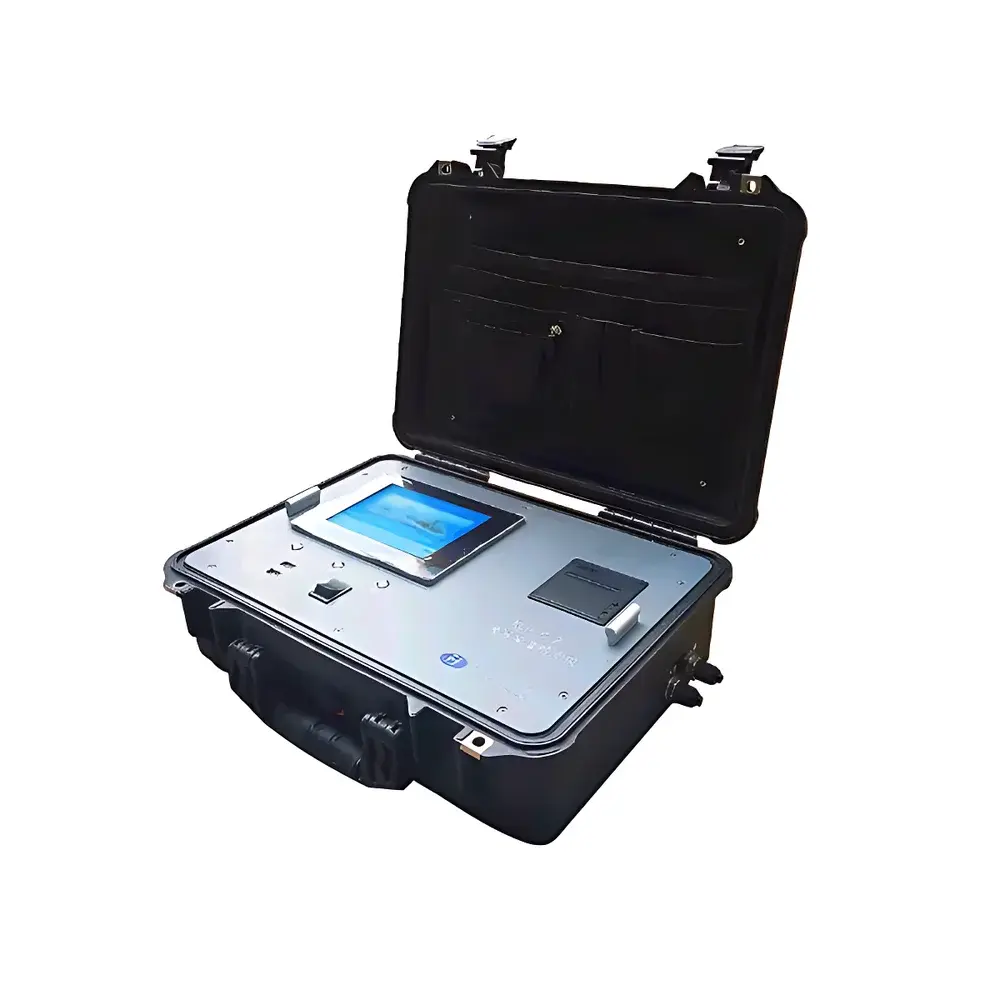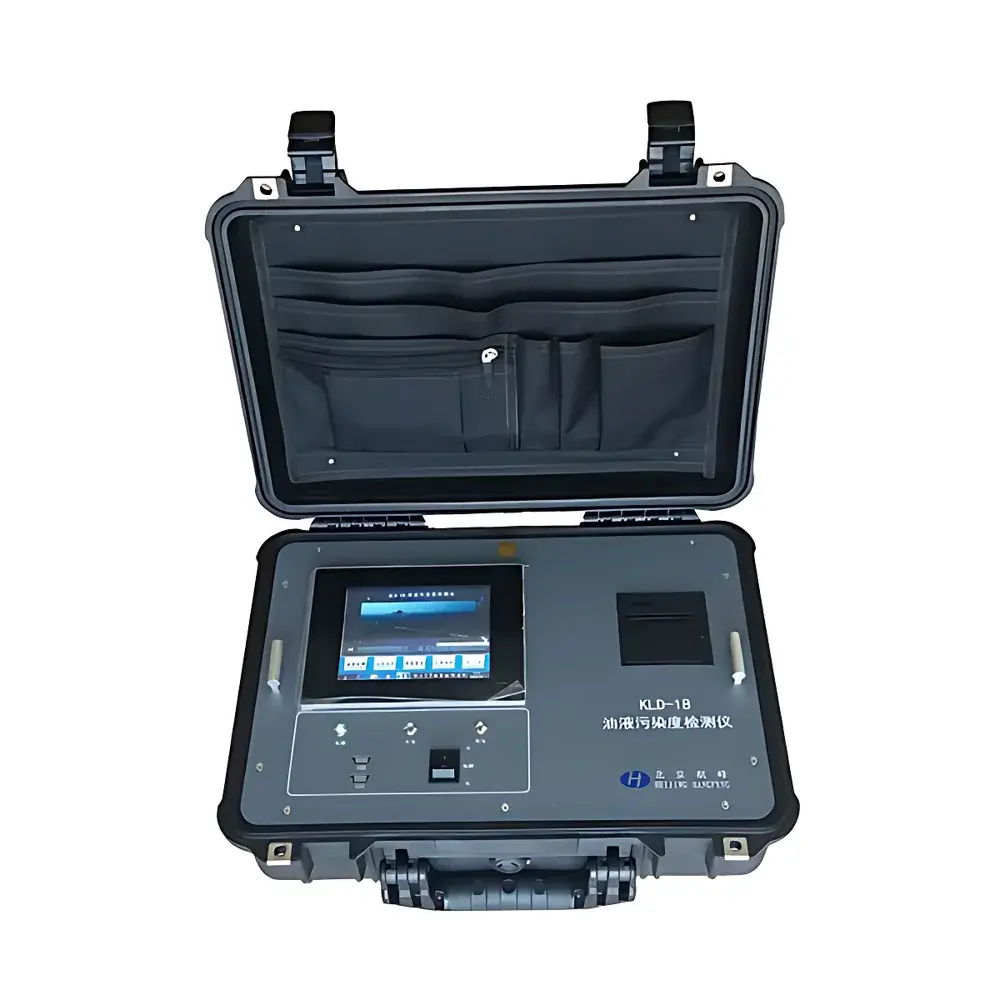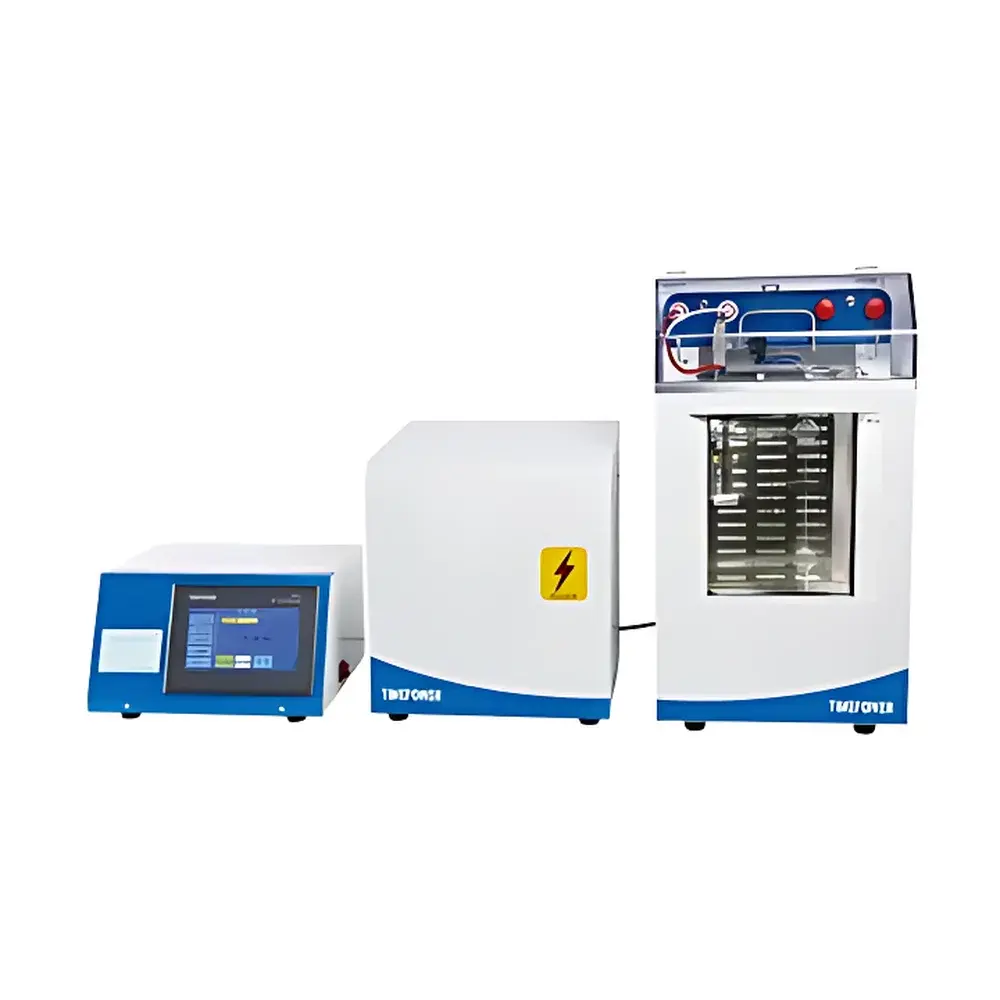
TimePower TP575 Insulating Oil Gassing Tendency Tester
| Brand | TimePower |
|---|---|
| Origin | Beijing, China |
| Manufacturer Type | Manufacturer |
| Country of Origin | Domestic (China) |
| Model | TP575 |
| Quotation | Upon Request |
| Display | 7-inch capacitive touchscreen LCD |
| Temperature Control Range | Ambient to 100 °C |
| Setpoint Accuracy | 80 °C ±0.05 °C |
| Temperature Resolution | 0.01 °C |
| Test Voltage | 10 kV ±0.2 kV |
| Voltage Resolution | 0.01 kV |
| Test Duration Options | 5 min, 10 min, 50 min, 120 min (automatically selected per standard) |
| Timing Accuracy | <±0.1 s |
| Hydrogen Inlet Pressure | 0.05–0.1 MPa |
| Stirring Speed | 1200 rpm |
| Heating Power | ≤1500 W |
| Total Power Consumption | ≤1700 W |
| Operating Ambient | 10–40 °C |
| Relative Humidity | <85% RH |
| Data Storage Capacity | 1000 test records |
| Safety Features | Interlocked high-voltage enclosure, earth-grounding requirement, automatic power cutoff on lid opening |
| Printer | Integrated thermal printer |
| Dimensions (Controller / HV Generator / Test Unit) | 320×305×195 mm / 320×305×380 mm / 320×305×590 mm |
| Accessories | Gassing cell, calibrated gas burette |
Overview
The TimePower TP575 Insulating Oil Gassing Tendency Tester is a precision-engineered instrument designed to quantify the gassing behavior of electrical insulating oils under controlled electrochemical stress. It operates on the principle defined in ASTM D2300 (equivalent to GB/T 11142–1989 and NB/SH/T 0810–2010), where a hydrogen-saturated oil sample is subjected to a radial electric field at elevated temperature (typically 80 °C) and high voltage (10 kV, 50 Hz). Under these conditions, partial discharges occur at the oil–hydrogen interface, triggering either gas absorption or evolution—measured volumetrically via a calibrated gas burette. The net volume change (mL/100 mL oil) reflects the oil’s inherent gassing tendency: positive values indicate gas evolution (e.g., methane, hydrogen), while negative values indicate net gas absorption. This measurement is critical for assessing long-term dielectric stability, predicting sludge formation, and evaluating inhibitor effectiveness in transformer and switchgear oils.
Key Features
- Compliance-ready architecture supporting dual-standard execution: GB/T 11142–1989 and NB/SH/T 0810–2010, with automated parameter loading based on selected method.
- High-stability temperature control system featuring imported platinum RTD sensors and digital PID temperature modules, achieving ±0.05 °C setpoint accuracy at 80 °C across the full 20–100 °C operational range.
- Integrated 7-inch industrial-grade capacitive touchscreen interface with intuitive graphical workflow navigation, eliminating reliance on external PCs during routine testing.
- Dedicated gassing cell assembly with sealed hydrogen inlet (0.05–0.1 MPa regulated supply), precision-machined electrodes, and removable oil reservoir with quick-drain valve for efficient oil exchange and cross-contamination mitigation.
- Real-time voltage monitoring with 0.01 kV resolution and active feedback regulation to maintain 10 kV ±0.2 kV throughout the 120-minute test cycle.
- Thermal printer with non-volatile memory buffer ensures immediate hardcopy output of test parameters, raw gas volume readings, calculated gassing tendency, and timestamp—all traceable to individual test IDs.
- Hardware-enforced safety interlocks: grounded chassis requirement, HV compartment door sensor, and automatic HV shutdown upon lid actuation or thermal over-limit detection.
Sample Compatibility & Compliance
The TP575 accommodates standard 100 mL insulating oil samples conforming to IEC 60296, ASTM D3487, and GB 2536 specifications. Its gassing cell geometry and electrode configuration meet dimensional tolerances specified in NB/SH/T 0810–2010 Annex A. The instrument supports full auditability for GLP and ISO/IEC 17025 environments: all test parameters (temperature, voltage, time, gas volume) are logged with microsecond timestamps; user actions (login, method selection, start/stop) are recorded with operator ID; and data integrity is preserved via write-protected internal flash storage (1000-test capacity). While not pre-certified for FDA 21 CFR Part 11, its logging structure—including immutable records, electronic signatures via password-protected login, and exportable CSV reports—enables straightforward validation by end-user QA teams.
Software & Data Management
No external software installation is required. All control logic, calibration management, and reporting functions reside onboard the embedded Linux-based controller. Test methods are stored as editable XML templates, allowing labs to define custom hold times, voltage ramps, or temperature profiles beyond standard presets. Raw gas volume measurements from the burette transducer are automatically corrected for ambient pressure and temperature using integrated barometric and hygrometric sensors. Final gassing tendency (GT) is calculated per Equation 1 in NB/SH/T 0810–2010: GT = [(Vf − Vi) × 100] / Voil, where Vf and Vi are final and initial gas volumes (mL), and Voil is the oil volume (100 mL). Data export is supported via USB 2.0 port (FAT32-formatted drive), generating ISO 8601-compliant .csv files containing method metadata, environmental conditions, raw sensor outputs, and final GT values—ready for import into LIMS or statistical process control platforms.
Applications
- Quality assurance of new mineral and synthetic insulating oils prior to transformer filling.
- Monitoring gassing tendency degradation during accelerated aging studies (e.g., IEC 60814 extended tests).
- Evaluating the impact of antioxidant additives (e.g., DBPC, passivators) on gas evolution kinetics.
- Root-cause analysis of abnormal gas-in-oil results (DGA) when methane/hydrogen ratios deviate from typical fault patterns.
- Supporting condition-based maintenance decisions for high-voltage equipment in utility substations and traction power systems.
- Method verification and inter-laboratory comparison exercises under CNAS or ILAC-MRA frameworks.
FAQ
What standards does the TP575 fully support?
It implements GB/T 11142–1989 and NB/SH/T 0810–2010 with hardware-level parameter enforcement—including fixed 10 kV/50 Hz excitation, programmable 80 °C ±0.05 °C bath control, and auto-selected 120-minute duration.
Is hydrogen gas supply included with the instrument?
No. A certified 99.999% purity hydrogen cylinder with dual-stage regulator (output 0.05–0.1 MPa) and stainless-steel delivery tubing must be provided by the user.
Can the gassing cell be cleaned in situ?
Yes—the cell is fully disassemblable; electrodes and glass burette are autoclavable; all wetted parts are compatible with analytical-grade heptane and isopropanol rinses.
How is temperature uniformity verified across the oil volume?
The bath uses axial impeller-driven circulation (1200 rpm) and dual-point RTD monitoring (top/bottom); validation data per ASTM E74 shows ≤0.1 °C gradient across 100 mL sample volume at 80 °C.
Does the instrument support remote diagnostics?
Not natively. However, the USB export interface enables offline review of full diagnostic logs—including sensor health flags, thermal error history, and HV waveform stability metrics.