
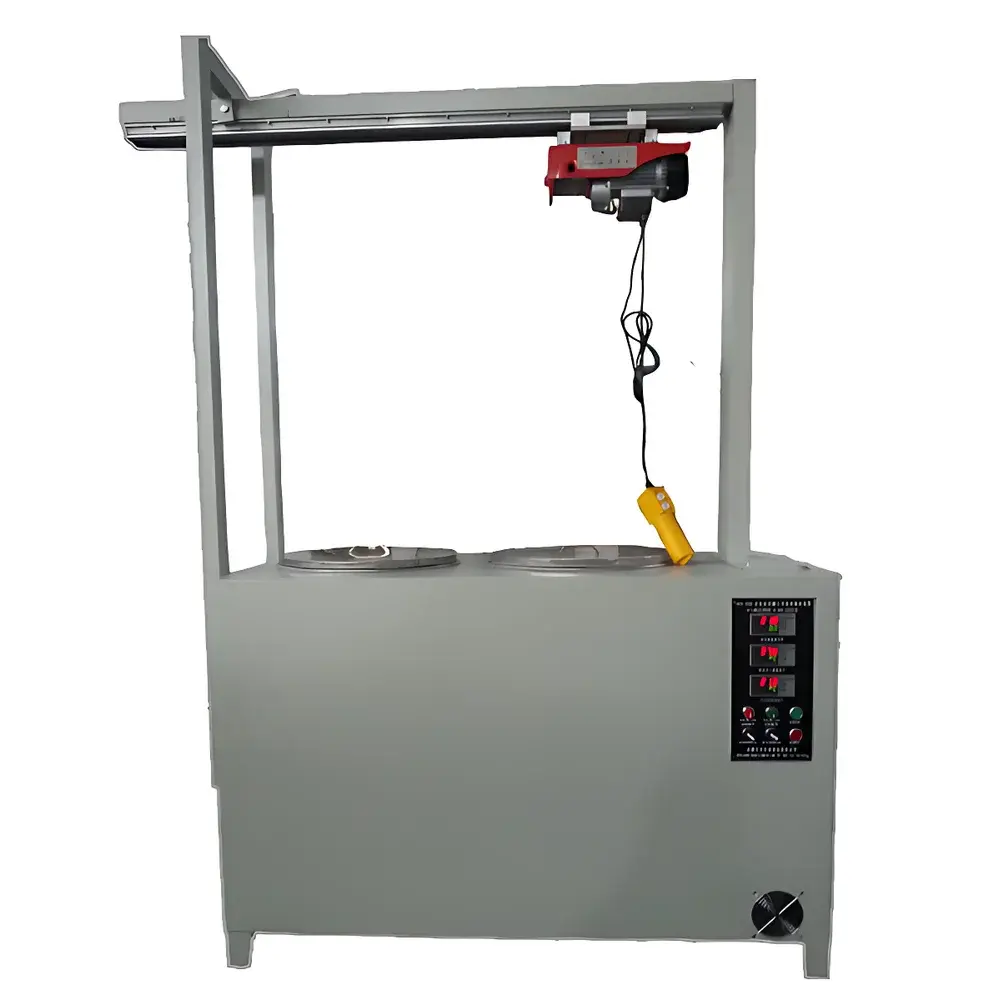
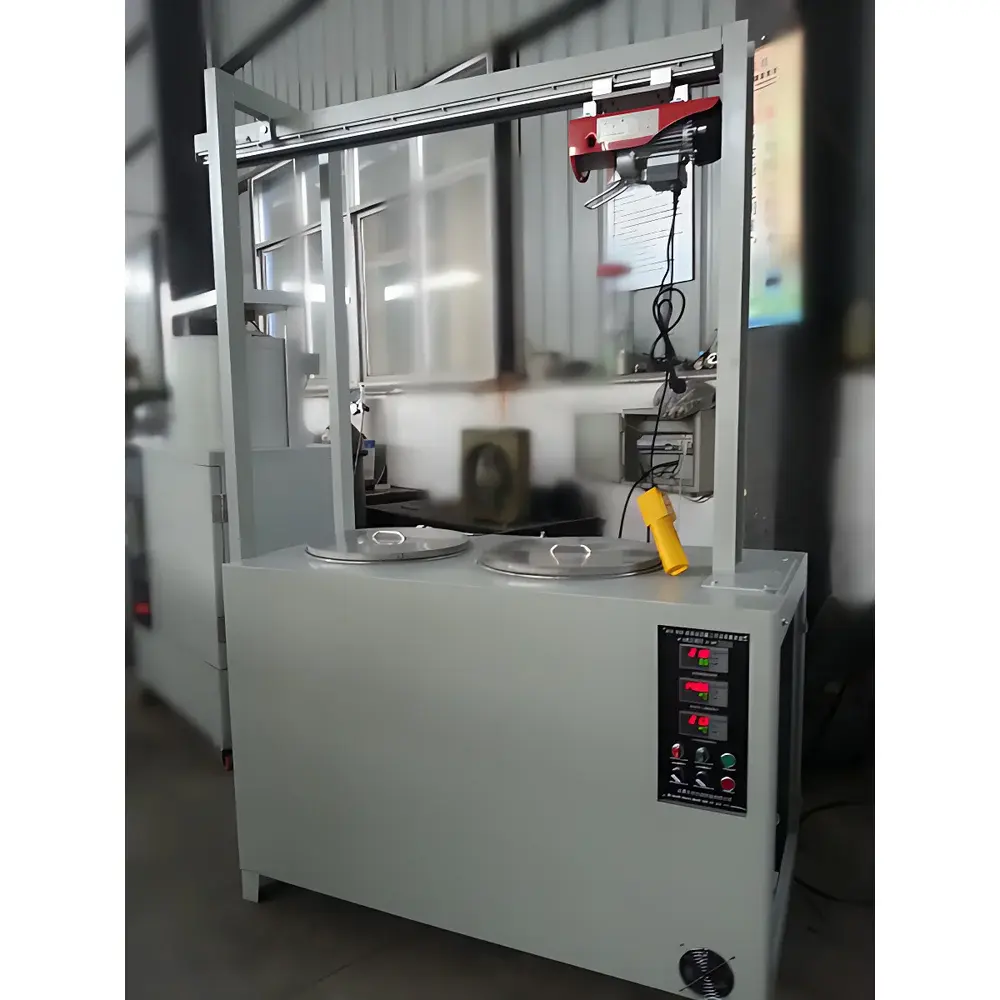
DRX-06D Automatic Thermal Diffusivity Tester for Concrete
| Origin | Hunan, China |
|---|---|
| Manufacturer Type | Authorized Distributor |
| Origin Category | Domestic (China) |
| Model | DRX-06D |
| Price Range | USD 7,000 – 14,000 (FOB) |
| Test Method | Transient Plane Source (TPS) / Comparative Cut-Edge Method per Hydraulic Concrete Standards |
| Heating Power | 4 kW (adjustable) |
| Temperature Measurement Range | 0–100 °C, Accuracy: ±0.1 °C |
| Timing Resolution | 0.1 s |
| Stirring Power | ≤500 W |
| Construction Materials | AISI 304 Stainless Steel (heating bath, cooling bath, sample holder) |
| Automation Level | Fully Computer-Controlled with Real-Time Data Acquisition & Report Generation |
| Compliance | DL/T 5150–2001, SL 3562–2006, DL/T 536–2006 |
Overview
The DRX-06D Automatic Thermal Diffusivity Tester for Concrete is a precision-engineered instrument designed specifically for determining the thermal diffusivity (α, m²/s) of hardened concrete specimens under controlled transient heating conditions. It operates on the principle of the comparative cut-edge method—aligned with the physical interpretation of Fourier’s second law—as standardized in major Chinese hydraulic engineering test protocols including DL/T 5150–2001, SL 3562–2006, and DL/T 536–2006. Unlike steady-state techniques requiring prolonged thermal equilibrium, the DRX-06D employs a time-resolved, dual-bath configuration (heating and cooling) to capture temperature evolution at defined geometric boundaries of cylindrical or prismatic concrete samples. This enables high reproducibility in measuring how rapidly heat propagates through heterogeneous cementitious matrices—critical for predicting thermal cracking risk, evaluating mass concrete performance in dams and spillways, and validating thermal modeling inputs in structural simulation software.
Key Features
- Fully automated operation via dedicated Windows-based control software with real-time thermocouple monitoring and closed-loop power modulation
- High-stability heating system with 4 kW adjustable output and integrated PID temperature regulation across 0–100 °C range
- Dual stainless-steel baths (AISI 304) — one actively heated, one actively cooled — ensuring symmetric thermal boundary conditions and minimal environmental drift
- Integrated precision stirring mechanism (≤500 W) for uniform fluid temperature distribution within both baths, minimizing convection-induced measurement artifacts
- 0.1 °C temperature resolution and 0.1 s timing resolution support rigorous adherence to ASTM E1461–22 and ISO 22007-2 data acquisition requirements for transient thermal property determination
- Modular sample holder design accommodating standard concrete specimens per DL/T 5150 (e.g., Ø150 mm × 300 mm cylinders or 100 mm cubes), with thermal contact optimization via calibrated interface paste
Sample Compatibility & Compliance
The DRX-06D is validated for use with cured concrete specimens containing Portland cement, fly ash, slag, silica fume, and polymer-modified binders—provided specimens meet minimum density (>2,200 kg/m³) and moisture equilibrium criteria per SL 3562–2006. Specimen surface preparation must conform to DL/T 5150–2001 Section 12.3.2 (flatness tolerance ±0.05 mm over 100 mm length). The system satisfies technical verification requirements for laboratory accreditation under CNAS-CL01:2018 (equivalent to ISO/IEC 17025:2017), and its calibration traceability aligns with national metrological standards JJF 1033–2016. All test reports generated include mandatory metadata fields required by DL/T 5150–2001 Annex F: ambient temperature, specimen age, curing history, moisture content, and operator ID.
Software & Data Management
The included DRX-06D Control Suite v3.2 provides full IEC 62443-compliant local operation with audit-trail functionality (user login, parameter change logs, report generation timestamps). Data export supports CSV, XML, and PDF formats compatible with LIMS integration. Raw thermocouple voltage traces (20 Hz sampling), calculated α-values with uncertainty propagation (based on GUM Supplement 1 methodology), and graphical overlays of experimental vs. theoretical temperature decay curves are stored in an encrypted SQLite database. Software validation documentation (IQ/OQ/PQ summary) and electronic signature capability compliant with FDA 21 CFR Part 11 are available upon request for regulated QA/QC environments.
Applications
- Thermal performance assessment of mass concrete placements in hydroelectric infrastructure (dams, penstocks, surge tanks)
- Validation of finite element thermal models used in crack prediction during early-age hydration exotherms
- Quality assurance testing for low-heat cement formulations and supplementary cementitious material (SCM) blends
- Research into thermal compatibility between concrete and embedded steel or composite liners under cyclic thermal loading
- Supporting compliance with GB/T 50476–2019 (Code for Durability Design of Concrete Structures) Clause 4.3.2 on thermal gradient limits
FAQ
What concrete specimen dimensions are supported?
Standard configurations include Ø150 mm × 300 mm cylinders and 100 mm cubes per DL/T 5150–2001; custom holders can be fabricated for non-standard geometries upon request.
Is external PC hardware included in the base configuration?
No—the DRX-06D requires a user-supplied Windows 10/11 computer (Intel i5 or higher, 8 GB RAM, USB 2.0 port, Ethernet) and printer; system compatibility is verified pre-shipment.
How is calibration maintained over time?
Annual verification using NIST-traceable reference materials (e.g., SRM 734a fused quartz) is recommended; built-in self-diagnostics monitor thermocouple linearity, bath temperature stability, and timing circuit drift.
Does the system support multi-specimen sequential testing?
Yes—the software scheduler permits unattended batch runs with automatic bath reconditioning between tests, reducing operator intervention time by >60% compared to manual protocols.
Can raw temperature-time datasets be exported for third-party analysis?
Yes—full-resolution thermocouple data (millivolt-level outputs with timestamped headers) are exportable in ASCII format for MATLAB, Python (NumPy/Pandas), or ANSYS Thermal Desktop ingestion.





