
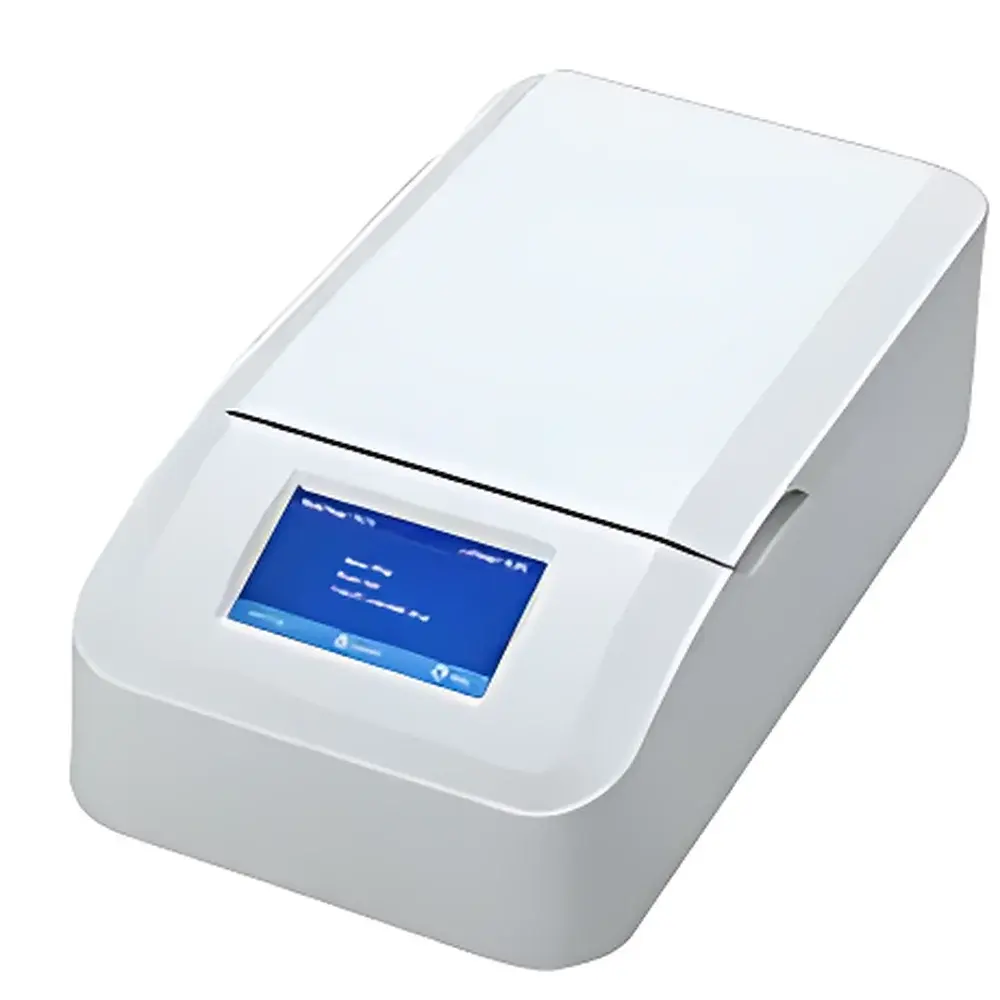
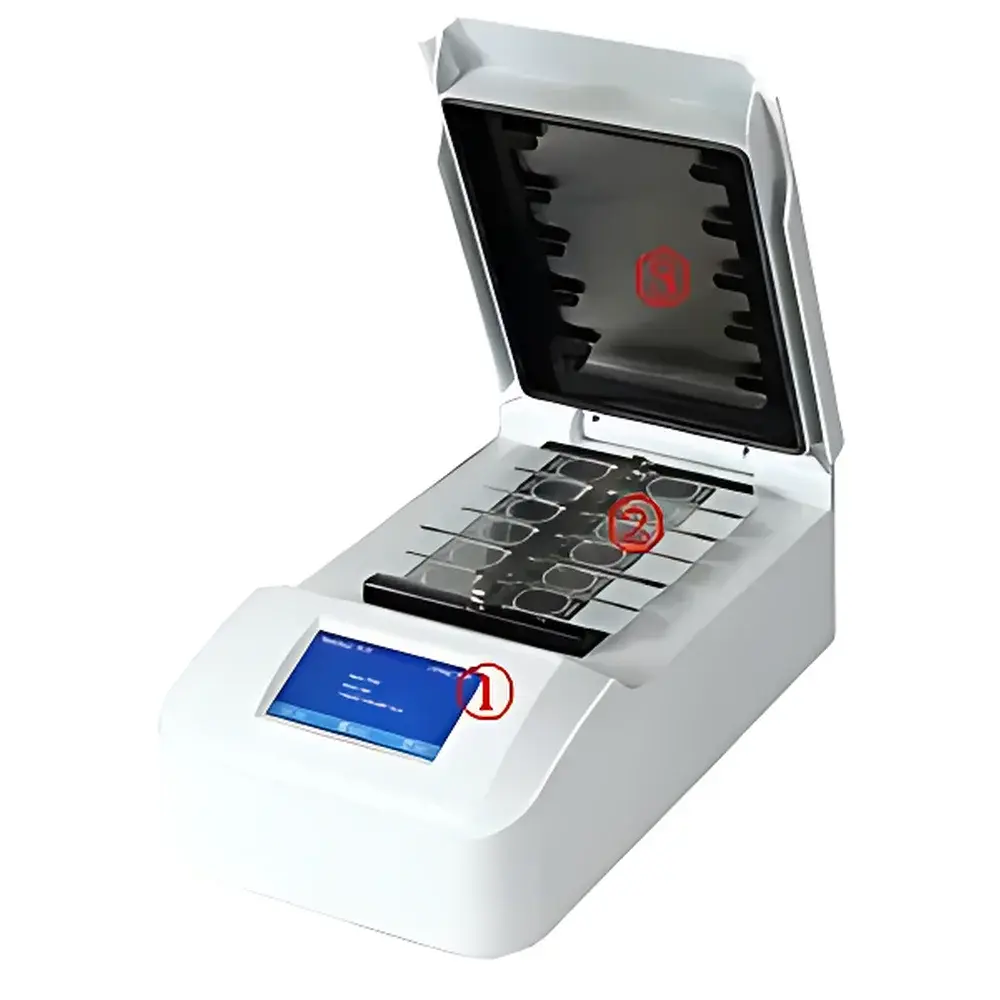
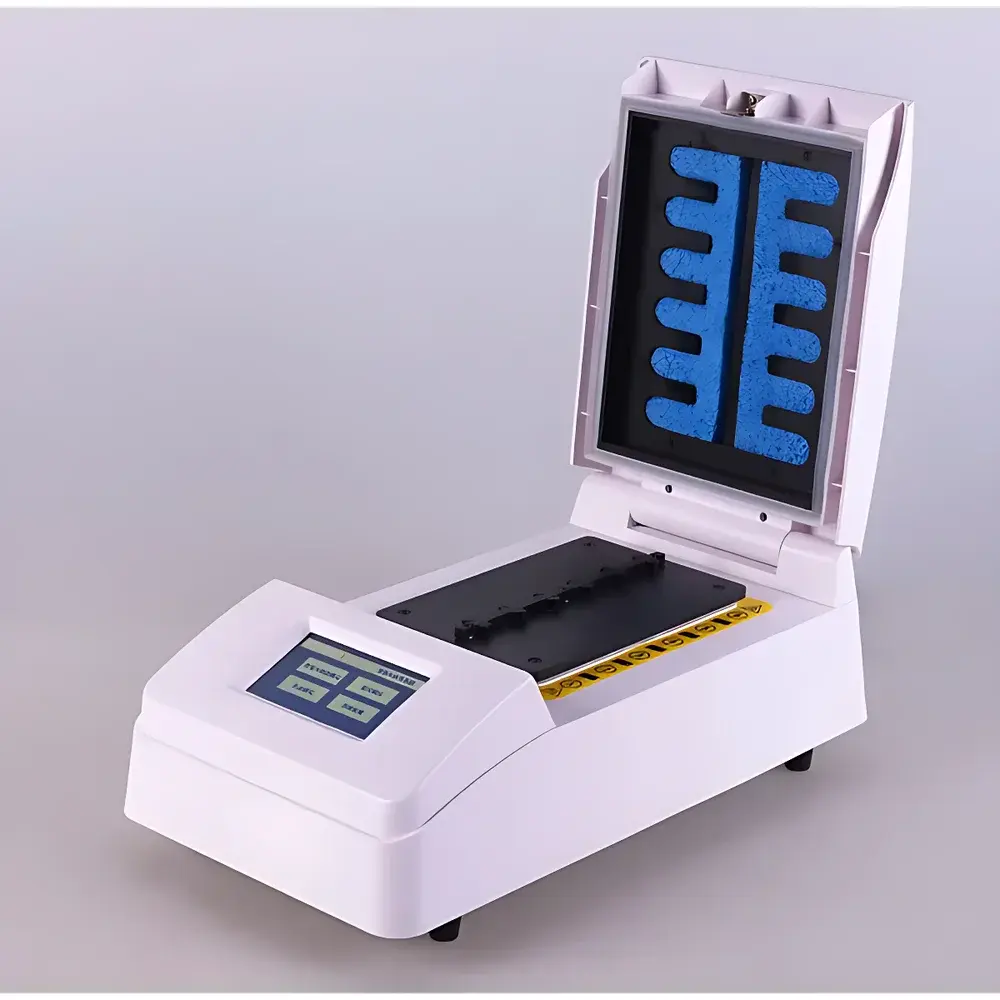
DS SH1000 Immuno In Situ Hybridization Instrument
| Brand | DS |
|---|---|
| Origin | Beijing, China |
| Manufacturer Type | Authorized Distributor |
| Country of Origin | Domestic (China) |
| Model | SH1000 |
| Automation Level | Semi-Automatic |
| Instrument Type | Chromogenic In Situ Hybridization (CISH) System |
| Temperature Range | Room Temperature +5 °C to 100 °C |
| Sample Capacity | 12 microscope slides |
| Power Consumption | 350 W |
| Dimensions (W×D×H) | 440 mm × 220 mm × 120 mm |
| Weight | 4.5 kg |
| Humidity Control | Not integrated |
| Temperature Accuracy | ≤ ±0.5 °C |
| Temperature Uniformity | ≤ ±0.5 °C |
| Heating Time (37 °C → 95 °C) | ≤2 min |
| Cooling Time (95 °C → 45 °C) | ≤6 min |
| Timer Range | 1 min – 99 h 59 min |
| Program Storage | 300 user-defined protocols |
| Operating Modes | Denaturation & Hybridization, Hybridization-only, Multi-step Protocol Execution |
Overview
The DS SH1000 Immuno In Situ Hybridization Instrument is a semi-automated, benchtop thermal platform engineered for precise and reproducible execution of chromogenic in situ hybridization (CISH) and combined immunohistochemistry–in situ hybridization (IHC-ISH) workflows. It operates on the principle of controlled thermal denaturation and sequence-specific nucleic acid hybridization directly on formalin-fixed paraffin-embedded (FFPE) tissue sections mounted on standard glass slides. By maintaining tightly regulated temperature gradients across the heating platform—within ±0.5 °C accuracy and uniformity—the instrument ensures consistent DNA/RNA target accessibility and probe binding kinetics, critical for diagnostic sensitivity and inter-laboratory assay concordance. Designed for pathology laboratories adhering to CAP-accredited or ISO 15189-compliant workflows, the SH1000 supports standardized turnaround times and protocol traceability without requiring external humidification chambers or manual slide handling during thermal transitions.
Key Features
- 12-slide capacity with independent thermal profiling across the entire aluminum alloy heating block, minimizing edge effects and ensuring uniform probe hybridization
- High-resolution capacitive touchscreen interface with dual-language support (English / Simplified Chinese) and intuitive icon-driven navigation
- Three preconfigured operational modes: Denaturation & Hybridization (integrated ramp-and-hold), Hybridization-only (isothermal), and Multi-step Protocol (up to 10 sequential segments per program)
- Robust power management architecture featuring automatic resume-on-power-restoration—retains current step, elapsed time, and remaining duration after unexpected AC interruption
- Programmable auto-cooling function initiates passive/active thermal dissipation post-run to ambient-safe temperatures, reducing operator wait time and preventing slide overexposure
- Preheat mode activates thermal stabilization prior to slide loading, eliminating warm-up drift and improving first-run reproducibility
- 300-user-program memory with timestamped storage, accessible via front-panel recall or optional USB export (FAT32 formatted)
- PID-controlled heating system with rapid thermal response: achieves 95 °C from 37 °C in ≤2 minutes; cools to 45 °C in ≤6 minutes
Sample Compatibility & Compliance
The SH1000 accommodates standard 25 mm × 75 mm microscope slides—including charged, APES-coated, or polymer-coated variants—without adapter requirements. Its sealed lid design minimizes evaporation during extended hybridization steps (e.g., overnight 37 °C incubations), though it does not incorporate active humidity regulation; users are advised to apply mineral oil overlays or use hybridization chamber-compatible coverslips for RNA-sensitive assays. The instrument meets IEC 61010-1:2010 safety standards for laboratory electrical equipment and complies with EMC Directive 2014/30/EU. While not certified for FDA 21 CFR Part 11 compliance out-of-the-box, its audit-trail-capable logging (time-stamped start/end, temperature logs per cycle, error codes) supports GLP/GMP-aligned documentation when paired with validated SOPs and external LIMS integration.
Software & Data Management
The embedded firmware provides real-time temperature monitoring with on-screen graphing (last 30 minutes), deviation alerts, and non-volatile event logging (max. 1000 entries). All programs store metadata including date/time stamp, operator ID field (manual entry), and thermal profile summary. USB port enables export of protocol files (.prg) and session logs (.csv) for external analysis or QA review. No proprietary software installation is required; exported data is compatible with Excel, GraphPad Prism, and laboratory information systems supporting CSV ingestion. Firmware updates are delivered via USB flash drive and validated through checksum verification.
Applications
- Detection of gene amplifications (e.g., HER2, EGFR) and chromosomal translocations (e.g., ALK, ROS1) in FFPE tumor specimens
- Co-localization studies combining CISH with immunohistochemical markers on serial sections or multiplexed slides
- Validation of NGS findings using orthogonal, morphology-integrated methods in clinical molecular pathology
- Research-grade spatial transcriptomics screening where probe hybridization fidelity outweighs throughput demands
- Teaching laboratories requiring robust, low-maintenance instrumentation for undergraduate histotechnology training
FAQ
Does the SH1000 support fluorescent in situ hybridization (FISH)?
No—it is optimized for chromogenic detection systems (e.g., DAB, Fast Red) and lacks darkroom-compatible optics or UV shielding. FISH workflows require dedicated fluorescence-capable instruments with vibration isolation and emission-filtered imaging.
Can humidity be added externally?
Yes—users may place calibrated humidity control packets (e.g., saturated salt solutions in sealed hybridization boxes) beneath the instrument’s lid or integrate third-party humidified slide cassettes compatible with standard 12-slide formats.
Is validation documentation provided for IQ/OQ/PQ?
DS supplies a Factory Acceptance Test (FAT) report and calibration certificate traceable to NIM (National Institute of Metrology, China). Site-specific IQ/OQ protocols must be developed by the end user per ISO/IEC 17025 guidelines.
What maintenance is required?
Annual verification of temperature accuracy using NIST-traceable thermocouple probes is recommended. Cleaning involves isopropyl alcohol wipe-down of the heating surface and lid gasket; no consumables or service contracts are mandatory.
How is data integrity ensured during long hybridizations?
All thermal cycles are logged with millisecond-resolution timestamps and stored in write-protected memory. Power loss triggers automatic checkpointing—no data corruption occurs, and resumed runs retain original timing parameters.




