
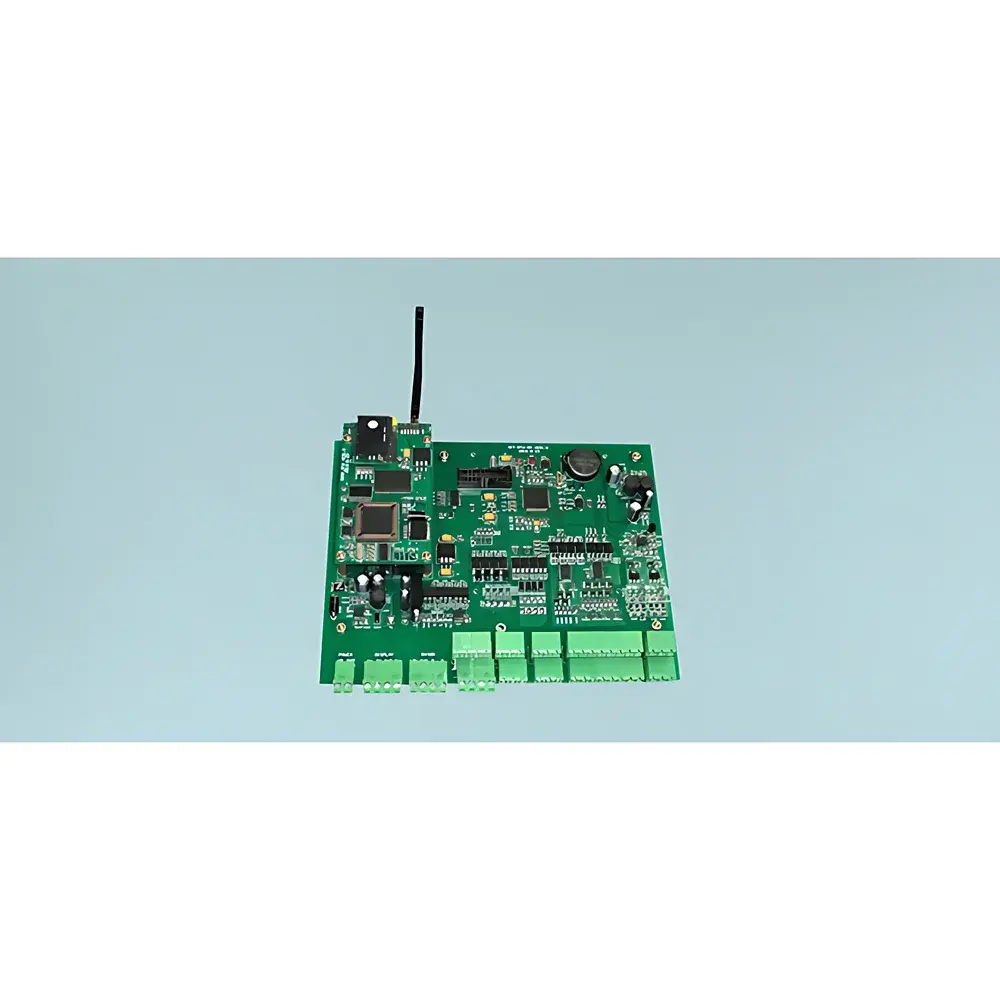
DSE DIT-RTU-85 Remote Terminal Unit for Water Resource Monitoring and Management
| Brand | DSE |
|---|---|
| Origin | Shenzhen, China |
| Manufacturer Type | Authorized Distributor |
| Origin Category | Domestic (China) |
| Model | DIT-RTU-85 |
| Pricing | Available Upon Request |
Overview
The DSE DIT-RTU-85 is a purpose-built, low-power remote terminal unit engineered for real-time monitoring and telemetry in water resource management systems. Designed in strict compliance with the Chinese Ministry of Water Resources’ SL 427–2008 Technical Specification for Data Transmission in Water Resources Monitoring and Management Systems, this RTU serves as a field-deployable edge node for integrated acquisition, processing, storage, and wireless transmission of hydrological and operational parameters. Its core architecture centers on an ARM Cortex-M3 32-bit microcontroller, optimized for deterministic real-time performance, extended battery life, and robust environmental operation in unattended outdoor installations. The device supports multi-sensor data ingestion—including pulse-based flow meters, 4–20 mA analog transmitters, RS485/RS232 digital instruments, and mechanical Gray-code level sensors—enabling comprehensive visibility into water consumption, reservoir or pipe network pressure/level dynamics, pump status, and critical infrastructure integrity. All measurement data is time-stamped, validated, and transmitted via embedded GPRS or CDMA cellular modules (field-selectable), ensuring interoperability with centralized SCADA platforms and cloud-based water management dashboards.
Key Features
- ARM Cortex-M3 32-bit MCU with hardware watchdog and brown-out detection for industrial-grade reliability
- Dual-channel pulse input with interrupt-driven counting—supports single-pulse, dual-pulse, and anti-tamper magnetic/anti-cut meters without pulse loss
- Two isolated 4–20 mA analog inputs with 24 VDC sensor excitation, configurable for water level, pressure, or conductivity transmitters
- RS485 interface compliant with Modbus RTU protocol; RS232 port available for legacy or specialized instrumentation (e.g., water quality analyzers)
- Gray-code input channel for float-type water level sensors, enabling high-resolution mechanical position tracking
- Digital I/O expansion for dry-contact status monitoring: door open/closed, AC power failure, battery backup activation, pump run/stop, and alarm relay outputs
- Onboard ferroelectric RAM (FRAM) for non-volatile, wear-resistant storage of up to 30 days of 15-minute interval data and event-triggered logs
- Optional LED display module with keypad navigation—cyclically shows cumulative flow, instantaneous flow, level, pressure, and active alarms
- Configurable communication modes: scheduled self-reporting, master-initiated polling (call-and-response), or hybrid operation—all adhering to SL 427–2008 frame structure and CRC validation
Sample Compatibility & Compliance
The DIT-RTU-85 interfaces with a broad spectrum of field instrumentation commonly deployed across municipal water supply networks, irrigation districts, and industrial water intake points. It accommodates pulse-output mechanical and smart water meters (including those certified per CJ/T 224–2012), electromagnetic and ultrasonic flowmeters with analog or serial output, submersible pressure transducers (e.g., 0–10 mH2O, 4–20 mA), and mechanical float-level sensors with 12-bit Gray-code resolution. All firmware logic, data formatting, and transmission timing align precisely with SL 427–2008, including mandatory header fields, data type encoding, encryption readiness flags, and error recovery sequences. While not certified to IEC 61000-4 EMC standards or UL 61010 by default, the unit meets GB/T 17626 series requirements for industrial environments and supports optional surge protection modules for lightning-prone deployment sites.
Software & Data Management
Configuration and parameterization are performed via ASCII command set over RS232 or through a Windows-based configuration utility (DSE ConfigTool v3.x), which enables secure remote setup of sampling intervals, alarm thresholds, data retention policies, and communication profiles. All configuration changes are logged with timestamps and user identifiers. The RTU implements local data validation prior to transmission—rejecting out-of-range analog values, detecting broken-wire conditions on current loops, and flagging inconsistent pulse frequencies. Alarm events (e.g., threshold breach, power mode transition, unauthorized enclosure access) trigger immediate priority transmission and are stored with millisecond-accurate timestamps. Firmware updates are delivered over-the-air (OTA) using signed binary packages verified via SHA-256 hash, supporting rollback capability and version-controlled deployment. Audit trails for all remote parameter modifications comply with basic GLP traceability expectations, though full 21 CFR Part 11 electronic signature functionality requires integration with a validated central platform.
Applications
- Municipal water distribution network monitoring: real-time flow balancing, leak detection via night-flow analysis, and pressure zone management
- Irrigation district metering: allocation tracking, gate control synchronization, and seasonal water use reporting under national water rights frameworks
- Industrial process water accounting: compliance reporting for discharge permits, cooling tower makeup monitoring, and boiler feedwater reconciliation
- Reservoir and canal level surveillance: flood forecasting support, gate automation handshaking, and sedimentation trend analysis
- Remote pump station telemetry: runtime logging, dry-run prevention, motor thermal status correlation, and predictive maintenance scheduling
- Smart water metering infrastructure: aggregation point for AMI rollouts where NB-IoT or LoRaWAN backhaul is unavailable or cost-prohibitive
FAQ
Does the DIT-RTU-85 support MQTT or HTTP protocols for cloud integration?
No—it natively implements only SL 427–2008 over GPRS/CDMA. MQTT or RESTful API connectivity requires a protocol gateway at the central server layer.
Can it operate on solar power with battery backup?
Yes—its ultra-low standby current (<15 µA) and wide-input DC power range (9–36 VDC) make it compatible with standard solar-charged 12 V battery systems.
Is firmware source code or SDK available for custom development?
No—DSE provides only binary firmware updates and closed configuration tools; no public HAL or driver-level APIs are released.
What is the maximum number of data points it can store locally during communication outage?
Up to 10,000 timestamped records (including both periodic and event-triggered entries) in FRAM, configured via cycle depth and retention policy.
Does it support time synchronization via NTP or GPS?
No—time is maintained by internal RTC with ±2 ppm accuracy; external sync must be handled by the central system during data ingestion.







