
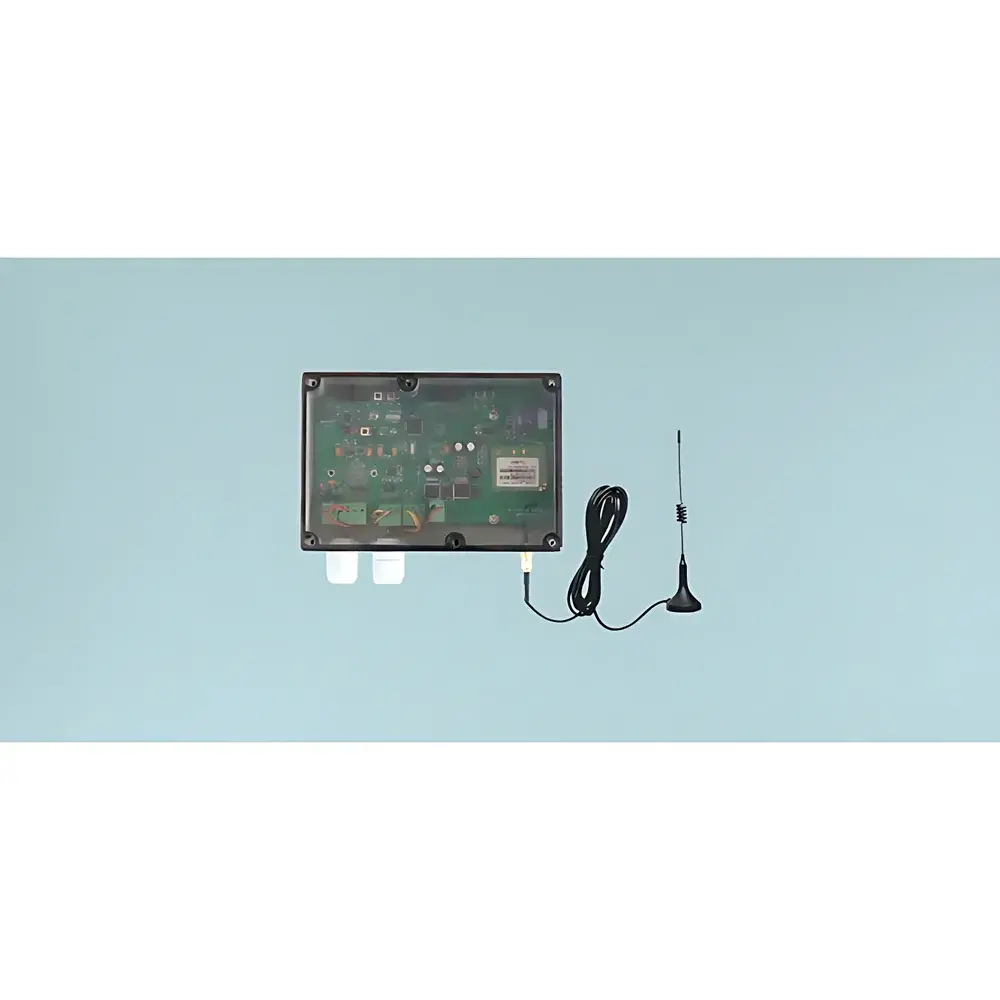
DSE DIT-RTU-90 Ultra-Low-Power Pipeline Monitoring RTU
| Brand | DSE |
|---|---|
| Origin | Shenzhen, China |
| Manufacturer Type | Authorized Distributor |
| Country of Origin | China |
| Model | DIT-RTU-90 |
| Pricing | Available Upon Request |
Overview
The DSE DIT-RTU-90 is an industrial-grade, ultra-low-power Remote Terminal Unit (RTU) engineered specifically for long-term, battery-operated monitoring of water, gas, or district heating pipeline infrastructure. Designed around a high-efficiency microcontroller unit (MCU) with advanced power management architecture, the DIT-RTU-90 implements multi-layered energy optimization strategies—including dynamic voltage scaling, clock gating, and deep-sleep mode control—to achieve sub-50 µA quiescent current during standby. This enables continuous field deployment for 6–12 months on standard primary lithium batteries (e.g., ER34615 or equivalent), eliminating reliance on grid power or solar supplementation in remote or confined underground utility environments such as valve chambers, meter pits, and inspection wells. Its core function is autonomous data acquisition from analog, digital, and pulse-based sensors—pressure transducers, flow meters, liquid level switches, and tamper-detection contacts—followed by secure, time-synchronized transmission via GPRS to centralized SCADA or cloud-based monitoring platforms.
Key Features
- Ultra-low-power design with deep-sleep current < 50 µA and adaptive wake-up scheduling (configurable sleep interval)
- Integrated GPRS modem supporting UDP-based data transmission with automatic network reconnection and real-time link status monitoring
- Dual-mode analog input channel supporting 4–20 mA or 0–5 V pressure sensor interfaces, including programmable excitation voltage output for sensor powering and post-acquisition power cutoff
- Two digital input channels for dry-contact sensors (e.g., manhole cover open/close detection, high-level alarm switches)
- Pulse-counting input for mechanical or electromagnetic flow meters (totalizer and instantaneous rate calculation)
- Onboard battery voltage monitoring with configurable low-voltage alert threshold and automated notification to central server
- Fully configurable operational parameters via serial command set or over-the-air (OTA) configuration: reporting interval (default 15 min, adjustable up to 24 h), server IP/port, sensor calibration coefficients, and wake-up schedule
Sample Compatibility & Compliance
The DIT-RTU-90 is compatible with industry-standard 2-wire and 3-wire pressure transmitters (e.g., Honeywell ST3000, Siemens SITRANS P, or local OEM equivalents), pulse-output turbine or ultrasonic flowmeters, and passive float or capacitive level switches. It supports sensor interoperability through user-defined scaling and linearization tables. While not certified to IEC 61000-6-2/4 or ATEX/IECEx out-of-the-box, its enclosure meets IP68 ingress protection requirements when installed in sealed junction boxes or dedicated RTU enclosures rated for underground use. The device adheres to GB/T 17626 (China’s EMC standard) and complies with RoHS 2011/65/EU directives. Firmware logging and parameter change history support basic auditability for municipal utility maintenance workflows aligned with ISO 55001 asset management principles.
Software & Data Management
Data transmission follows a lightweight, deterministic UDP packet structure containing timestamped sensor values, device status flags (battery level, signal strength, network state), and CRC-16 checksums. No proprietary protocol stack is required at the server side—standard UDP listeners or MQTT bridges (with optional gateway conversion) can ingest payloads directly. Configuration and firmware updates are performed via ASCII command interface over RS-232 or RS-485, enabling integration into legacy SCADA systems without middleware dependency. All configuration changes are stored in non-volatile memory with write-cycle limiting to ensure 10+ years of EEPROM endurance. While the unit does not implement TLS or certificate-based authentication, it supports static IP whitelisting at the cellular carrier level and configurable message encryption keys for payload obfuscation where mandated by internal IT policy.
Applications
- Unmanned pressure monitoring at critical nodes in municipal drinking water distribution networks
- Remote flow verification in aging cast-iron or PVC pipelines where trenching for power cabling is cost-prohibitive
- Manhole security surveillance via lid-open detection and water ingress alarms in combined sewer overflow (CSO) infrastructure
- Preventive maintenance enablement through trend analysis of battery voltage decay and GPRS signal stability over time
- Temporary deployment during pipe rehabilitation projects or hydrant flushing campaigns to validate hydraulic model assumptions
FAQ
What is the typical battery life under standard operating conditions?
With default 15-minute reporting intervals and a 19 Ah ER34615 lithium-thionyl chloride cell, field deployments consistently achieve 8–10 months of operation. Life extends to ≥12 months when configured for hourly reporting and minimal sensor excitation duration.
Can the DIT-RTU-90 interface with Modbus RTU sensors?
No—this unit does not support Modbus or other serial sensor protocols. It accepts only analog (4–20 mA / 0–5 V), pulse, and dry-contact inputs. Integration with Modbus devices requires an external protocol converter.
Is over-the-air firmware update supported?
Firmware updates require physical serial connection. However, all operational parameters—including reporting schedule, server address, and sensor scaling—are fully configurable remotely via command packets sent over GPRS.
Does the device support GPS positioning?
No built-in GPS module is included. Position metadata must be assigned manually during commissioning or inferred from fixed installation coordinates in the central database.
How is data integrity ensured during intermittent GPRS connectivity?
The RTU buffers up to 256 timestamped records in onboard flash memory. When connectivity resumes, buffered data is transmitted in chronological order before resuming real-time reporting—ensuring no loss of critical trend information during outages.







