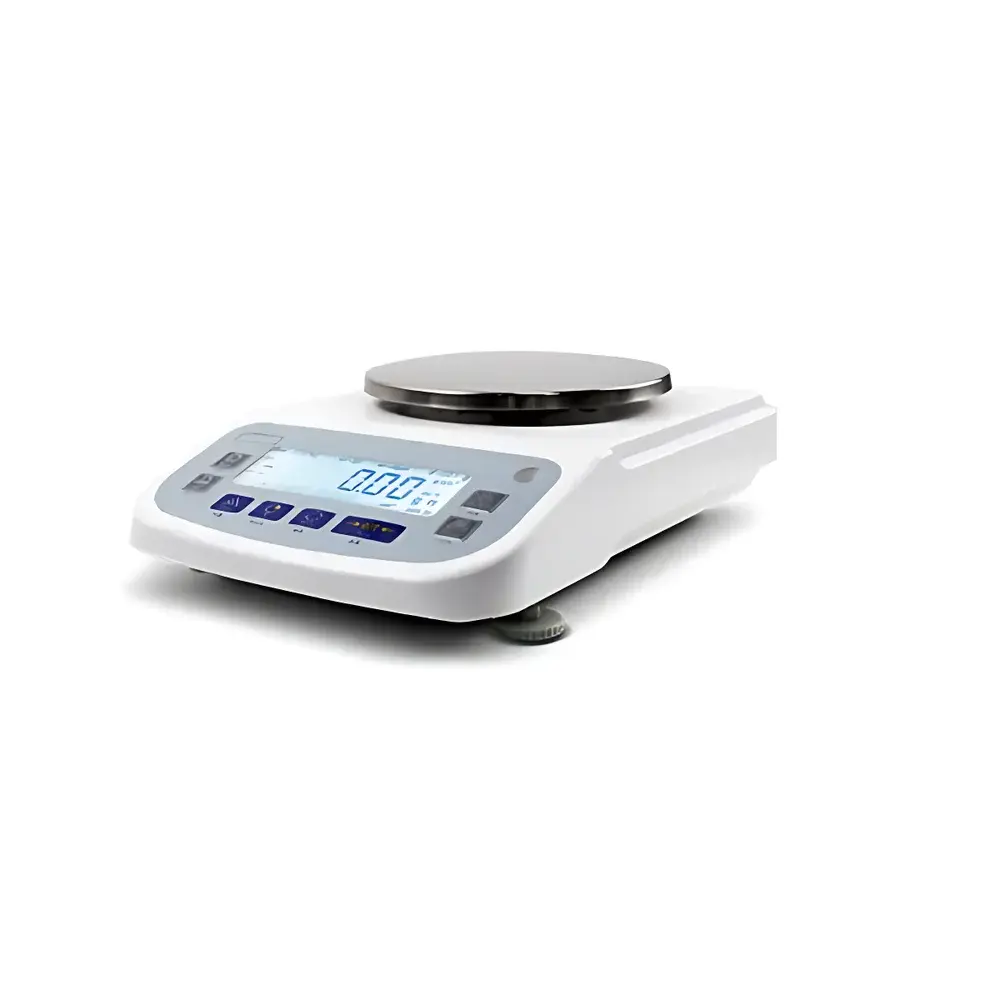
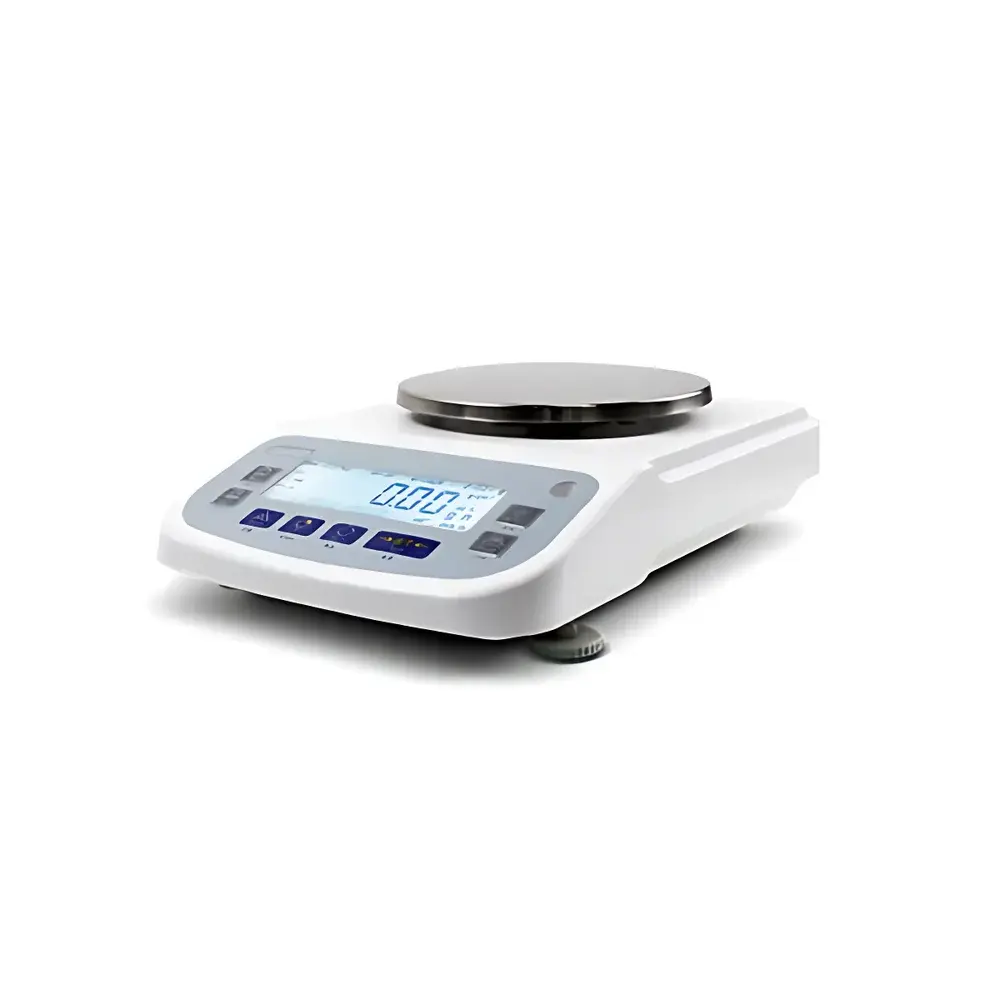
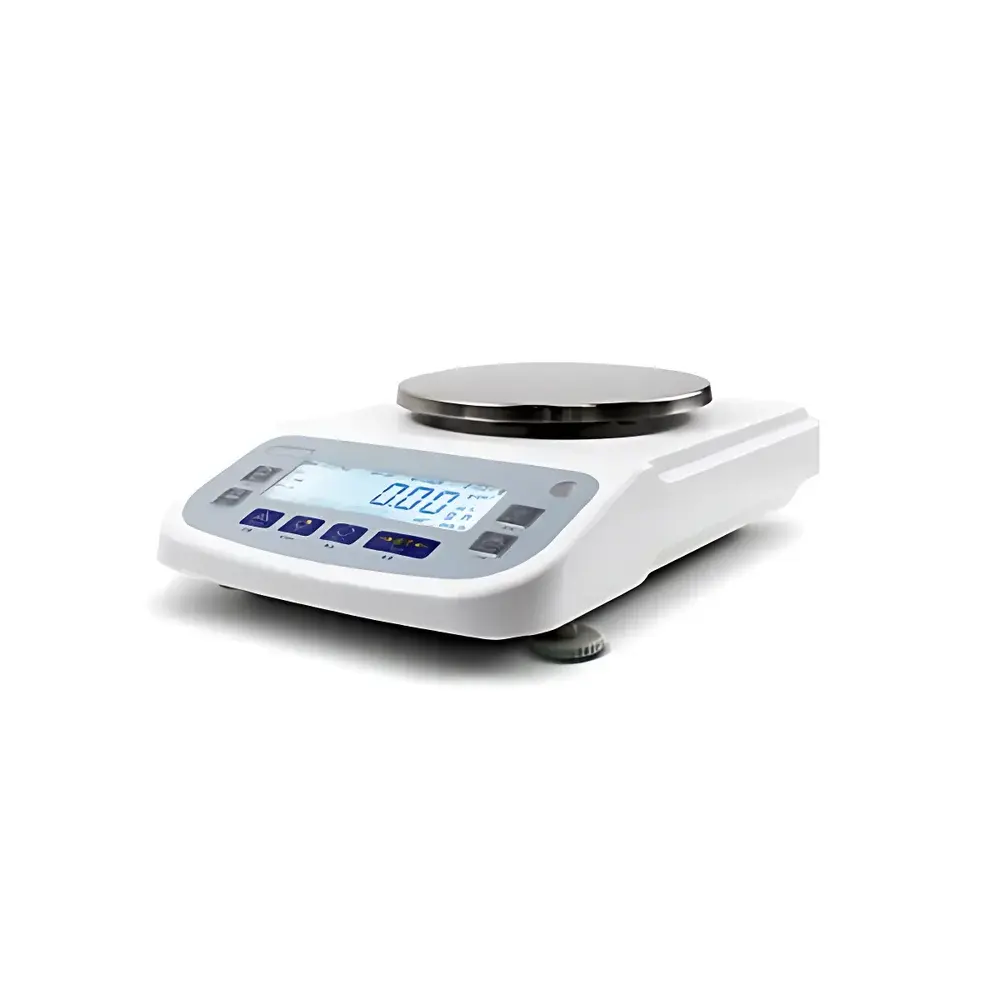
D&TC Dantec ES1200 Precision Electronic Balance
| Brand | D&TC Dantec |
|---|---|
| Origin | Tianjin, China |
| Model | ES1200 |
| Maximum Capacity | 1200 g |
| Readability | 10 mg |
| Repeatability | ±10 mg |
| Linearity Error | ±10 mg |
| Stabilization Time | ≤2.5 s |
| Pan Diameter | Φ160 mm |
| Dimensions (W×D×H) | 210 × 310 × 90 mm |
| Operating Temperature | 13–25 °C |
| Operating Humidity | 10–70 % RH |
| Warm-up Time | 30–60 min |
| Power Input | 220 V AC / 50 Hz |
| Output | 7.5 V DC / 600 mA |
| RS232 Baud Rates | 300–9600 |
| Accuracy Class | Class II |
| Sensor Type | Gold-plated ceramic variable-capacitance transducer |
| Environmental Compensation | Integrated high-precision humidity & temperature sensors |
| Display | Backlit LCD with intuitive layout |
| Weighing Units | g, ct, oz, lb, etc. |
| Modes | Standard weighing, counting, percentage, checkweighing |
| Construction | Corrosion-resistant stainless-steel pan |
Overview
The D&TC Dantec ES1200 Precision Electronic Balance is a Class II-certified analytical-grade instrument engineered for reliable, high-reproducibility mass measurement in regulated and non-regulated laboratory environments. It operates on the principle of electromagnetic force compensation augmented by a gold-plated ceramic variable-capacitance sensor — a design that delivers superior long-term stability, minimal drift, and immunity to mechanical fatigue compared to traditional strain-gauge or electromagnetic coil-based systems. With a maximum capacity of 1200 g and readability of 10 mg, the ES1200 meets ISO/IEC 17025 metrological requirements for routine quality control, formulation verification, and sample preparation tasks where sub-centigram resolution is essential. Its optimized thermal and hygroscopic compensation architecture — incorporating integrated high-accuracy temperature and relative humidity sensors — actively mitigates environmental influence on measurement integrity, ensuring consistent performance across typical lab conditions (13–25 °C, 10–70 % RH).
Key Features
- Gold-plated ceramic variable-capacitance load cell: Delivers exceptional linearity (±10 mg), repeatability (±10 mg), and resistance to corrosion, static discharge, and mechanical shock.
- Environmental compensation system: Real-time correction for ambient temperature and humidity fluctuations minimizes drift and improves measurement robustness.
- Stainless-steel weighing pan (Φ160 mm): Chemically inert, easy-to-clean surface compatible with pharmaceutical excipients, reagents, and industrial powders.
- Backlit LCD display with ergonomic layout: High-contrast readout supports rapid interpretation under varied lighting; unit and mode indicators are unambiguous.
- Multi-function weighing modes: Includes standard mass measurement, piece counting (with automatic average piece weight calculation), percentage weighing relative to a reference, and checkweighing with configurable tolerance limits.
- RS232 serial interface (configurable baud rates: 300–9600): Enables bidirectional communication with PCs, LIMS, ELN systems, or label printers; supports ASCII and MODBUS RTU protocols.
- Robust mechanical design: IP42-rated enclosure with anti-static, spill-resistant housing; optimized structural rigidity reduces vibration sensitivity and enhances floor-level usability.
Sample Compatibility & Compliance
The ES1200 accommodates a broad range of solid and granular samples — from bulk pharmaceutical intermediates and catalyst powders to metal alloys and food ingredients — without requiring external draft shields under standard lab airflow conditions. Its 1200 g capacity and low-profile pan geometry support stable placement of irregular or tall containers. The balance complies with OIML R 76-1 (2021) and EN 45501:2015 for Class II instruments, satisfying baseline metrological traceability requirements for QC labs operating under ISO 9001, ISO 13485, or GMP frameworks. While not inherently 21 CFR Part 11-compliant, its RS232 output supports integration into validated data acquisition systems when paired with compliant software and audit-trail-enabled middleware.
Software & Data Management
Data export is performed via ASCII-formatted serial output, compatible with spreadsheet applications (e.g., Microsoft Excel), statistical process control (SPC) tools, and laboratory information management systems (LIMS). Timestamped records include gross/net/tare values, unit identifiers, and operator codes (when entered manually). For GLP/GMP environments, users may configure external logging solutions to capture full audit trails — including calibration events, parameter changes, and user logins — provided the host application enforces electronic signature and change-control protocols per FDA guidance.
Applications
- Pharmaceutical: Raw material receipt inspection, tablet weight uniformity testing (per USP ), excipient dispensing, and stability study sample preparation.
- Food & Beverage: Batch ingredient dosing, nutritional labeling compliance checks, and moisture content determination via loss-on-drying workflows.
- Chemical Manufacturing: Catalyst charge verification, reaction stoichiometry validation, and quality release testing of fine chemicals.
- Academic & Teaching Labs: General chemistry quantitation, density determination, and stoichiometric experiment support where cost-effective precision is prioritized.
- Metal & Alloy Processing: Scrap sorting verification, plating bath additive dosing, and incoming material certification.
FAQ
What is the minimum sample weight for reliable measurement on the ES1200?
The recommended minimum weight is 200 mg, based on the 10 mg readability and industry-standard uncertainty guidelines (e.g., USP ). Below this threshold, relative uncertainty increases significantly.
Does the ES1200 support internal calibration?
No — it requires external manual calibration using certified weights traceable to national standards (e.g., NIST SRM). Internal calibration is not implemented in this model.
Can the balance be used in a fume hood or near HVAC vents?
It is not recommended. Air currents exceeding 0.2 m/s may compromise repeatability. Use only in still-air environments or with optional draft shields (sold separately).
Is the RS232 interface compatible with modern Windows/macOS systems?
Yes — when connected via a USB-to-RS232 adapter with signed drivers, the balance communicates reliably with terminal emulators (e.g., PuTTY) and custom Python/Node.js data acquisition scripts.
What does “Class II” accuracy classification mean?
Per OIML R 76, Class II denotes balances intended for general laboratory use with a verification scale interval (e) of 10 mg and a minimum capacity of 200 e (i.e., 2 g), meeting defined limits for error, repeatability, and eccentric loading.