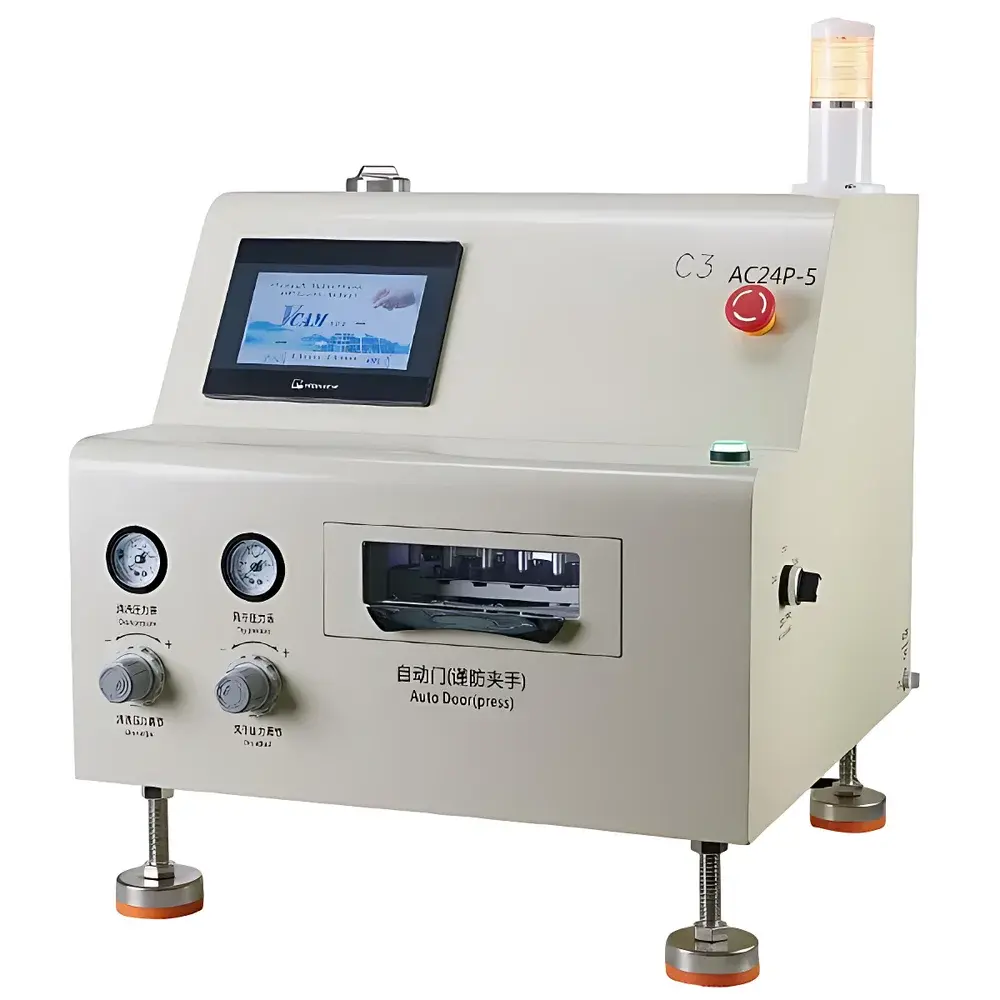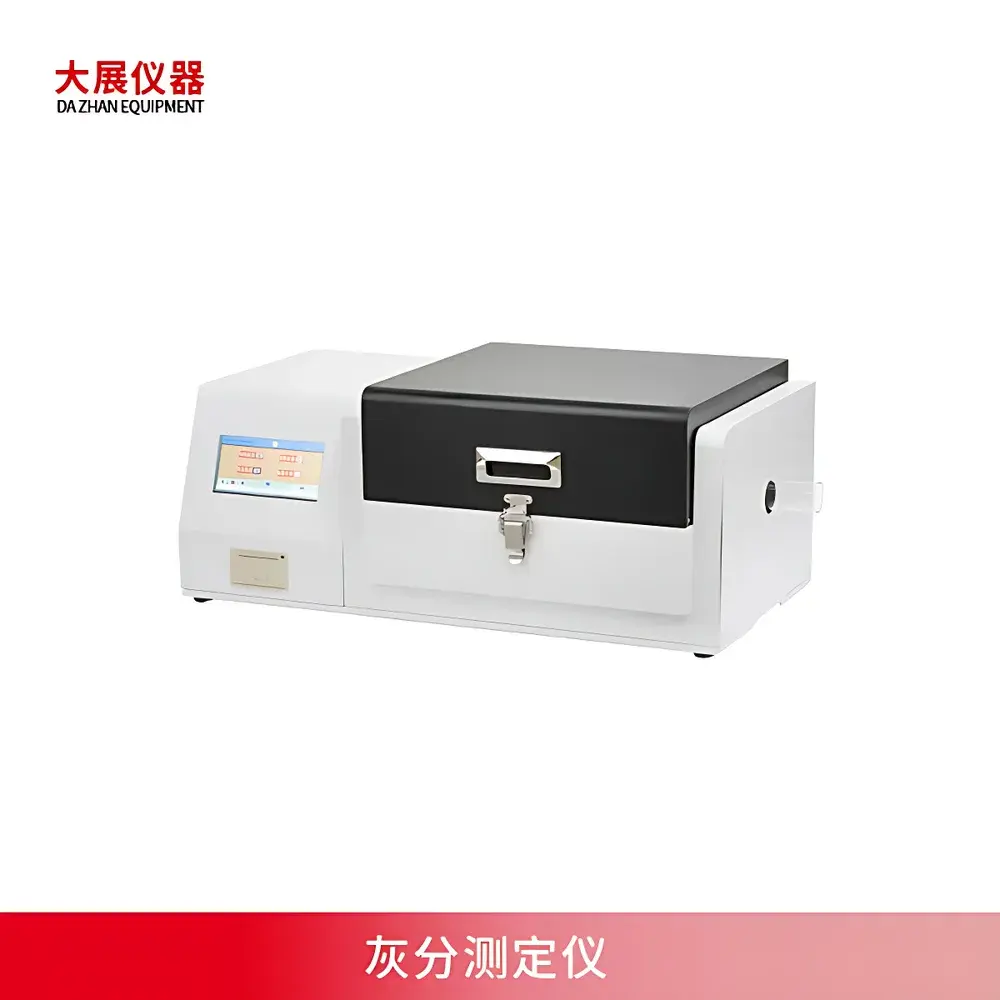
DZ3500S Carbon Black Content Analyzer by DAZHAN
| Brand | DAZHAN |
|---|---|
| Origin | Jiangsu, China |
| Model | DZ3500S |
| Display | 7-inch capacitive touchscreen |
| Quartz tube dimensions | Φ44 × 600 ± 5 mm |
| Furnace chamber dimensions | Φ45 × 300 ± 5 mm |
| Heating element | high-temperature alloy wire |
| Heating zone length | 350 mm |
| Operating temperature range | ambient to 1200 °C |
| Temperature control | intelligent programmable controller with multi-segment ramp/soak profiles |
| Temperature resolution | 0.1 °C |
| Power supply | AC 220 V / 50–60 Hz |
| Gas flow control | dual-channel, program-automated switching |
| Cooling time | ≤20 min (from 900 °C to ambient), enabled by hinged lid design |
| Sample capacity | 4 positions per run |
| Sample handling | rail-mounted sample holder with lid-open access |
| Data processing | embedded software for automatic calculation of carbon black content and ash content |
| Optional accessories | exhaust filtration unit, thermal printer |
Overview
The DZ3500S Carbon Black Content Analyzer is a dedicated thermal gravimetric instrument engineered for precise quantification of carbon black and residual ash in polymer-based materials—primarily rubber compounds, thermoplastics, masterbatches, and pigment-loaded composites. It operates on the principle of controlled pyrolysis under inert (N₂) or oxidative (air/O₂) atmospheres, followed by gravimetric mass loss analysis. The instrument complies with standardized test methods including ASTM D1606 (for rubber), ISO 6964 (carbon black in elastomers), and GB/T 3780.2–2019 (Chinese national standard for carbon black content determination). Its robust architecture integrates a high-uniformity furnace, precision temperature programming, and real-time mass monitoring to deliver reproducible results essential for quality control laboratories in rubber and plastics manufacturing.
Key Features
- Hinged-lid furnace design enabling rapid cooling (≤20 min from 900 °C to ambient), significantly reducing turnaround time between consecutive runs.
- Simultaneous four-position sample testing with rail-mounted, heat-resistant ceramic sample holders—enhancing throughput without compromising positional temperature uniformity.
- Intelligent programmable temperature controller supporting up to 10-segment heating/cooling profiles, adjustable ramp rates (0.1–30 °C/min), and independent soak durations per segment.
- Integrated dual-gas manifold with automated solenoid switching between nitrogen (for pyrolysis) and air (for ash oxidation), ensuring process repeatability and method compliance.
- 7-inch capacitive touchscreen interface with intuitive navigation, real-time temperature/mass trend display, and on-device data logging (no external PC required).
- Embedded calculation engine that automatically derives carbon black content (% w/w) and ash content (% w/w) using pre-configured mass balance equations per ASTM D1606 and ISO 6964 protocols.
Sample Compatibility & Compliance
The DZ3500S accommodates standard crucibles (alumina or platinum) with maximum sample mass of 2.0 g per vessel. It supports heterogeneous matrices including EPDM, SBR, NR, PP, PE, EVA, and PVC compounds—regardless of filler loading or antioxidant package. All thermal cycles are traceable via timestamped log files, supporting GLP/GMP-aligned documentation requirements. Optional exhaust filtration meets local occupational health standards for particulate and volatile organic compound (VOC) capture during pyrolysis. The system’s temperature uniformity (±3 °C across working zone at 900 °C) and thermal stability (<±0.5 °C over 30-min soak) satisfy calibration verification criteria outlined in ISO/IEC 17025 for accredited testing laboratories.
Software & Data Management
Data acquisition and reporting are fully managed within the onboard firmware. Each test generates a CSV-compatible record containing time-stamped temperature, mass, derivative (dm/dt), atmosphere state, and final calculated values. Export is supported via USB flash drive; no proprietary software installation is required. Audit trails include operator ID (optional login), method name, parameter set version, and calibration status flag. When paired with optional thermal printing, reports include instrument ID, test date/time, sample ID, raw masses (initial, post-pyrolysis, post-oxidation), and certified calculations—all formatted to meet internal QA documentation standards. The system supports 21 CFR Part 11–compliant electronic signatures when integrated into validated LIMS environments via RS232 or Ethernet (firmware upgrade required).
Applications
- Quality assurance of carbon black–filled rubber compounds prior to extrusion or molding.
- Verification of pigment dispersion homogeneity in masterbatch production.
- Batch-to-batch consistency checks in tire tread, conveyor belt, and hose compound manufacturing.
- Regulatory compliance testing for REACH SVHC screening (e.g., assessing PAH content indirectly via char residue morphology).
- R&D support for developing low-carbon-footprint elastomer formulations using alternative fillers (e.g., biochar, silica hybrids).
- Failure analysis of degraded polymer components where unexpected ash residues indicate contamination or thermal degradation pathways.
FAQ
What standards does the DZ3500S comply with for carbon black quantification?
ASTM D1606, ISO 6964, GB/T 3780.2–2019, and JIS K 6221.
Can the instrument differentiate between carbon black and other carbonaceous residues?
No—it measures total combustible carbon mass loss under inert gas; differentiation requires complementary techniques such as Raman spectroscopy or TEM.
Is furnace calibration traceable to national standards?
Yes—calibration certificates are provided with NIST-traceable PtRh thermocouples and certified reference materials (CRM) for mass verification.
What maintenance is required for long-term accuracy?
Quarterly verification of thermocouple drift, annual quartz tube inspection for devitrification, and biannual cleaning of gas inlet filters and exhaust pathways.
Does the system support method validation per ICH Q2(R2)?
Yes—built-in repeatability testing mode, intermediate precision assessment tools, and full parameter logging enable full validation protocol execution.