
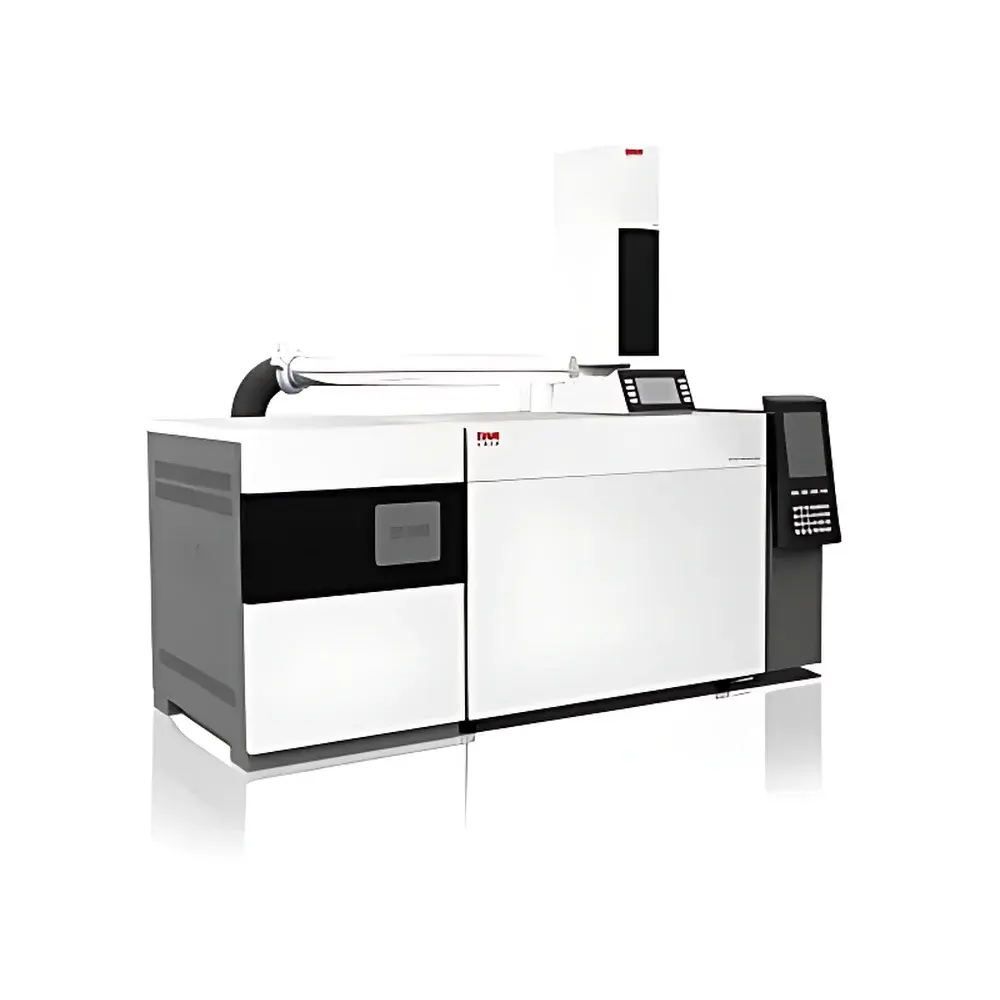
East & West Analysis GCxGC TOF MS 3300 Comprehensive Two-Dimensional Gas Chromatography Time-of-Flight Mass Spectrometer
| Brand | East & West Analysis |
|---|---|
| Origin | Beijing, China |
| Manufacturer Type | Manufacturer |
| Instrument Type | Time-of-Flight Mass Spectrometer |
| Chromatography Configuration | Comprehensive Two-Dimensional Gas Chromatography (GC×GC) |
| Model | GCxGC TOF MS 3300 |
| Mass Range | Not specified |
| Resolution | Not specified |
| Sensitivity | Not specified |
| Scan Speed | 500 spectra/sec (≥15 kHz pusher frequency) |
Overview
The East & West Analysis GCxGC TOF MS 3300 is a high-performance comprehensive two-dimensional gas chromatography coupled with time-of-flight mass spectrometry (GC×GC–TOF MS) system engineered for deep chemical profiling of complex volatile and semi-volatile organic mixtures. Unlike conventional one-dimensional GC–MS, this platform implements orthogonal separation—first dimension (¹D) separation by volatility and second dimension (²D) separation by polarity—via cryogenic modulation, dramatically increasing peak capacity, sensitivity, and structured chromatographic patterns. The system operates on the principle of pulsed ionization and time-resolved ion flight measurement in a field-free drift region, enabling simultaneous acquisition of full-spectrum data at high temporal resolution without duty cycle loss. Designed for laboratories requiring untargeted screening, trace-level quantitation, and structural elucidation in environmental analysis, petrochemical fingerprinting, food authenticity testing, and metabolomics, the GCxGC TOF MS 3300 delivers reproducible retention behavior, enhanced signal-to-noise ratio, and robust spectral fidelity under routine operational conditions.
Key Features
- Patented Quad-Jet Cryogenic Modulator: Implements alternating cold trapping and rapid thermal desorption across four independent nozzles; supports variable modulation periods (2–12 s), ensuring optimal peak focusing and minimal band broadening across diverse analyte volatilities.
- Dual Independent Oven Architecture: Features two physically separated column ovens—first-dimension oven and second-dimension oven—with individual PID temperature control; eliminates thermal crosstalk during ²D elution and maintains stable retention time alignment across repeated runs.
- Modulator Integration within ²D Oven: Positioned directly inside the second-dimension temperature-controlled zone to decouple modulation thermal transients from column temperature programming, improving retention time reproducibility (RSD < 0.5% over 50 injections).
- High-Speed TOF Mass Analyzer: Equipped with dual-filament electron ionization (EI) source compliant with NIST/EPA spectral libraries; achieves full-mass-range acquisition at 500 spectra per second with pusher repetition rate exceeding 15 kHz, preserving chromatographic integrity even at sub-second ²D peak widths.
- Maintenance-Optimized Ion Optics: Modular source design enables rapid filament replacement and ion guide cleaning without breaking vacuum; all critical components are accessible via front-panel service ports, minimizing instrument downtime.
Sample Compatibility & Compliance
The GCxGC TOF MS 3300 accommodates liquid, solid, and gaseous samples following standard derivatization or extraction protocols (e.g., SPME, P&T, LLE, SPE). It supports capillary columns up to 60 m in length for the first dimension and ≤3 m for the second dimension, compatible with common stationary phases including DB-5ms, BPX-50, and SLB-IL111. System architecture conforms to ISO/IEC 17025 requirements for analytical instrument validation. Data acquisition and processing workflows support audit-trail-enabled operation aligned with FDA 21 CFR Part 11 principles when deployed in regulated environments. While not pre-certified for GLP/GMP, the platform’s deterministic scan timing, hardware-based trigger synchronization, and metadata-rich raw file format (including modulation phase timestamps and oven ramp logs) facilitate method qualification per ASTM D7213 (petroleum hydrocarbon speciation) and EPA Method 8270/8272 (semivolatile organics).
Software & Data Management
The integrated GC×GC–TOF MS software suite provides unified control of gas flow parameters, oven ramps, modulator timing, TOF acquisition settings, and vacuum interlocks. Real-time spectral deconvolution leverages automated baseline correction and co-elution resolution algorithms optimized for GC×GC peak shapes. Quantitative workflows include internal standard calibration, response factor normalization, and matrix-matched standardization—exportable to LIMS via ASTM E1384-compliant ASCII formats. Spectral library searching uses probabilistic matching against NIST MS Search 2.7g and Wiley 9th Edition databases with adjustable match thresholding and retention index filtering. Raw data files retain complete instrument configuration metadata and are stored in open-format HDF5 containers, supporting third-party reprocessing with tools such as ChromaTOF (Leco), GC Image (GC Image LLC), or open-source Python libraries (e.g., pyOpenMS, netCDF4).
Applications
- Environmental forensics: Identification and quantification of PAHs, PCBs, chlorinated pesticides, and oxygenated hydrocarbons in soil, sediment, and water extracts.
- Petrochemical characterization: Detailed hydrocarbon class analysis (PIONA), biomarker profiling, and sulfur/nitrogen compound mapping in crude oils and refined fuels.
- Food and flavor chemistry: Detection of trace aroma compounds, adulterants, thermal degradation products, and geographic origin markers in essential oils, wines, and dairy products.
- Clinical and exposomic research: Targeted and untargeted analysis of urinary volatiles, breath condensates, and lipid oxidation products associated with metabolic disorders or occupational exposure.
- Materials science: Off-gassing profiling of polymers, adhesives, and electronic encapsulants under thermal stress conditions (e.g., ASTM D6866-compliant VOC screening).
FAQ
What modulation technologies are supported?
The system offers two configurations: a consumable-free heated modulator for routine applications and a high-performance liquid nitrogen-cooled quad-jet modulator for maximum peak capacity and sensitivity in complex matrices.
Is the EI source capable of generating NIST-compatible spectra?
Yes—the dual-filament EI source operates at standard 70 eV with beam current stabilization and energy calibration routines embedded in the auto-tune protocol, ensuring spectral match scores ≥90% against NIST reference standards.
How is data integrity maintained during long-duration GC×GC runs?
All acquisition events are timestamped with microsecond precision and synchronized to the modulation clock; raw data files embed instrument state logs, including column head pressure, oven temperatures, and detector gain settings, enabling full traceability per ISO/IEC 17025 clause 7.7.
Can the software perform automatic peak deconvolution in GC×GC space?
Yes—integrated deconvolution algorithms apply retention plane clustering, peak volume integration, and spectral purity assessment across both dimensions, reducing manual review time by up to 70% in high-throughput labs.
What vacuum system architecture is used?
A hybrid turbomolecular-pumping station with active vibration isolation and real-time pressure monitoring ensures stable TOF performance; automatic vent-and-pump cycles initiate upon door opening or pressure excursion beyond 5×10⁻⁶ mbar.




