
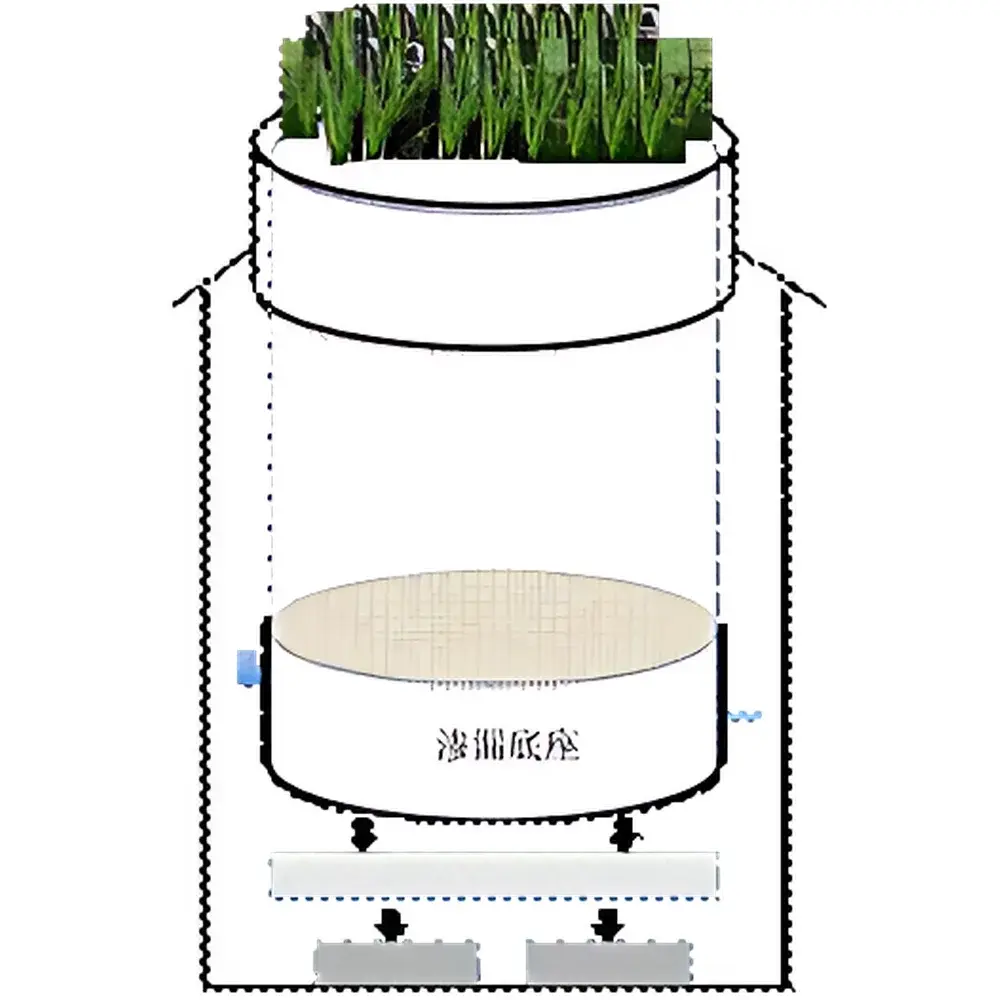
EcoTron Multi-Functional Micro-Lysimeter
| Origin | Beijing |
|---|---|
| Manufacturer Type | Distributor |
| Regional Origin | Domestic (China) |
| Model | Eco Tron |
| Price Range | USD 14,000–42,000 |
| Instrument Category | Multi-Functional Soil Analyzer |
| Soil Column Diameter | 20–60 cm |
| Soil Column Height | 20–80 cm |
| Wind Speed Range | 0–60 m/s ±3% |
| Wind Direction | 0–360° ±3° |
| Air Temperature | −40 to +55 °C ±0.2 °C |
| Relative Humidity | 1–100% RH ±3–5% |
| Atmospheric Pressure | 650–1100 hPa ±1 hPa |
| Rainfall Rate | 0–4 mm/min ±4% |
| Global Solar Radiation | 0–2000 W/m² ±5% |
| Evapotranspiration Resolution | 0.01 mm |
| Volumetric Water Content Range | 0–100% ±2% |
| VWC Resolution | 0.1% |
| Soil Temperature Range | −40 to +80 °C ±0.2 °C |
| TDR Probe Diameter | 8 mm |
| Tensiometer Probe Diameter | 3 mm |
| Tensiometer Resolution | 1 mbar |
| Soil Temperature Sensor Resolution | 0.01 °C |
| Data Logger | 8-channel TDR-compatible, supports >10 thermistor/tension sensors |
Overview
The EcoTron Multi-Functional Micro-Lysimeter is an engineered field and laboratory-scale lysimetric system designed for high-resolution, long-term quantification of soil water balance, solute transport, and plant–soil–atmosphere interactions. It operates on the fundamental principle of mass balance—specifically, the water balance equation P + I – ET – D – ΔS = 0 and the solute mass balance equation Dep + F – V – L – ΔM = 0, where ET represents evapotranspiration, P is precipitation, I is irrigation input, D is drainage, ΔS is change in soil water storage, Dep is atmospheric deposition, F is fertilizer or contaminant input, V is plant uptake and gaseous loss, L is leaching, and ΔM is net change in soil solute mass. As the only internationally recognized method grounded in direct volumetric water balance, micro-lysimetry provides traceable, physically constrained estimates of evapotranspiration—critical for validating remote sensing products, calibrating hydrological models, and assessing climate–ecosystem feedbacks across agroecosystems, grasslands, forests, and riparian wetlands.
Key Features
- Modular Soil Monolith Structure: Configurable PVC or stainless-steel soil columns (20–60 cm diameter × 20–80 cm height), enabling replication of native soil profiles or controlled reconstitution experiments.
- High-Precision Weighing Subsystem: Integrated with laboratory-grade analytical balances (not included) via load-bearing base and funnel-type drainage collector, supporting evapotranspiration resolution down to 0.01 mm.
- Multi-Parameter Environmental Monitoring: Co-located meteorological station with certified sensors for wind speed (cup anemometer, ±3%), wind direction (vane, ±3°), air temperature (thermistor, −40 to +55 °C, ±0.2 °C), relative humidity (capacitive, 1–100% RH, ±3–5%), barometric pressure (silicon piezoresistive, 650–1100 hPa, ±1 hPa), rainfall (tipping-bucket, 0–4 mm/min, ±4%), and global solar radiation (photovoltaic pyranometer, 0–2000 W/m², ±5%).
- TDR-Based Soil Moisture Profiling: 8-channel data logger compatible with time-domain reflectometry probes (8 mm diameter); measurement range 0–100% volumetric water content (VWC), accuracy ±2%, resolution 0.1%.
- High-Resolution Soil Tension & Temperature: Miniature tensiometers (3 mm probe diameter, 1 mbar resolution) and calibrated thermistors (−20 to +60 °C, 0.01 °C resolution) support simultaneous matric potential and thermal regime monitoring.
- Expandable Architecture: Supports optional minirhizotron imaging for in situ root growth analysis, NDVI/PRI spectral indices (EU-manufactured), groundwater level transducers, and integration with soil CO2 efflux chambers for coupled carbon–water cycle studies.
Sample Compatibility & Compliance
The EcoTron accommodates intact soil monoliths collected from diverse pedological settings—including loamy sand, clay loam, peat, and volcanic ash soils—as well as reconstructed columns for controlled experimental treatments. Its structural design complies with ISO 10381-7 (soil sampling—part 7: lysimeters) and aligns with ASTM D5127 (standard guide for lysimeter use in environmental research). All embedded sensors meet CE marking requirements for electromagnetic compatibility (EMC Directive 2014/30/EU) and low-voltage safety (LVD Directive 2014/35/EU). The data acquisition firmware supports audit-trail logging and user-access controls, facilitating adherence to GLP (Good Laboratory Practice) and GMP-aligned workflows in regulatory environmental monitoring programs.
Software & Data Management
Data collection is managed via a field-deployable 8-channel datalogger with non-volatile memory, real-time clock, and USB 2.0 interface for secure offline retrieval. Firmware supports configurable sampling intervals (1 min to 24 h), alarm thresholds, and sensor diagnostics. Raw time-series outputs are exported in CSV format compatible with MATLAB, R, Python (Pandas), and industry-standard hydrological modeling platforms (e.g., HYDRUS, SWAT, APSIM). Optional cloud-based telemetry modules (LTE-M/NB-IoT) enable remote parameter adjustment and automated data push to secure AWS S3 buckets. All metadata—including sensor calibration dates, installation depth, and soil horizon descriptors—is embeddable within file headers to ensure FAIR (Findable, Accessible, Interoperable, Reusable) data principles.
Applications
- Quantifying crop water use efficiency and irrigation scheduling under variable climate scenarios.
- Evaluating nitrate leaching risk and pesticide mobility in vadose zone hydrology.
- Validating satellite-derived evapotranspiration products (e.g., MOD16, SSEBop) at tower-footprint scale.
- Studying root architecture dynamics under drought or nutrient stress using integrated minirhizotrons.
- Assessing biogeochemical coupling between soil respiration, moisture hysteresis, and redox-sensitive element cycling (e.g., Fe, Mn).
- Supporting long-term ecological research (LTER) network protocols for ecosystem water budgets.
FAQ
What is the minimum detectable evapotranspiration increment?
The system achieves 0.01 mm resolution when paired with a 0.1 g precision balance and a 1 m² equivalent surface area column.
Can the EcoTron be deployed in frozen soils?
Yes—air temperature and soil temperature sensors operate down to −40 °C; however, TDR measurements are attenuated below −2 °C due to ice-phase dielectric effects; tensiometric readings remain valid above −10 °C.
Is calibration documentation provided for all sensors?
Each sensor ships with individual factory calibration certificates traceable to NIST or PTB standards, including temperature-dependent correction coefficients for humidity and radiation sensors.
How is data integrity ensured during extended unattended operation?
The datalogger implements cyclic redundancy check (CRC-32) on all stored records, automatic power-fail recovery, and write-protected memory sectors to prevent corruption during brownouts or battery depletion.
Does the system comply with FDA 21 CFR Part 11 for regulated environmental monitoring?
While not pre-certified, the audit-log architecture, electronic signature support, and role-based access control can be configured to meet Part 11 requirements for validated environmental compliance reporting.







