
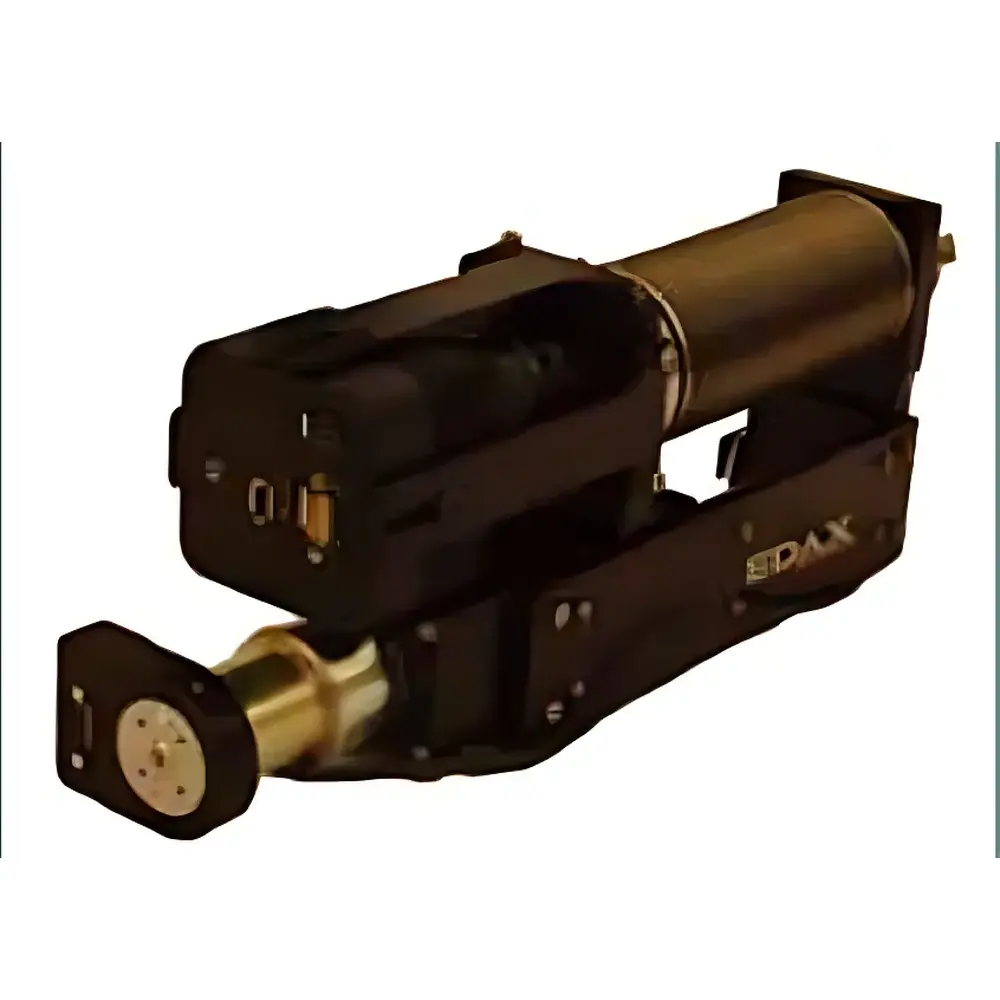
EDAX DigiView EBSD Camera System
| Brand | EDAX |
|---|---|
| Origin | USA |
| Manufacturer Type | Authorized Distributor |
| Product Origin | Imported |
| Model | DigiView |
| Pricing | Upon Request |
| CCD Resolution | 1392 × 1040 pixels |
| Readout Speeds | 20 MHz / 40 MHz |
| Angular Resolution | < 0.1° |
| Quantum Efficiency | > 62% @ 500 nm |
| Bit Depth | 12-bit digital output |
| Read Noise | < 8 e⁻ @ 20 MHz |
| Exposure Time Range | Up to 15 minutes |
| Cooling | Single-stage Peltier (fanless) |
| Interface | Gigabit Ethernet |
| Gain Control Range | 0–35 dB (fully adjustable) |
| Vacuum Compatibility | Bellows-mounted for in-chamber operation |
| Optional Feature | Integrated Fore-Scatter Detector (FSD) |
| Software Integration | Fully compatible with EDAX TEAM™ EBSD analysis suite |
Overview
The EDAX DigiView EBSD Camera System is a high-performance, vacuum-compatible digital imaging platform engineered specifically for Electron Backscatter Diffraction (EBSD) applications in scanning electron microscopy (SEM). Operating on the fundamental principle of capturing Kikuchi diffraction patterns generated by backscattered electrons from crystalline samples under electron beam irradiation, the DigiView camera delivers high-fidelity pattern acquisition essential for accurate crystallographic orientation mapping, phase identification, and microstructural quantification. Its design emphasizes signal fidelity, temporal resolution, and operational robustness within ultra-high vacuum (UHV) SEM chambers. The system integrates seamlessly with EDAX’s TEAM™ software suite—enabling real-time indexing, grain reconstruction, and texture analysis—while maintaining full compatibility with high-resolution EBSD (HR-EBSD) workflows requiring sub-pixel pattern shift detection.
Key Features
- High quantum efficiency (QE) interline CCD sensor (>62% at 500 nm), optimized for fluorescence screen emission spectra common in EBSD phosphor screens
- 1.4 megapixel resolution (1392 × 1040 active pixels) supporting fine-grained spatial sampling of Kikuchi bands
- Dual readout speeds (20 MHz and 40 MHz) enabling flexible trade-offs between frame rate and read noise—critical for low-dose or high-speed mapping
- Fanless single-stage Peltier cooling reduces thermal noise without introducing mechanical vibration or chamber contamination risks
- Ultra-low read noise (<8 e⁻ at 20 MHz) and 12-bit digitization ensure high dynamic range and reproducible intensity calibration across extended exposure durations
- Gigabit Ethernet interface provides deterministic data transfer, synchronized triggering, and remote configuration without latency bottlenecks
- Full software control over gain (0–35 dB), offset (black level), exposure time (1 ms to 15 min), and pixel binning modes via TEAM™ or third-party APIs
- Bellows-mounted vacuum feedthrough enables stable, drift-free positioning inside the SEM chamber while preserving vacuum integrity up to 10⁻⁷ mbar
- Optional integrated Fore-Scatter Detector (FSD) supports simultaneous acquisition of backscattered electron (BSE) topography alongside EBSD patterns for correlative microstructure analysis
Sample Compatibility & Compliance
The DigiView camera is compatible with standard SEM sample geometries and tilt angles typical for EBSD (e.g., 70° sample tilt). It supports both conventional and high-resolution EBSD configurations—including pattern-shifting techniques requiring sub-pixel stability—and has been validated for use with a wide range of conductive and non-conductive crystalline materials (metals, ceramics, geological specimens, and semiconductor wafers) when paired with appropriate charge mitigation strategies. The system complies with CE marking requirements for electromagnetic compatibility (EMC) and low-voltage directives. While not a standalone regulated device, its integration into SEM-based analytical workflows aligns with ISO/IEC 17025 quality management principles for testing laboratories and supports audit-ready data acquisition when used with TEAM™ software configured for GLP/GMP environments (e.g., traceable metadata logging, user access controls, and electronic signatures per FDA 21 CFR Part 11 guidelines).
Software & Data Management
DigiView operates exclusively through EDAX’s TEAM™ EBSD software platform, which provides comprehensive instrument control, real-time image processing, and automated pattern indexing. TEAM™ implements advanced noise suppression algorithms—including adaptive median filtering and Poisson-constrained deconvolution—to enhance band contrast prior to Hough transform-based indexing. All acquired frames are timestamped and embedded with hardware metadata (exposure, gain, binning, detector position), ensuring full traceability for scientific reproducibility. Raw image data is stored in vendor-neutral formats (e.g., TIFF with embedded EXIF tags) and can be exported for third-party analysis using open-source libraries such as MTEX or commercial packages like HKL Channel 5. The Gigabit Ethernet interface supports streaming to local NVMe storage arrays, enabling sustained acquisition rates up to 200 indexed patterns per second with >99% indexing success under optimal conditions.
Applications
- Grain boundary characterization and misorientation analysis in polycrystalline alloys and additively manufactured components
- Crystallographic texture quantification in rolled sheet metals, extruded profiles, and thin-film coatings
- Deformation mechanism studies via kernel average misorientation (KAM) and geometrically necessary dislocation (GND) density mapping
- Phase distribution mapping in multiphase steels, superalloys, and mineral assemblages
- HR-EBSD strain mapping with sub-microradian angular sensitivity for elastic strain field reconstruction
- In-situ heating/cooling experiments where thermal drift compensation and long-exposure stability are required
- Correlative EBSD–EDS–BSE analysis using synchronized acquisition modes enabled by FSD integration
FAQ
What vacuum level is required for DigiView operation?
The DigiView camera is rated for continuous operation at vacuum levels down to 10⁻⁷ mbar; bellows mounting ensures no outgassing or seal degradation during extended use.
Can DigiView be retrofitted onto existing SEMs?
Yes—DigiView is compatible with most modern SEM platforms equipped with standard EBSD port flanges (CF63 or CF100); mechanical and electrical integration kits are available from EDAX authorized distributors.
Does DigiView support binning modes?
Yes—hardware binning (2×2, 4×4) is supported to increase frame rate or improve signal-to-noise ratio in low-intensity regimes, configurable via TEAM™ software.
Is the FSD option required for standard EBSD?
No—the Fore-Scatter Detector is optional and primarily beneficial for correlative BSE/EBSD studies; standard EBSD functionality remains fully operational without it.
How is calibration maintained across long-term deployments?
TEAM™ software includes automated calibration routines that reference known crystal standards (e.g., Si, Ni, Al); all calibration parameters are version-controlled and exportable for audit purposes.




