
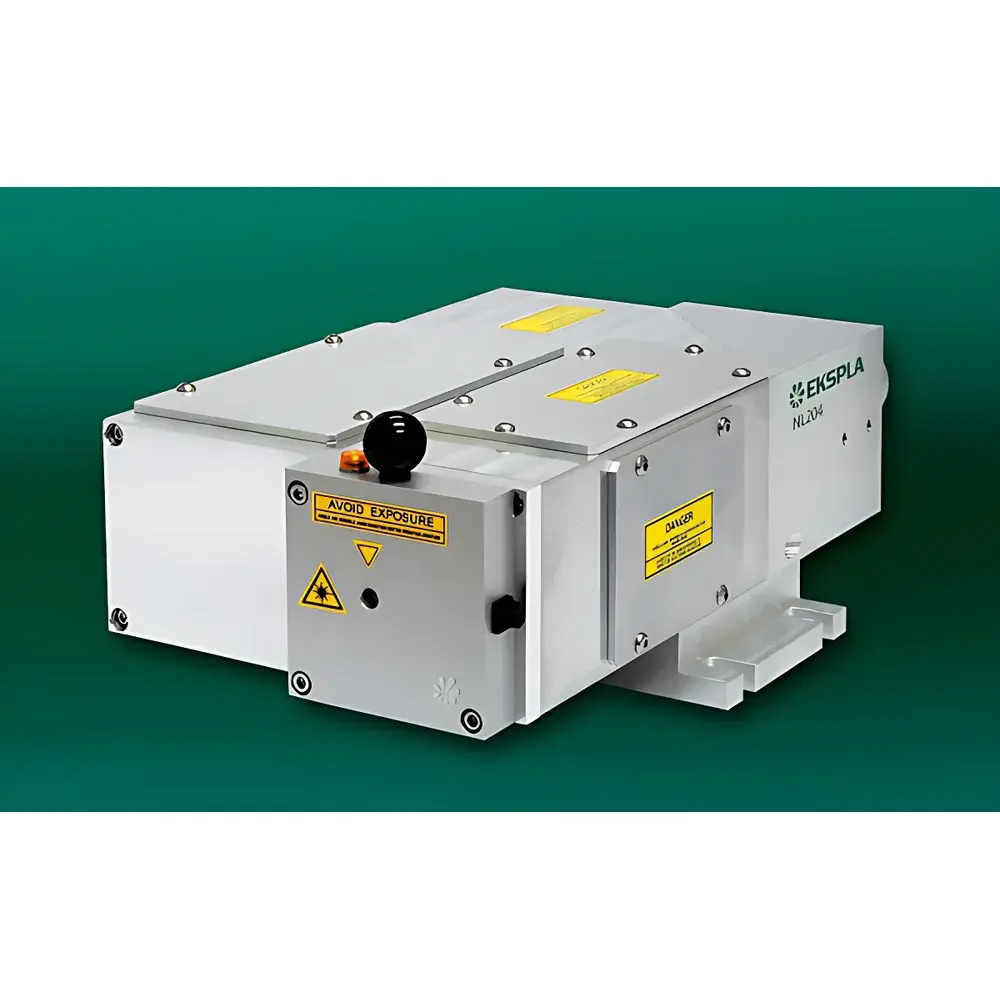
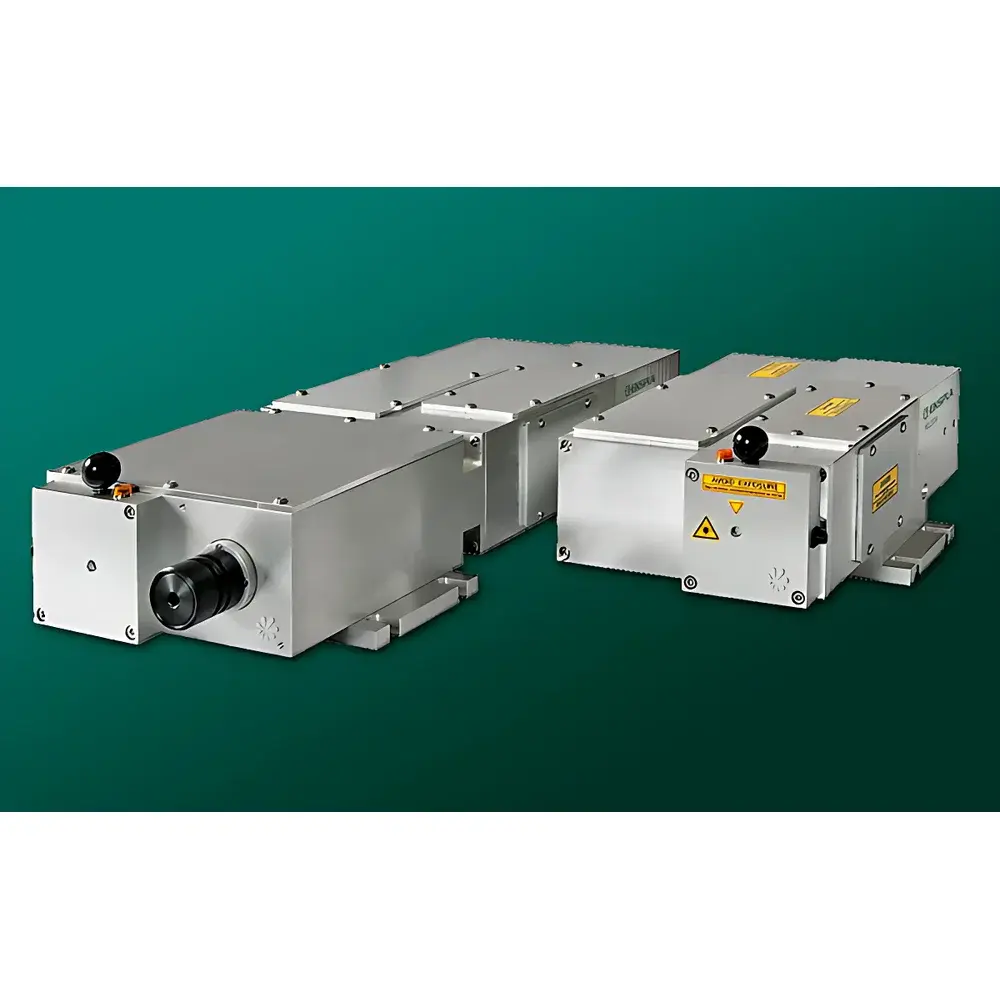
Ekspla NL200 Series Diode-Pumped Q-Switched Nd:YAG Nanosecond Laser
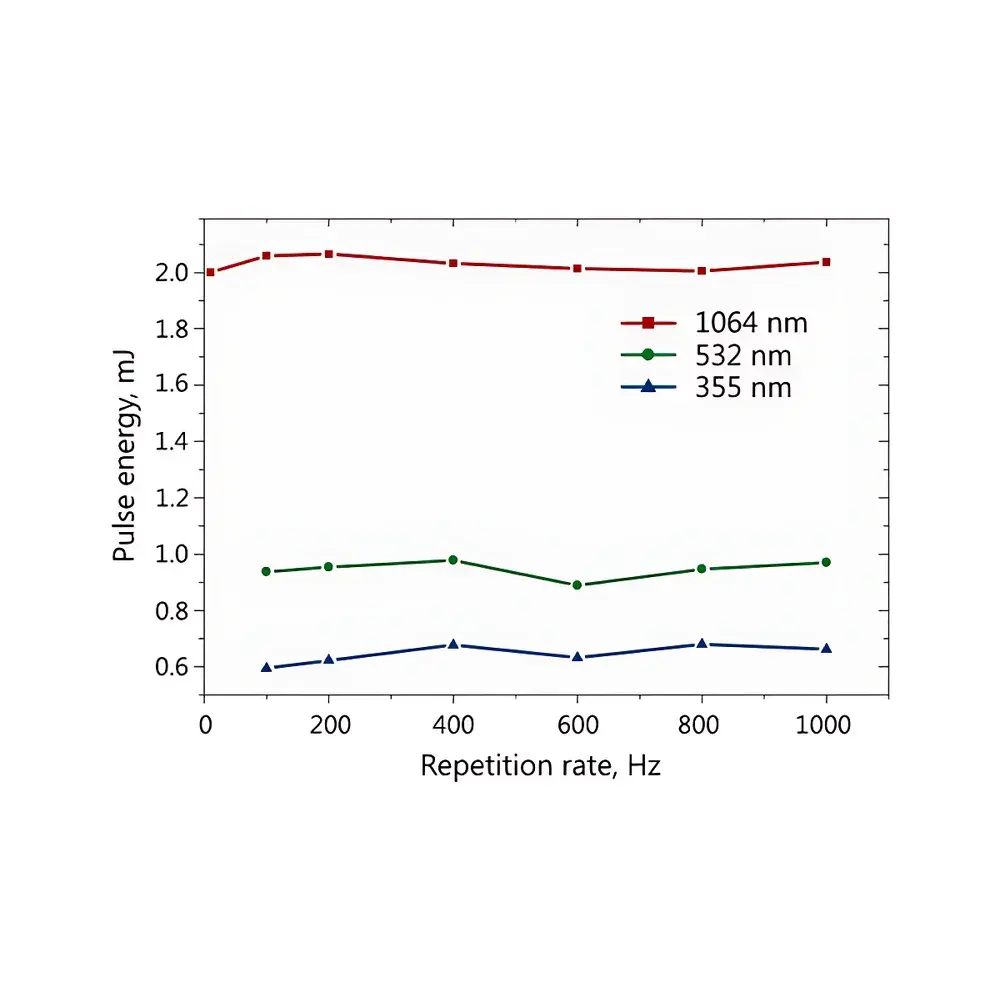
| Pulse Energy | up to 4 mJ @ 1064 nm |
|---|---|
| Repetition Rate | up to 2500 Hz |
| Wavelengths | 1064 nm, 532 nm, 355 nm, 266 nm, 213 nm |
| Pulse Duration | ~6.5 ns @ 1064 nm |
| Q-Switching | Electro-optical |
| Cooling | Air-cooled |
| Operation Mode | Turn-key, sealed cavity, USB/CAN/remote pad control |
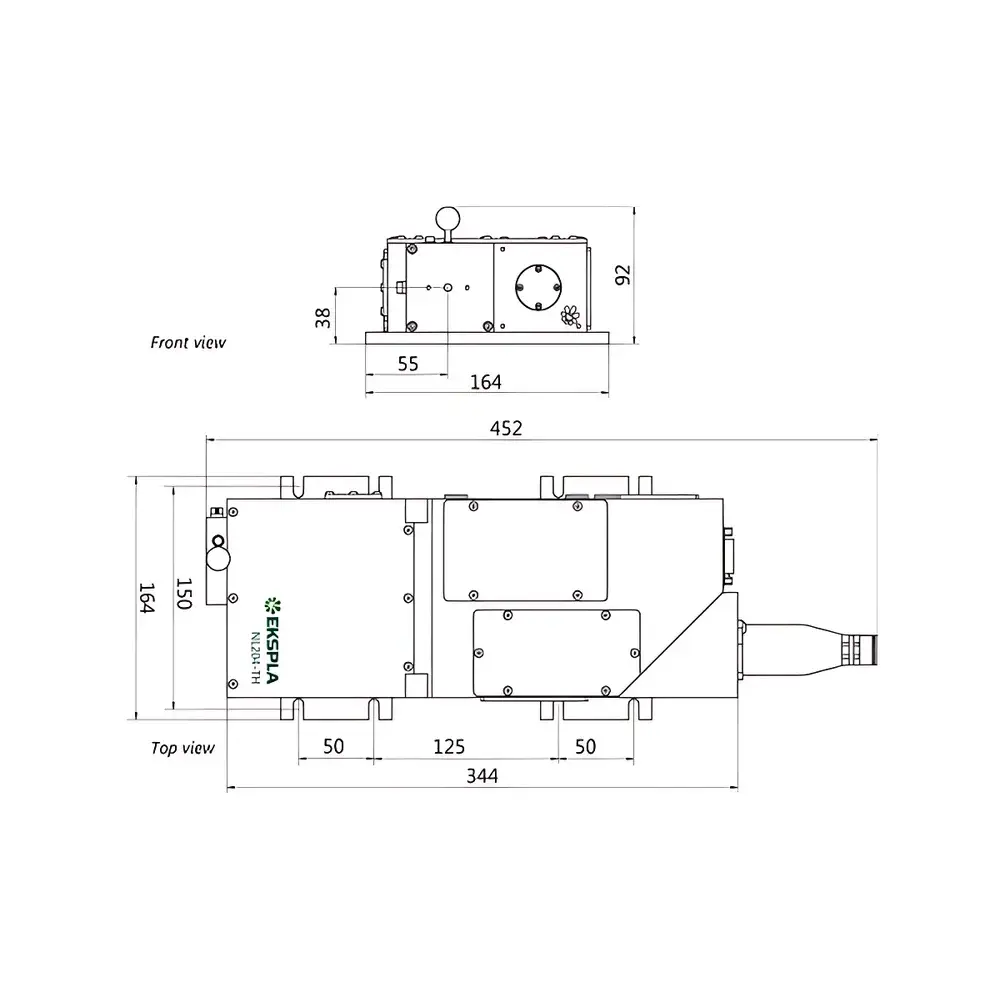
| Dimensions | Extremely compact, end-pumped architecture |
Overview
The Ekspla NL200 Series is a high-reliability, diode-pumped, electro-optically Q-switched Nd:YAG nanosecond laser engineered for precision applications requiring stable pulse energy, short temporal profiles, and multi-wavelength flexibility. Operating on the fundamental 1064 nm transition of neodymium-doped yttrium aluminum garnet (Nd:YAG), the system leverages end-pumping geometry to achieve exceptional beam quality and mechanical stability within a minimized footprint. The laser’s core architecture integrates a hermetically sealed resonator cavity, eliminating sensitivity to ambient humidity and particulate contamination—critical for long-term operation in industrial cleanrooms or field-deployable spectroscopic platforms. Pulse generation follows standard Q-switched dynamics: population inversion is built via diode pumping, then rapidly released through controlled electro-optic switching, yielding Gaussian-like temporal profiles with typical full-width-at-half-maximum (FWHM) durations of approximately 6.5 ns at 1064 nm. This nanosecond-scale pulse width enables efficient nonlinear optical conversion while maintaining sufficient peak power (>600 MW at 4 mJ) for ablation, plasma generation, and time-resolved photophysical studies.
Key Features
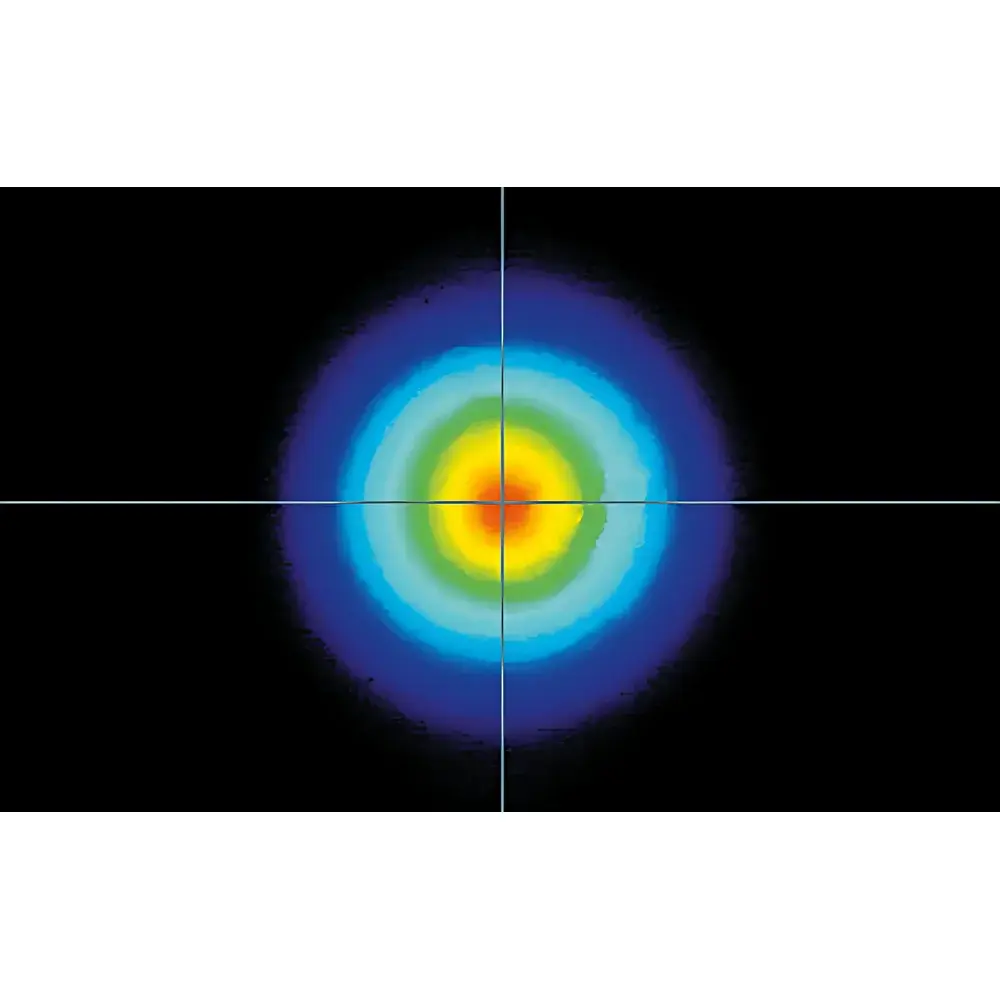
- End-pumped Nd:YAG architecture delivering high spatial mode quality (M² < 1.3) and superior pointing stability (< 5 µrad RMS over 8 hours)
- Electro-optic Q-switching ensuring precise timing control, jitter < 1 ns RMS relative to external TTL trigger input
- Variable repetition rate from single-shot to 2500 Hz, programmable via USB, CAN bus, or front-panel remote pad
- Integrated harmonic generation modules supporting simultaneous or interchangeable output at 532 nm (second harmonic), 355 nm (third harmonic), 266 nm (fourth harmonic), and 213 nm (fifth harmonic)
- Air-cooled design with no external chiller requirement; thermal management optimized for continuous duty cycle at maximum rep rate
- Turn-key operation with embedded microcontroller-based diagnostics, including real-time pulse energy monitoring, temperature logging, and interlock status reporting
- Hermetically sealed optical cavity with desiccant-free internal environment, rated for >20,000 operating hours under GLP-compliant usage conditions
Sample Compatibility & Compliance
The NL200 series is compatible with a broad range of optical materials, including fused silica, BK7, CaF₂, and UV-grade quartz optics—enabling integration into custom beam delivery systems for laser-induced breakdown spectroscopy (LIBS), time-of-flight mass spectrometry (TOF-MS), and remote LIDAR platforms. Its wavelength options comply with ISO 11551 (laser power/energy measurement standards) and meet Class 4 laser safety requirements per IEC 60825-1:2014. When operated with optional harmonics, the system supports alignment and calibration traceable to NIST-traceable radiometric standards. For regulated environments, firmware supports audit-ready logging (timestamped event records, user access logs) aligned with FDA 21 CFR Part 11 principles when deployed with validated third-party data acquisition software.
Software & Data Management
Control is facilitated through Ekspla’s proprietary NL Control Suite (v3.2+), a Windows-based application supporting real-time parameter adjustment, automated sequence scripting, and synchronized data capture from external detectors (e.g., photodiodes, oscilloscopes). USB 2.0 and CAN 2.0B interfaces enable deterministic command-response latency (< 5 ms). All operational parameters—including pulse energy history, cavity temperature, Q-switch voltage, and repetition rate—are logged in CSV-compatible format with UTC timestamps. Optional API libraries (C/C++, Python, LabVIEW) allow integration into larger automation frameworks compliant with SECS/GEM or OPC UA protocols. Firmware updates preserve configuration integrity and support rollback to prior certified versions—a requirement for GMP-aligned manufacturing validation.
Applications
- Pulsed laser deposition (PLD) of thin films, particularly for complex oxides and nitrides where stoichiometric transfer requires stable pulse-to-pulse energy (≤ ±0.75% RMS over 1 hour)
- Intravolume marking of transparent dielectrics (e.g., Gorilla Glass, sapphire) using non-linear absorption at 355 nm or 266 nm
- Laser ablation inductively coupled plasma mass spectrometry (LA-ICP-MS) sample introduction systems demanding <1% pulse energy drift across multi-hour runs
- Time-resolved fluorescence lifetime imaging (FLIM) and pump-probe spectroscopy utilizing externally triggered, jitter-controlled pulses
- Atmospheric remote sensing via differential absorption LIDAR (DIAL) at 266 nm and 355 nm, leveraging narrow linewidth (< 0.1 cm⁻¹) and high spectral purity
- Calibration source for photodetector linearity testing and optical power meter validation across UV–NIR bands
FAQ
What is the maximum average power achievable at 1064 nm?
At 2500 Hz and 4 mJ/pulse, the theoretical average power is 10 W; however, derating to 8.5 W is recommended for continuous operation to ensure thermal equilibrium and long-term diode lifetime.
Can the NL200 be integrated into a Class 100 cleanroom environment?
Yes—the sealed cavity, absence of outgassing adhesives, and RoHS-compliant construction meet ISO 14644-1 Class 5 particulate limits when installed with appropriate vibration isolation.
Is fifth-harmonic generation (213 nm) available as a factory-installed option?
Yes, 213 nm output is supported via cascaded fourth–fifth harmonic generation and requires optional BBO or CLBO crystal sets; it is offered as a configurable module at time of order.
Does the system support synchronization with external cameras or delay generators?
Yes—TTL-compatible sync outputs (rising-edge triggered, 5 V CMOS) are provided for master–slave timing; jitter between laser pulse and sync signal is ≤ 0.8 ns RMS.
What maintenance intervals are specified for the Q-switch crystal and pump diodes?
No scheduled replacement is required under normal operating conditions; diode lifetime exceeds 20,000 hours at rated current, and EO crystals are rated for >10⁹ shots at full energy.





