
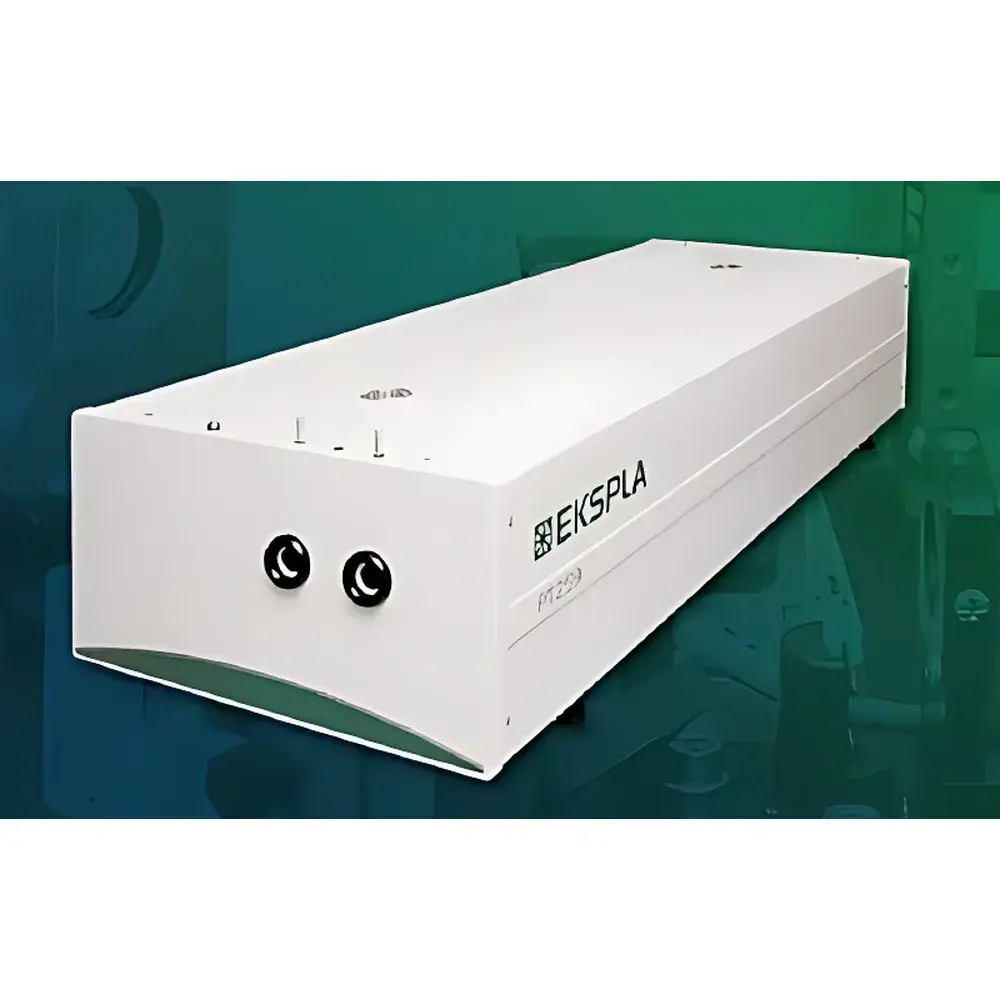
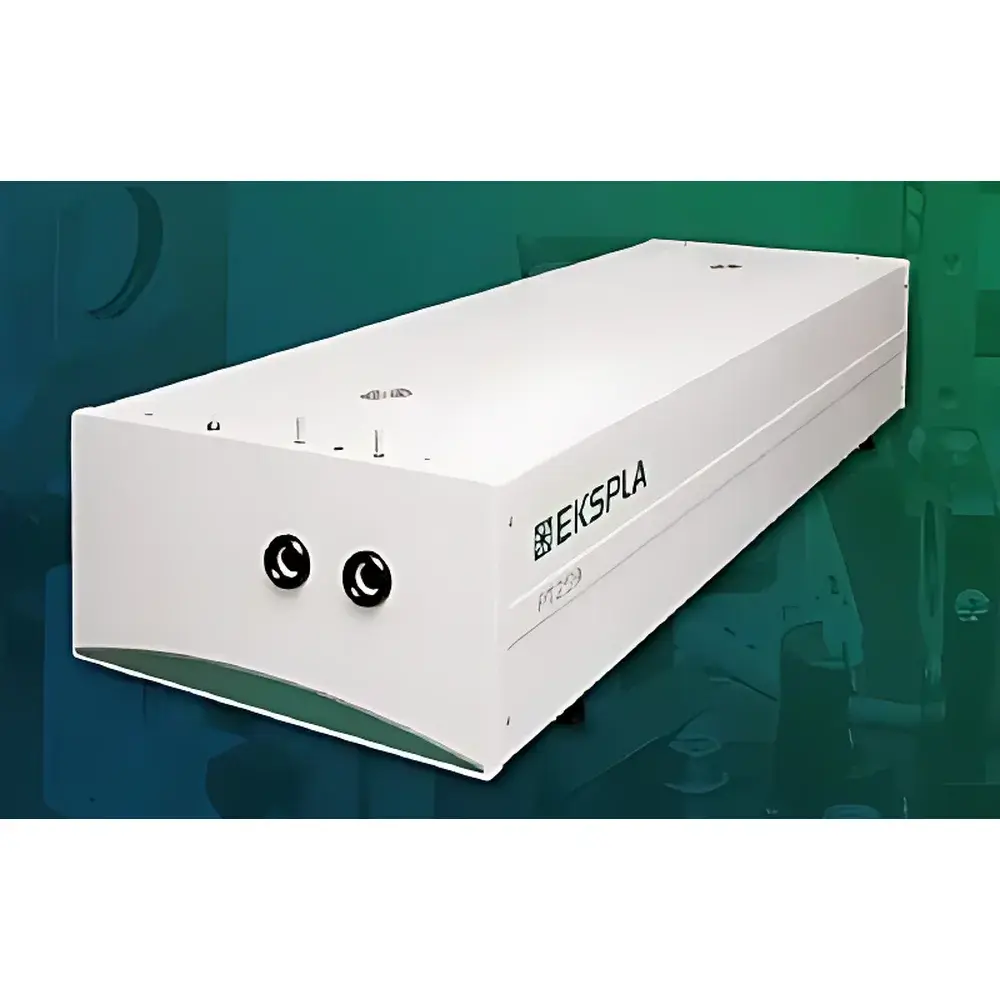
Ekspla PT200 Series Picosecond Tunable Optical Parametric Oscillator Laser System
| Brand | Ekspla |
|---|---|
| Origin | Lithuania |
| Manufacturer Type | OEM Manufacturer (not distributor) |
| Product Type | Imported |
| Model | PT200 |
| Core Architecture | Diode-Pumped Solid-State (DPSS) Pump Laser + Integrated Picosecond Optical Parametric Oscillator (OPO) |
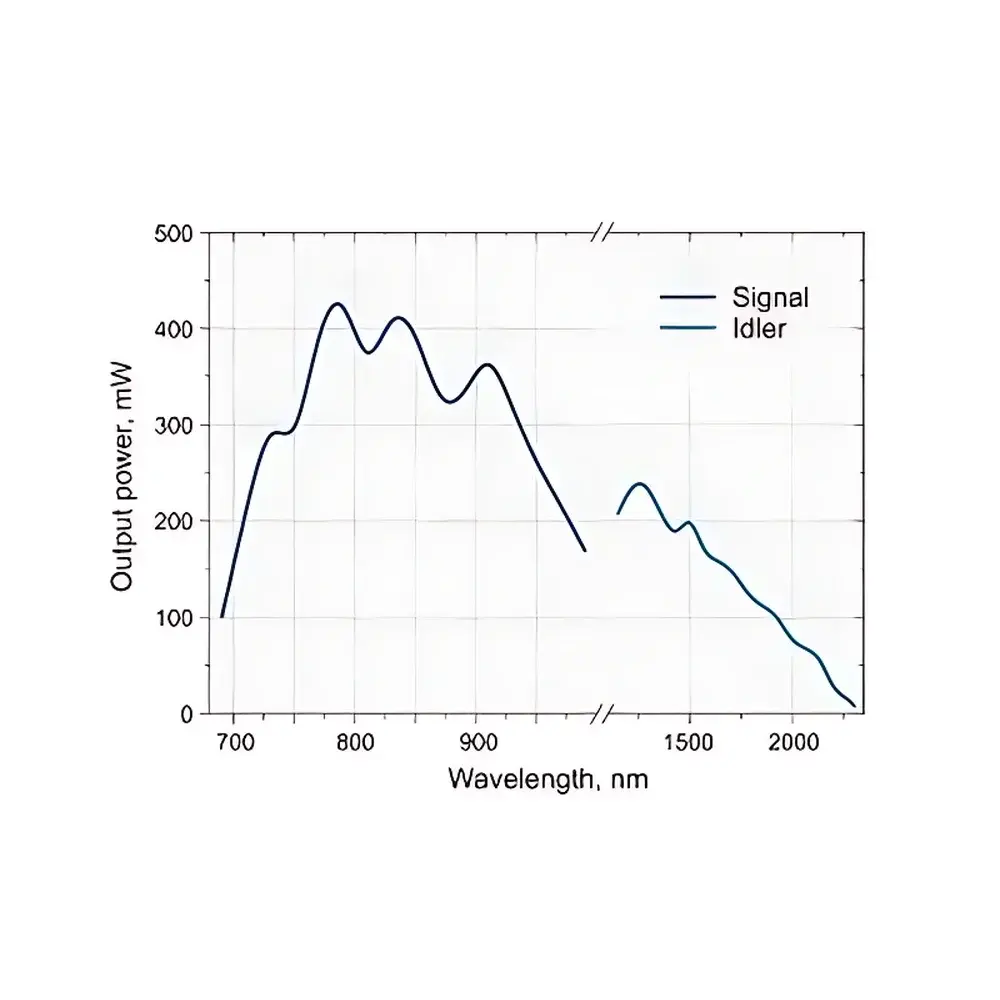
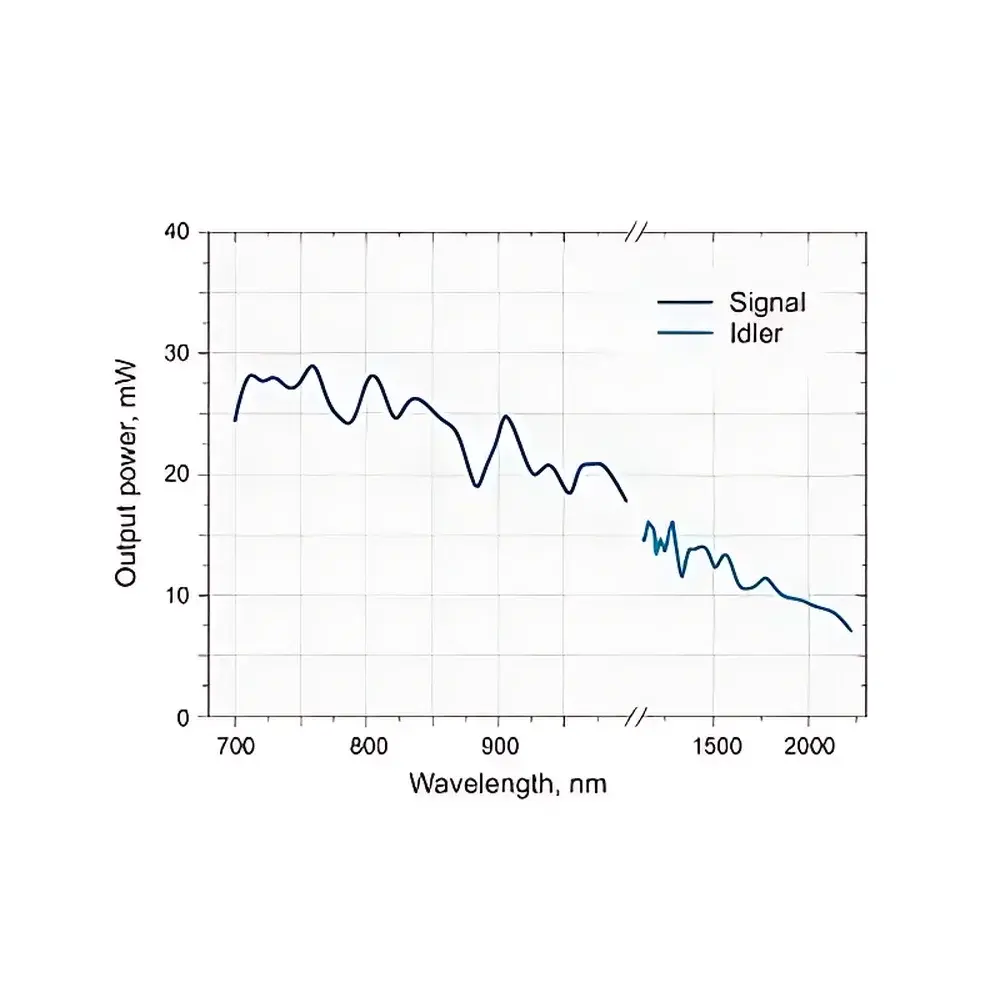
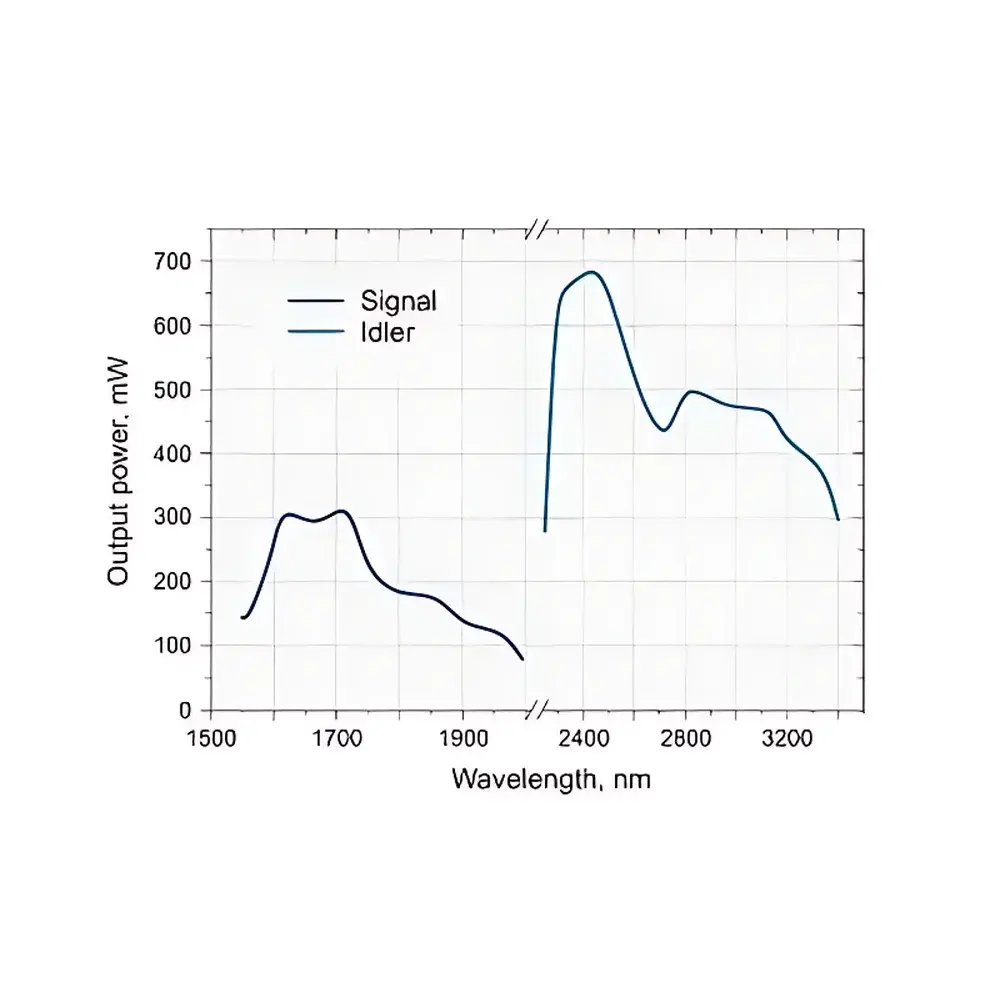
| Tuning Range | 690–3400 nm (standard), optional UV extension via SHG |
| Pulse Duration | 5 ps (PT257/PT259), 70 ps (PT277) |
| Repetition Rate | 1 MHz (PT259), 88 MHz (PT257/PT277) |
| Peak Power | Up to 5 kW |
| Beam Quality | M² ≤ 1.3 (nearly diffraction-limited) |
| Linewidth | <0.3 cm⁻¹ (FT-limited, PT277) |
| Output Monitoring | Optional integrated wavelength meter |
| Control Interface | USB (standard), RS232 (optional), LabVIEW™ drivers included |
| Compliance | CE-marked, RoHS-compliant, designed for GLP/GMP-adjacent research environments |
Overview
The Ekspla PT200 Series represents a class of fully integrated, microprocessor-controlled picosecond tunable laser systems engineered for high-precision nonlinear optical spectroscopy and microscopy. At its core, each PT200 system combines a diode-pumped solid-state (DPSS) Nd:YVO₄ pump laser with a synchronously pumped, temperature-stabilized optical parametric oscillator (OPO) in a single rigid optomechanical housing. This monolithic architecture eliminates inter-unit alignment drift, significantly enhancing long-term pointing stability and reducing thermal sensitivity—critical for multi-day CARS or two-photon experiments requiring sub-wavenumber reproducibility. The system operates on the principle of parametric amplification in nonlinear crystals (e.g., BBO, KTA, or PPLN depending on model), enabling continuous, software-driven wavelength tuning across 690–3400 nm with <0.1 nm step resolution. The 5 ps or 70 ps pulse durations—depending on model—are intrinsically synchronized to the pump laser’s repetition rate (1 MHz or 88 MHz), ensuring temporal fidelity essential for time-resolved fluorescence, coherent anti-Stokes Raman scattering (CARS), and pump-probe studies.
Key Features
- Monolithic DPSS-OPO integration ensures mechanical and thermal stability, minimizing realignment requirements over extended operation cycles.
- Microstepping motor-driven wavelength tuning with closed-loop feedback enables repeatable, automated spectral scans without manual recalibration.
- Precise bidirectional Peltier-based crystal temperature control (±0.02 °C stability) allows rapid, hysteresis-free tuning across broad spectral regions—including mid-IR generation in PT277 (2.5–3.4 µm).
- Nearly Fourier-transform-limited spectral linewidth (<0.3 cm⁻¹ for PT277) supports high-resolution vibrational spectroscopy and narrowband excitation in heterogeneous samples.
- Collinear dual-wavelength output option (e.g., signal + idler) is factory-aligned for CARS applications, eliminating external beam combiners and associated dispersion compensation complexity.
- Integrated USB interface with native LabVIEW™ drivers, SCPI-compatible command set, and optional RS232 support enable seamless integration into automated microscope platforms or custom DAQ systems.
Sample Compatibility & Compliance
The PT200 series is compatible with standard optical tables, inverted and upright confocal microscopes, vacuum-compatible sample chambers, and cryogenic stages (with appropriate beam path isolation). Its near-diffraction-limited beam (M² ≤ 1.3 across full tuning range) couples efficiently into single-mode fibers and high-NA microscope objectives (e.g., 0.9–1.4 NA oil immersion). All models comply with IEC 60825-1:2014 (laser safety Class IV), CE Directive 2014/30/EU (EMC), and RoHS 2011/65/EU. While not certified for clinical or GMP manufacturing use, the system’s deterministic tuning repeatability, audit-trail-capable software logging (via LabVIEW™ or third-party platforms), and stable output power meet technical prerequisites for GLP-conforming academic and industrial R&D labs performing ASTM E1847 (Raman spectroscopy) or ISO 21542 (vibrational analysis of surfaces) protocols.
Software & Data Management
Control is executed via Ekspla’s proprietary PT200 Manager application (Windows 10/11, 64-bit), which provides real-time wavelength readout, power monitoring, crystal temperature tracking, and automated scan scripting. All parameters—including pulse energy, repetition rate, and OPO cavity alignment offsets—are logged with timestamps and user-defined metadata. LabVIEW™ drivers expose low-level VIs for advanced synchronization with TCSPC modules, galvo scanners, or shutter controllers. Raw wavelength calibration data (grating position vs. output λ) is stored in HDF5 format, supporting traceability per ISO/IEC 17025:2017 clause 7.7. No cloud connectivity or remote firmware updates are implemented; all configuration changes require local authenticated access—aligning with institutional IT security policies for regulated research environments.
Applications
- CARS microscopy: Simultaneous generation of pump (e.g., 800 nm) and Stokes (e.g., 1040 nm) beams enables label-free chemical imaging of lipids, proteins, and pharmaceutical crystallinity at subcellular resolution.
- Two-photon fluorescence microscopy: High peak power (>5 kW) and 88 MHz repetition rate optimize photon yield in deep-tissue imaging using red-shifted fluorophores (e.g., mCherry, tdTomato).
- Vibrational sum-frequency generation (VSFG) and infrared absorption spectroscopy: PT277’s narrow linewidth and mid-IR coverage support surface-specific vibrational analysis of catalysts, membranes, and 2D materials.
- Time-resolved laser-induced fluorescence (TRLIF): UV extension (via optional SHG) enables nanosecond-to-picosecond lifetime measurements in environmental sensing and nuclear fuel cycle analytics.
- Coherent Raman scattering spectroscopy: Tuning across 1000–4000 cm⁻¹ Raman shift range allows quantitative mapping of molecular vibrations without dye labeling—particularly valuable in biophotonics and polymer science.
FAQ
What distinguishes the PT257, PT259, and PT277 models?
The PT257 delivers high average power (≥400 mW at 800 nm) at 88 MHz for high-sensitivity two-photon imaging; the PT259 operates at 1 MHz with higher peak power for time-gated detection schemes; the PT277 prioritizes spectral purity in the mid-IR (2.5–3.4 µm) with <0.3 cm⁻¹ linewidth for high-resolution vibrational spectroscopy.
Is wavelength calibration traceable to NIST standards?
While the PT200 does not include factory-certified NIST-traceable calibration, its internal wavelength meter option (when installed) references a stabilized HeNe laser and can be cross-validated against NIST-traceable spectral lamps (e.g., Hg/Ar) per user-defined SOPs.
Can the system operate under vacuum or in inert gas environments?
Yes—the laser head is sealed and rated for operation in dry nitrogen or argon purge environments; optional vacuum feedthroughs for beam exit are available upon request.
Does the system support external triggering or synchronization?
All models accept TTL input for master-slave synchronization and provide programmable delay outputs for coordinating detectors, shutters, or scanning mirrors with sub-nanosecond jitter.
What maintenance is required beyond routine optics cleaning?
No consumables or periodic alignment services are specified. The thermally stabilized OPO crystal and solid-state pump laser ensure >20,000 hours MTBF; only annual verification of wavelength accuracy and beam pointing stability is recommended per ISO 10110-5.




