
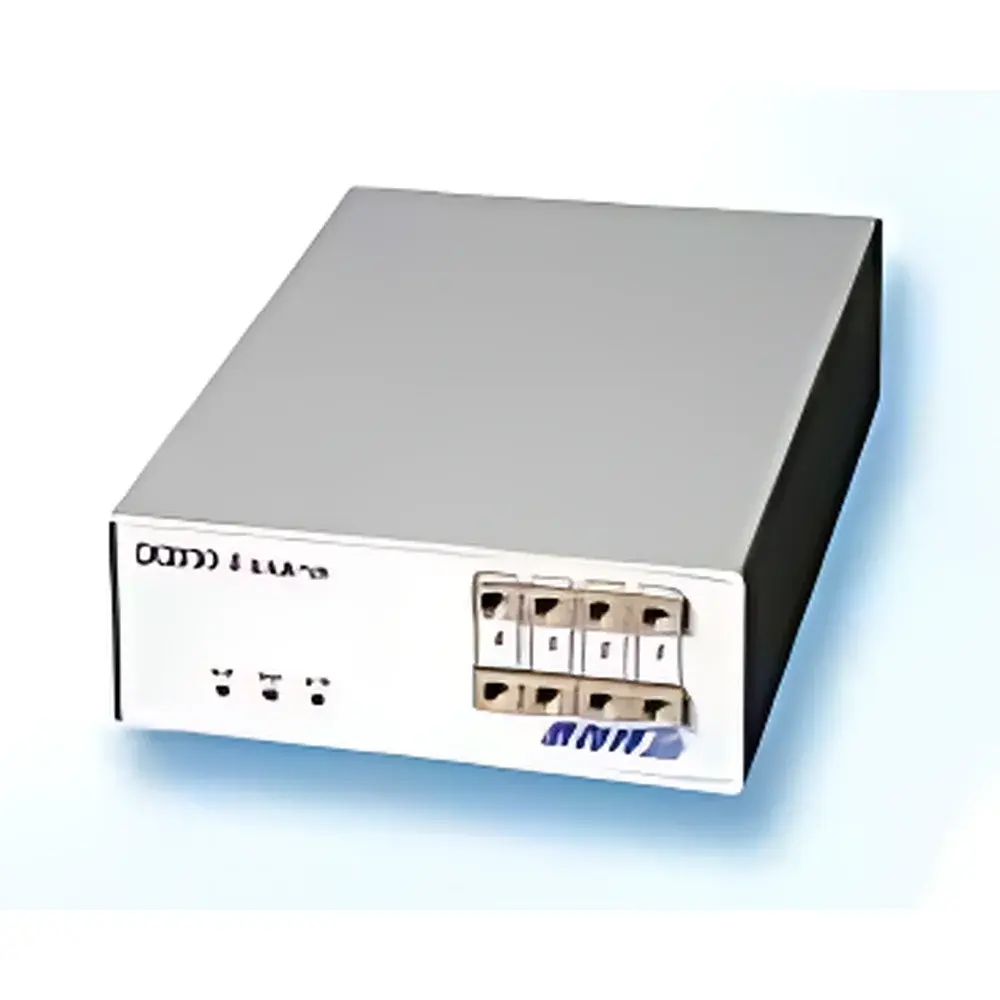
Elite DG230 Online Degasser
| Brand | Elite |
|---|---|
| Origin | Liaoning, China |
| Manufacturer Type | Manufacturer |
| Product Category | Domestic |
| Model | DG230 |
| Instrument Type | Conventional High-Performance Liquid Chromatography (HPLC) System Component |
| Application Scope | Universal HPLC Solvent Degassing |
| Number of Channels | 2–5 |
| Max Flow per Channel | 10 mL/min |
| Degassing Membrane Material | Teflon® AF |
| Rated Pressure (Full Flow) | 0.48 MPa |
| Channel Volume | 480 µL |
| Internal Diameter | 1.2 mm |
| Pressure Drop | 3.9 mmHg/(mL/min) |
| Power Supply | DC 15–24 V |
| Dimensions | 190 × 140 × 56 mm |
Overview
The Elite DG230 Online Degasser is an engineered solution for continuous, high-efficiency removal of dissolved gases from HPLC mobile phases—critical for maintaining baseline stability, detector sensitivity, and chromatographic resolution during gradient elution. Operating on Henry’s Law principle, the DG230 subjects solvents to a precisely controlled vacuum environment within sealed, membrane-based degassing chambers. Dissolved gases (e.g., O₂, N₂, CO₂) permeate selectively through ultra-permeable amorphous fluoropolymer (Teflon® AF) tubing walls into the vacuum cavity, where they are continuously evacuated. Unlike conventional degassers relying on intermittent vacuum pump cycling—and thus subject to pressure transients—the DG230 employs a ZHCR® (Zero-Hysteresis Constant-Run) vacuum system: a microstepping motor drives a dual-stroke diaphragm pump in continuous low-speed operation to sustain stable vacuum, with transient high-speed bursts only during initial chamber evacuation. This architecture eliminates vacuum lag, prevents baseline drift, and ensures reproducible retention times across extended analytical runs.
Key Features
- Teflon® AF membrane technology—50× higher gas permeability vs. standard PTFE—enables rapid equilibration, minimal channel volume (480 µL), and compact footprint (190 × 140 × 56 mm)
- ZHCR® vacuum system: stepper-motor-controlled diaphragm pump operates continuously without solenoid valves; eliminates pressure pulsation and mechanical wear associated with on/off cycling
- Integrated vacuum sensor and microcontroller perform real-time monitoring, automatic self-diagnostics, and fault-triggered shutdown with visual alert
- Chemically inert fluid path: all-wetted surfaces consist of PTFE diaphragms and Teflon® AF tubing—compatible with acetonitrile, methanol, water, THF, and common HPLC-grade buffers (pH 1–14)
- Configurable 2–5 independent degassing channels, each rated for ≤10 mL/min at up to 0.48 MPa backpressure—designed for seamless integration upstream of HPLC quaternary or binary pumps
- Low acoustic emission (<42 dB(A)) and negligible pressure drop (3.9 mmHg per mL/min) preserve flow consistency and reduce system vibration transmission
Sample Compatibility & Compliance
The DG230 is validated for use with standard reversed-phase, HILIC, ion-pairing, and aqueous normal-phase HPLC mobile phases. Its non-metallic, fluoropolymer-only fluidic path ensures no leaching, catalytic degradation, or metal ion contamination—supporting trace-level analysis per USP , ICH Q2(R2), and ASTM D7260-22 guidelines. The device complies with IEC 61010-1 for laboratory electrical safety and meets CE marking requirements for electromagnetic compatibility (EMC Directive 2014/30/EU). While not certified under FDA 21 CFR Part 11, its vacuum stability, audit-ready status indicators, and deterministic operational logic align with GLP/GMP data integrity expectations for regulated laboratories performing method validation or stability-indicating assays.
Software & Data Management
The DG230 operates as a standalone hardware module with no embedded software stack or network interface. All control and monitoring are handled via analog circuitry and discrete logic—ensuring deterministic response, zero firmware vulnerabilities, and immunity to OS-level interruptions. Vacuum status, fault conditions, and power-on self-test results are communicated via LED indicators (green = nominal, red = vacuum loss or sensor fault). For integration into automated workflows, optional dry-contact relay outputs (available upon request) support external interlock signaling to HPLC pump controllers or LIMS event logging systems. No drivers, SDKs, or configuration utilities are required—installation consists solely of solvent line routing and DC power connection.
Applications
- Stabilizing UV-Vis and fluorescence detector baselines during multi-solvent gradient methods (e.g., peptide mapping, pharmaceutical impurity profiling)
- Preventing bubble formation in low-pressure mixing modules and electrochemical detectors
- Enabling reproducible retention time alignment across multi-day sequence runs in QC release testing
- Supporting UHPLC systems requiring sub-100 nL dead-volume compatibility and minimal backpressure contribution
- Maintaining consistent mobile phase composition in preparative HPLC systems operating at >10 mL/min aggregate flow
- Reducing oxidative degradation of labile analytes (e.g., catecholamines, sulfonamides) by minimizing dissolved oxygen exposure
FAQ
What vacuum level does the DG230 maintain?
The system sustains a stable vacuum of approximately 15–25 kPa absolute (110–190 mmHg), optimized for maximum gas removal efficiency without inducing solvent boiling or membrane stress.
Can the DG230 be used with aggressive solvents like DMSO or chloroform?
Teflon® AF exhibits excellent chemical resistance, but prolonged exposure to DMSO, chlorinated hydrocarbons, or strong oxidizers (e.g., perchloric acid) is not recommended; consult Elite’s chemical compatibility chart prior to deployment.
Is calibration required?
No user calibration is needed—the vacuum sensor is factory-trimmed and drift-compensated via embedded temperature compensation algorithms.
How does the DG230 handle solvent switching during method development?
Its rapid equilibrium time (<60 seconds after flow initiation or solvent change) ensures consistent degassing performance across mobile phase transitions without manual intervention.
Does it support remote monitoring via Ethernet or USB?
No—this is a purpose-built analog hardware module designed for reliability and interference-free operation in electromagnetically noisy lab environments.




