
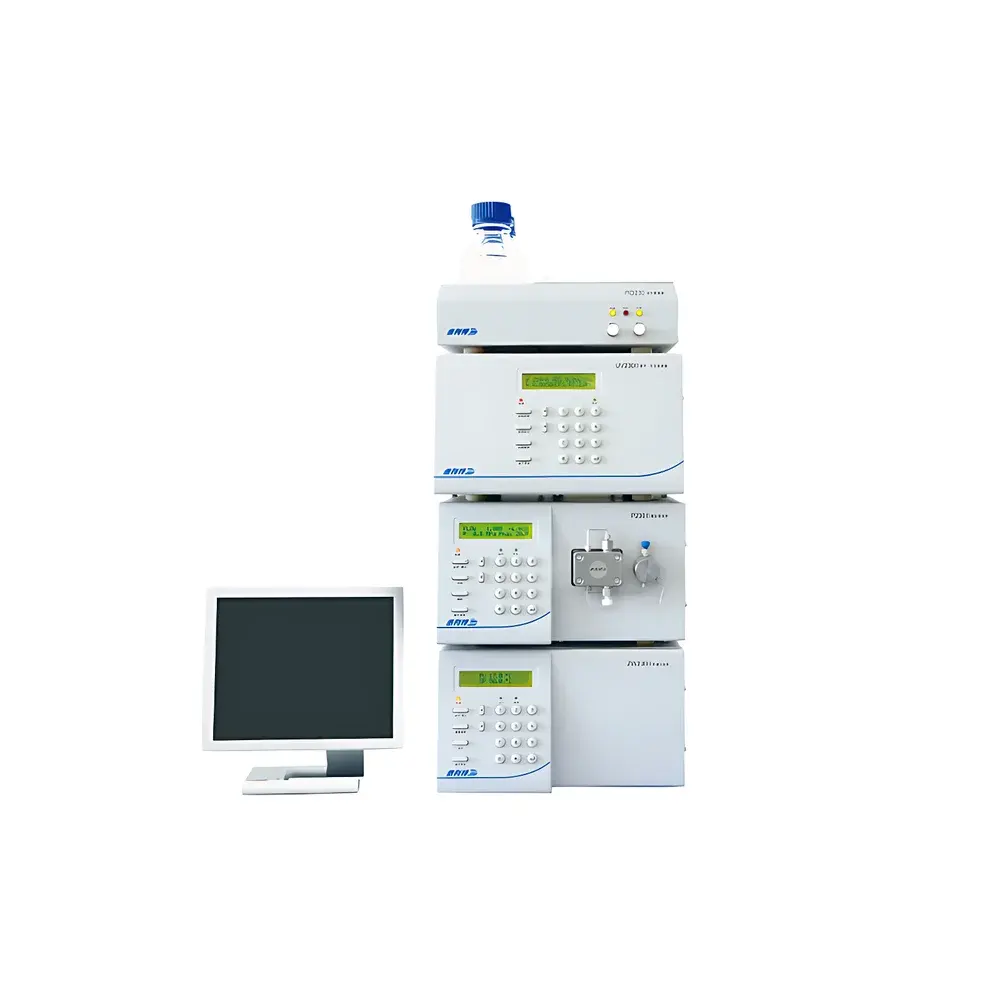
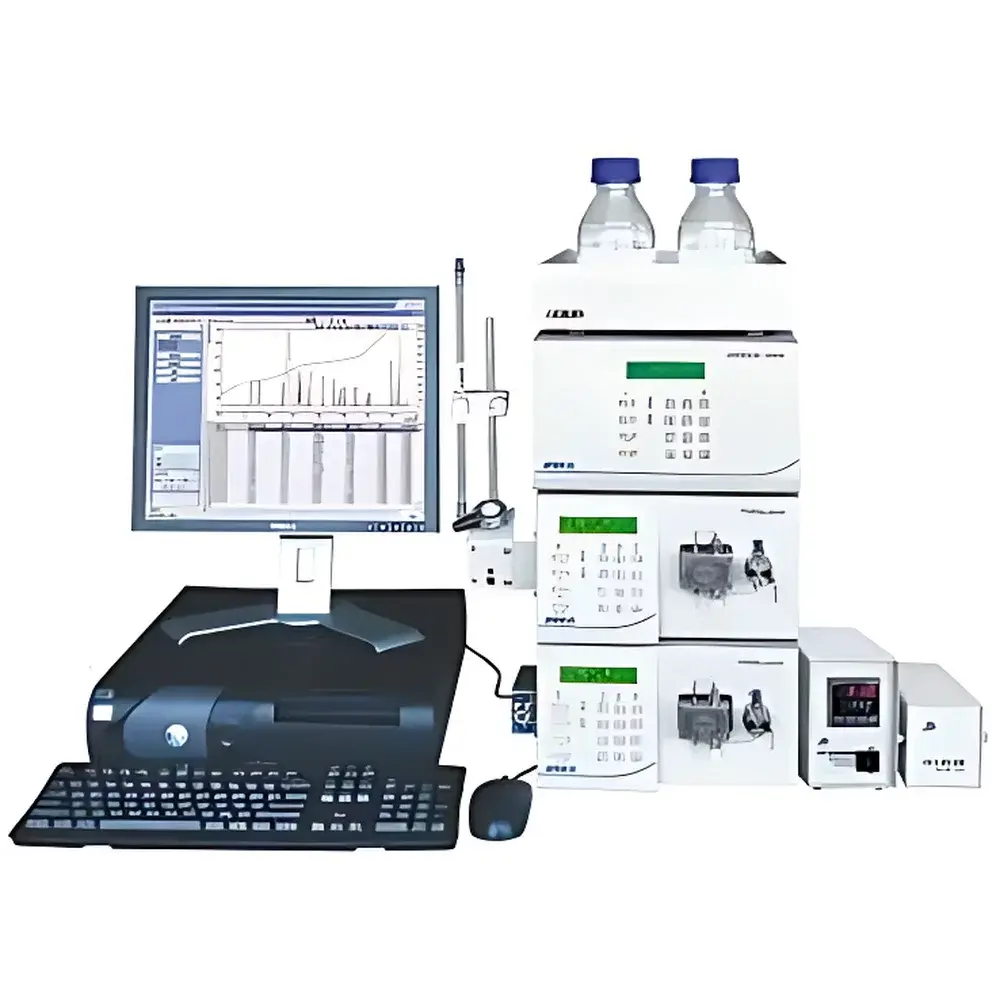
Elite P230II High-Performance Liquid Chromatograph
| Brand | Elite |
|---|---|
| Origin | Liaoning, China |
| Manufacturer Type | OEM Manufacturer |
| Regional Classification | Domestic (China) |
| Model | P230II |
| Price Range | USD 14,000 – 28,000 (approx.) |
| Instrument Type | Conventional HPLC System |
| Application Scope | General-Purpose Analytical HPLC |
| Flow Rate Range | 0.001–9.999 mL/min (adjustable in 0.001 mL/min increments) |
| Maximum Operating Pressure | 42.0 MPa |
| Autosampler Capacity | 120 positions |
| Injection Volume Range | 1–100 µL |
| Column Oven Temperature Range | Ambient +5°C to 85°C |
| UV-Vis Wavelength Range | 190–700 nm |
| Data Acquisition Frequency | 20 Hz |
Overview
The Elite P230II High-Performance Liquid Chromatograph is a modular, general-purpose HPLC system engineered for precision, long-term operational stability, and method flexibility in routine analytical laboratories. Built upon the field-proven architecture of the widely deployed P230 platform—with over 1,000 units operating globally—the P230II integrates a short-stroke, flow-compensated dual-piston reciprocating pump and a high-sensitivity, low-drift UV-Vis absorbance detector. Its core separation principle relies on liquid-phase partitioning under high-pressure mobile phase delivery, enabling reproducible retention time control and quantitative resolution of small-molecule analytes across pharmaceutical, environmental, food safety, and academic research applications. Designed for ISO/IEC 17025-compliant environments, the system supports method validation workflows and aligns with key regulatory expectations for instrument qualification (IQ/OQ/PQ), including traceable pressure and flow calibration protocols.
Key Features
- High-precision binary high-pressure gradient and quaternary low-pressure gradient configurations—enabling robust method development and transfer across diverse separation chemistries
- Flow rate accuracy ±0.2% RSD at 1.0 mL/min and linearity deviation <±0.5% over full range (0.001–9.999 mL/min)
- Integrated column oven with PID-controlled temperature regulation (ambient +5°C to 85°C, ±0.3°C stability), supporting retention time reproducibility in method-critical workflows
- UV-Vis detector featuring a 10 mm pathlength flow cell, deuterium/tungsten dual-lamp source, and real-time spectral baseline correction
- 120-position autosampler with programmable injection volume (1–100 µL), needle wash capability, and temperature-controlled sample compartment (4–40°C optional)
- Automatic system diagnostics at power-on, pressure/flow self-check, and intelligent power-fail recovery—minimizing downtime and operator intervention
Sample Compatibility & Compliance
The P230II accommodates standard 3.0–4.6 mm ID analytical columns (up to 250 mm length) and is compatible with reversed-phase (C18, C8), HILIC, ion-exchange, and size-exclusion media. It meets mechanical and electrical safety requirements per GB 4793.1–2007 (equivalent to IEC 61010-1) and electromagnetic compatibility per GB/T 18268.1–2010 (IEC 61326-1). While not pre-certified for FDA 21 CFR Part 11, the system’s data acquisition architecture supports audit-trail-enabled software upgrades compliant with GLP/GMP documentation standards. Method transfer studies conducted per USP and ICH Q2(R2) guidelines confirm inter-system reproducibility when operated under identical gradient and temperature conditions.
Software & Data Management
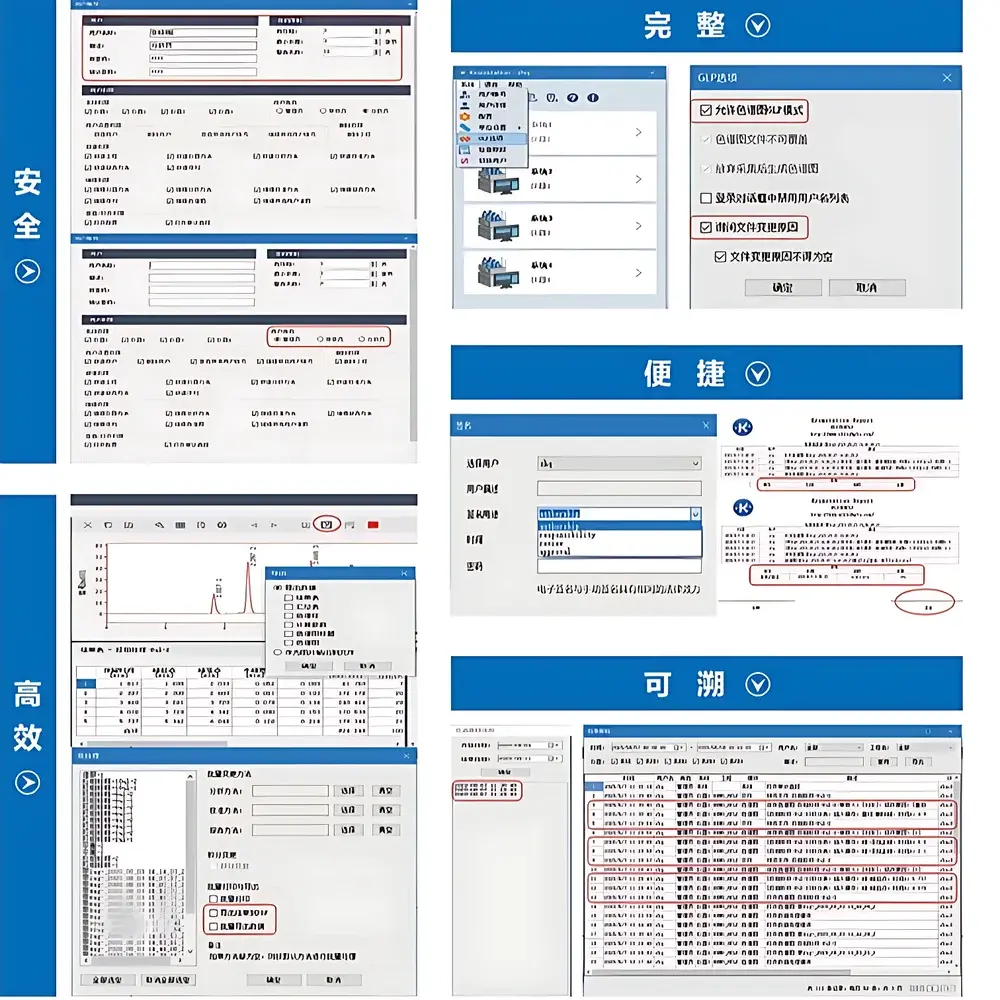
Control and data processing are performed via the Elite Chromatographic Data System (CDS) workstation—a Windows-based application offering dual-mode operation: full remote control via PC or standalone instrument-panel operation with real-time parameter display and manual run initiation. The CDS provides peak integration using tangent skim and valley-to-valley algorithms, customizable reporting templates (PDF/CSV/XLS export), and raw data archiving with time-stamped metadata (acquisition time, instrument state, user ID). Raw signal files (.dat) retain full 20 Hz acquisition fidelity and support post-run wavelength scanning, spectral library matching, and multi-wavelength quantitation. Audit trail functionality—including user login history, parameter change logs, and electronic signature prompts—is available in validated software versions for regulated environments.
Applications
- Pharmaceutical QC: Assay and related substances testing per USP monographs (e.g., paracetamol, ibuprofen, metformin)
- Food & Beverage: Quantification of preservatives (sorbic acid, benzoic acid), sweeteners (aspartame, sucralose), and mycotoxins (aflatoxin B1)
- Environmental Analysis: Detection of PAHs, phenolic compounds, and pesticide residues (e.g., organophosphates) in water and soil extracts
- Amino Acid Analysis: Coupled with ELITE-AAK pre-column derivatization module for physiological fluid profiling (plasma, urine) per ISO 13022
- Academic Research: Method development for novel stationary phases, solvent strength optimization, and kinetic modeling of retention behavior
FAQ
Is the P230II compatible with third-party CDS software such as Chromeleon or Empower?
Yes—via standard ASCII .csv export and simulated Agilent 1100/1200 command set; however, native driver support is limited to Elite CDS for full hardware-level control and diagnostic access.
What is the maximum column backpressure the system can sustain during extended gradient runs?
The pump and flow cell are rated for continuous operation up to 42.0 MPa (6090 psi); pressure limit alarms activate at 95% of max rating to prevent seal wear or check valve failure.
Does the autosampler support needle-in-vial injection for volatile or air-sensitive samples?
Standard configuration uses loop-based injection; optional vial-piercing needle kits with septum-pierce capability and inert gas purge lines are available for oxygen- or moisture-sensitive analyses.
Can the UV-Vis detector perform simultaneous multi-wavelength quantitation?
Yes—the detector acquires full-spectrum data at 20 Hz and allows post-acquisition extraction of up to four user-defined wavelengths with independent baseline correction and peak tracking.
What maintenance intervals are recommended for routine operation?
Pump seal replacement every 6–12 months (depending on buffer usage), UV lamp replacement every 2,000 hours, and annual calibration verification of flow rate, pressure transducer, and wavelength accuracy per NIST-traceable standards.





