

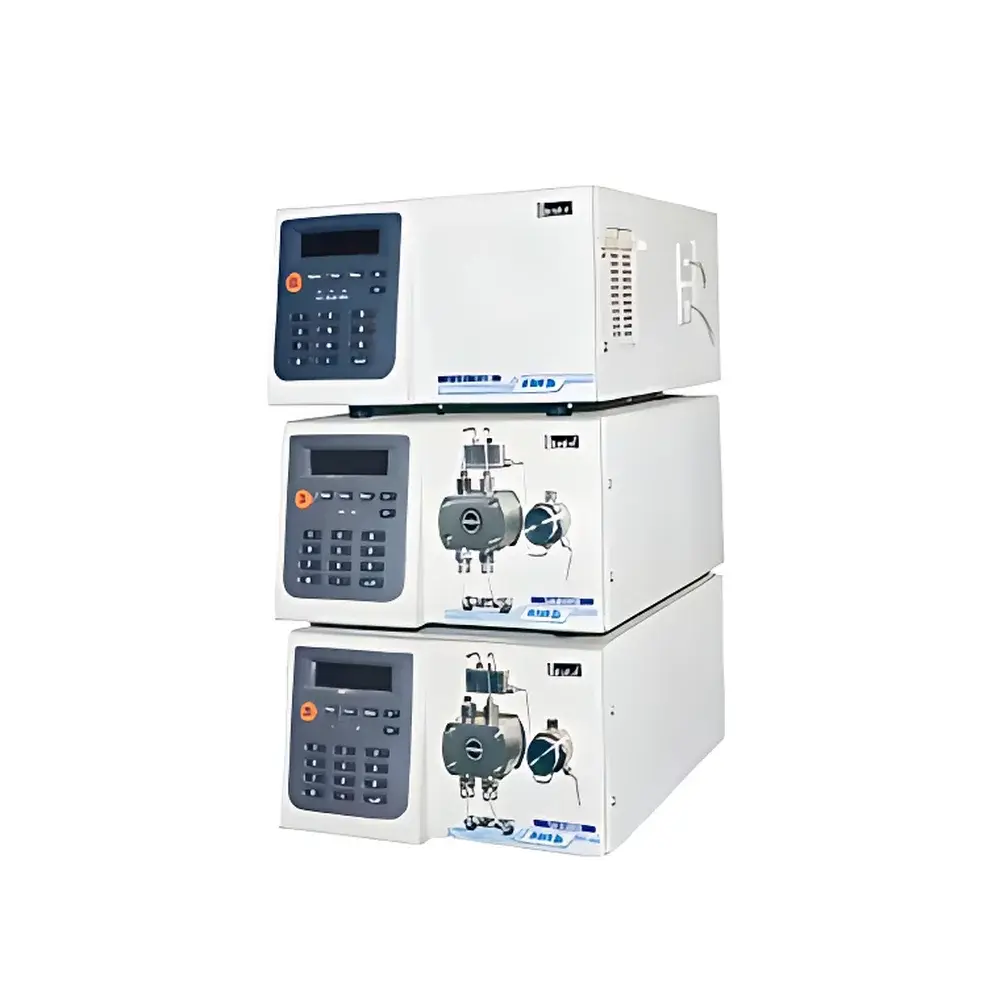
Elite P3500 Semi-Preparative High-Performance Liquid Chromatography System
| Brand | Elite |
|---|---|
| Origin | Liaoning, China |
| Manufacturer Type | Direct Manufacturer |
| Product Category | Domestic |
| Model | P3500 Semi-Preparative |
| Application Level | Laboratory Grade |
| Instrument Type | High-Pressure Preparative HPLC |
| Flow Rate Range | 0.01–50.00 mL/min |
| Flow Accuracy | ≤ ±1.0% |
| Flow Precision (RSD) | ≤ 0.3% |
| Maximum Operating Pressure | 30 MPa |
| Wavelength Range | 190–700 nm |
| Baseline Noise | ≤ ±0.5 × 10⁻⁵ AU |
Overview
The Elite P3500 Semi-Preparative High-Performance Liquid Chromatography (HPLC) System is an integrated, high-reliability platform engineered for scalable purification and analytical characterization of organic compounds, pharmaceutical intermediates, natural products, and biomolecules. Designed as a direct evolution of the P230p series, the P3500 leverages dual-piston reciprocating pump architecture with cam-driven short-stroke plunger mechanics—eliminating passive dampeners and minimizing system dwell volume to enhance gradient fidelity and peak resolution at semi-preparative flow rates. Its operational envelope spans 0.01–50.00 mL/min with ≤ ±1.0% flow accuracy and RSD ≤ 0.3%, supporting both method development at analytical scale and milligram-to-gram-level isolation under pressures up to 30 MPa (4350 psi). The system integrates either the UV3100 or UV230II UV-Vis detector, both featuring holographic concave grating optics, microcontroller-driven wavelength scanning, and PC-synchronized time-programmable wavelength switching—enabling multi-wavelength detection, spectral acquisition during pump stoppage, and real-time optimization of absorbance sensitivity across 190–700 nm.
Key Features
- Dual-piston, cam-actuated constant-flow pump with floating-guided plunger assembly—ensures long-term pressure stability and reduced mechanical wear under continuous operation.
- Sub-microliter flow resolution (0.01 mL/min setting increment) enabled by microstepping motor control, critical for reproducible low-flow separations and gradient formation in complex matrices.
- Modular detector design: UV3100 offers enhanced thermal management for baseline drift < 1.0 × 10⁻⁴ AU/h and baseline noise ≤ ±0.5 × 10⁻⁵ AU; UV230II provides self-diagnostic startup (lamp status, power integrity), full-spectrum scanning, and RS485/USB communication for instrument integration.
- Compact footprint (420 × 300 × 175 mm) with optimized PCB layout using AT89C55 microcontroller and SPI bus architecture—reducing component count and improving electromagnetic compatibility and mean time between failures (MTBF).
- Dual-cell flow cell options: analytical cell (10 mm pathlength, 11 µL volume) and semi-preparative cell (2 mm pathlength, 6 µL volume)—minimizing band broadening while maintaining sufficient sensitivity for collected fractions.
Sample Compatibility & Compliance
The P3500 system accommodates standard 10–30 mm ID preparative columns and supports reversed-phase (C18, C8), normal-phase (silica), ion-exchange, and size-exclusion chromatography media. It complies with core laboratory quality requirements for method transfer and documentation: all detectors support analog output (0–1 V or 0–5 V, optional DA module) for legacy data acquisition systems, and firmware enables timestamped event logging compatible with GLP-compliant audit trails. While not pre-certified for 21 CFR Part 11, the system’s deterministic pump timing, non-volatile method storage, and detector parameter locking provide foundational traceability required for regulated environments—including pharmaceutical QC, academic natural product isolation, and environmental contaminant fractionation per ASTM D7089 or ISO 17025-aligned workflows.
Software & Data Management
Control and data acquisition are performed via Windows-based EliteChrom software (v3.x or later), supporting isocratic and multi-step gradient programming, real-time chromatogram overlay, peak integration with customizable baselines, and export to CSV, ASCII, or AIA (.cdf) formats. The software implements hardware-triggered fraction collection synchronization, retention time alignment across runs, and wavelength program scheduling—e.g., switching from 220 nm for peptide elution to 280 nm for aromatic detection within a single run. All method parameters, detector settings, and acquisition timestamps are stored in encrypted project files, facilitating version-controlled method archiving and cross-instrument reproducibility assessment.
Applications
- Purification of synthetic peptides and oligonucleotides prior to mass spectrometry or biological activity assays.
- Isolation of active constituents from plant extracts, fermentation broths, or polymer degradation mixtures.
- Method scouting and scalability studies bridging analytical HPLC (≤4.6 mm ID) to semi-preparative scale (10–21.2 mm ID).
- Stability-indicating assays for pharmaceutical formulations under ICH Q5C guidelines, leveraging programmable wavelength switching to monitor degradation products.
- Quality control of excipients and raw materials in accordance with USP chromatographic separations.
FAQ
What column dimensions are recommended for optimal performance on the P3500 system?
Columns with internal diameters of 10–21.2 mm and lengths of 100–250 mm are routinely used; packed beds should be rated for ≥35 MPa to accommodate safety margins at the 30 MPa maximum operating pressure.
Can the P3500 be integrated into a networked laboratory environment?
Yes—both UV3100 and UV230II detectors support USB 2.0 and RS485 interfaces; EliteChrom software allows remote monitoring and method deployment over LAN when configured with static IP addressing and firewall exceptions.
Is the system suitable for GMP-regulated production batches?
The P3500 is validated for laboratory-scale purification and analytical support in GMP environments; however, full 21 CFR Part 11 compliance requires supplemental validation of electronic records, user access controls, and audit trail generation—typically implemented via third-party LIMS or ELN integration.
How does the floating-guided plunger design improve long-term reliability?
It eliminates lateral stress on seals and bearings during reciprocation, reducing friction-induced wear and maintaining volumetric consistency over >10,000 hours of continuous operation under typical solvent conditions (e.g., acetonitrile/water or methanol/water gradients).
What maintenance intervals are recommended for routine operation?
Pump seal replacement every 6–12 months (depending on solvent aggressiveness and daily usage), detector lamp replacement every 1,500–2,000 hours, and annual calibration verification against NIST-traceable flow standards and neutral density filters.




