
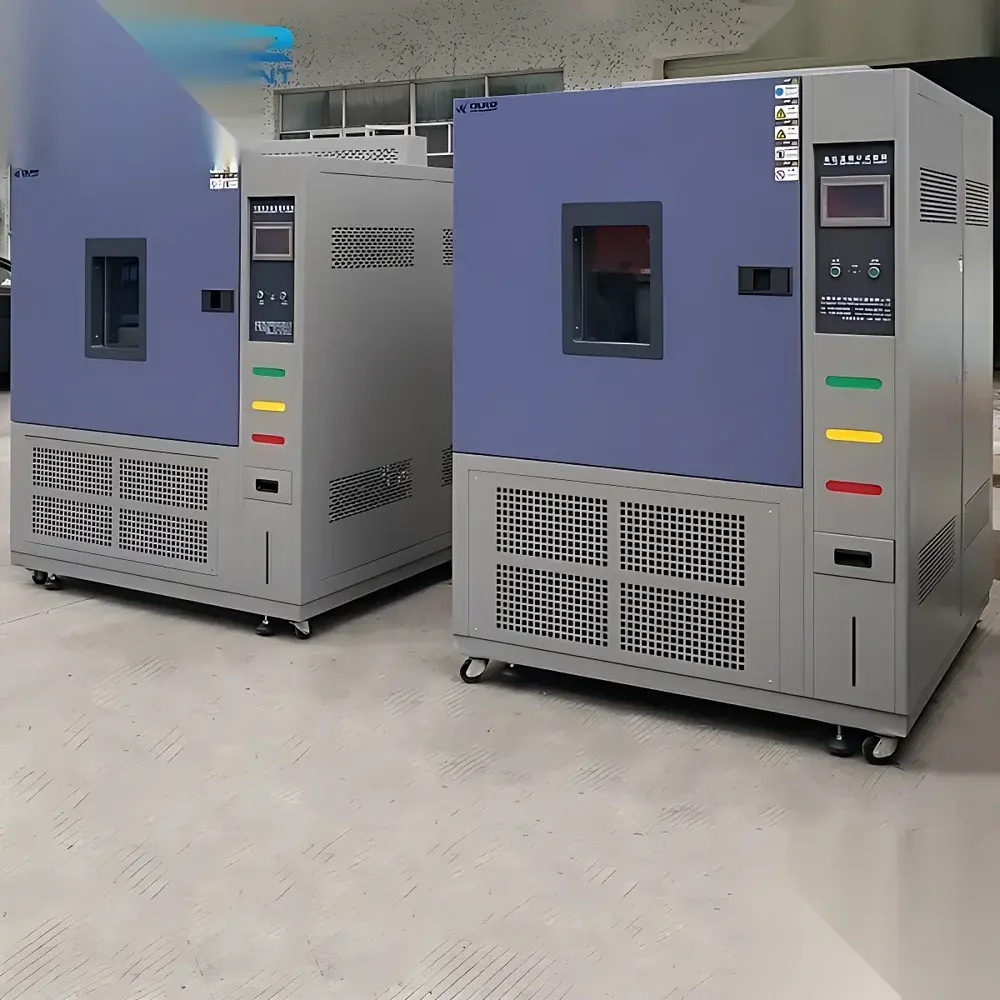
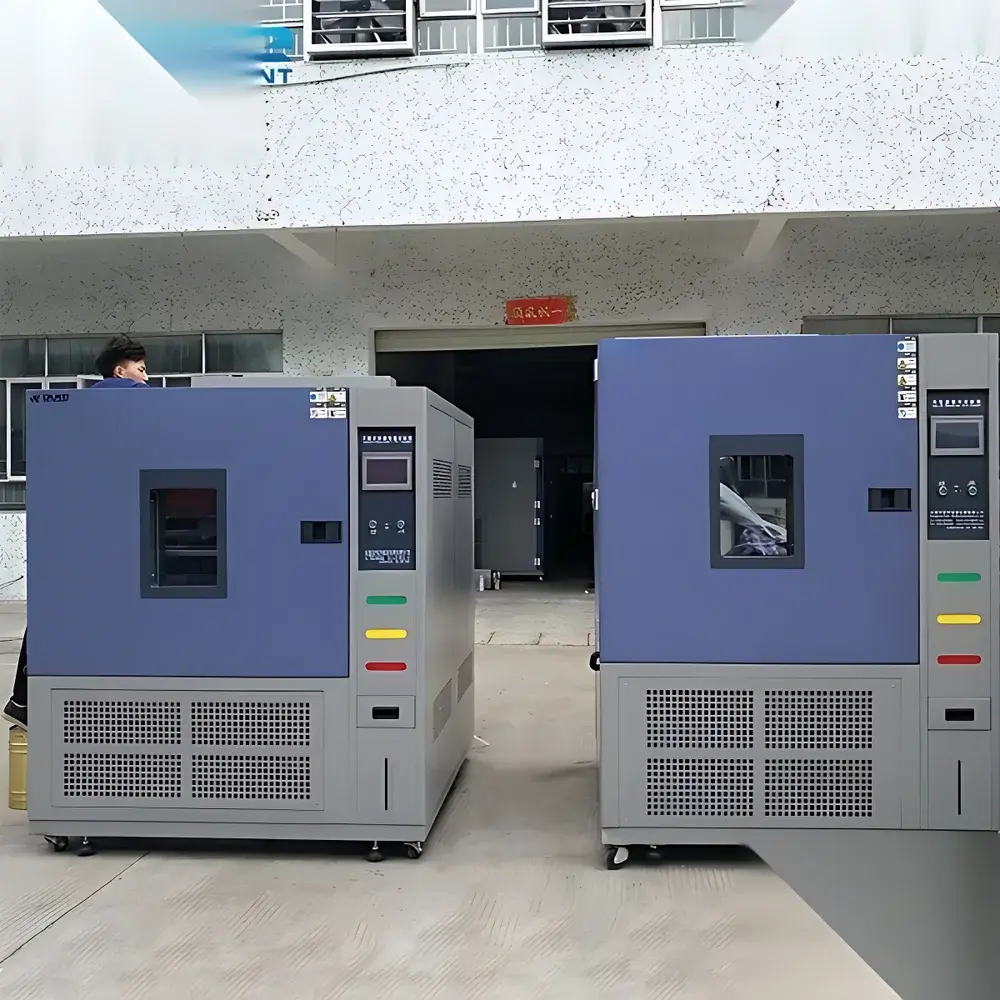
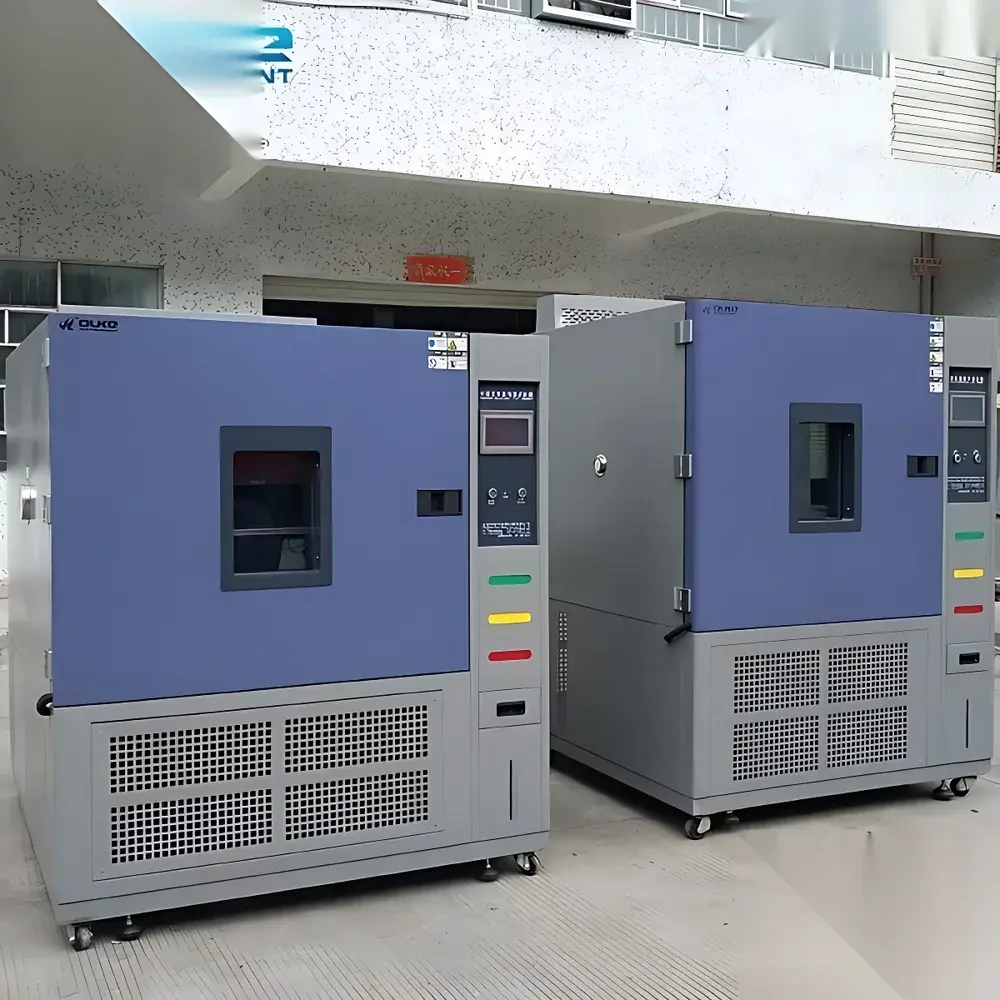
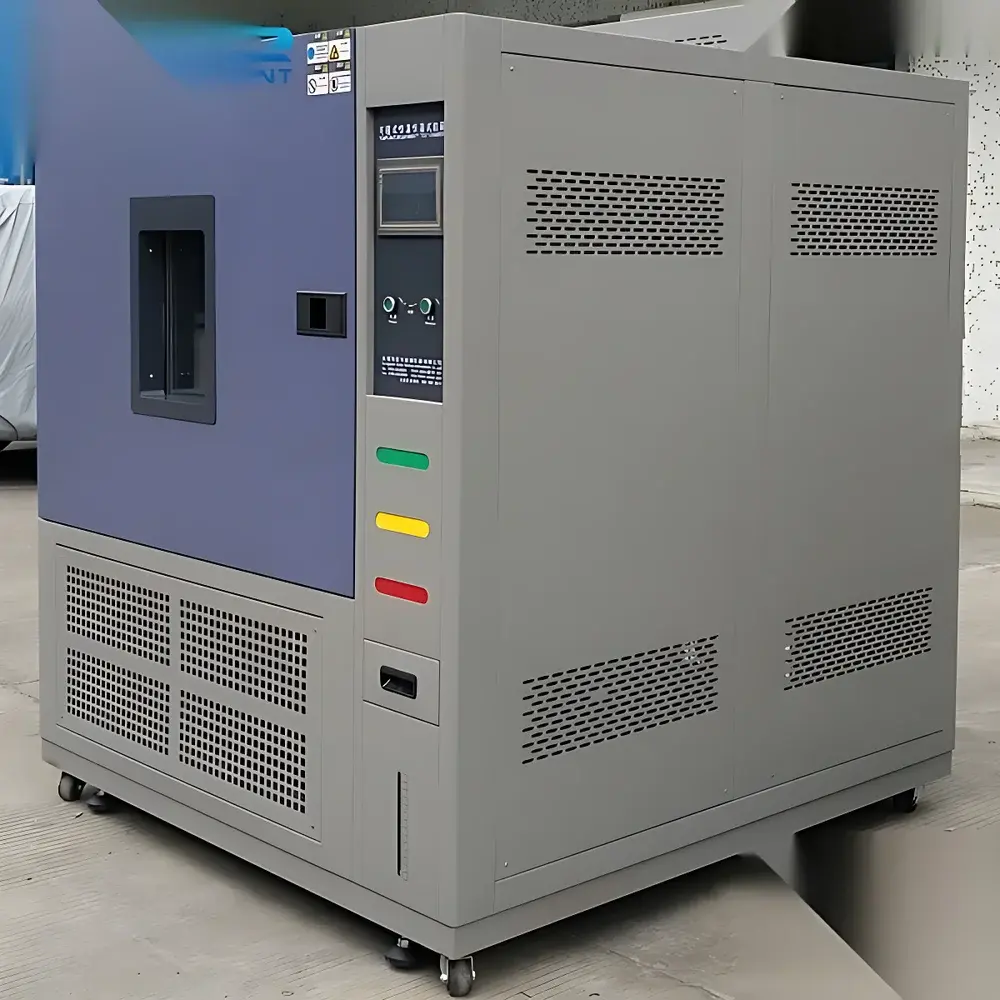
English Product Name
| Brand | Other Brands |
|---|---|
| Origin | Imported |
| Manufacturer Type | Authorized Distributor |
| Price | USD 3,100 (approx.) |
| Compliance | GB/T 5170.2–1996, GB/T 5170.5–1996, GB 2423.1–1989, GB 2423.2–1989, GB 2423.22–1987, GB 10589–1989, GB 10592–1989, GB 11158–1989 |
Overview
The Environmental Test Chamber for Switches and Sockets is a precision-engineered temperature and humidity controlled chamber designed specifically for reliability validation of electrical components under defined climatic stress conditions. Built upon the fundamental principles of forced-air convection thermal management and dual-acting steam-humidification with refrigerated dehumidification, this chamber enables controlled simulation of storage, transportation, and operational environments per international and national standards—including IEC 60068-2 series equivalents reflected in GB/T 2423 test methods. Its architecture supports both steady-state conditioning (e.g., constant 40 °C / 93 % RH) and dynamic cycling (e.g., temperature ramping from −40 °C to +85 °C within specified rates), making it suitable for evaluating insulation integrity, contact resistance stability, mechanical actuation consistency, and corrosion resistance of low-voltage switching devices across their full lifecycle. The chamber operates within a standard ambient reference condition of 25 °C ±6 °C and zero-load configuration for calibration traceability.
Key Features
- Full-arc ergonomic enclosure design with high-gloss finish and flush-mounted, non-reactive door handles for enhanced usability and cleanroom-compatible operation.
- Imported programmable touch-screen controller with intuitive interface, multi-segment ramp-soak profiles, real-time data logging, and password-protected parameter access—supporting up to 99 cycles with 99 steps per cycle.
- Balance Temperature and Humidity Control (BTHC) system utilizing PID-driven SSR outputs to dynamically match heating/steam injection power against thermal/humidity losses—ensuring long-term stability (< ±0.5 °C, ±2 % RH typical).
- Capillary-tube-based refrigeration circuit with automatic capacity modulation—eliminating mechanical expansion valve hysteresis and delivering smoother, more repeatable cooling transitions than conventional TXV systems.
- Integrated water-cooling interface requiring inlet water at 10–28 °C and 0.1–0.3 MPa pressure to maintain rated cooling performance across extended low-temperature operation (down to −70 °C).
Sample Compatibility & Compliance
This chamber accommodates standard switch and socket assemblies (IEC 60669-1, GB 16915.1), including surface-mounted, flush-mounted, and industrial-grade enclosures up to 600 mm × 600 mm × 600 mm internal volume. Internal chamber dimensions are customizable per client specification, including walk-in configurations. All performance specifications—including temperature range (−70 °C to +150 °C), humidity range (20–98 % RH), and ramp rates—are validated under no-load, ISO 17025-aligned laboratory conditions per GB/T 5170.2 and GB/T 5170.5. The unit meets structural and safety requirements referenced in GB 4793.1 (safety of electrical equipment for measurement, control, and laboratory use) and supports GLP-compliant testing workflows when integrated with audit-trail-capable software.
Software & Data Management
The embedded controller provides local data storage (≥10,000 hours of timestamped T/RH readings) and USB export capability. Optional PC-based software (Windows 10/11 compatible) enables remote monitoring, automated report generation (PDF/CSV), alarm event history, and electronic signature support aligned with FDA 21 CFR Part 11 requirements for regulated environments. Calibration certificates include as-found/as-left data with NIST-traceable references for temperature (PT100 Class A) and humidity (capacitive polymer sensor, ±1.5 % RH accuracy).
Applications
- Validation of thermal shock resistance in snap-action switches per GB 2423.22 (Test N).
- Humidity aging studies on insulating materials used in socket bodies (e.g., thermoset plastics, PA66-GF30) under sustained 85 °C / 85 % RH stress.
- Functional verification of current-carrying contacts during high-humidity exposure to assess creepage distance degradation.
- Pre-compliance screening for CCC, CE, and UL certification submissions requiring environmental stress sequences.
- Quality assurance testing in incoming inspection labs for OEMs sourcing electrical accessories from global suppliers.
FAQ
What is the standard calibration interval for this chamber?
Annual calibration is recommended; however, frequency may increase based on usage intensity, criticality of test outcomes, and internal QA policy—particularly when supporting ISO 9001 or IATF 16949 audits.
Can the chamber perform rapid temperature transitions (e.g., 10 °C/min)?
Ramp rates are load-dependent and specified as air-average values per GB/T 5170.2. Typical unloaded ramp rates range from 1–3 °C/min between −40 °C and +85 °C; faster transitions require optional high-capacity refrigeration and auxiliary heaters.
Is remote monitoring supported via Ethernet or Modbus?
Yes—optional Ethernet/IP or RS-485 Modbus RTU interfaces are available for integration into centralized facility monitoring systems (SCADA/BMS).
Does the chamber meet ASTM D4332 or ISO 2231 for conditioning prior to mechanical testing?
Yes—the chamber satisfies the temperature and humidity stabilization requirements of ASTM D4332 (standard practice for conditioning containers, packages, or packaging components) and ISO 2231 (plastics—standard atmospheres for conditioning and testing).
How is condensation managed during low-temperature, high-humidity transitions?
The system employs pre-cooled drain lines, insulated chamber walls, and timed defrost cycles synchronized with humidity ramping to minimize internal condensate accumulation on test specimens.



