
English Product Name
| Brand | Ying'an Meicheng |
|---|---|
| Origin | Beijing, China |
| Manufacturer Type | Authorized Distributor |
| Region of Manufacture | Domestic (China) |
| Model | Y-I |
| Instrument Type | Plasma-Based Purification System |
| Flow Rate | 1–4 m³/h |
| Purity | 99.9999% (N₂ ≤ 0.2 ppm) |
| Dimensions (W×D×H) | 500 × 500 × 900 mm |
Overview
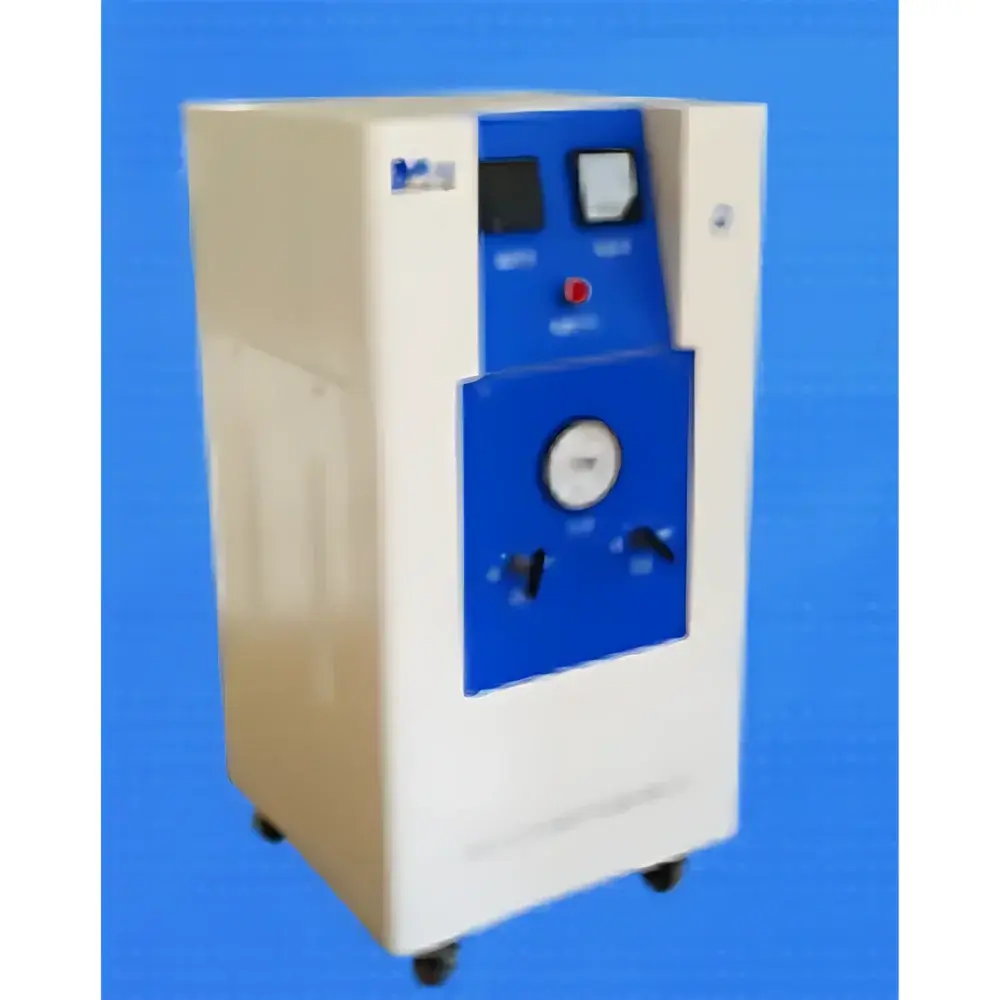
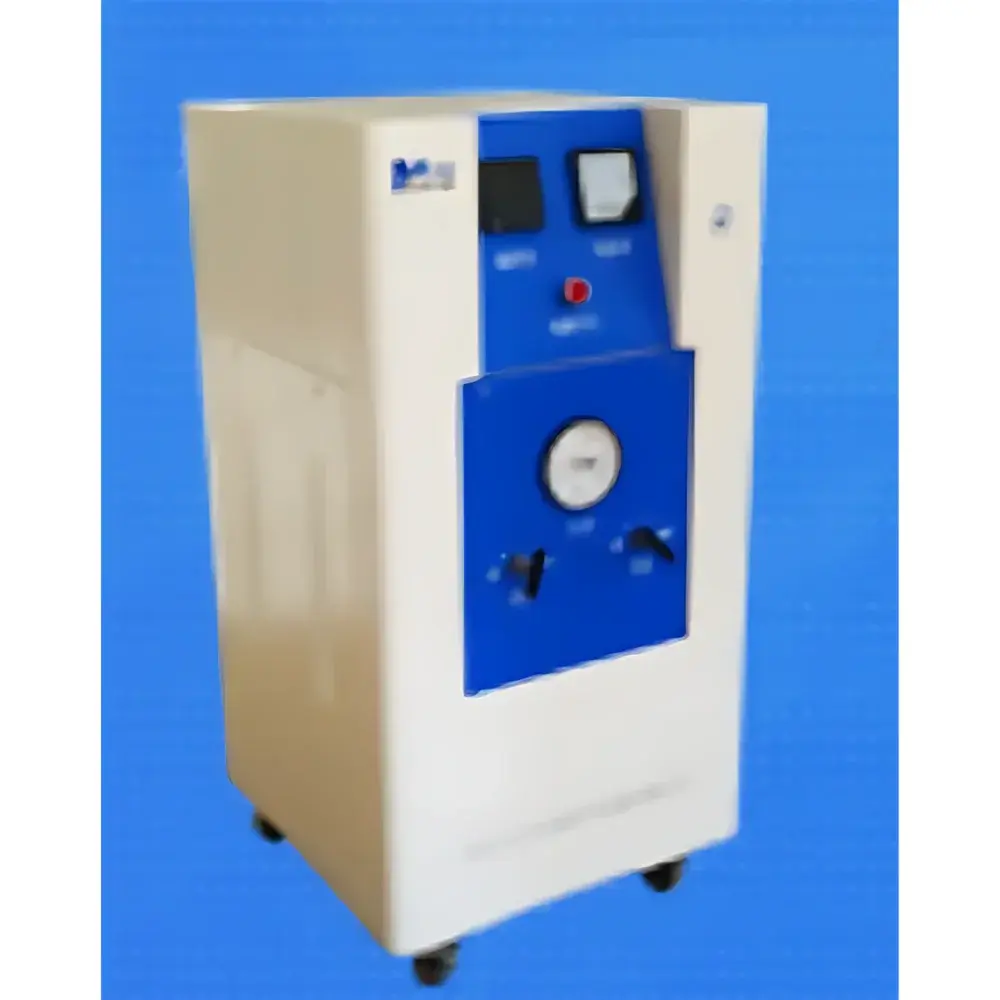
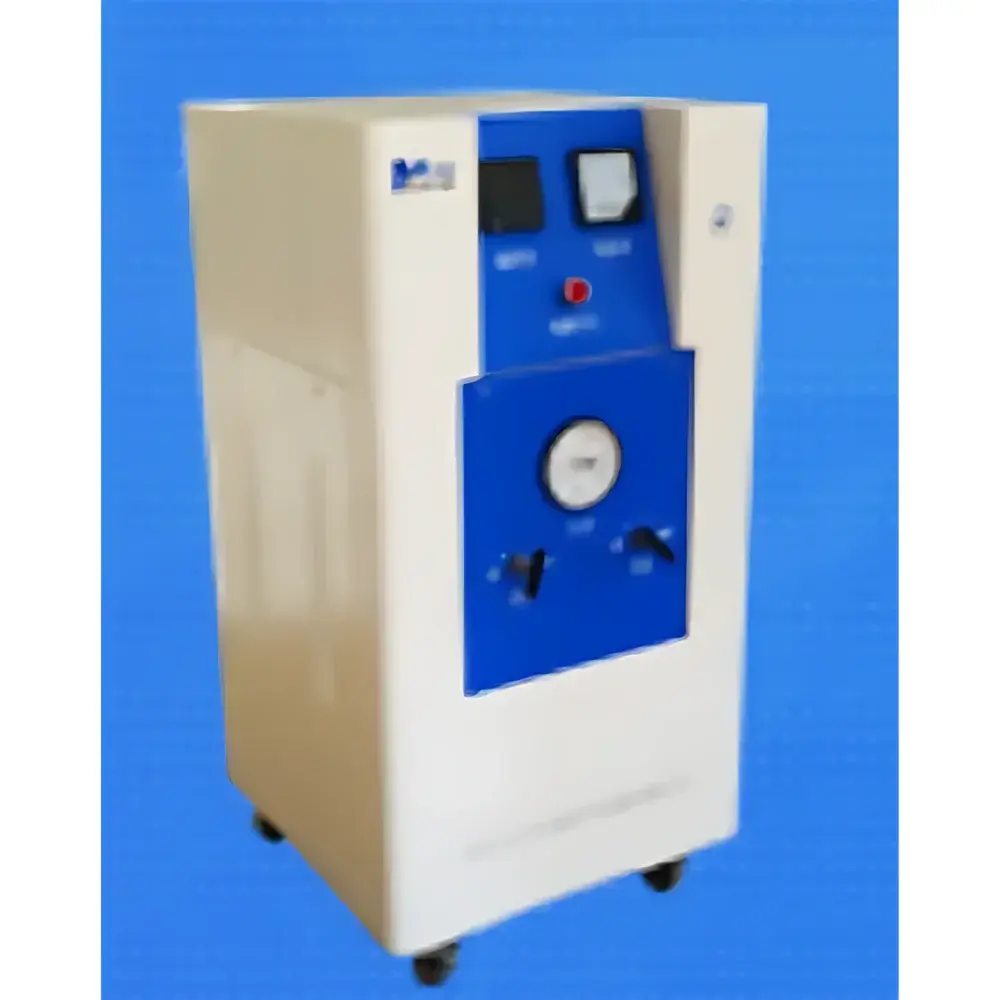
The Ying’an Meicheng Y-I Argon Purifier is a compact, high-efficiency gas purification system engineered for continuous in-line refinement of commercial-grade argon (typically 99.998% pure) to ultra-high-purity levels required in analytical and industrial applications. It employs a multi-stage purification mechanism combining solid-state catalytic conversion, nano-structured adsorption, and physical filtration—eliminating nitrogen, oxygen, hydrogen, moisture, and particulate contaminants without requiring external hydrogen addition or process interruption. Unlike conventional tower-type purifiers relying on thermal swing or pressure-swing adsorption, the Y-I integrates a regenerable synthetic reactor core built with imported noble-metal catalysts and sub-6 µm particulate pre- and post-filters. Its design conforms to the operational demands of trace-gas-sensitive instrumentation including ICP-OES, ICP-MS, GD-MS, spark emission spectrometers, GC carrier gas systems, and semiconductor chamber purge lines—where residual nitrogen below 0.2 ppm and total hydrocarbon content < 0.1 ppm are critical for baseline stability and spectral resolution.
Key Features
- Continuous operation during regeneration: High-purity argon output remains uninterrupted while the reactor undergoes automatic thermal-catalytic regeneration—no system shutdown or manual intervention required.
- Nano-engineered purification core: Utilizes proprietary noble-metal catalysts supported on high-surface-area substrates, enabling deep nitrogen removal via low-temperature catalytic recombination (N₂ + 3H₂ → 2NH₃), followed by selective adsorption of ammonia and water vapor.
- Particulate control architecture: Dual-stage stainless-steel sintered filters (inlet and outlet) retain particles ≥ 0.6 µm with >99.999% efficiency; filter elements comply with ISO 8573-1 Class 1 for solid contaminants.
- Material integrity: All wetted components—including tubing, valves, and manifolds—are fabricated from electropolished 316L stainless steel meeting ASTM A270 and SEMI F57 standards for low-outgassing and corrosion resistance.
- Modular interface compatibility: Standard CGA-580 inlet/outlet ports with optional adapter kits support seamless integration with Thermo Fisher, PerkinElmer, Bruker, SPECTRO, Hitachi, and Shimadzu analytical platforms.
- Electrical reliability: Control electronics undergo 72-hour burn-in testing; embedded microcontroller provides real-time status monitoring (pressure differential, temperature ramp, cycle count) via LED indicators and dry-contact alarm outputs.
Sample Compatibility & Compliance
The Y-I is validated for use with Grade 4.8 (99.998%) and Grade 5.0 (99.999%) technical argon supplied from standard high-pressure cylinders or bulk liquid dewars. It meets functional requirements specified in ASTM E2882–22 (Standard Guide for Selection and Use of Gas Purification Systems in Elemental Analysis), ISO 8573-1:2010 Class 1 for particulates and Class 2 for water vapor, and aligns with GLP/GMP environmental control expectations for laboratory gas supply infrastructure. While not certified to UL/CE as a standalone appliance, its electrical subsystem complies with IEC 61000-6-3 (EMC emissions) and IEC 61000-6-2 (immunity). Documentation includes full traceability of catalyst batch numbers, filter certification reports, and material test reports (MTRs) per EN 10204 3.1.
Software & Data Management
The Y-I operates as a stand-alone hardware module with no embedded firmware or network connectivity. All operational logic is implemented in hardened analog-digital circuitry, eliminating cybersecurity risks associated with IoT-enabled gas systems. Regeneration cycles, runtime hours, and pressure-drop thresholds are logged via non-volatile EEPROM and accessible through front-panel diagnostics. For laboratories requiring audit trails under FDA 21 CFR Part 11 or ISO/IEC 17025, optional analog 4–20 mA output signals (for inlet/outlet pressure and reactor temperature) can be interfaced with validated SCADA or LIMS platforms. Calibration records and maintenance logs must be retained manually per institutional SOPs.
Applications
- ICP-OES and ICP-MS: Ensures stable plasma ignition and minimizes polyatomic interferences (e.g., 40Ar16O⁺ on 56Fe⁺) through consistent sub-ppm nitrogen control.
- Spark-OES (Direct-Reading Spectrometry): Prevents electrode oxidation and spectral line broadening in metallurgical labs performing ASTM E415 or ISO 11577 analysis.
- GC Carrier Gas: Delivers inert, particle-free argon for thermal conductivity detectors (TCD) and electron capture detectors (ECD), reducing baseline drift and improving LOD for halogenated compounds.
- Semiconductor Process Tools: Supplies purge gas for ALD/CVD chambers where residual O₂ or H₂O causes unintended oxide growth or film stoichiometry deviation.
- High-Purity Metal Melting: Supports argon-shrouded induction furnaces used in titanium, zirconium, and rare-earth alloy production per ASTM B348 and AMS 2249.
FAQ
Does the Y-I require hydrogen gas for regeneration?
No. The system uses an integrated catalytic recombination mechanism that does not rely on external H₂ supply—eliminating explosion hazards and regulatory handling requirements.
What is the expected service life of the synthetic reactor core?
Under typical operating conditions (≤4 m³/h, ambient temperature ≤35°C), the reactor maintains specification-compliant performance for ≥12,000 hours or 500 regeneration cycles, whichever occurs first.
Can the Y-I be installed vertically or horizontally?
It is designed exclusively for upright orientation as specified in the mechanical drawings; tilting beyond ±5° compromises internal flow distribution and catalyst bed integrity.
Is third-party validation data available for purity claims?
Yes—certified test reports from CNAS-accredited laboratories (Certificate No. CNAS LXXXXX) documenting N₂ ≤0.18 ppm, O₂ ≤0.05 ppm, H₂O ≤0.1 ppm, and THC ≤0.08 ppm are provided with each unit shipment.
How often must the particulate filters be replaced?
Filter replacement interval depends on upstream gas quality; under ISO 8573-1 Class 4 inlet conditions, replacement is recommended every 6,000 operating hours or annually—whichever comes first.



