
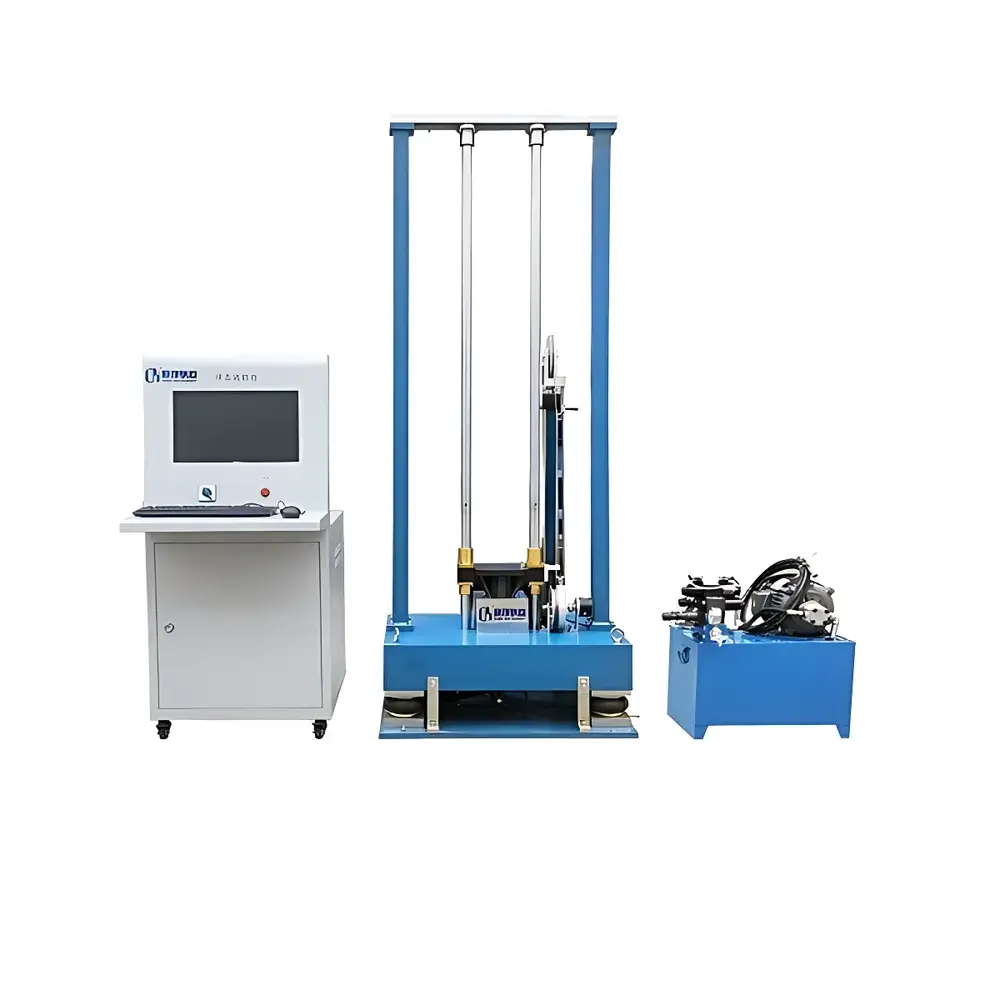
English Product Name
| Brand | OK Instruments |
|---|---|
| Origin | Imported |
| Manufacturer Type | Authorized Distributor |
| Price | USD 14,000–42,000 (FOB) |
| Load Capacity | 10–100 kg |
| Table Dimensions | 20×20 to 80×65 cm |
| Acceleration Range | 150–15,000 m/s² |
| Pulse Duration | 0.5–30 ms |
| Waveform Options | Half-sine, Trapezoidal, Post-peak Sawtooth |
| Power Supply | AC 380 V ±5%, 3-phase 5-wire, 50/60 Hz ±0.5 Hz |
| Compliance | IEC 60068-2-27, MIL-STD-810H, GJB 150.18A, JIS C 0041, ASTM D999 |
Overview
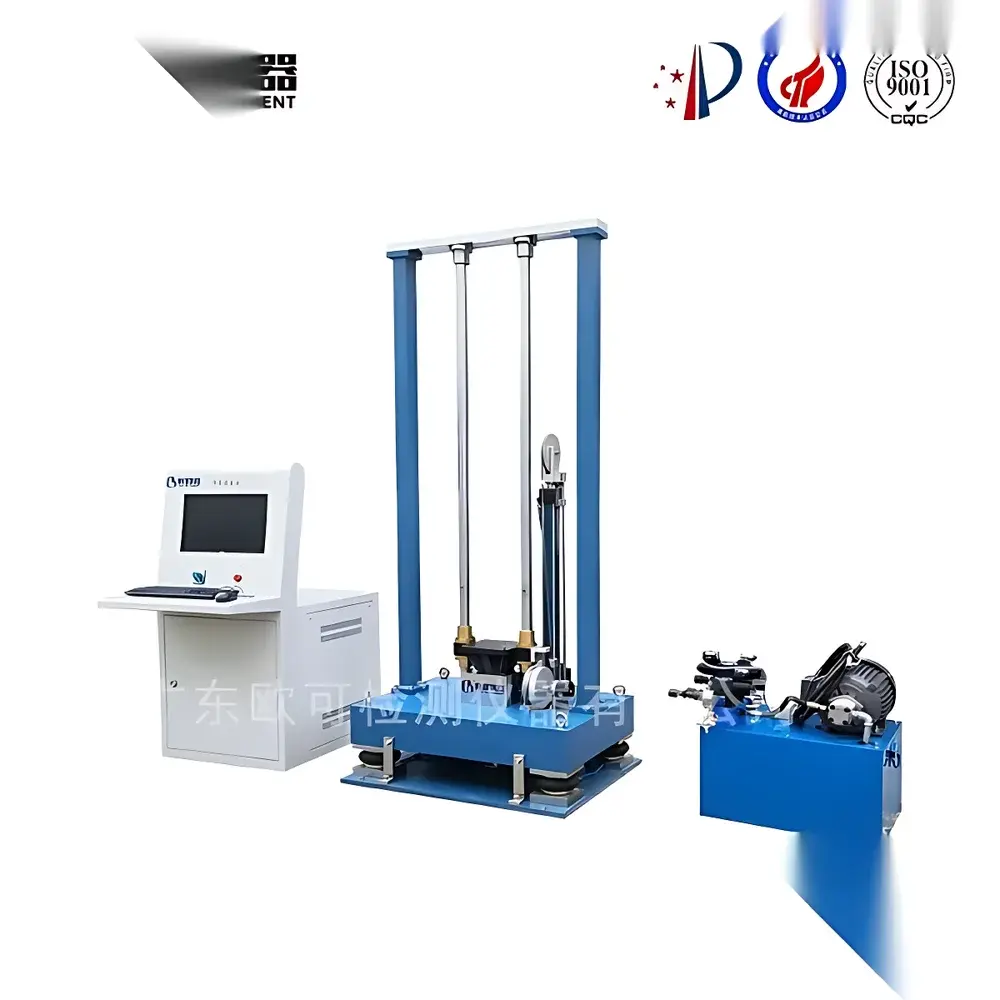
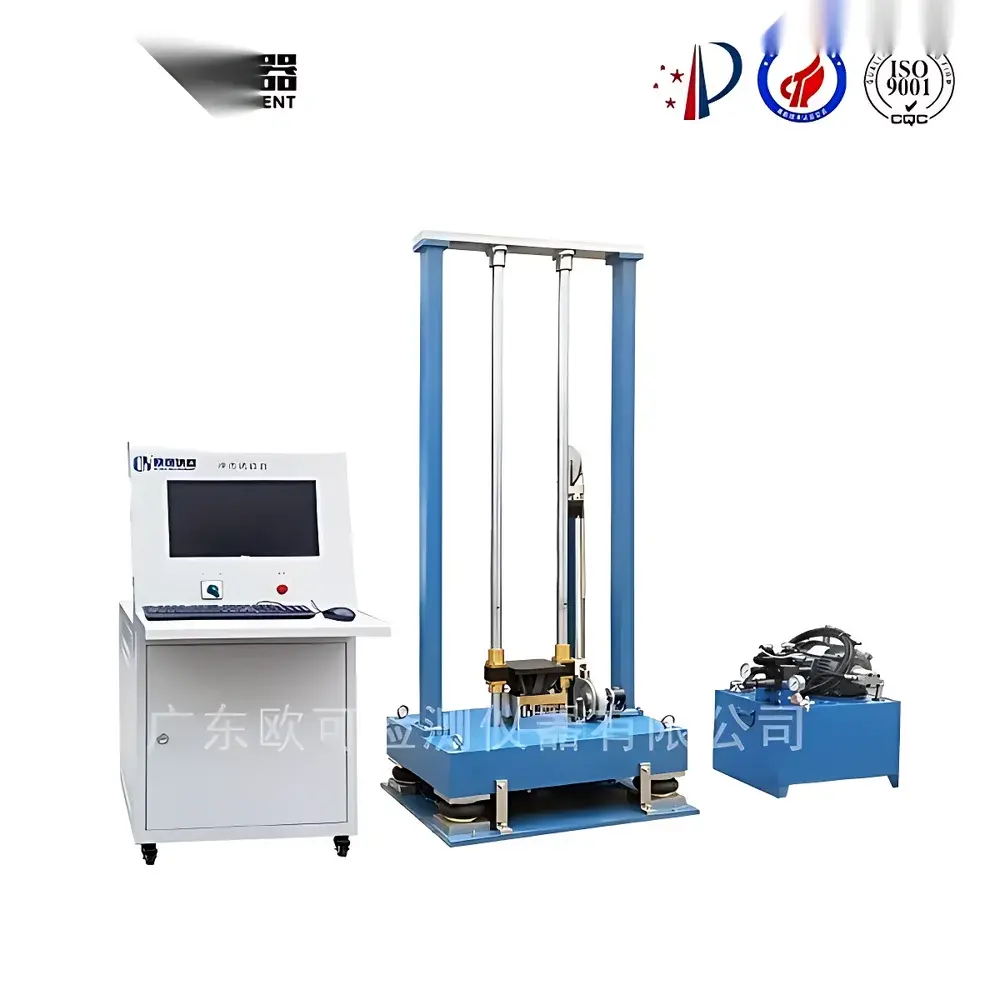
The OK-S Series Electromechanical Shock Testing System is a precision-engineered platform designed for controlled, repeatable mechanical shock simulation in laboratory and industrial quality assurance environments. It operates on the principle of controlled free-fall impact or spring-driven impulse generation, enabling accurate reproduction of transient acceleration profiles—including half-sine, trapezoidal, and post-peak sawtooth waveforms—as defined in international environmental testing standards. Unlike pneumatic or hydraulic shock systems, this electromechanical architecture eliminates compressed air dependency and hydraulic fluid maintenance, offering improved long-term stability, reduced operational noise, and enhanced waveform fidelity through direct motor-driven elevation and programmable release mechanisms. The system is calibrated to deliver high-reproducibility shock pulses with tightly controlled rise time, peak acceleration, and pulse duration—critical parameters for evaluating product robustness against transportation hazards, drop events, and field-service mechanical transients.
Key Features
- DC motor-driven lifting mechanism with precision gear reduction and roller-guided vertical motion ensures consistent elevation height and minimal mechanical hysteresis.
- Interchangeable impact buffers—fabricated from elastomeric compounds, aluminum honeycomb, or polyurethane—allow precise tuning of pulse duration (0.5–30 ms) and waveform shape without hardware modification.
- Dual-mode operation: configurable for single-event drop impact or programmable repetitive shock sequences (adjustable frequency via motor speed control).
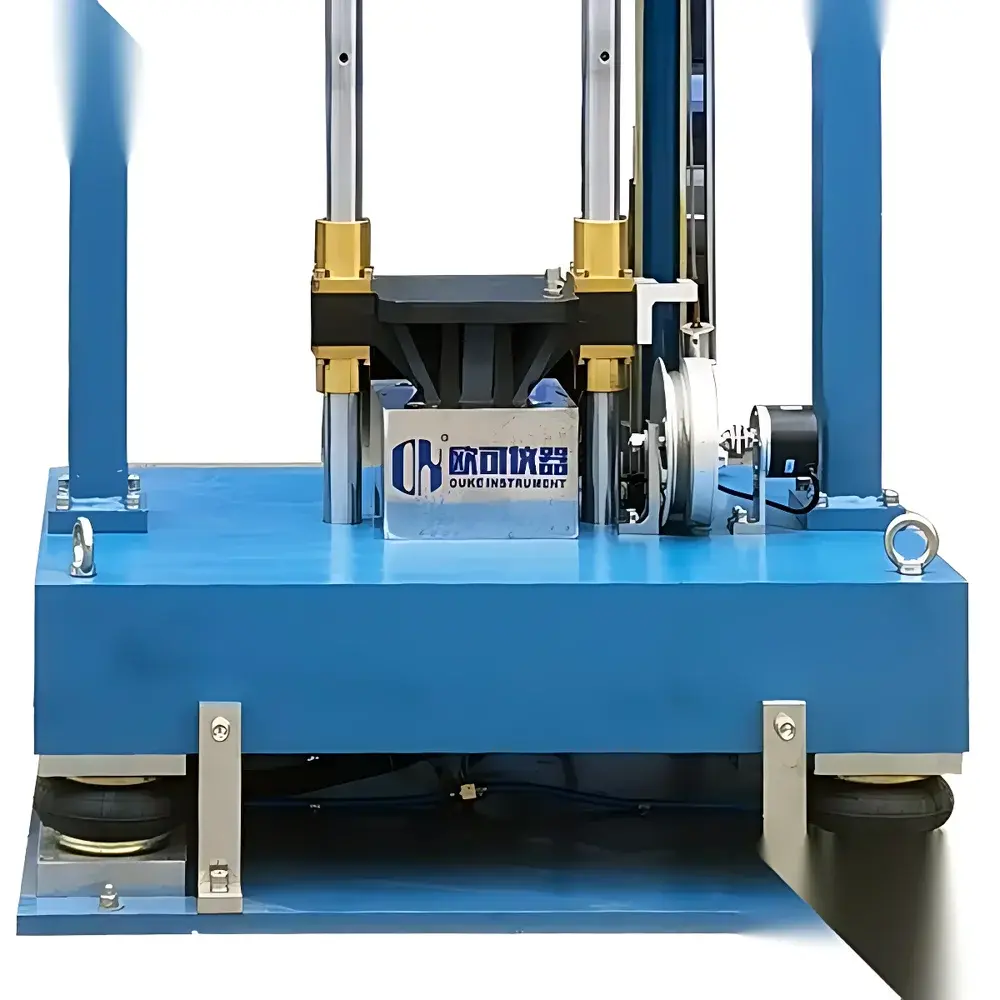
- Integrated base damping system with tuned mass absorbers and isolation mounts minimizes energy transmission to facility floors, meeting ISO 10816-1 vibration emission limits for adjacent instrumentation.
- Fail-safe design includes emergency stop circuitry, position-limit sensors, redundant power cutoff relays, and uninterruptible power monitoring to maintain safety during power loss or operator error.
- Structural frame constructed from stress-relieved welded steel with reinforced load-bearing columns supports rated payloads up to 100 kg while maintaining <±0.3 mm lateral runout across full travel.
Sample Compatibility & Compliance
The OK-S series accommodates test specimens ranging from small electronic modules (e.g., PCB assemblies, MEMS sensors) to full-sized consumer electronics enclosures and automotive ECUs. Mounting interfaces include T-slotted aluminum tables with M6 and ¼”-20 threaded inserts, compatible with standard fixture plates and custom adapters. All models are factory-verified per IEC 60068-2-27 (Shock), MIL-STD-810H Method 516.8 (Shock), GJB 150.18A (Chinese military standard), JIS C 0041, and ASTM D999 (Packaging Shock Testing). Calibration certificates traceable to NIST or equivalent national metrology institutes are provided with each shipment. Optional waveform validation kits—including piezoelectric accelerometers, charge amplifiers, and digital oscilloscopes—are available for in-house verification per ISO/IEC 17025 requirements.
Software & Data Management
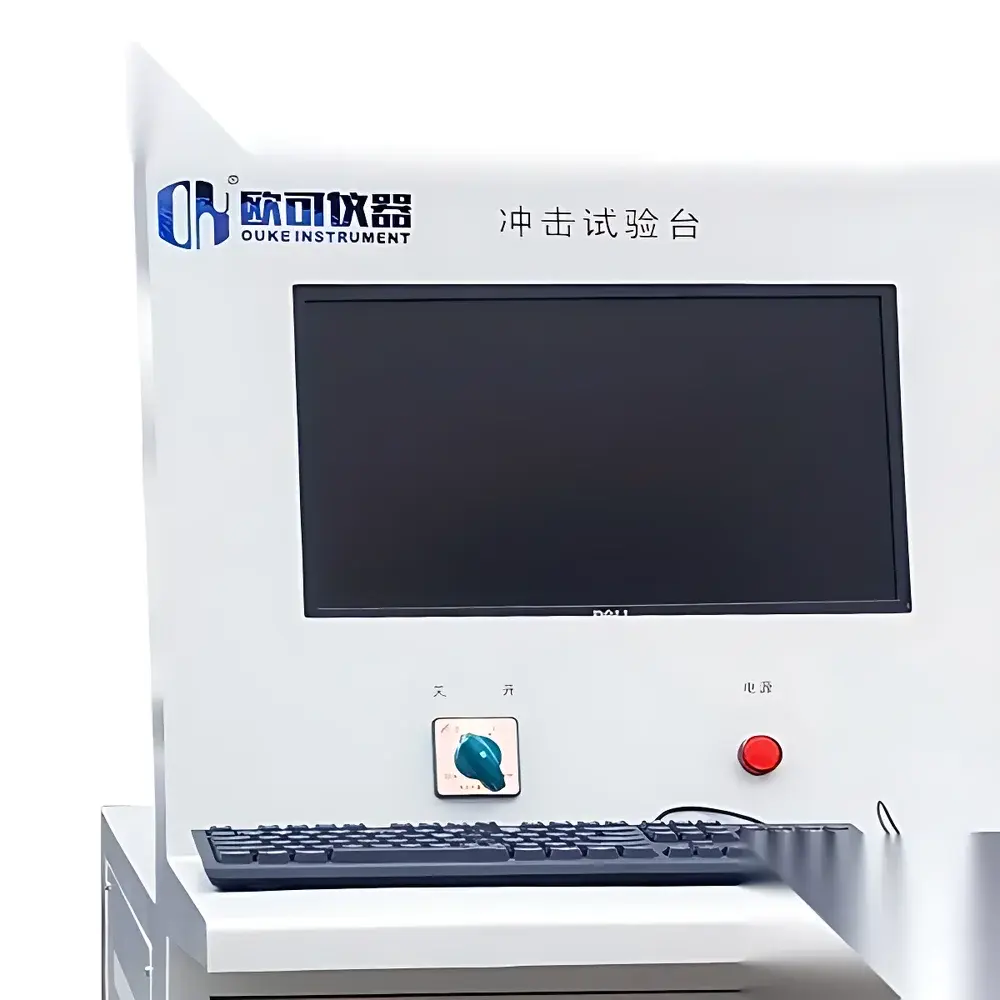
The system integrates with OK-TestControl v3.2—a Windows-based application supporting waveform definition, test sequencing, real-time acceleration monitoring, and automated report generation. Software features include: preloaded waveform templates compliant with major standards; user-defined pulse parameter constraints (e.g., maximum jerk, minimum zero-crossing tolerance); audit-trail logging per FDA 21 CFR Part 11 requirements (with optional electronic signature module); and export of raw time-acceleration data in CSV, MATLAB (.mat), and Universal File Format (UFF 58) formats. All firmware and software updates are delivered via secure HTTPS portal with version-controlled release notes and backward-compatible configuration migration tools.
Applications
- Qualification testing of aerospace avionics per DO-160 Section 8 (Shock)
- Drop-test validation of handheld medical devices under IEC 60601-1 Clause 9.4.2
- Transportation simulation for lithium-ion battery packs per UN 38.3 Section 38.3.4.1
- Robustness assessment of semiconductor packaging subjected to board-level mechanical shock
- Glass display integrity evaluation in smartphones and tablets using half-sine pulses at 1,500 g / 2 ms
- Quality gate testing in automotive Tier-1 suppliers for ECU mounting bracket fatigue resistance
FAQ
What waveform types are natively supported without add-on hardware?
Half-sine waveforms are generated as standard. Trapezoidal and post-peak sawtooth waveforms require optional buffer kits and are configured via software-defined release timing and impact surface geometry.
Is third-party calibration certification included with purchase?
Yes—each unit ships with a factory calibration certificate valid for 12 months, traceable to NIST or DAkkS-accredited laboratories. Optional annual recalibration services are available under GLP-compliant service agreements.
Can the system be integrated into an existing test automation framework?
Yes—the OK-S series provides TCP/IP and RS-232 communication protocols with documented SCPI command sets, enabling seamless integration with LabVIEW, Python-based test sequencers, and MES platforms such as Siemens Opcenter or Rockwell FactoryTalk.
What is the typical lead time for delivery and commissioning?
Standard models ship within 6–8 weeks after order confirmation. On-site installation, mechanical verification, and operator training are completed within 48 hours of equipment arrival at customer premises, subject to facility readiness (level floor, adequate power, and ventilation).
Does the warranty cover waveform repeatability drift over time?
Yes—the 24-month comprehensive warranty includes periodic performance verification of acceleration amplitude deviation (<±2.5% of setpoint) and pulse duration consistency (<±0.2 ms), measured using certified reference accelerometers and calibrated data acquisition systems.



