
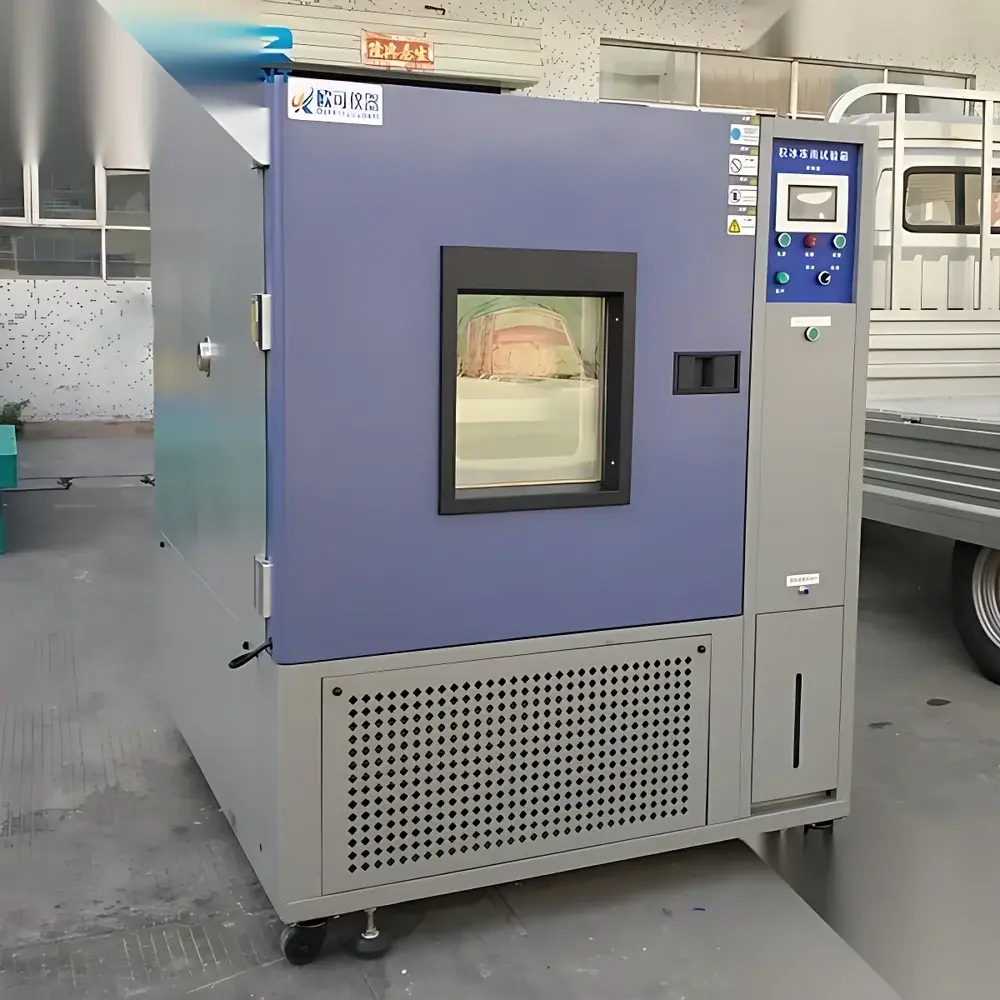
English Product Name
| Brand | OK Instruments |
|---|---|
| Origin | Imported |
| Manufacturer Type | Authorized Distributor |
| Price | USD 14,000 (FOB) |
| Internal Dimensions (L×W×H) | 500×600×500 mm to 1000×1000×1000 mm |
| External Dimensions (L×W×H) | 1000×1750×1100 mm to 1500×2000×1600 mm |
| Temperature Range | −20 °C to +80 °C (customizable) |
| Temperature Uniformity | ±2.0 °C |
| Temperature Fluctuation | ±0.5 °C |
| Rainfall Intensity | 25 mm/h |
| Nozzle Orifice Diameter | φ0.4 mm |
| Simulated Droplet Diameter | 1.0–1.5 mm |
| Ice Accumulation Thickness Options | 6 / 13 / 37 / 75 mm |
| Ice Density Range | 0.2–0.9 g/cm³ |
| Water Temperature Control | 0–5 °C |
| Inner Chamber Material | SUS304 Stainless Steel |
| Outer Chamber Material | Galvanized Steel with Powder Coating or Optional SUS304 |
| Heating System | Helical Ni-Cr Alloy Heaters with Ceramic Insulation Mounts |
| Humidification | Embedded Ni-Cr Alloy Electric Humidifier |
| Refrigeration | Hermetic Compressor (Tecumseh or French-made equivalent) |
| Controller | 5.7″ TFT Color LCD Touchscreen (Bilingual English/Chinese Interface) |
| Cable Port | One φ50 mm Opening |
| Standard Accessories | Adjustable Sample Rack Set |
| Power Supply | AC 220 V ±5%, 50 Hz ±0.5 Hz, Single-Phase Three-Wire |
| Ambient Operating Conditions | 5–35 °C, RH ≤85% non-condensing |
Overview
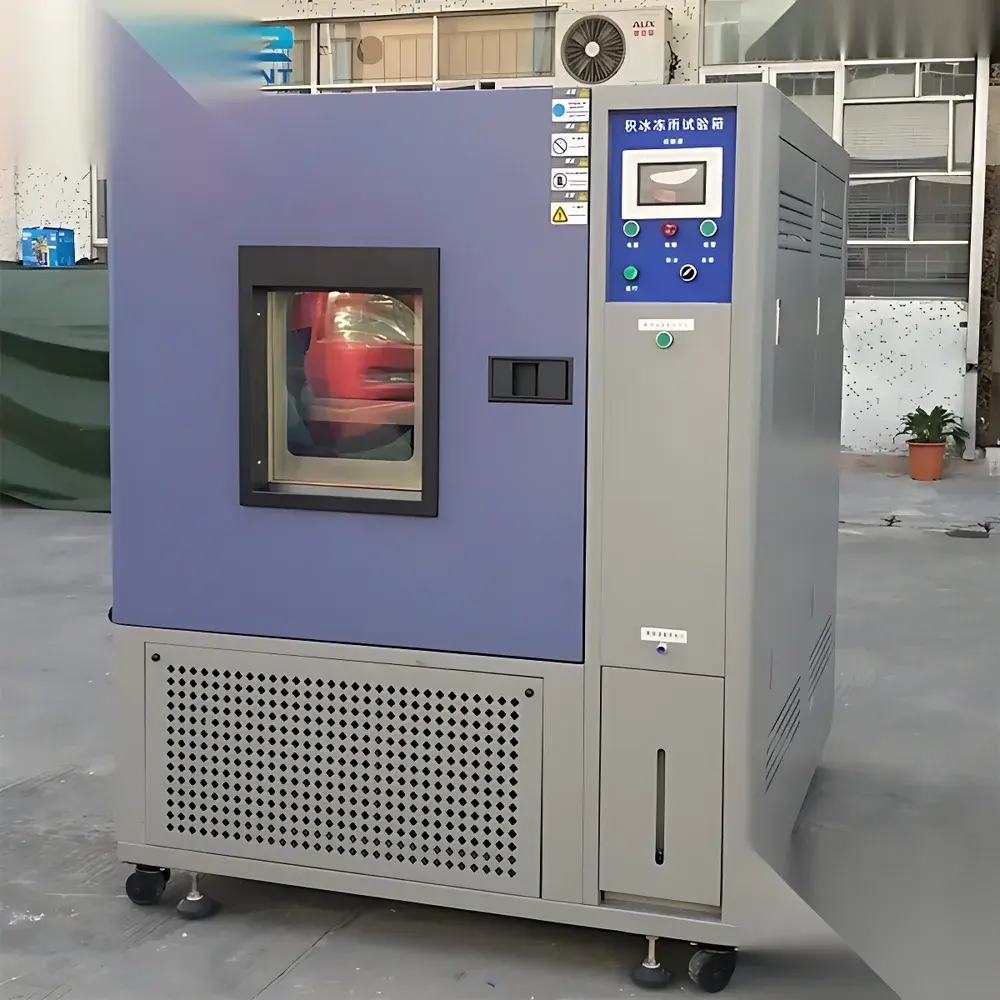
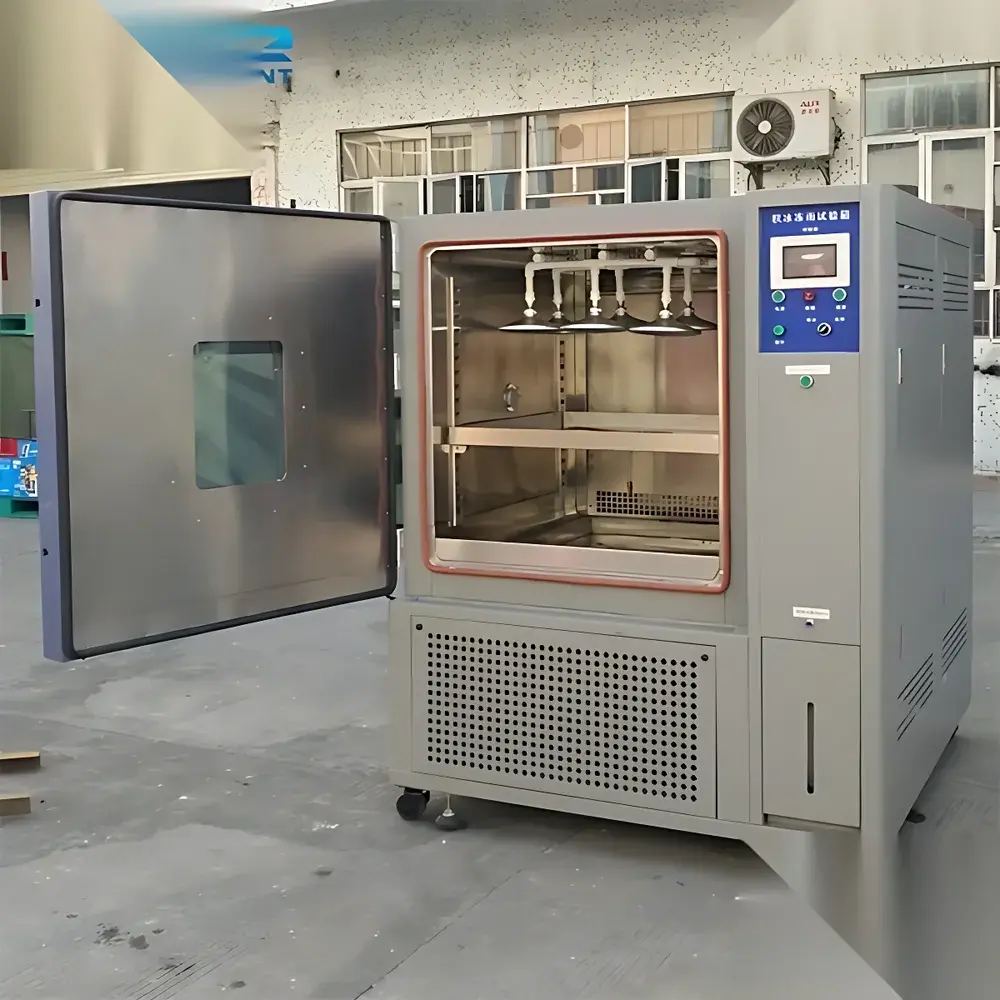
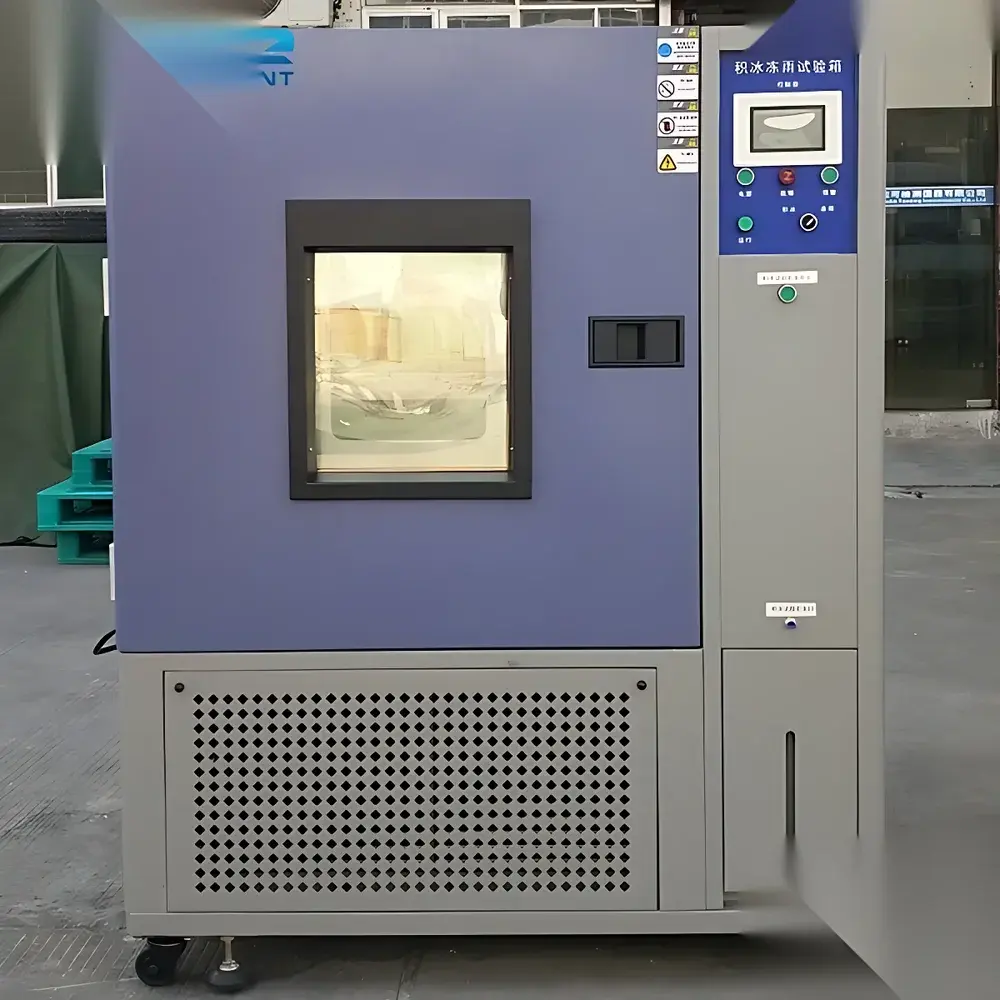
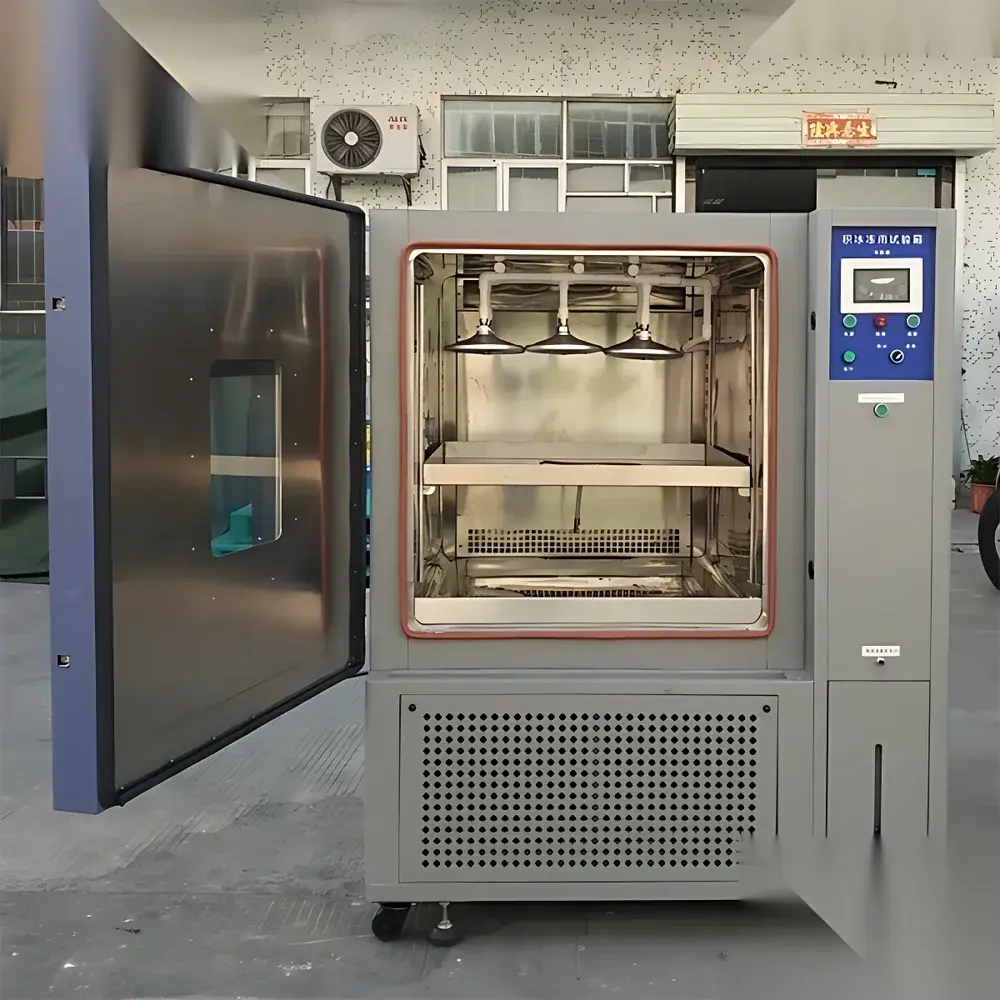
The OK-JBDY Series Icing and Freezing Rain Test Chamber is a purpose-built environmental simulation system engineered for rigorous laboratory evaluation of equipment performance under controlled icing and freezing rain conditions. It operates on the principle of controlled nucleation and accretion: supercooled water droplets—generated at precisely regulated temperature and size—are directed onto test specimens at defined impact velocity and flux density, replicating natural glaze ice formation mechanisms observed in atmospheric icing events. Designed in strict conformance with GJB 150.22A–2009 (the People’s Republic of China Military Standard for Environmental Testing of Equipment, Part 22: Icing and Freezing Rain Testing), this chamber supports full-cycle qualification testing for aerospace, defense, wind energy, marine, and high-reliability outdoor electronics systems. Its architecture enables reproducible simulation of both rime and glaze ice morphologies—including clear ice from freezing rain and opaque rime from supercooled fog—and accommodates structural load assessment, thermal management validation, and anti-icing/de-icing system efficacy verification under standardized exposure profiles.
Key Features
- Precisely calibrated droplet generation system delivering consistent 1.0–1.5 mm diameter water droplets at 25 mm/h rainfall intensity, with nozzle orifice diameter fixed at φ0.4 mm to ensure laminar flow stability and minimal splashing.
- Multi-stage temperature control architecture maintaining chamber air and spray water independently: ambient air stabilized between −20 °C and +80 °C (±0.5 °C fluctuation, ±2.0 °C uniformity), while spray water temperature held strictly within 0–5 °C to guarantee supercooling prior to impact.
- Modular chamber configurations (OK-JBDY-150 through OK-JBDY-1000) with scalable internal volumes—from 0.15 m³ to 1.0 m³—enabling flexible specimen sizing from avionics components to full-scale rotor blade sections.
- Dual-material construction: corrosion-resistant SUS304 stainless steel interior for long-term exposure to saline-mist and ice meltwater; exterior options include powder-coated galvanized steel or full SUS304 for marine-grade durability.
- Integrated refrigeration using hermetically sealed compressors (Tecumseh or equivalent European OEM units) paired with optimized heat exchanger geometry to sustain sub-zero operational stability over extended test durations (≥72 h continuous).
- TFT touchscreen controller with real-time logging, programmable multi-step profiles, alarm history, and dual-language (English/Chinese) interface compliant with ISO/IEC 17025 documentation requirements.
Sample Compatibility & Compliance
The OK-JBDY chamber accommodates a broad spectrum of test articles—including aircraft wings, radar domes, photovoltaic panels, offshore sensor housings, and unmanned aerial vehicle (UAV) propulsion systems—provided they fit within the selected internal volume and do not obstruct airflow or droplet trajectory paths. All models meet structural and thermal boundary condition requirements specified in GJB 150.22A–2009 for Class I (freezing rain), Class II (supercooled drizzle), and Class III (mixed-phase icing) test categories. While not certified to ASTM D3232 or SAE ARP5412 by default, the chamber’s physical parameters (droplet size distribution, liquid water content equivalence, impact velocity profile, and surface temperature gradient control) are traceable to those standards via third-party calibration reports. Optional traceable NIST-traceable temperature and flow sensors can be integrated to support GLP-compliant test execution and FDA 21 CFR Part 11–aligned audit trails when paired with external data acquisition software.
Software & Data Management
The embedded controller provides local data acquisition at 1 Hz resolution for chamber air temperature, water temperature, setpoint deviation, and runtime status. Exportable CSV logs include timestamped values for all monitored variables, supporting post-test statistical analysis in MATLAB, Python (Pandas), or commercial QC platforms. For enterprise integration, optional RS485/Modbus RTU or Ethernet/IP communication modules enable remote monitoring and command sequencing via SCADA or MES systems. All firmware updates are delivered via secure USB import with SHA-256 signature verification. Audit trail functionality records user login/logout events, parameter changes, and manual override actions—meeting minimum requirements for ISO 9001:2015 clause 7.1.5.2 and IEC 61508 functional safety validation workflows.
Applications
- Aerospace: Validation of wing de-icing boots, pitot-static system ice protection, and UAV flight control surface operability under simulated in-flight icing.
- Renewable Energy: Certification testing of wind turbine blade leading-edge erosion resistance and ice-shedding dynamics under repeated freeze-thaw cycles.
- Maritime & Offshore: Evaluation of radar antenna radome transparency loss, sensor housing optical degradation, and mooring line icing adhesion under sea-spray-derived ice accumulation.
- Defense Electronics: Functional survivability assessment of battlefield communications gear, EO/IR turrets, and unmanned ground vehicle (UGV) navigation sensors exposed to freezing drizzle environments.
- Automotive R&D: Development and verification of autonomous vehicle LiDAR lens heating strategies and camera housing anti-fogging performance in cold-humid conditions.
FAQ
Does the chamber simulate both glaze ice and rime ice?
Yes—glaze ice is formed using the freezing rain mode (supercooled droplets impacting above-freezing surfaces), while rime ice is generated by lowering specimen surface temperature below −10 °C and maintaining high relative humidity with fine droplet mist.
Can ice thickness be measured in situ during testing?
No—ice thickness is verified post-test via calibrated calipers or optical profilometry; however, cumulative mass gain may be estimated using pre- and post-test gravimetric measurements.
Is saline water spraying supported?
Standard configuration uses deionized water; seawater simulation requires optional corrosion-resistant spray manifold upgrade and dedicated filtration loop to prevent nozzle clogging.
What is the maximum continuous run time without maintenance?
72 hours at −15 °C with 25 mm/h rainfall intensity; compressor duty cycle and condensate drainage intervals are automatically managed by the controller.
Are calibration certificates included with shipment?
Factory calibration certificates for temperature sensors and flow meters are provided; NIST-traceable recalibration services are available annually upon request.



