
English Product Name
| Brand | OK |
|---|---|
| Origin | Imported |
| Manufacturer Type | Authorized Distributor |
| Price Range | USD 2,600–12,500 (varies by model) |
| Temperature Range | RT+10°C to 200°C or 300°C |
| Temperature Uniformity | ±2°C |
| Temperature Stability | ±0.5°C |
| Air Exchange Rate | 2–100 cycles/hour |
| Adjustable Air Exchange Interval | 1 min–99 h |
| Internal Chamber Dimensions (W×D×H, mm) | 450×450×500 to 800×1000×1000 |
| Power Consumption | 4.0–9.0 kW |
| Controller | PID + SSR Microprocessor-Based Digital Controller |
| Timer Range | 1–9999 min |
| Rotating Turntable Diameter | Φ250–Φ700 mm |
| Safety Protections | Over-temperature, over-current, motor overheat, leakage, and short-circuit protection |
Overview
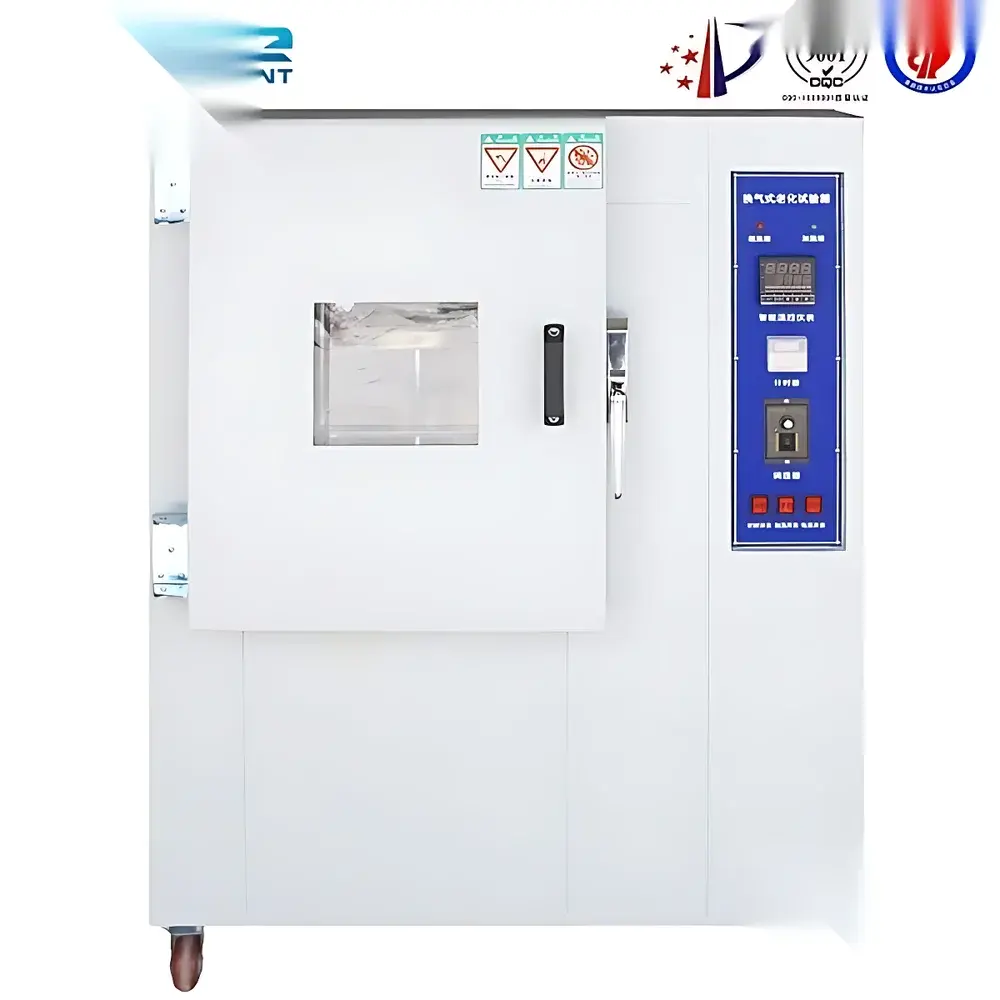
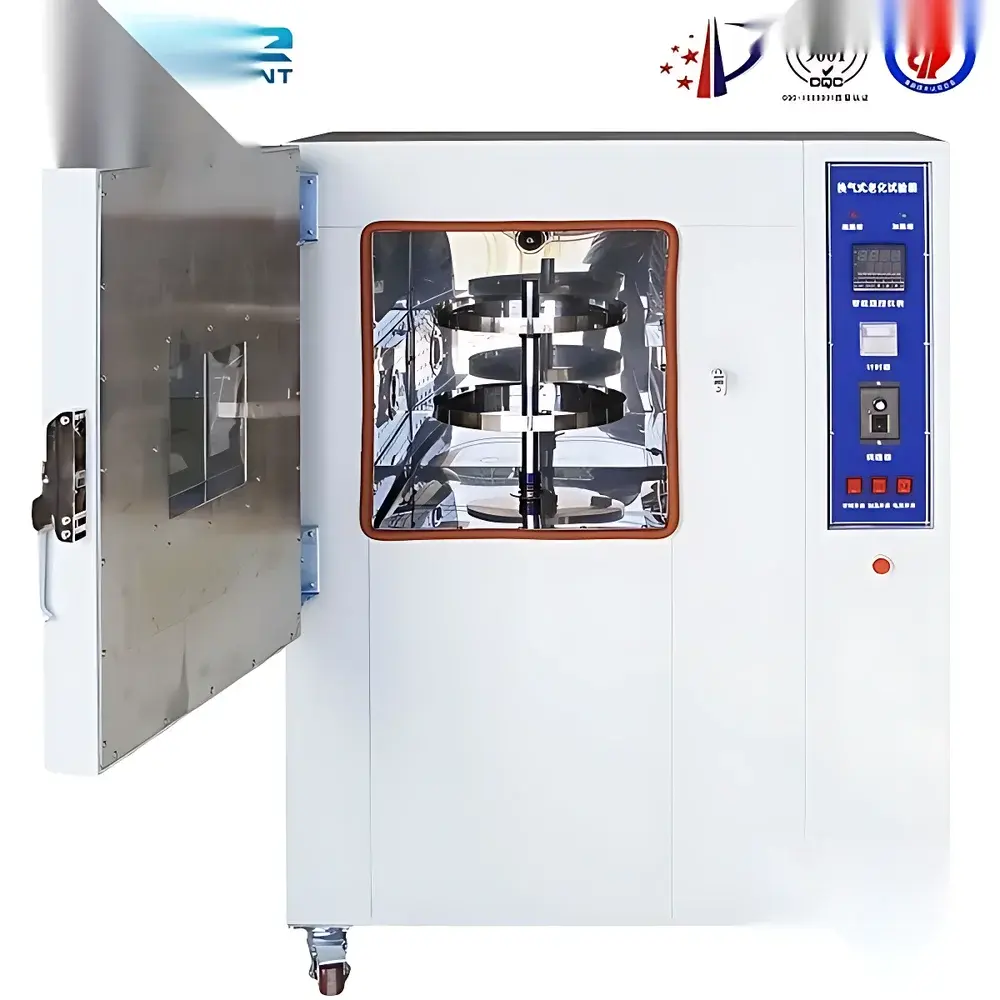
The OK-HQ Series Forced-Air Thermal Aging Test Chambers are precision-engineered environmental simulation systems designed to evaluate the long-term thermal stability and oxidative degradation behavior of polymeric materials—including wires & cables, rubber compounds, plastics, leather, and textiles—under controlled, accelerated aging conditions. Based on the fundamental principle of forced-convection thermal oxidation, these chambers maintain a continuously refreshed ambient atmosphere inside the test chamber via a calibrated, adjustable air exchange system. This ensures reproducible oxygen availability—critical for simulating real-world service life under elevated temperatures—and directly supports compliance with standardized aging protocols defined in ASTM D5423-09 (Type II Forced-Air Laboratory Ovens), ASTM D5374-93(2005), UL 1581, IEC 60811, VDE 0472, JIS C 3005, and GB/T 2951. The chambers operate across a wide temperature range (RT+10°C to 200°C or 300°C), with high-stability microprocessor control enabling precise regulation of both thermal setpoints and air exchange dynamics.
Key Features
- Robust dual-layer chamber construction: inner liner fabricated from polished SUS304 stainless steel (electropolished finish optional); outer shell made of A3 cold-rolled steel with durable epoxy-polyester powder coating.
- High-efficiency horizontal forced-air circulation system with adjustable baffle plates and high-temperature-resistant centrifugal blower, ensuring ≤±2°C temperature uniformity across the working volume per ASTM E145.
- Digital programmable air exchange controller with independent adjustment of exchange frequency (2–100 cycles/hour) and interval timing (1 minute to 99 hours), traceable via integrated digital airflow calibration interface.
- PID + SSR microprocessor-based temperature controller with 0.1°C resolution, real-time deviation display, and auto-tuning functionality; includes built-in timer (1–9999 minutes) with automatic shutdown and alarm output.
- Standardized observation window with tempered glass and integrated LED lighting for continuous visual monitoring without thermal interruption.
- Optional rotating turntable (Φ250–Φ700 mm) with low-RPM drive mechanism to ensure uniform exposure of vertically oriented specimens (e.g., insulated wire samples).
- Energy-optimized insulation using 100 mm thick ultra-fine glass fiber blanket (thermal conductivity ≤0.04 W/m·K), minimizing standby heat loss and improving thermal response consistency.
- Standard 50 mm diameter test port on left side wall (with silicone gasket and brass plug) for external sensor feedthrough, power supply, or data logging integration.
Sample Compatibility & Compliance
The OK-HQ series accommodates diverse specimen geometries—including bundled wires, molded elastomer strips, extruded tubing, fabric swatches, and composite laminates—within its five standard internal volumes (100 L to 800 L). All models meet structural and operational requirements specified in ASTM D5423-09 (Type II oven classification), including minimum airflow velocity (≥0.2 m/s at chamber center), maximum allowable temperature gradient (≤±2°C), and validated air exchange rate linearity. The system architecture supports GLP-compliant operation when paired with optional audit-trail-enabled data loggers and electronic signature modules compliant with FDA 21 CFR Part 11. Calibration certificates (NIST-traceable) and IQ/OQ documentation packages are available upon request for regulated laboratory environments.
Software & Data Management
While the base configuration features an embedded LED display controller, optional RS485/Modbus RTU or Ethernet TCP/IP interfaces enable seamless integration with centralized laboratory information management systems (LIMS) or SCADA platforms. Third-party software (e.g., LabVIEW, MATLAB, or custom Python-based DAQ tools) can acquire real-time temperature, cycle count, elapsed time, and alarm status via ASCII protocol. For full regulatory traceability, optional data logging modules provide time-stamped CSV exports with checksum verification, user access logs, and electronic signature support aligned with ISO/IEC 17025 and GMP Annex 11 requirements.
Applications
- Evaluation of insulation integrity and embrittlement resistance in automotive wiring harnesses per SAE J1128 and ISO 6722.
- Accelerated aging validation of halogen-free flame-retardant (HFFR) cable compounds under IEC 60811-501.
- Thermal oxidative stability testing of silicone rubber gaskets used in aerospace sealing applications.
- Comparative shelf-life modeling of thermoplastic elastomers (TPEs) in medical device housings per ISO 10993-12.
- Pre-compliance screening of textile coatings and synthetic leathers for apparel durability standards (AATCC TM186, ISO 105-B02).
FAQ
What standards does the OK-HQ chamber comply with?
It meets ASTM D5423-09 (Type II), ASTM D5374-93(2005), UL 1581, IEC 60811, VDE 0472, JIS C 3005, and GB/T 2951. Full compliance documentation is provided with each unit.
Can the air exchange rate be verified independently?
Yes—the system includes calibrated flow measurement points and supports third-party validation using hot-wire anemometry or tracer gas dilution methods per ISO 16000-23.
Is remote monitoring supported out of the box?
Standard units include local display only; RS485 Modbus or Ethernet communication modules are optional add-ons for networked supervision.
What is the typical calibration interval recommended?
Annual calibration is recommended per ISO/IEC 17025 guidelines; NIST-traceable certificates and on-site calibration services are available.
Are custom chamber sizes or voltage configurations available?
Yes—custom engineering services include 208V/240V/380V/415V electrical configurations, extended temperature ranges up to 350°C, and bespoke internal dimensions upon request.



