
English Product Name
| Brand | Other Brands |
|---|---|
| Origin | Imported |
| Manufacturer Type | General Distributor |
| Quotation | USD 2,650 (approx.) |
| Chamber Volume | 150 L |
| Temperature Range | –40°C to +150°C (typical, subject to configuration) |
| Humidity Range | 20%–98% RH |
| Cooling Water Requirement | 10–28°C, 0.1–0.3 MPa |
| Control System | PID-based BTHC (Balanced Temperature & Humidity Control) |
| Refrigerant | R404A |
| Compressor | Hermetic Scroll Compressor (TaiKang) |
| Noise Level | <60 dB(A) |
| Compliance | GB/T 2423.1, GB/T 2423.2, IEC 60068-2-1, MIL-STD-2164A, GJB 1032–1990 |
Overview
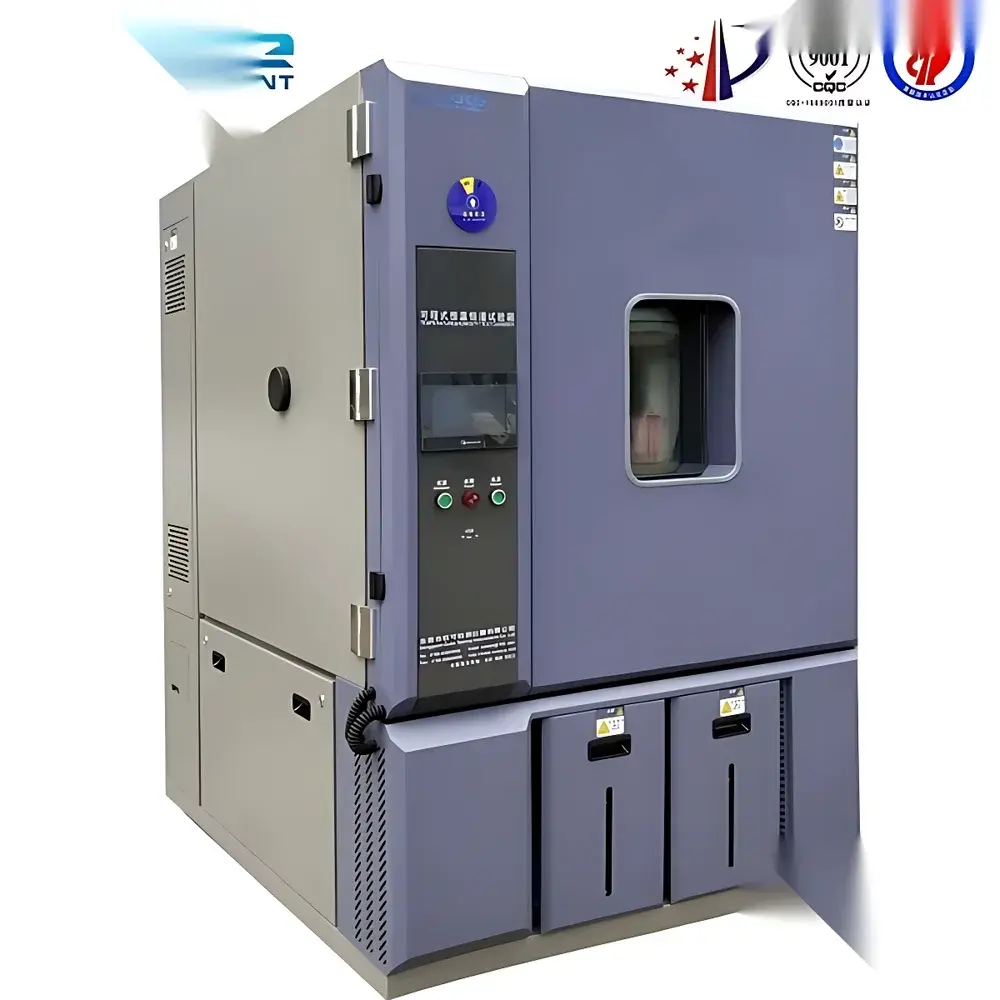
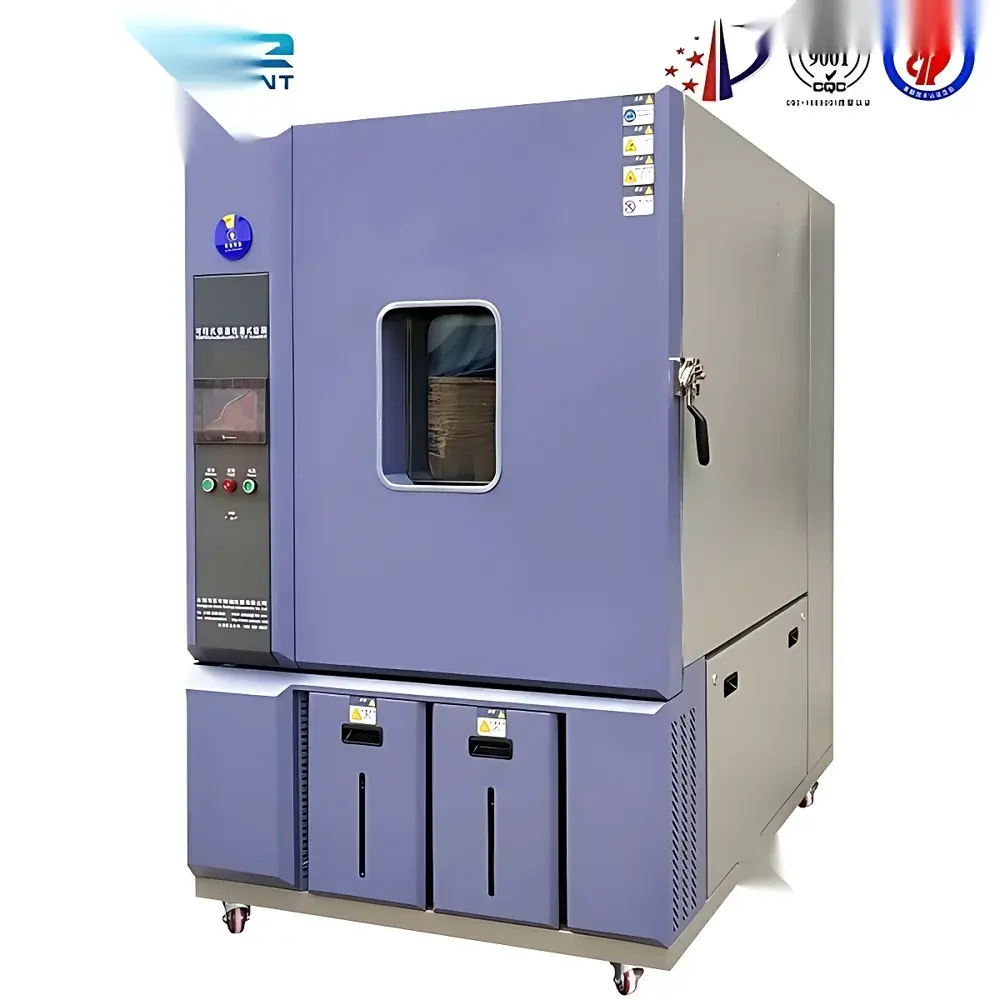
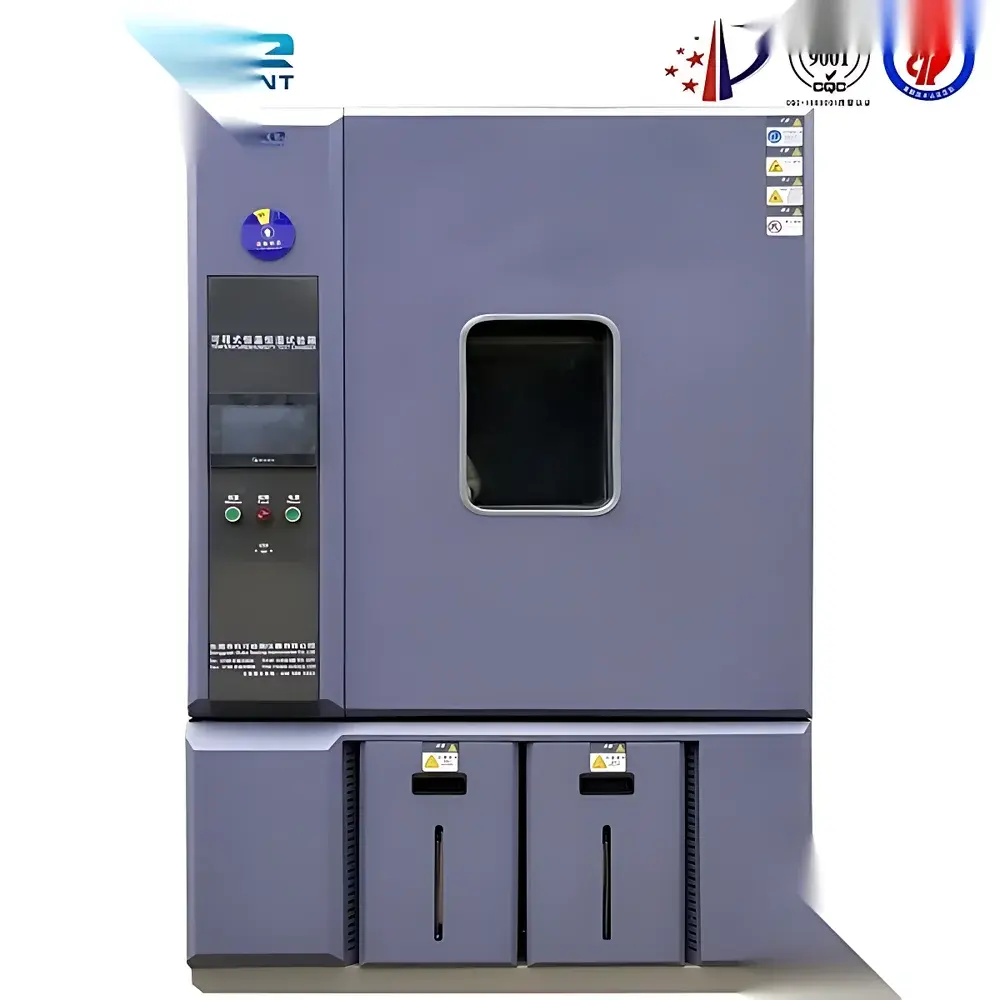
The TH-150L Temperature and Humidity Controlled Environmental Test Chamber is an engineered solution for accelerated environmental stress screening (ESS) and reliability validation of electronic components, automotive modules, aerospace subsystems, and industrial materials under precisely regulated thermal and hygrothermal conditions. Based on the principle of balanced heating, cooling, humidification, and dehumidification—implemented via a P.I.D.-controlled BTHC (Balanced Temperature & Humidity Control) architecture—the chamber maintains long-term stability in setpoint tracking with minimal overshoot or drift. Its design adheres to fundamental thermodynamic constraints of air-based conditioning systems: temperature ramp rates are defined as average air-change rates across the full working volume—not specimen surface or core temperature gradients—and are inherently load-dependent. Performance specifications—including temperature uniformity (±2.0°C), humidity accuracy (±3.0% RH), and recovery time—are validated under standard ambient conditions (25°C ±6°C, no-load), per ISO/IEC 17025-aligned calibration protocols documented in the included third-party metrological certificate.
Key Features
- Robust multi-layer safety architecture: dry-heater protection, independent over-temperature cutoff, low-water-level interlock, compressor overload/overheat/overcurrent sensing, high-pressure refrigerant switch, molded-case circuit breaker, and earth-leakage protection.
- Optimized thermal-hygric dynamics: full-capillary tube expansion system with auto-load capacity modulation—proven more stable and responsive than conventional thermostatic expansion valves—enabling rapid, uniform, and repeatable temperature/humidity transitions.
- Human-centered interface: ergonomic arc-shaped enclosure with flush-mount non-reactive handles; intuitive touchscreen controller supporting dual-mode operation (constant condition and programmable cycling), preloaded with standardized test profiles per MIL-STD-2164A and GJB 1032.
- Energy-efficient engineering: integrated distilled water recovery loop for humidification, optimized power routing reducing operational energy consumption by up to 30%, and automatic municipal water filtration—eliminating dependency on deionized or purified water supplies.
- Acoustically damped construction: hermetically sealed TaiKang scroll compressor operating below 60 dB(A), enabling deployment in shared laboratory environments without acoustic isolation requirements.
Sample Compatibility & Compliance
The TH-150L accommodates test specimens up to 450 mm × 450 mm × 350 mm (W×D×H), supported by two adjustable stainless-steel shelves. It meets the physical and procedural requirements of multiple international and defense-grade standards, including GB/T 2423.1–2023 (Cold Test Method A), GB/T 2423.2–2023 (Dry Heat Test Method B), IEC 60068-2-1:2007, MIL-STD-2164A (1995), and GJB 1032–1990 (Environmental Stress Screening for Electronic Equipment). All control logic and data logging functions comply with GLP/GMP-relevant traceability principles; audit trails, user access levels, and electronic signature support can be enabled via optional firmware upgrade to meet FDA 21 CFR Part 11 readiness requirements.
Software & Data Management
The embedded controller runs proprietary firmware developed in-house, supporting multilingual UI (English, German, Japanese, Simplified Chinese) and export of timestamped CSV logs containing chamber air temperature, relative humidity, setpoint deviation, alarm history, and runtime diagnostics. Optional Ethernet/Wi-Fi connectivity enables remote monitoring, centralized fleet management via web-based dashboards, and integration with LIMS or MES platforms using Modbus TCP or OPC UA protocols. Calibration metadata—including date, technician ID, reference standard ID, and uncertainty budget—is embedded in each exported dataset, satisfying ISO/IEC 17025 clause 7.7 traceability mandates.
Applications
This chamber is routinely deployed in: qualification testing of PCB assemblies under thermal cycling and damp heat (IEC 60068-2-14, IEC 60068-2-30); accelerated life testing of polymer encapsulants and conformal coatings; environmental stress screening (ESS) of avionics subassemblies per MIL-STD-2164A; validation of battery thermal management systems under combined thermal-hygric loads; and material compatibility studies involving hygroscopic composites or moisture-sensitive adhesives. Its 150 L internal volume provides sufficient spatial margin for airflow homogenization while maintaining accessibility for manual sample insertion and sensor placement.
FAQ
What is the typical temperature ramp rate for this chamber?
Average air temperature transition rates range from 1°C/min to 3°C/min depending on target range, load mass, and ambient cooling water conditions—per Clause 3 of the technical note.
Does the unit include calibration documentation?
Yes—a NIST-traceable third-party metrological calibration certificate is supplied, covering temperature and humidity sensors at three points across the operational range.
Can the chamber operate continuously at 98% RH and 85°C?
Yes, but sustained operation above 85°C and >85% RH requires active condensate management and periodic maintenance of the humidifier sump; consult the controller’s built-in duty-cycle limiter for extended high-stress profiles.
Is custom external dimensioning available?
Yes—standard footprint excludes protrusions (e.g., condenser vents, cable glands); non-standard enclosures can be fabricated upon engineering review and mechanical interface agreement.
What refrigerant is used, and is it compliant with current environmental regulations?
R404A is employed—a zero-ozone-depletion-potential (ODP = 0) hydrofluorocarbon approved under Annex I of the EU F-Gas Regulation (No. 517/2014) for laboratory-scale equipment through 2030, with full phaseout roadmap alignment.



