
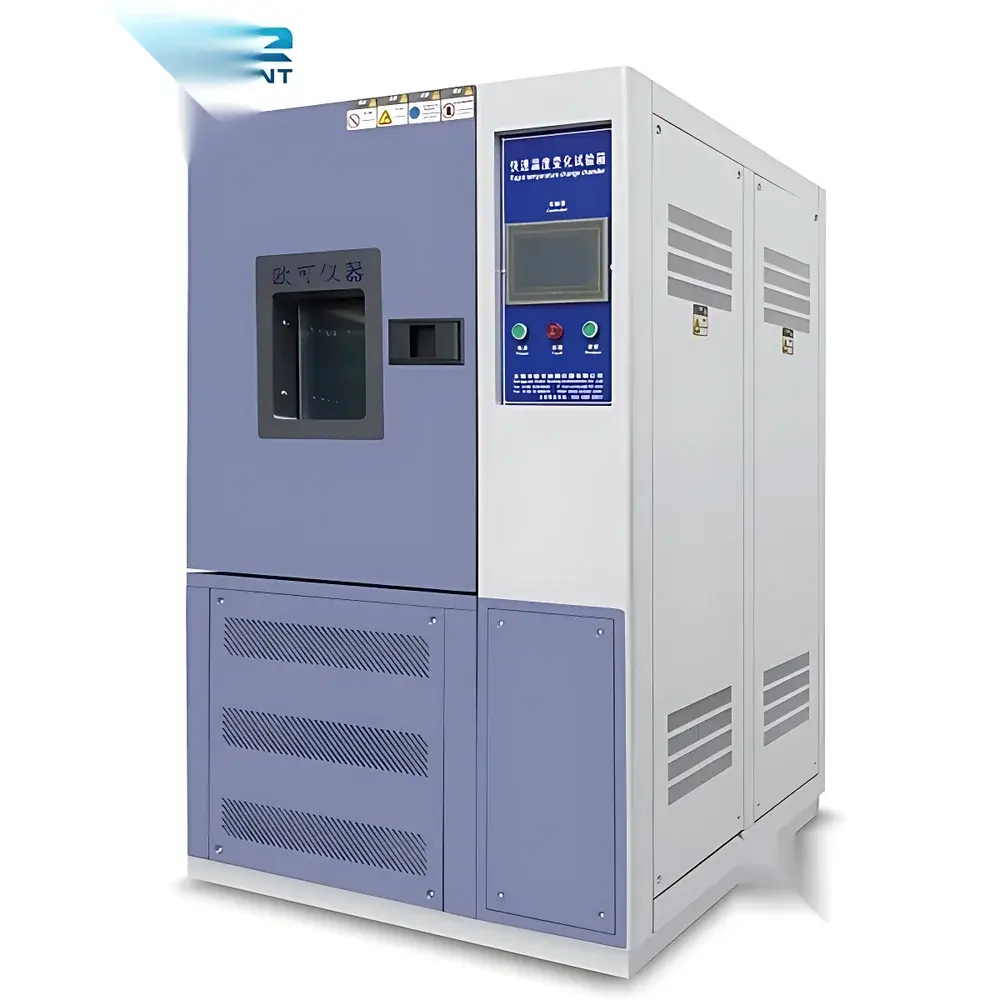
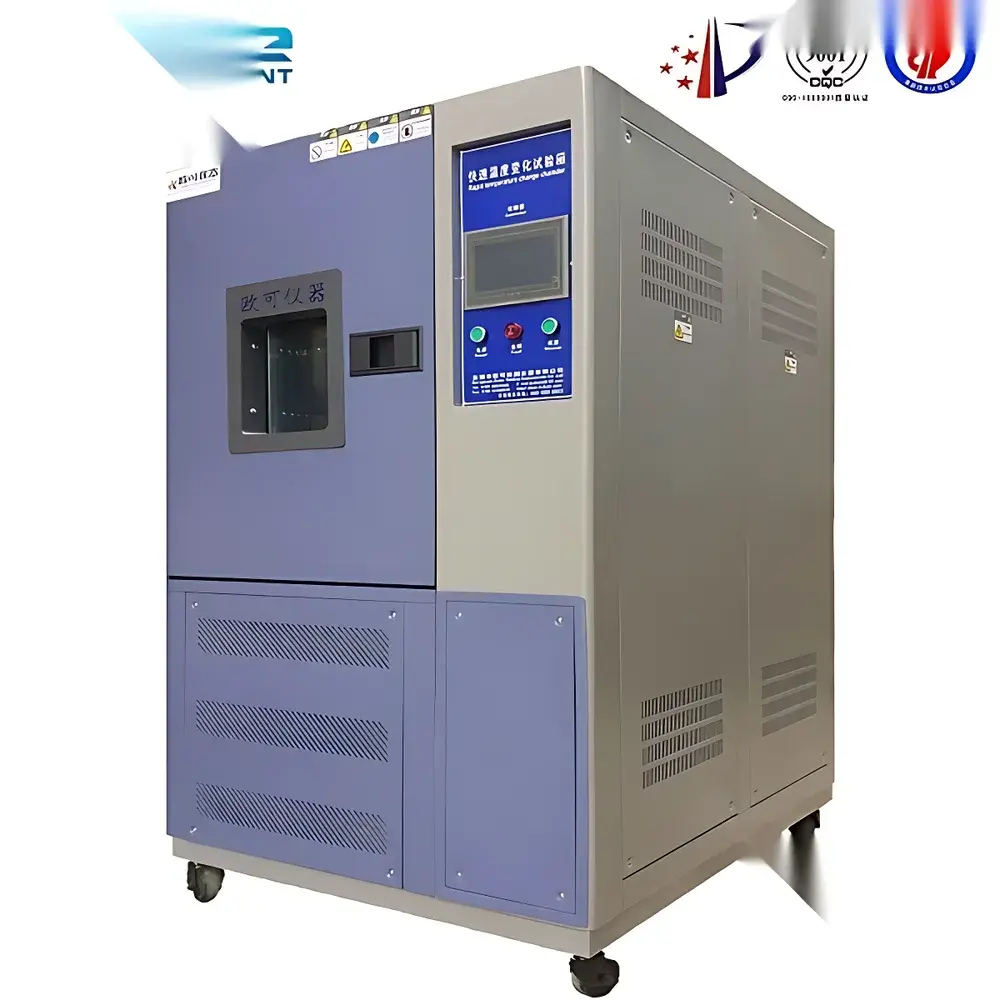
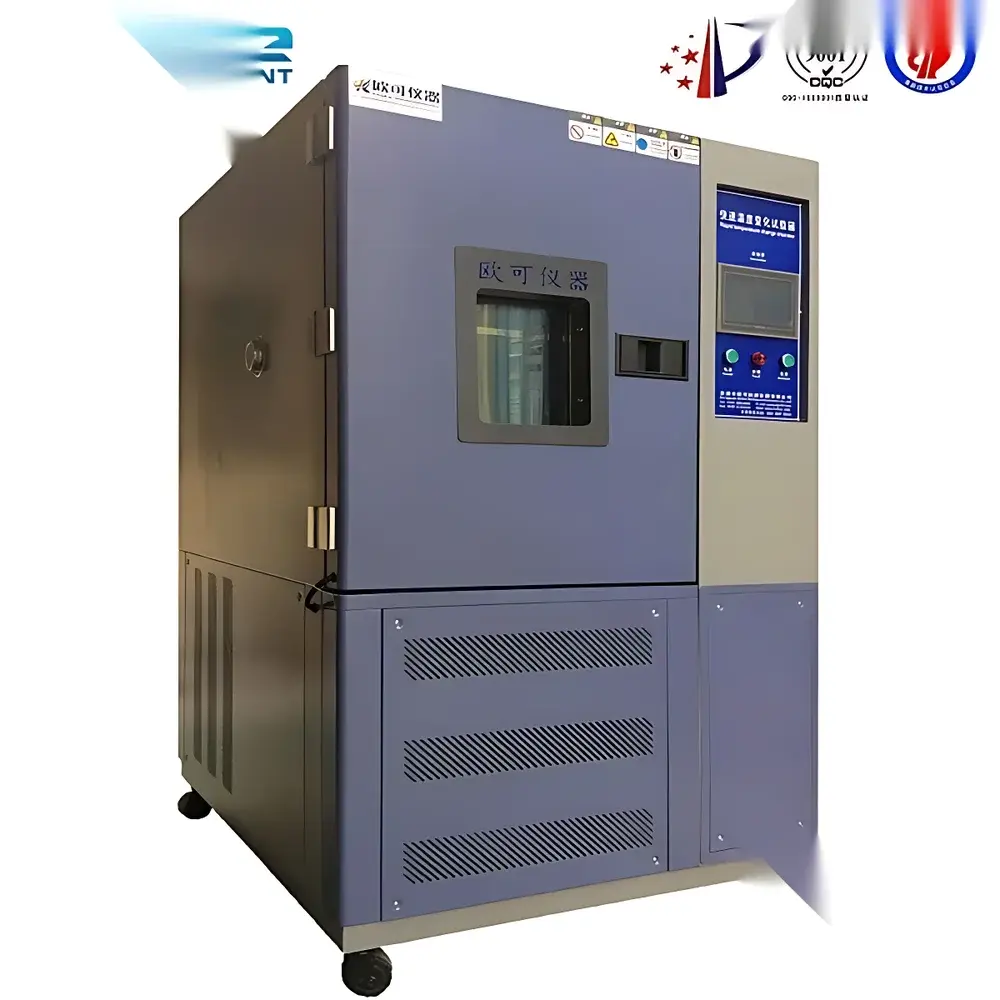
English Product Name
| Brand | Other Brands |
|---|---|
| Origin | Imported |
| Manufacturer Type | Authorized Distributor |
| Price | USD 13,500–18,000 (FOB) |
| Temperature Range | A: −20°C to +100°C |
| B | −40°C to +100°C |
| C | −60°C to +100°C |
| Temperature Uniformity | ≤ ±2.0°C |
| Temperature Stability | ≤ ±0.5°C |
| Temperature Deviation | ≤ ±2.0°C |
| Ramp Rate | Heating: ≥3°C/min |
| Cooling | 0.7–1.0°C/min |
| Refrigeration System | Air-Cooled, Single-Stage Mechanical Compression |
| Compressor | Hermetic Imported Unit |
| Controller | Imported Intelligent PID-Based Temperature & Humidity Controller (Optional Humidity Control per GB/T 10586 & IEC 60068-3-5) |
| Internal Dimensions (W×D×H, mm) | 350×320×450 |
| Power Supply | AC 220V±10% / 50Hz or AC 380V±10% / 50Hz |
| Ambient Operating Temperature | +5°C to +35°C |
| Inner Chamber Material | SUS304 Stainless Steel |
Overview
The KS-TH Series Environmental Stress Screening (ESS) Chamber is an engineered solution for accelerated thermal aging, temperature cycling, and reliability validation of electronic components, automotive modules, aerospace subsystems, and industrial materials. Based on the fundamental principles of controlled thermal stress application—governed by Arrhenius kinetics and JEDEC JESD22-A104—this chamber subjects test specimens to precisely defined high-low temperature profiles to simulate long-term operational degradation in compressed timeframes. Designed and validated against multiple international standards—including GB/T 10589 (Low-Temperature Test Chambers), GB/T 11158 (High-Temperature Test Chambers), GB/T 10586 (Damp Heat Test Chambers), and IEC 60068-3-5 (Environmental Testing – Guidance for Temperature and Humidity Control)—the KS-TH platform supports full compliance with MIL-STD-810G Method 502.6, IPC-9701A, and ISO 16750-4 for automotive electronics qualification.
Key Features
- Optimized air circulation architecture featuring a dual-duct, tangential airflow system ensures uniform thermal distribution across the entire working volume—verified per IEC 60068-3-5 Annex D.
- Hermetically sealed, high-efficiency imported compressors deliver stable refrigeration performance under continuous operation, minimizing maintenance intervals and supporting unattended 72-hour+ test cycles.
- Multi-point calibrated PID-based controller with real-time feedback loop enables sub-degree temperature resolution and adaptive ramp rate control—critical for simulating realistic thermal shock transitions.
- SUS304 stainless steel interior chamber resists corrosion, prevents particulate shedding, and meets cleanroom-compatible cleaning protocols required for semiconductor packaging and medical device validation.
- Dual-layer safety architecture includes independent mechanical overtemperature cutoff, compressor thermal overload protection, fan motor overheat monitoring, refrigerant low-pressure alarm, and optional water-level sensing for humidified variants.
Sample Compatibility & Compliance
The KS-TH series accommodates a broad spectrum of sample geometries—from PCB assemblies and battery cells to polymer housings and optical sensors—without compromising thermal fidelity. Internal dimensions scale from 350×320×450 mm (KS-TH-50) to 1000×1000×1000 mm (KS-TH-1000), enabling parallel testing of up to 24 AEC-Q200 qualified capacitors or full-size EV battery modules. All models are preconfigured to meet traceability requirements under ISO/IEC 17025:2017 for calibration laboratories and support GLP/GMP audit readiness via configurable event logging (e.g., door open/close, setpoint change, alarm activation). Optional humidity control extends compliance to GB/T 2423.3 (IEC 60068-2-78) and USP for pharmaceutical packaging stability studies.
Software & Data Management
Equipped with RS485/Modbus RTU and optional Ethernet interfaces, the KS-TH integrates seamlessly into centralized lab management systems (LIMS) and MES environments. The embedded controller logs timestamped temperature/humidity data at user-defined intervals (1–60 sec), stores ≥30 days of local history, and exports CSV-formatted reports compatible with JMP, Minitab, and Python-based statistical process control (SPC) workflows. For regulated industries, optional firmware upgrade enables 21 CFR Part 11-compliant electronic signatures, audit trails, and role-based access control—supporting FDA submissions and ISO 13485 quality system documentation.
Applications
- Accelerated life testing of lithium-ion battery cells under thermal cycling (−40°C ↔ +85°C, 500 cycles).
- Thermal shock qualification of automotive ADAS ECUs per ISO 16750-4 Section 4.2.2.
- Material embrittlement analysis of polymeric seals used in aerospace hydraulic systems.
- Reliability screening of solder joints in high-density BGA packages per IPC-9701A Annex B.
- Stability assessment of sterile barrier packaging per ASTM F1980 and ISO 11607-1.
FAQ
What standards does the KS-TH chamber comply with for temperature uniformity verification?
Per IEC 60068-3-5, uniformity is verified using nine calibrated PT100 sensors placed at standardized locations (center + eight corners); results are documented in the Factory Acceptance Test (FAT) report.
Can the chamber be integrated into an automated test sequence with external PLCs?
Yes—Modbus RTU protocol enables bidirectional communication for setpoint triggering, status polling, and fault acknowledgment within SCADA or LabVIEW-controlled test benches.
Is humidity control available as a factory-installed option?
Yes—humidified variants (KS-TH-H series) include steam generator, stainless steel water reservoir, and condensate management system compliant with GB/T 10586 and IEC 60068-2-78.
What is the expected mean time between failures (MTBF) for the refrigeration system?
Based on field data from 120+ installed units, MTBF exceeds 15,000 hours under standard operating conditions (≤8 hrs/day, ambient ≤30°C).
Does the controller support custom profile programming with dwell, ramp, and loop functions?
Yes—the interface supports up to 99 segments per profile, nested loops (max 999 cycles), and conditional branching based on elapsed time or sensor thresholds.



