
English Product Name
| Brand | OEM |
|---|---|
| Origin | Imported |
| Manufacturer Type | Authorized Distributor |
| Price | USD 3,100 (reference only) |
| Temperature Range | –40 °C to +150 °C (optional: –120 °C to +150 °C) |
| Temperature Resolution | 0.01 °C |
| Temperature Uniformity | ±0.5 °C |
| Temperature Deviation | ≤ ±2 °C |
| Humidity Range | 30–98% RH (optional: 5–98% RH) |
| Humidity Resolution | 0.1% RH |
| Humidity Deviation | ≤ ±2.5% RH |
| Cooling Rate | 0.7–1.0 °C/min |
| Heating Rate | 2.0–3.0 °C/min |
| Control System | TEMI880 Color LCD Touchscreen Programmable Controller |
| Power Supply | 380 V ±5%, 50 Hz, 3P+N+G (220 V optional) |
| Inner Chamber Material | SUS304 Stainless Steel |
| Outer Casing | SUS304 Stainless Steel or A3 Steel with Electrostatic Powder Coating (Paint-Finished) |
| Ambient Operating Conditions | 25 °C ±6 °C, No Load |
| Cooling Water Requirements | 10–28 °C, 0.1–0.3 MPa |
Overview
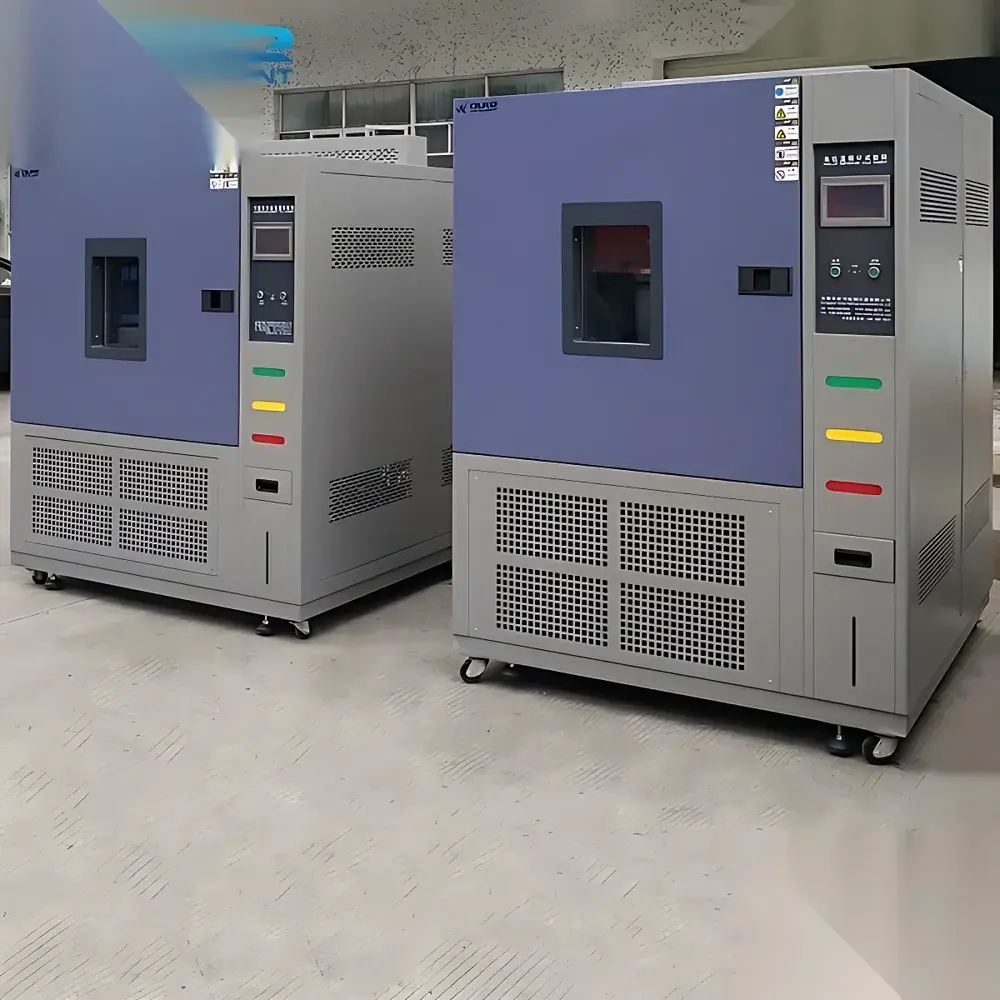
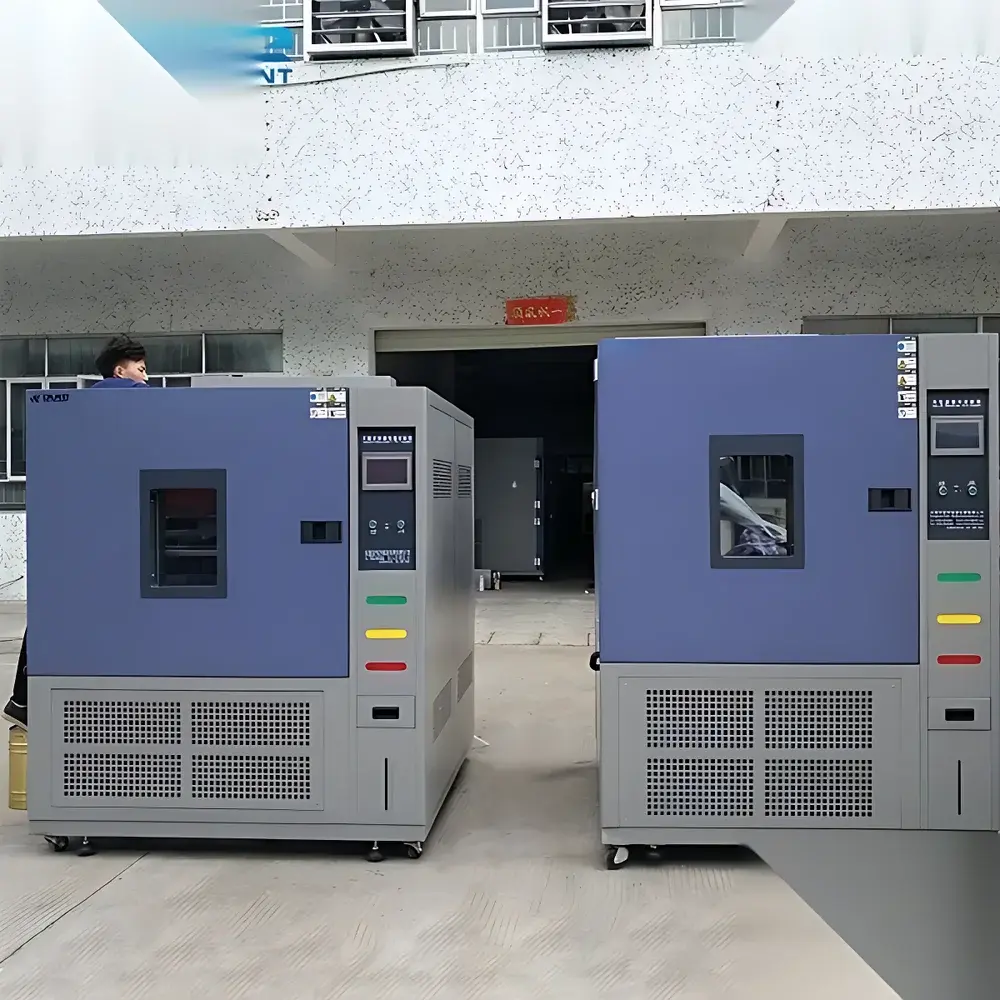
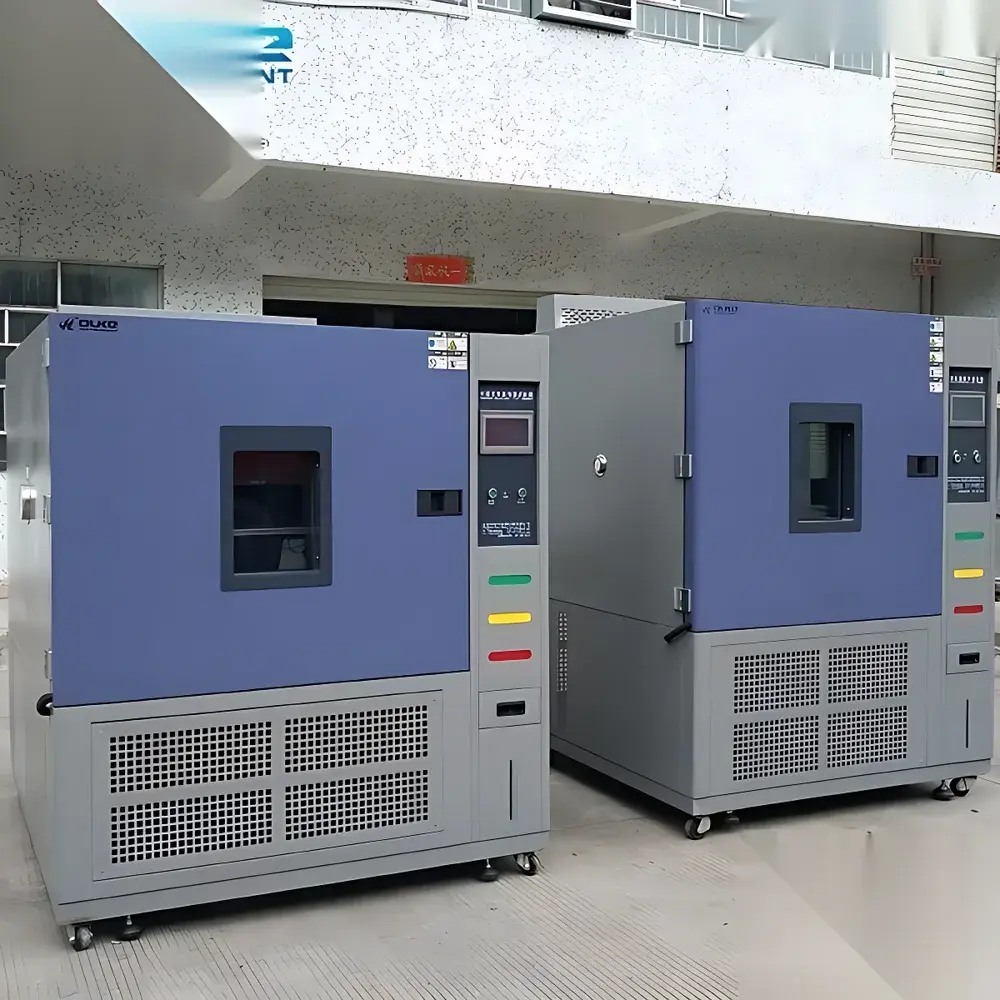
The OEM-Branded Paint-Finished Temperature and Humidity Controlled Environmental Test Chamber is a precision-engineered environmental simulation system designed for rigorous reliability validation of electronic components, automotive parts, aerospace materials, pharmaceutical packaging, and consumer electronics under defined thermal and hygrothermal stress conditions. It operates on the principle of forced-air convection combined with integrated refrigeration (mechanical cascade or single-stage compression), electric heating, and steam-based humidification—enabling stable, repeatable control across wide temperature and relative humidity ranges. The chamber meets fundamental metrological and operational requirements specified in IEC 60068-3-5, IEC 60068-3-6, and ISO 16750-4 for environmental testing, while its structural design and calibration traceability support compliance with GLP, GMP, and internal QA protocols requiring documented environmental stability during qualification testing.
Key Features
- Robust dual-layer construction: interior chamber fabricated from mirror-finished SUS304 stainless steel for corrosion resistance and ease of cleaning; outer enclosure available in either SUS304 or A3 steel with high-durability electrostatic powder coating (paint-finished finish) for enhanced aesthetic and mechanical protection.
- High-precision TEMI880 programmable controller featuring a 7-inch color LCD touchscreen interface, multi-segment ramp-soak profiles, real-time data logging, USB export capability, and password-protected parameter locking for audit-ready operation.
- Optimized air circulation system with adjustable axial fans and baffle-guided airflow ensures uniform temperature distribution (±0.5 °C) and rapid humidity response across the working volume.
- Modular refrigeration architecture supports both standard (–40 °C to +150 °C) and ultra-low temperature configurations (down to –120 °C), with cooling performance dependent on ambient water supply (10–28 °C, 0.1–0.3 MPa) and load conditions.
- Steam-type humidification system with PID-controlled stainless-steel boiler delivers precise RH control (30–98% RH standard; 5–98% RH optional) with resolution of 0.1% RH and deviation ≤ ±2.5% RH at steady state.
- Comprehensive safety architecture including over-temperature/over-humidity cut-off, compressor high-pressure protection, door interlock, and leakage current detection per IEC 61000-6-2 and IEC 61000-6-4.
Sample Compatibility & Compliance
This chamber accommodates test specimens up to custom-defined dimensions (including walk-in configurations), with thermal mass and surface emissivity being primary determinants of actual achievable ramp rates. All published performance specifications—including temperature/humidity uniformity, deviation, and transition rates—are validated per GB/T 5170.2–1996 (equivalent to IEC 60068-3-1) and GB/T 5170.5–1996 (equivalent to IEC 60068-3-2)—under no-load, 25 °C ambient conditions. The unit supports test execution in accordance with ASTM D4332, ISO 4892-2, MIL-STD-810H Method 502.7 (temperature), Method 507.6 (humidity), and IEC 60068-2-1 (cold), -2 (dry heat), -30 (damp heat cyclic). Optional validation packages include IQ/OQ documentation aligned with FDA 21 CFR Part 11 and EU Annex 11 requirements.
Software & Data Management
The TEMI880 controller provides embedded data storage for ≥100 test programs and 10,000 hours of time-stamped temperature/humidity records. Export is supported via USB to CSV format for post-processing in Excel or statistical analysis platforms (e.g., Minitab, JMP). Optional PC-based software enables remote monitoring, alarm notification via email/SMS, electronic signature workflows, and automatic generation of PDF test reports compliant with ISO/IEC 17025 reporting clauses. Audit trails record all user actions—including parameter changes, program starts/stops, and manual overrides—with timestamps and operator IDs, satisfying GLP/GMP data integrity expectations.
Applications
- Accelerated aging of polymer seals, adhesives, and conformal coatings under cyclic thermal-hygric stress.
- Pre-conditioning of lithium-ion battery cells prior to electrical performance characterization.
- Environmental stress screening (ESS) of PCB assemblies per IPC-9701A guidelines.
- Stability testing of sterile medical device packaging per ISO 11607-1.
- Validation of HVAC component performance under extreme ambient conditions.
- Material compatibility assessment for pharmaceutical secondary packaging exposed to tropical or desert climatic profiles.
FAQ
What is the difference between “temperature fluctuation” and “temperature deviation”?
Temperature fluctuation (±0.5 °C) refers to short-term variation around the setpoint during steady-state operation; temperature deviation (≤ ±2 °C) denotes spatial non-uniformity across the working volume, measured per GB/T 5170.2.
Can this chamber meet MIL-STD-810H Method 507.6 for damp heat testing?
Yes—when operated within its rated humidity range (30–98% RH) and stabilized per test profile timing, it satisfies the chamber performance criteria outlined in Section 507.6.1 for temperature and humidity tolerance.
Is the TEMI880 controller compliant with 21 CFR Part 11?
The base controller supports audit trail and user access control; full Part 11 compliance requires optional PC software with electronic signatures, role-based permissions, and encrypted database logging.
How does load affect ramp rate performance?
Published ramp rates (e.g., 2.0–3.0 °C/min heating) are nominal values under no-load conditions. Actual rates decrease proportionally with specimen thermal mass, insulation properties, and chamber fill ratio—engineering consultation is recommended for load-specific profiling.
What maintenance intervals are recommended for long-term reliability?
Refrigerant circuit inspection and humidity system descaling every 6 months; filter replacement every 3 months; annual calibration verification against NIST-traceable reference sensors.
Related Products



