
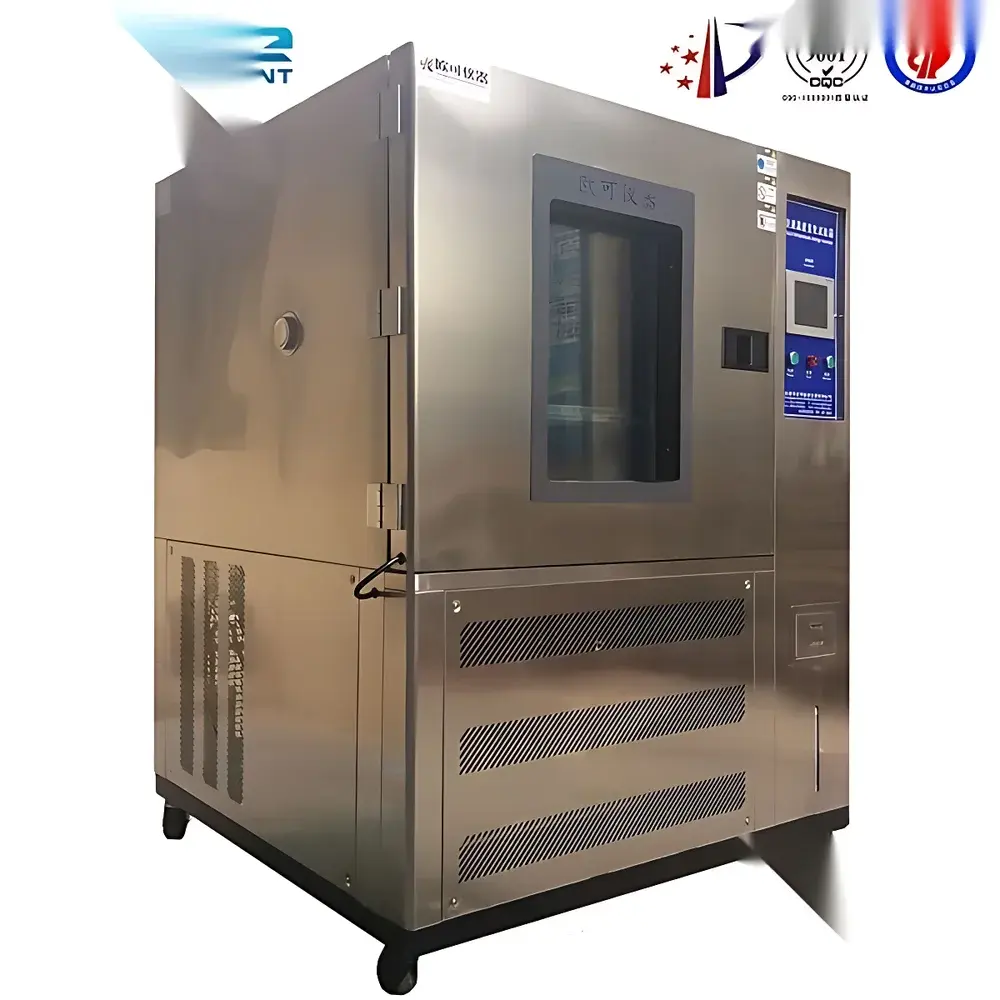
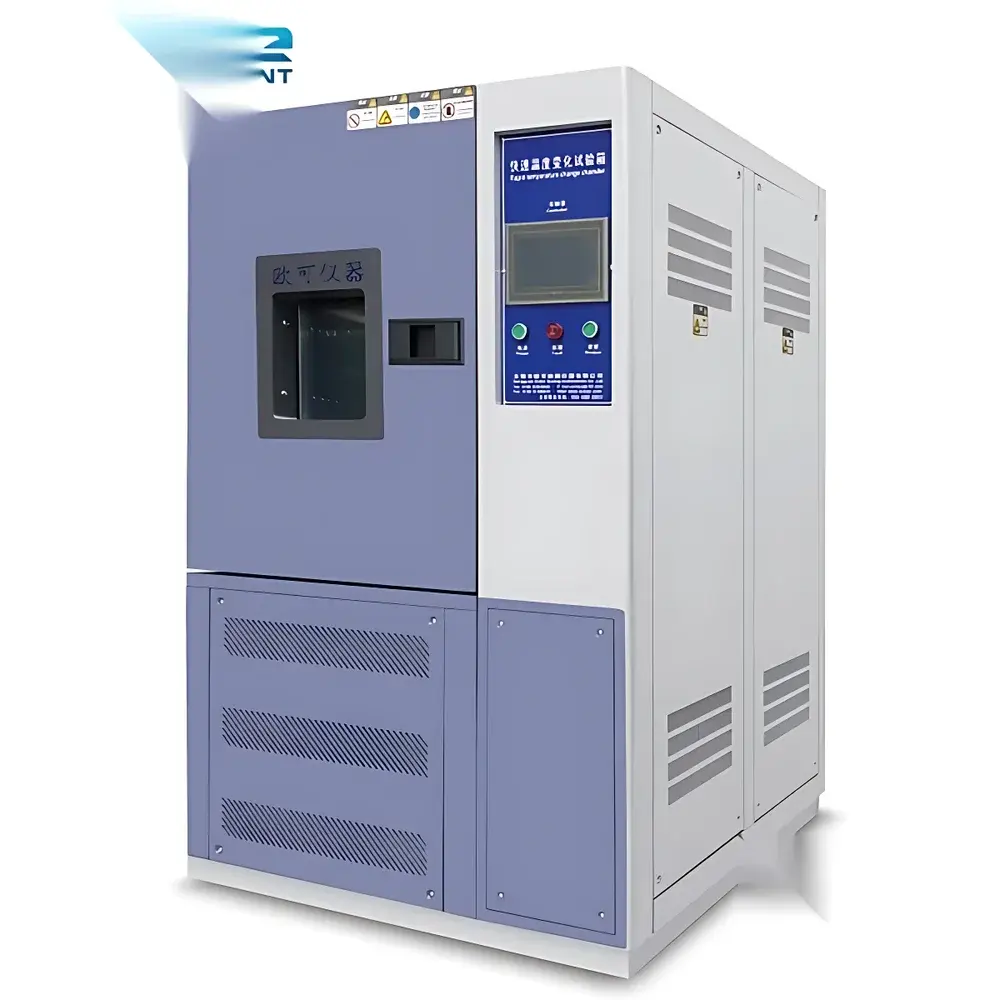
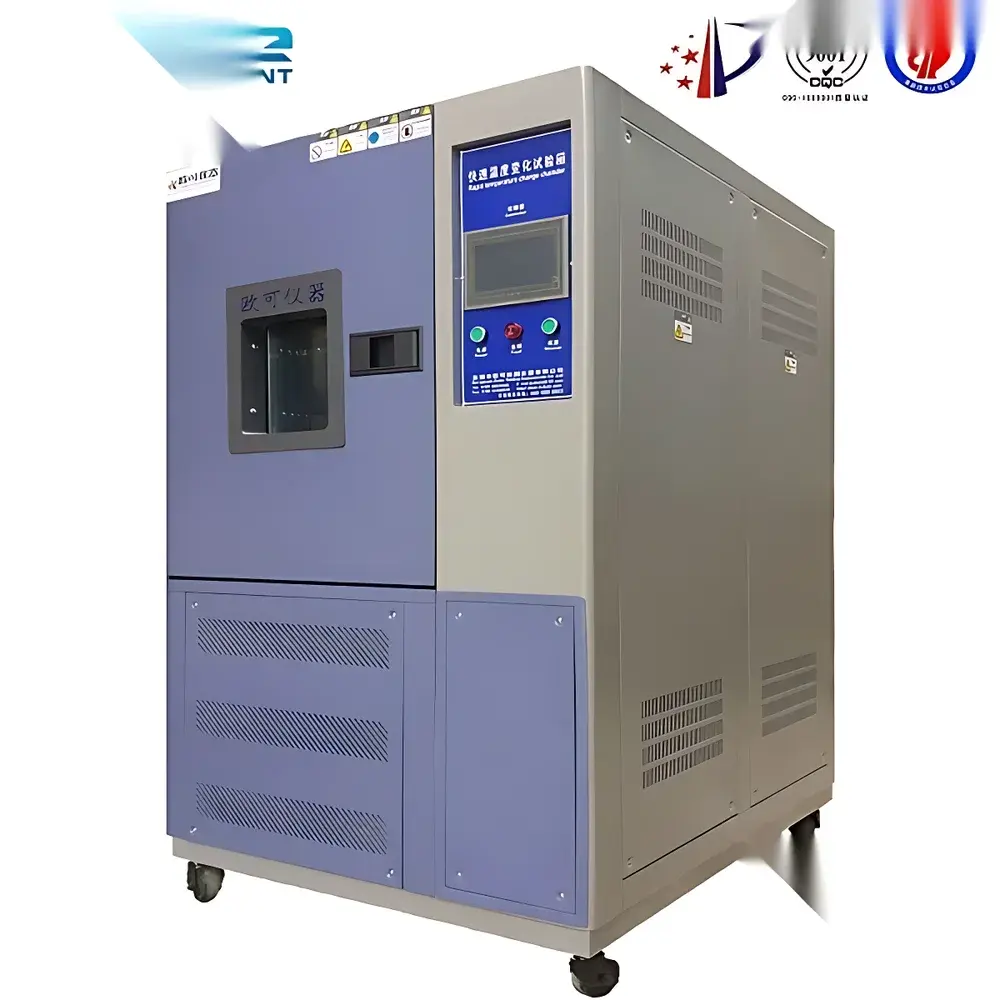
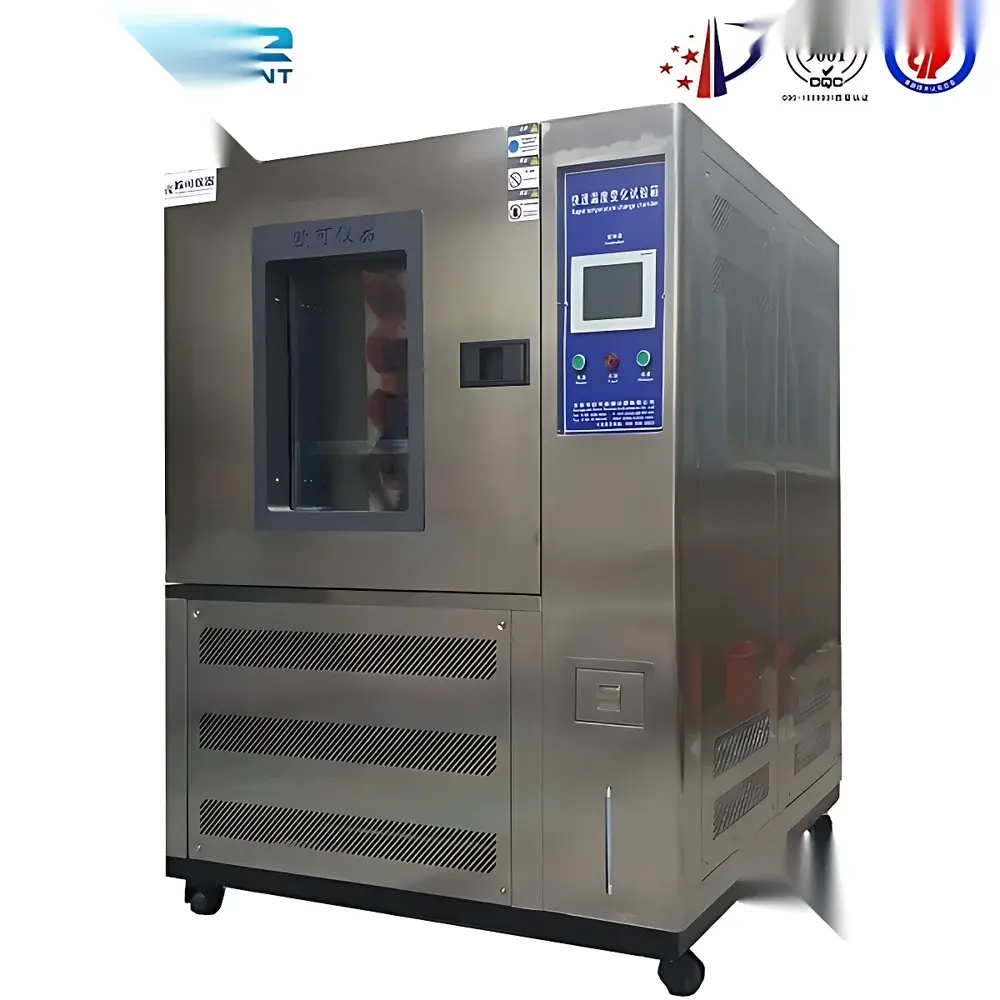
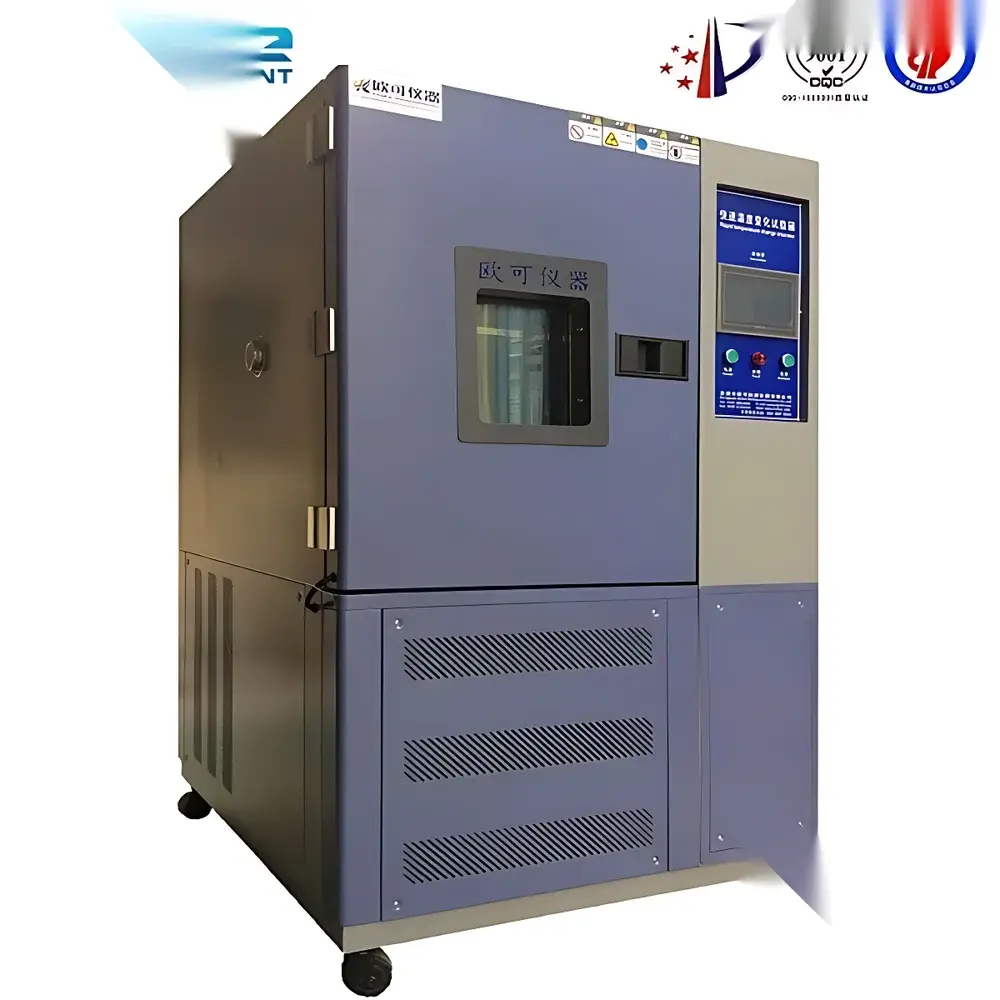
Environmental Stress Screening Chamber – High-Low Temperature & Humidity Accelerated Aging Test System
| Brand | Other Brands |
|---|---|
| Origin | Imported |
| Manufacturer Type | Authorized Distributor |
| Price | USD 14,000 (FOB) |
| Temperature Range | −60 °C to +80 °C |
| Humidity Range | 20–98 % RH (optional: 5–98 % RH or 10–98 % RH) |
| Control Method | Microprocessor-Based PID + SSR + Programmable Timer |
| Construction | Stainless Steel Interior + Pre-Painted Galvanized Steel Exterior |
| Refrigeration System | Dual-Stage Cascade Design with European/American Compressors |
| Refrigerant | R-404A / R-134a (ODP = 0, GWP-compliant) |
| Safety Features | Over-Temperature, Over-Humidity, Compressor Overload, Phase Failure, Door Interlock, Power-Failure Memory |
| Data Interface | RS-485 / Ethernet (optional data logger integration) |
Overview
The Environmental Stress Screening Chamber – High-Low Temperature & Humidity Accelerated Aging Test System is an industrial-grade climatic test chamber engineered for reliability validation, accelerated life testing, and environmental stress screening (ESS) of large-scale components, subassemblies, and finished goods. It operates on the principle of controlled thermal-hygrometric cycling—precisely modulating temperature (−60 °C to +80 °C) and relative humidity (20–98 % RH) to simulate years of field exposure in compressed timeframes. Designed for compliance-driven industries—including aerospace, automotive electronics, medical device manufacturing, and defense contracting—the system supports standardized aging protocols per MIL-STD-810H, IEC 60068-2, and ASTM D4329. Its modular panel architecture enables scalable internal volume configuration without compromising thermal uniformity or control fidelity.
Key Features
- Modular insulated panel construction using stainless steel interior surfaces and pre-painted galvanized steel exteriors—ensuring corrosion resistance, structural rigidity, and long-term dimensional stability.
- Dual-stage cascade refrigeration system integrating high-efficiency compressors from EU/US OEMs; optimized stage selection based on target temperature zone to extend compressor service life and improve energy efficiency.
- Horizontal air distribution with vertical heat exchange circulation—engineered via centrifugal blower and proprietary duct geometry to achieve ≤±0.5 °C temperature uniformity and ≤±2 % RH homogeneity across full working volume (per IEC 60068-3-5).
- Intuitive LCD controller with graphical user interface (GUI), multi-language support, and context-sensitive fault diagnostics—displaying real-time error codes, recommended remediation steps, and automatic power cutoff upon critical anomaly detection.
- Comprehensive safety architecture including over-temperature cutoff, humidity sensor failure detection, phase loss monitoring, door interlock, and non-volatile memory retention for test profiles and runtime logs during power interruption.
- Environmentally compliant refrigerants (R-404A/R-134a) meeting current EPA SNAP and EU F-Gas Regulation requirements—zero ozone depletion potential (ODP) and reduced global warming potential (GWP) versus legacy alternatives.
Sample Compatibility & Compliance
The chamber accommodates test specimens up to 3,000 mm (W) × 2,500 mm (D) × 2,800 mm (H), with custom interior dimensions configurable per client facility constraints. Internal airflow design prevents localized condensation and ensures representative stress application across heterogeneous geometries—including enclosures, PCB assemblies, battery packs, and polymer housings. All models are supplied with calibration certificates traceable to NIST or PTB standards. The system supports audit-ready documentation packages aligned with ISO/IEC 17025, FDA 21 CFR Part 11 (when paired with validated software), and GLP/GMP validation protocols—including IQ/OQ/PQ execution templates.
Software & Data Management
Optional Ethernet- or RS-485-enabled communication allows seamless integration with laboratory information management systems (LIMS) and centralized monitoring platforms. The embedded controller logs timestamped temperature/humidity values at user-defined intervals (1–600 seconds), stores ≥10,000 hours of historical data locally, and exports CSV-formatted reports compatible with MATLAB, Python pandas, and JMP. For regulated environments, optional validation-ready software provides electronic signatures, audit trails, role-based access control, and 21 CFR Part 11-compliant data integrity safeguards.
Applications
This chamber serves as a core tool in product development and quality assurance workflows: thermal cycling validation of automotive ECUs per AEC-Q200; humidity soak testing of conformal-coated circuit boards; accelerated corrosion assessment of metal fasteners under cyclic salt-spray–humidity conditions; shelf-life estimation of pharmaceutical packaging materials; and qualification of avionics cooling systems under extreme ambient transients. Its scalability and precision make it suitable for both R&D lab-scale evaluation and production-line ESS deployment.
FAQ
What is the standard warranty coverage?
Standard warranty includes 18 months parts-and-labor coverage for all mechanical, electrical, and control subsystems—excluding consumables and damage resulting from improper installation or operation.
Can the chamber be validated to IQ/OQ/PQ requirements?
Yes—factory-supplied validation documentation kits include protocol templates, calibration records, and traceable sensor certificates; third-party validation support is available upon request.
Is remote monitoring supported out-of-the-box?
Remote status viewing and basic alarm notification are enabled via built-in web server; full SCADA integration requires optional communication module and configuration support.
How is temperature uniformity verified during commissioning?
Uniformity verification follows IEC 60068-3-5 using nine calibrated PT100 sensors placed at defined spatial coordinates; final report includes deviation maps and statistical summary (mean, max/min delta, standard deviation).
Are custom humidity ranges beyond 20–98 % RH available?
Yes—low-humidity variants (5–98 % RH) utilize desiccant-assisted dehumidification; extended low-RH configurations require additional hardware and lead-time adjustment.



