
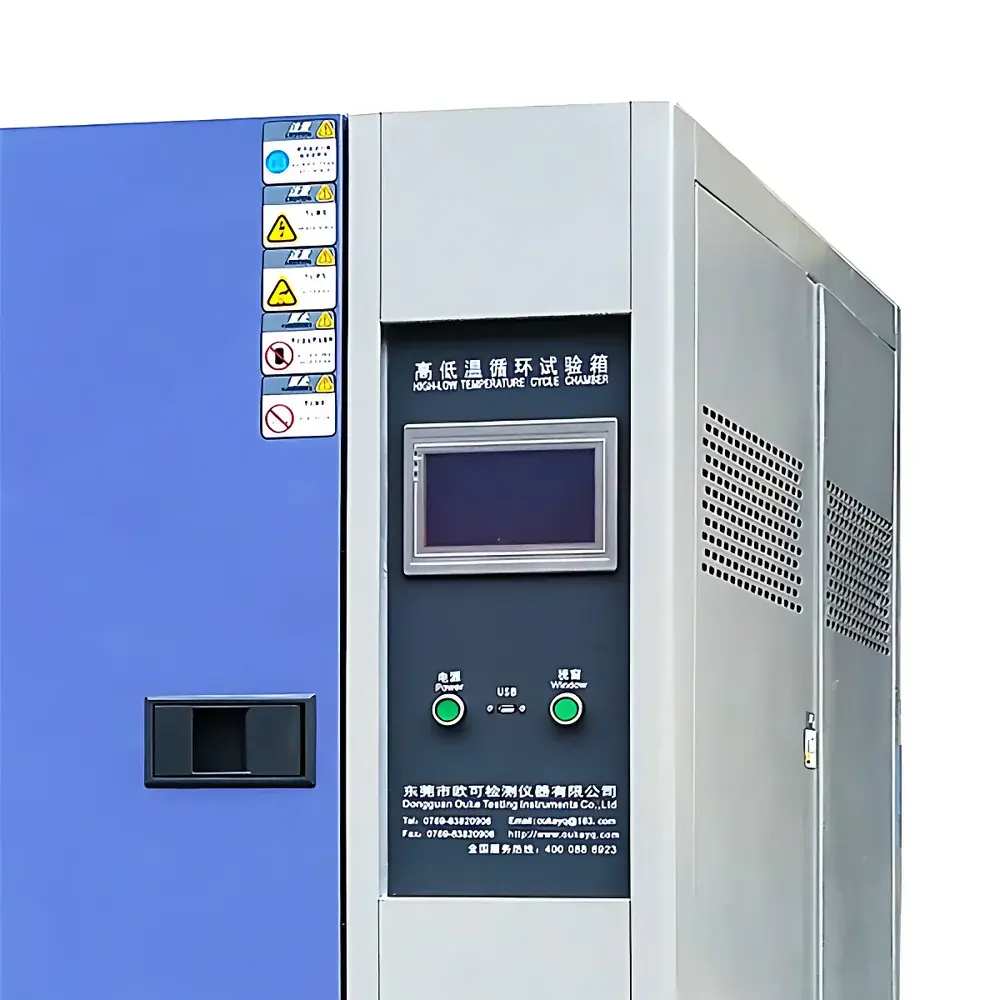
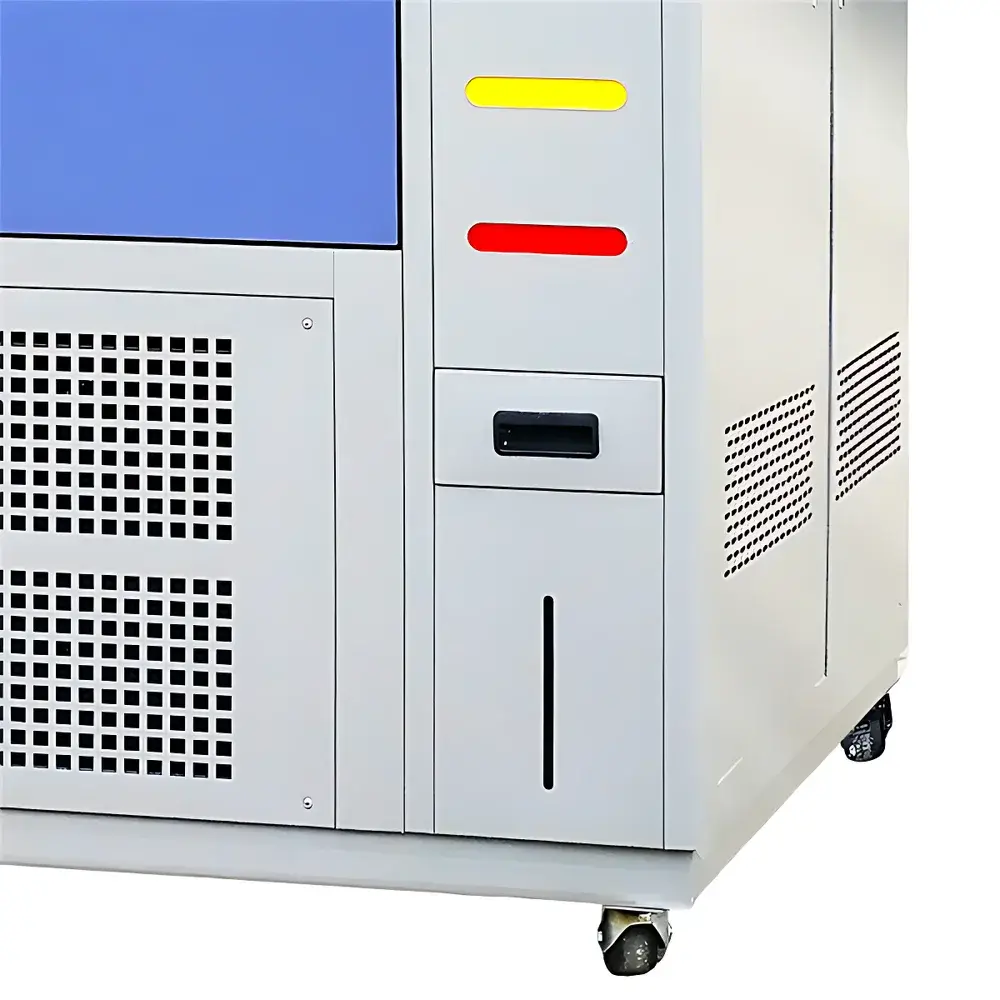
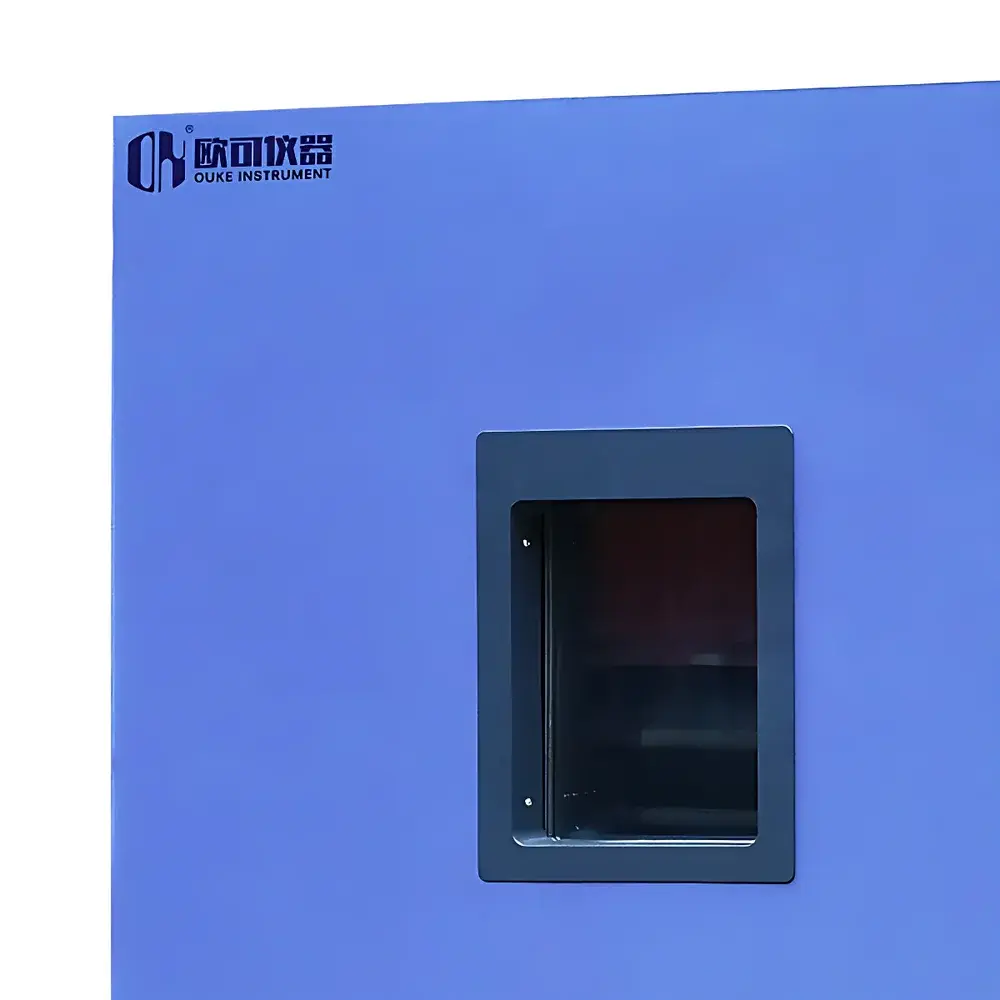
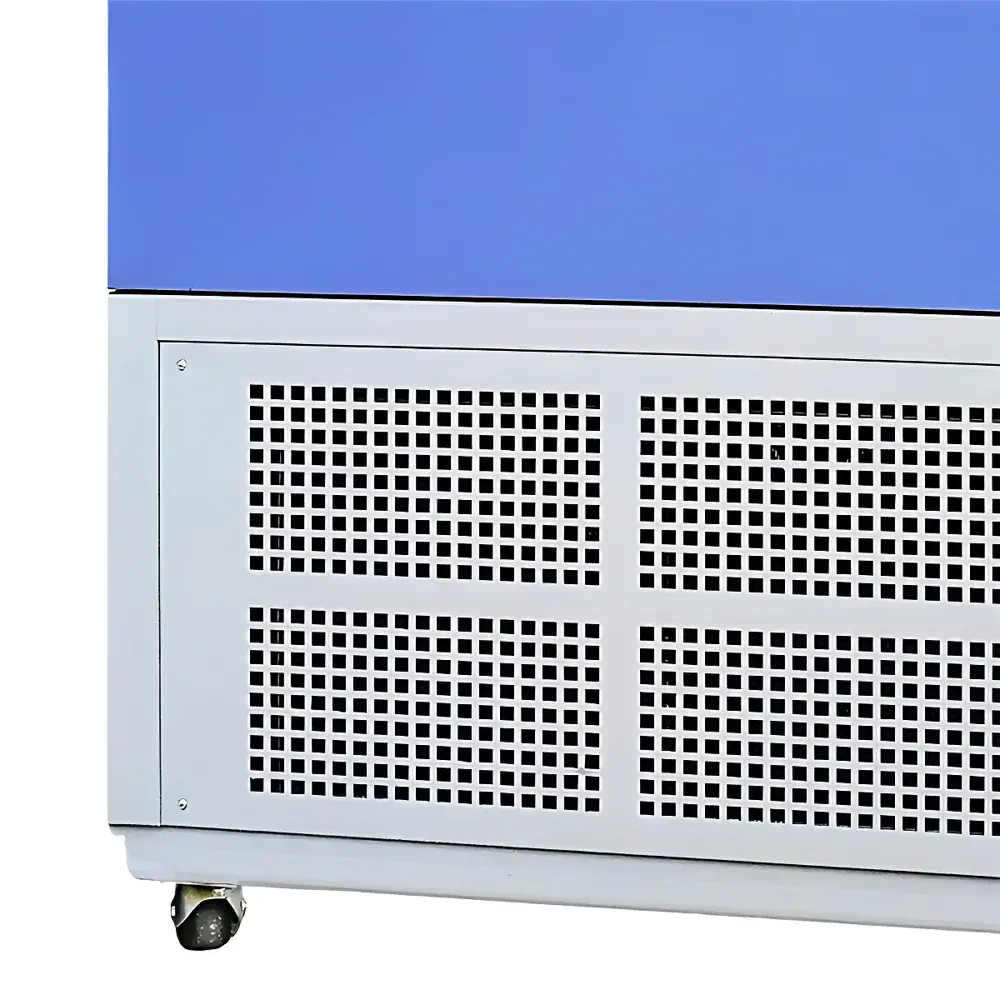
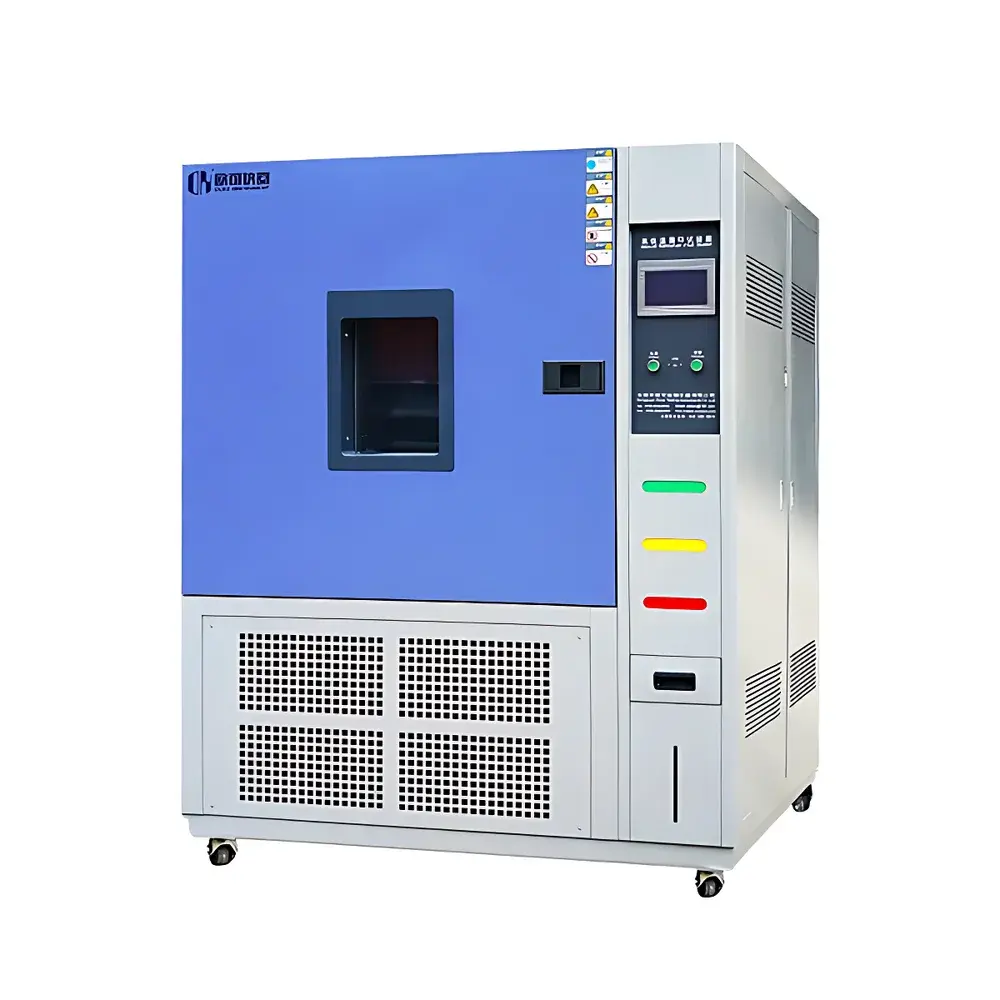
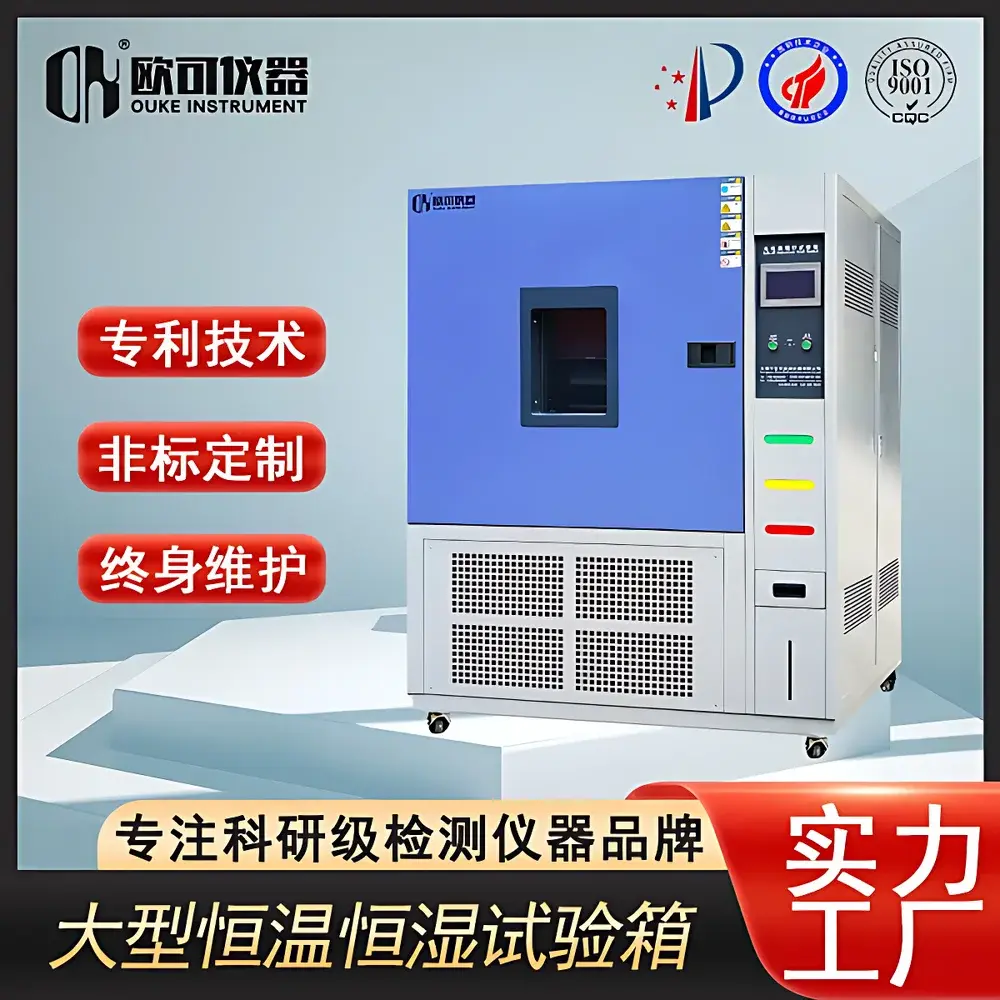
OK Environmental Test Chamber OK-TH-20 for Temperature, Humidity and Low-Pressure Simulation
| Brand | OK Instruments |
|---|---|
| Origin | Guangdong, China |
| Manufacturer Type | Direct Manufacturer |
| Product Category | Domestic |
| Model | OK-TH-20 |
| Instrument Type | Benchtop |
| Condensation Method | Air-Cooled |
| Temperature Range | −40 °C to +150 °C |
| Humidity Range | 20–98 % RH |
| Temperature Uniformity | ≤ ±2 °C |
| Temperature Fluctuation | ±1 °C (high-temp), ±2 °C (low-temp) |
| Humidity Uniformity | ≤ ±3 % RH |
| Humidity Fluctuation | ±3 % RH |
| Heating Rate | 1.0–3.0 °C/min |
| Internal Chamber Dimensions (W×D×H) | 700 × 500 × 400 mm |
Overview
The OK Environmental Test Chamber OK-TH-20 is an integrated benchtop environmental simulation system engineered for precise, synchronized control of temperature, relative humidity, and atmospheric pressure. Unlike conventional climatic chambers, the OK-TH-20 incorporates a vacuum-capable pressure regulation subsystem—enabling altitude simulation from −1,000 m (105 kPa) to 30,000 m (≤1 kPa)—making it suitable for low-pressure thermal-hygric testing per MIL-STD-810H Method 500.5, RTCA DO-160 Section 4, and GJB 150A-2009 Clause 10. Its core architecture employs a dual-stage air-cooled refrigeration circuit with pressure-compensated evaporator design, ensuring stable sub-zero performance under reduced ambient density. The chamber operates on the principle of closed-loop psychrometric control: temperature is regulated via PID-driven heating/cooling elements; humidity is maintained through a saturated steam injection system with condensate recovery; and pressure is modulated using a variable-speed vacuum pump with absolute pressure feedback and proportional relief control. This tri-parameter coupling allows users to execute complex test profiles—such as rapid decompression followed by thermal soak or humidity ramp under constant low pressure—without manual intervention.
Key Features
- Triple-parameter programmable controller with real-time synchronization of temperature, humidity, and absolute pressure (0.1–105 kPa range)
- Structurally reinforced stainless-steel inner chamber with multi-point pneumatic door lock and triple-lip silicone gasket sealing system for long-term vacuum integrity
- Pressure-stabilized air-cooled refrigeration unit featuring oil-separator and low-pressure expansion valve calibration for consistent −40 °C operation at 20 kPa
- Saturated steam humidification system with deionized water reservoir, anti-scale heater, and condensate return loop—optimized for low-boiling-point conditions below 50 kPa
- Integrated safety architecture: overpressure relief valve (set at 110 kPa), vacuum rupture disc (burst at 5 kPa), independent thermal cutoffs, and emergency mechanical venting
- Benchtop footprint (W700 × D500 × H400 mm internal) with front-loading access, observation window with heated anti-fog coating, and standardized cable/port interfaces (PG13.5, M25)
Sample Compatibility & Compliance
The OK-TH-20 accommodates electronic assemblies, battery modules, avionics enclosures, and sealed sensors up to 30 kg total load. Its chamber geometry supports uniform exposure per IEC 60068-3-3 (thermal gradients ≤2 K/m) and ISO 16750-4 (humidity distribution ≤±3 % RH across load zone). The system complies with electromagnetic compatibility requirements per EN 61326-1 and meets mechanical safety standards per EN 61000-6-2. While not certified to full DO-160G Level A, its pressure and thermal performance envelopes satisfy prerequisite validation tests for aerospace component qualification (e.g., pre-test verification of seal integrity, condensation resistance, and cold-start functionality at simulated 25,000 m altitude). Optional traceable calibration certificates (NIST-traceable Pt100 and capacitive RH sensors) are available for GLP-compliant laboratories.
Software & Data Management
Control and monitoring are performed via OK’s proprietary Windows-based software suite, supporting profile programming with up to 99 segments, conditional branching (e.g., “hold until pressure stabilizes at 12 kPa”), and event-triggered logging. All operational data—including chamber setpoints, actual readings, alarm states, and vacuum pump current—are timestamped and stored in CSV/SQLite format with configurable sampling intervals (1 s to 10 min). Audit trail functionality records user logins, parameter changes, and manual overrides—meeting basic FDA 21 CFR Part 11 requirements when deployed on domain-joined PCs with Windows Group Policy enforcement. Remote supervision is enabled via Ethernet (TCP/IP) or optional RS-485 Modbus RTU interface for integration into facility-wide SCADA systems.
Applications
- Aerospace: Functional verification of pitot-static systems, oxygen regulators, and composite material outgassing behavior under combined thermal-vacuum-humidity stress
- Defense electronics: Altitude-acclimatization testing of ruggedized radios and EO/IR payloads per MIL-STD-810H Method 520.5 (explosive atmosphere simulation)
- EV battery development: Evaluation of thermal runaway propagation thresholds and electrolyte volatility under low-pressure hot-humid conditions (e.g., 45 °C / 95 % RH / 50 kPa)
- Medical device R&D: Validation of sterilization packaging integrity and sensor drift in hypobaric-hygric environments mimicking high-altitude transport
- Materials science: Accelerated aging of conformal coatings, adhesives, and polymer encapsulants using cyclic low-pressure dew-point excursions
FAQ
Does the OK-TH-20 support simultaneous vibration input?
No—the OK-TH-20 is a dedicated temperature-humidity-low-pressure chamber. For triaxial environmental stress screening (ESS), OK offers the OK-THV series with integrated electrodynamic shaker mounting interfaces and structural reinforcement.
What is the minimum achievable pressure and how is it verified?
The chamber achieves ≤1 kPa absolute pressure (equivalent to ~30,000 m altitude) using a two-stage rotary vane vacuum pump. Pressure stability is verified via built-in piezoresistive transducer calibrated annually against a reference Baratron gauge.
Can the system operate continuously at −40 °C and 20 % RH under low pressure?
Yes—continuous operation at −40 °C is validated down to 20 kPa; however, maintaining 20 % RH below 50 kPa requires extended dehumidification cycles due to reduced water vapor saturation capacity. A dry gas purge option is recommended for ultra-low-RH stabilization.
Is third-party certification (e.g., TÜV, SGS) available for this model?
Factory-installed instrumentation can be pre-calibrated and documented per ISO/IEC 17025; formal certification requires on-site assessment by accredited bodies and is arranged separately upon order.
What maintenance intervals are recommended for the vacuum system?
Vacuum pump oil must be replaced every 2,000 operating hours or annually (whichever occurs first); inlet filter elements require cleaning every 500 hours; and chamber door gaskets should be inspected and lubricated quarterly with FDA-grade silicone grease.



