
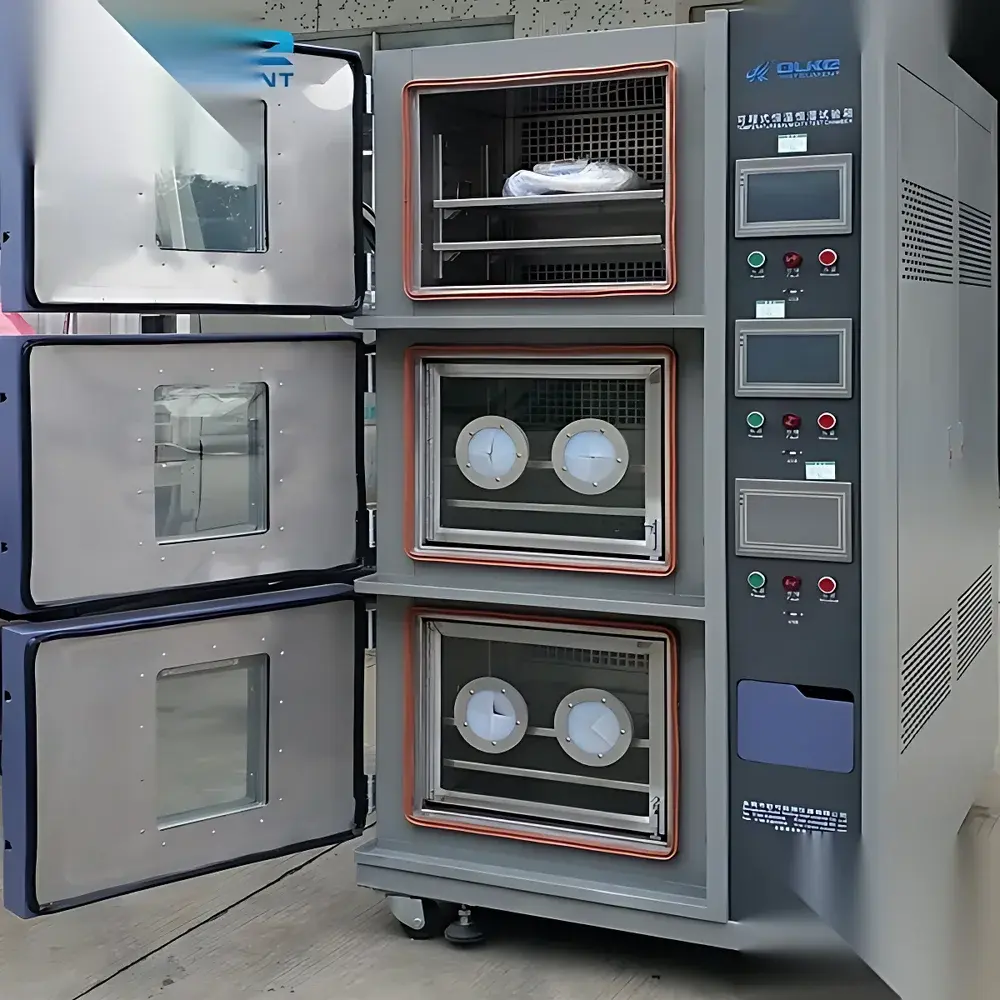
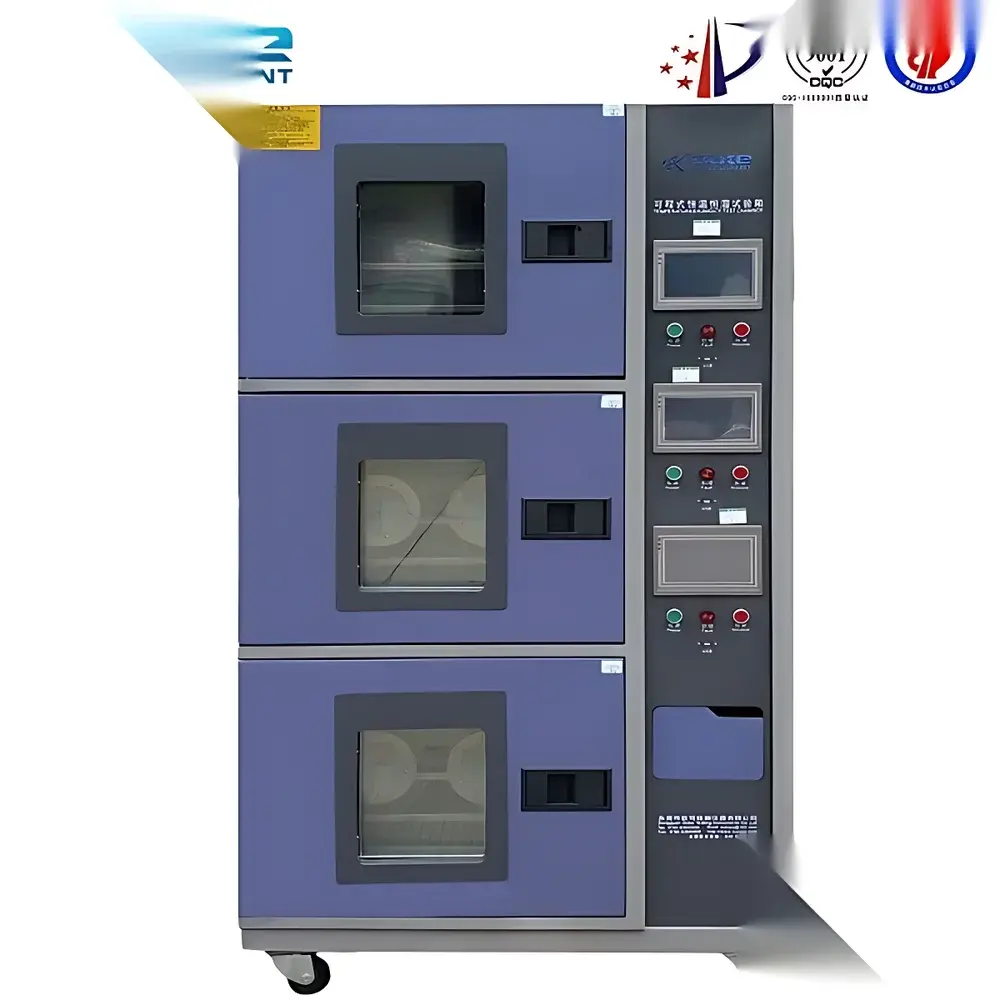
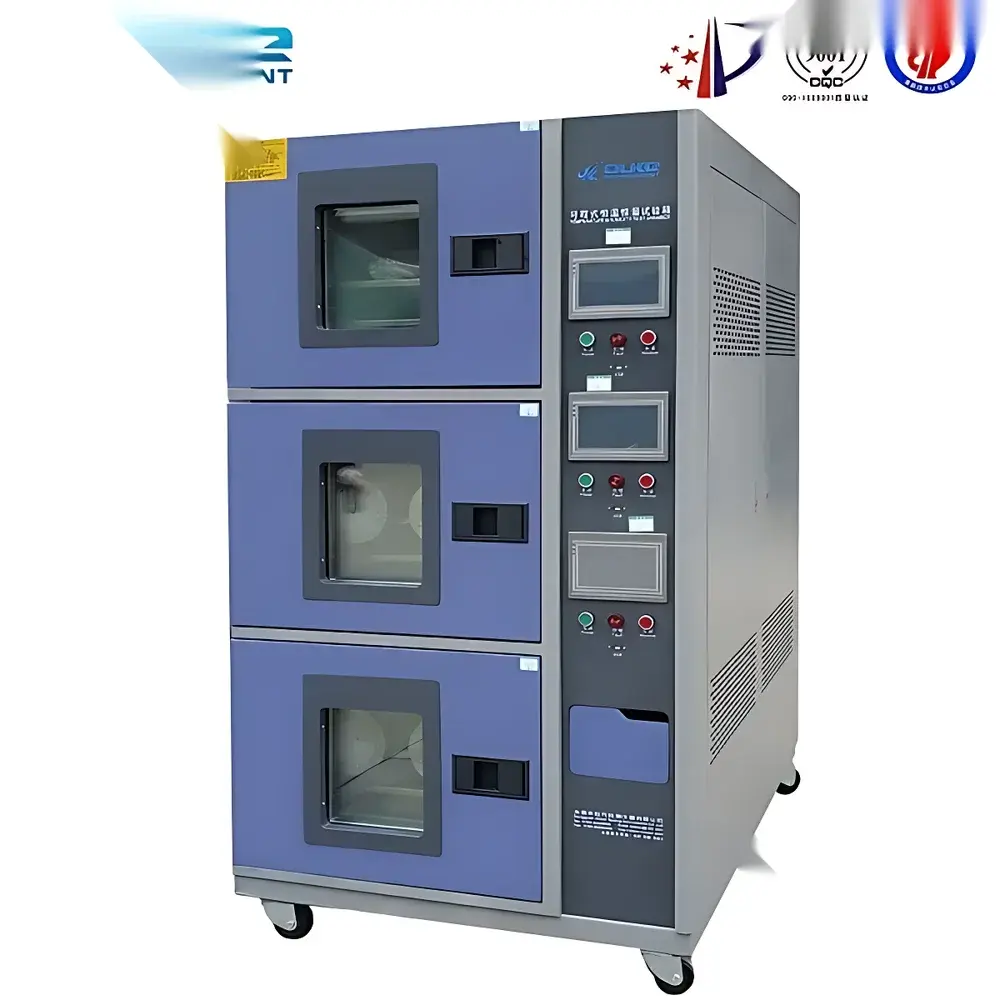
Environmental Test Chamber with -20°C Temperature and Humidity Control
| Key | Temperature Range: -20°C to +150°C |
|---|---|
| Humidity Range | 20–98% RH |
| Compliance | GB/T 5170.2, GB/T 5170.5, GB 2423.1, GB 2423.22, GB 10589, GB 11158 |
| Cooling Water Requirement | 10–28°C, 0.1–0.3 MPa |
| Control Method | PID-controlled BTHC (Balanced Temperature & Humidity Control) System |
| Construction | Full-capillary refrigeration circuit with auto-load capacity modulation |
| Operating Condition Basis | Measured at ambient 25°C ±6°C, no-load |
Overview
The Environmental Test Chamber with -20°C Temperature and Humidity Control is a precision-engineered climatic simulation system designed for rigorous environmental stress testing of materials, components, and finished products under controlled low-temperature and variable-humidity conditions. Based on the fundamental principles of psychrometric control and vapor-compression refrigeration, this chamber maintains stable thermal and hygric environments through a balanced heating/humidification and cooling/dehumidification architecture (BTHC). It is specifically configured to achieve and sustain a minimum operating temperature of –20°C while concurrently regulating relative humidity between 20% and 98% RH across its full temperature span. The system employs a full-capillary refrigeration circuit—free of mechanical expansion valves—to ensure consistent refrigerant flow, improved thermal response linearity, and long-term operational stability. All performance specifications—including temperature uniformity, humidity accuracy, and ramp rates—are validated under standardized no-load conditions per GB/T 5170.2 (temperature equipment verification) and GB/T 5170.5 (humidity equipment verification), aligning with internationally recognized metrological traceability frameworks.
Key Features
- Robust stainless-steel inner chamber with seamless welding and corrosion-resistant insulation, ensuring long-term integrity in cyclic thermal and humid exposure.
- PID-controlled Balanced Temperature & Humidity Control (BTHC) system that dynamically matches heating/humidification output to real-time thermal and moisture losses—enabling extended-duration steady-state operation without drift.
- Touchscreen controller with multi-segment programmable profiles, data logging (internal SD card or USB export), and password-protected parameter access—designed for ease of use and operator accountability.
- Full-capillary refrigeration loop with automatic load-adaptive capacity modulation—delivering faster, smoother, and more repeatable temperature transitions than conventional thermostatic expansion valve (TXV) systems.
- Ergonomic curved cabinet design with flat, non-reactive door handles, reinforced double-glazed observation window, and integrated safety interlocks compliant with IEC 61000-6-2/6-4 EMC standards.
- Cooling water interface engineered for external chiller integration, supporting continuous operation under high thermal load when ambient water supply meets 10–28°C inlet temperature and 0.1–0.3 MPa pressure requirements.
Sample Compatibility & Compliance
This chamber accommodates a broad range of sample types—including electronic assemblies, polymer composites, automotive interior materials, pharmaceutical packaging, and aerospace fasteners—within standard internal dimensions (customizable upon request). Its environmental conditioning capabilities support qualification testing per multiple national and international standards, including GB 2423.1 (cold test), GB 2423.22 (temperature change), and GB/T 5170.5 (humidity calibration methodology). While not certified to ISO/IEC 17025 as a standalone calibration laboratory, the unit’s measurement subsystems are traceable to national standards via factory-applied NIST-traceable sensor calibration reports. For regulated industries, optional audit-ready features include 21 CFR Part 11–compliant electronic signatures, ALCOA+ data integrity protocols, and GLP/GMP-aligned validation documentation packages (IQ/OQ/PQ).
Software & Data Management
The embedded controller supports local data acquisition at configurable intervals (1s–60 min), with real-time trend visualization and alarm-triggered event logging. Export formats include CSV and PDF for offline analysis. Optional PC-based software (EcoLab Suite v4.x) enables remote monitoring, multi-chamber fleet management, automated report generation (including uncertainty budgets per GUM), and integration with LIMS platforms via OPC UA or Modbus TCP. All stored data includes immutable timestamps, user IDs, and configuration snapshots—meeting baseline requirements for FDA-regulated stability studies and ISO 9001 internal audits.
Applications
- Accelerated aging of elastomers and adhesives under sub-zero thermal cycling combined with controlled humidity.
- Functional validation of battery packs and power electronics in cold-start scenarios (e.g., EV traction inverters).
- Stability assessment of medical device packaging per ISO 11607-1, particularly for barrier integrity at low-temperature storage conditions.
- Material coefficient-of-thermal-expansion (CTE) characterization using synchronized dimensional metrology fixtures (compatible with laser interferometry or digital image correlation).
- Qualification of avionics enclosures per DO-160 Section 4 (low temperature) and Section 5 (temperature shock), with optional rapid transition rate profiling.
FAQ
What is the minimum achievable temperature, and does it depend on humidity setpoint?
The chamber achieves –20°C across the full specified humidity range (20–98% RH); however, sustained operation below 0°C at high RH (>85%) may require extended dehumidification pre-conditioning to prevent frost accumulation on sensors and condensate pans.
Can the unit be validated for GxP compliance?
Yes—when equipped with optional validation kits (NIST-traceable PT100 probes, documented IQ/OQ protocols, and electronic audit trail modules), it supports installation, operational, and performance qualification under GMP/GLP frameworks.
Is the temperature ramp rate guaranteed under load?
Ramp rates listed in specifications are measured under no-load, ambient 25°C±6°C conditions per GB/T 5170.2. Actual performance with test articles depends on mass, thermal mass, surface emissivity, and chamber loading ratio—consult engineering for load-specific modeling.
Does the system support unattended weekend operation?
Yes—equipped with dual-stage over-temperature/over-humidity cutouts, door-open alarms, and optional SMS/email alert integration via Ethernet-connected gateway.
Are custom internal dimensions and access ports available?
Yes—structural modifications including oversized doors, cable/port penetrations, and reinforced floor loading capacity can be implemented during manufacturing per customer-specified mechanical drawings.



