
Environmental Test Chamber Manufacturer – Temperature and Humidity Controlled Chamber (Custom-Built, Import-Grade)
No specifications available.
Overview
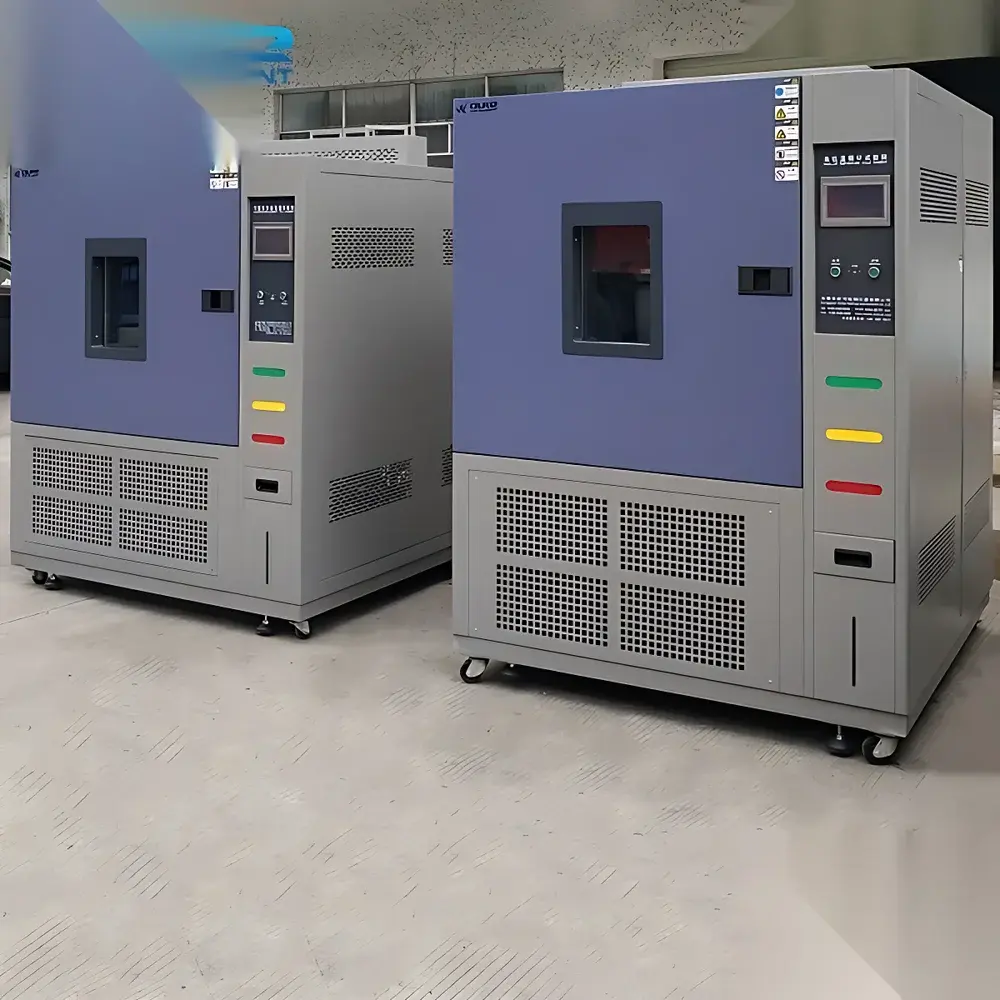
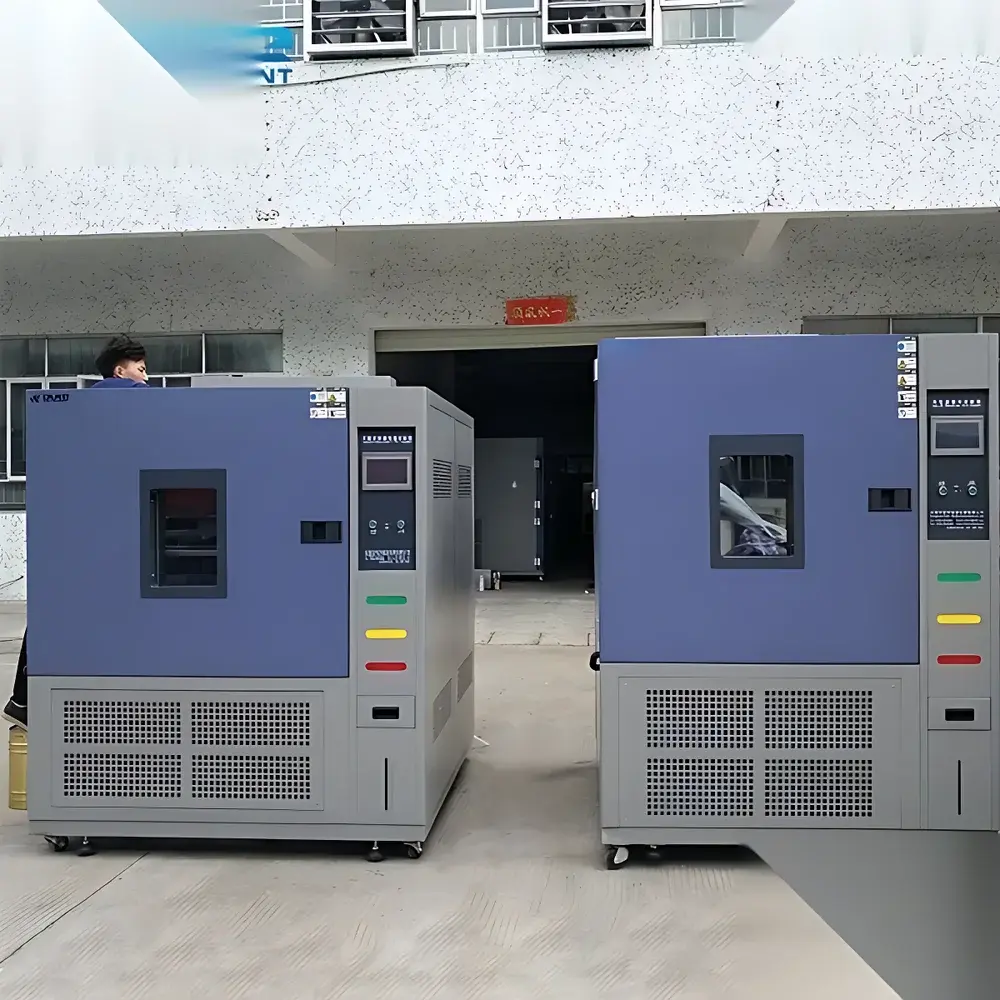
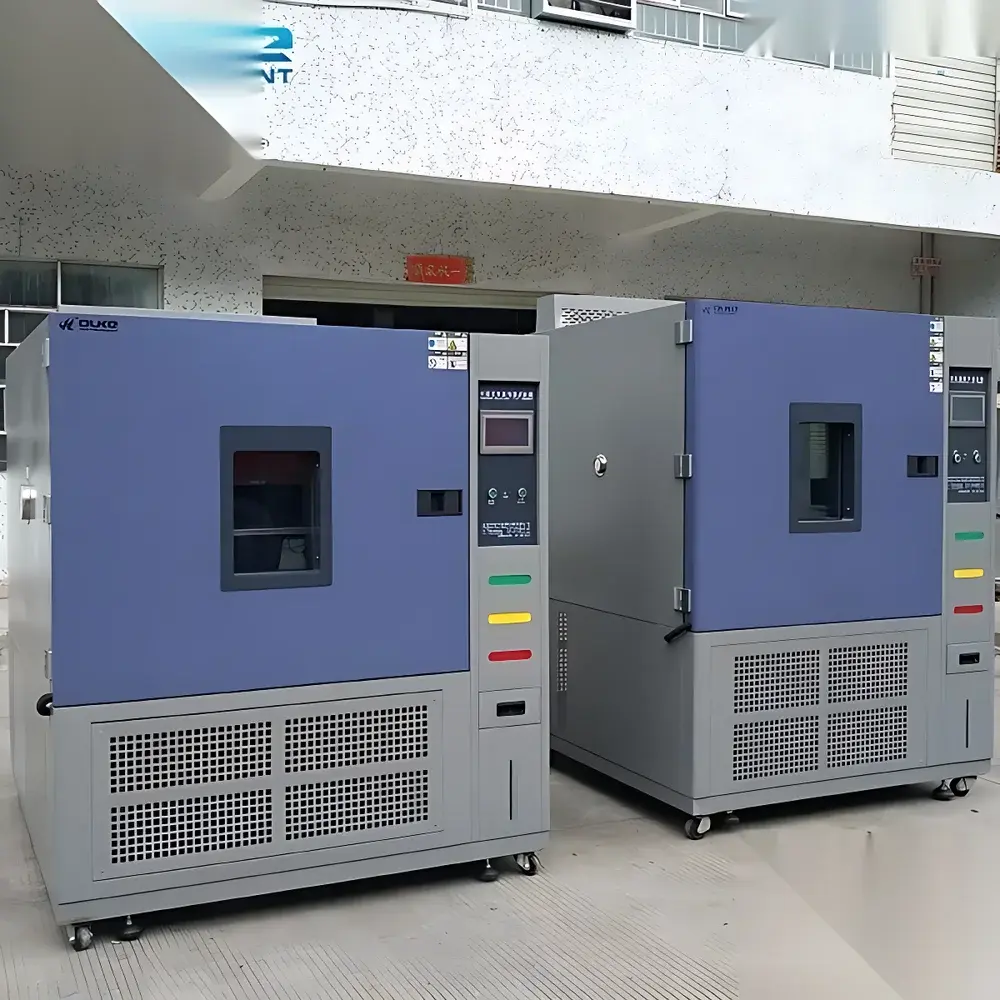
The Environmental Test Chamber – Temperature and Humidity Controlled Chamber is an engineered precision system designed for reproducible, long-term simulation of controlled climatic conditions in laboratory and industrial quality assurance environments. It operates on the principle of balanced temperature and humidity control (BTHC), integrating refrigeration, electric heating, steam or ultrasonic humidification, air circulation, and closed-loop PID feedback regulation to maintain stable setpoints across defined operational ranges. This chamber is not a generic storage unit but a calibrated test environment compliant with international environmental stress screening (ESS) and reliability testing protocols. Its architecture supports both static conditioning (e.g., storage stability per ICH Q1A(R3)) and dynamic cycling (e.g., thermal shock or humidity ramping), making it essential for validating product robustness under real-world climatic exposure scenarios.
Key Features
- Robust dual-protection architecture: independent overtemperature cutoff, dry-run protection for humidifiers, low-water-level interlock, compressor overload/overheat/overcurrent monitoring, high-pressure refrigerant safety switch, molded-case circuit breaker, and earth-leakage circuit interrupter (ELCI) for personnel and equipment safety.
- Advanced BTHC (Balanced Temperature & Humidity Control) system utilizing SSR-driven PID regulation to dynamically match heating/humidification output with thermal and moisture losses—enabling stable, energy-efficient operation over extended durations.
- Full capillary tube-based refrigeration system with automatic capacity modulation—eliminating mechanical expansion valve hysteresis and delivering superior temperature uniformity, faster ramp rates, and improved long-term repeatability compared to conventional thermostatic expansion valve (TXV) designs.
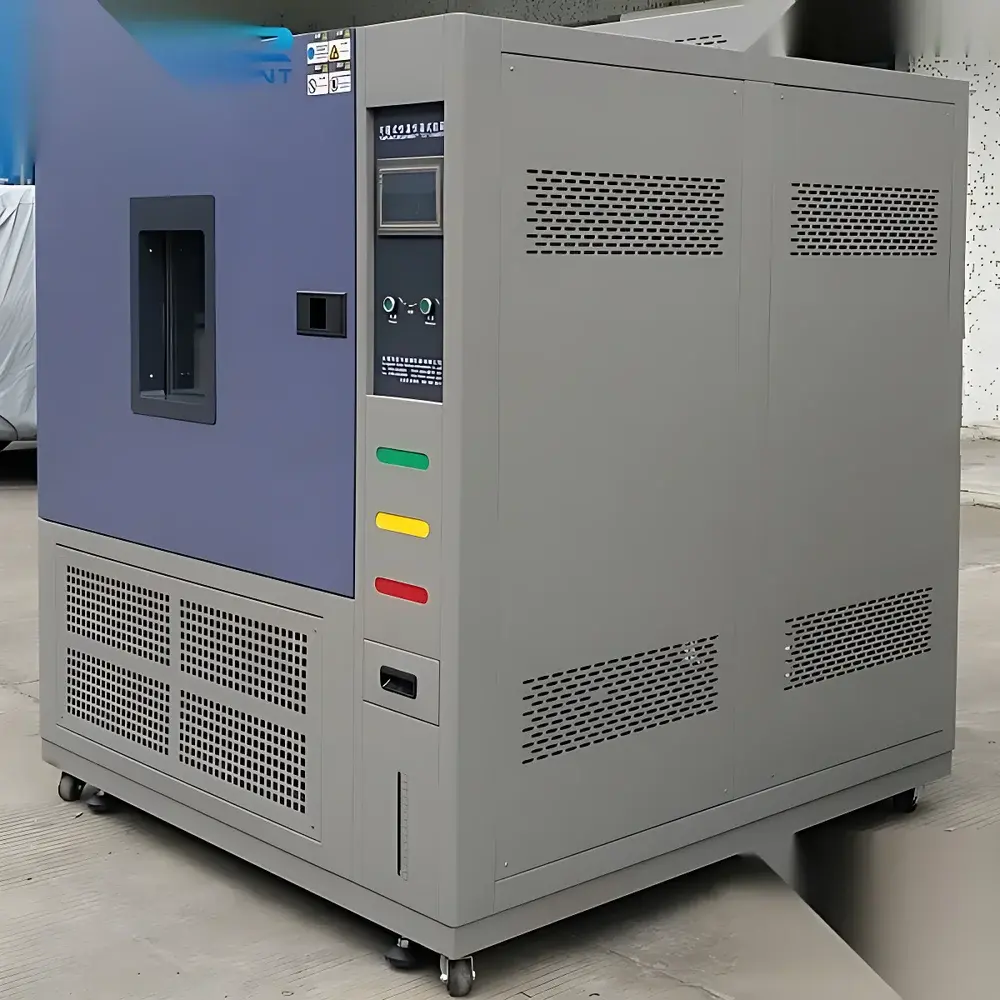
- Ergonomic curved enclosure with seamless stainless steel interior, flat non-reactive door handle, and intuitive 7-inch capacitive touchscreen controller supporting multi-segment programming, real-time trend logging, and user-level access control.
- Modular structural design: external dimensions exclude protruding components (e.g., condensate drain ports, service panels); custom footprint, internal volume, and interface configurations are available upon engineering review and specification alignment.
Sample Compatibility & Compliance
This chamber accommodates a wide range of sample types—including electronic assemblies, polymer components, pharmaceutical packaging, automotive ECUs, and aerospace composites—without compromising environmental fidelity. All performance specifications (e.g., temperature range, humidity range, uniformity, stability) are validated under no-load conditions at ambient reference temperature of 25 ± 6 °C per ISO 16750-4 and IEC 60068-3-5. Cooling water supply requirements (10–28 °C inlet temperature, 0.1–0.3 MPa pressure) ensure consistent refrigeration capacity across ambient fluctuations. The system complies with multiple internationally recognized standards, including GB/T 2423.1–2023 (cold testing), GB/T 2423.2–2023 (dry heat), IEC 60068-2-1 (Test A), IEC 60068-2-2 (Test B), GJB 1032A–2021 (environmental stress screening), MIL-STD-2164A (electronic equipment ESS), and GJB 234–2022 (quantitative ESS methodology). Full traceability documentation—including calibration certificates, FAT/SAT reports, and compliance matrices—is provided upon delivery.
Software & Data Management
The integrated controller supports local data acquisition at configurable intervals (1–60 s) with onboard storage for ≥30 days of continuous 4-channel logging (chamber air temperature, relative humidity, dew point, and setpoint deviation). Exportable CSV files are compatible with LIMS and MES platforms. Optional Ethernet/Wi-Fi connectivity enables remote monitoring via secure HTTPS web interface and integration with enterprise SCADA systems. Audit trail functionality meets FDA 21 CFR Part 11 requirements for electronic records and signatures, including user authentication, change history, and immutable event logs. Firmware updates are delivered via signed package verification to ensure system integrity and regulatory continuity.
Applications
- Accelerated aging studies for medical device packaging per ISO 11607-1.
- Environmental stress screening (ESS) of printed circuit board assemblies (PCBAs) prior to burn-in.
- Stability testing of active pharmaceutical ingredients (APIs) and finished dosage forms under ICH Q1 guidelines.
- Validation of automotive component thermal-hygric resilience per ISO 16750-4 and SAE J2334.
- Material compatibility assessment of adhesives, sealants, and elastomers under cyclic humidity exposure.
- Pre-compliance verification for consumer electronics before formal EMC and environmental certification (e.g., CE, UKCA, FCC).
FAQ
What does “air average ramp rate” mean in technical specifications?
It refers to the arithmetic mean rate of temperature change measured by multiple evenly distributed air sensors—not surface or load-core temperature. Actual sample response depends on mass, specific heat, thermal conductivity, and placement within the working volume.
Can this chamber operate continuously at 85 °C / 85 % RH?
Yes—within its specified operating envelope—but sustained high-humidity high-temperature operation requires verified cooling water supply conditions and periodic maintenance of humidifier electrodes or steam generator elements.
Is third-party calibration included with delivery?
Factory calibration using NIST-traceable reference sensors is standard; optional UKAS or A2LA-accredited on-site calibration is available upon request with advance scheduling.
How is system fault diagnosis supported?
The controller displays real-time error codes aligned with ISO 13849-1 diagnostic categories, and includes guided troubleshooting menus referencing electrical schematics, refrigerant pressure maps, and sensor validation procedures.



