
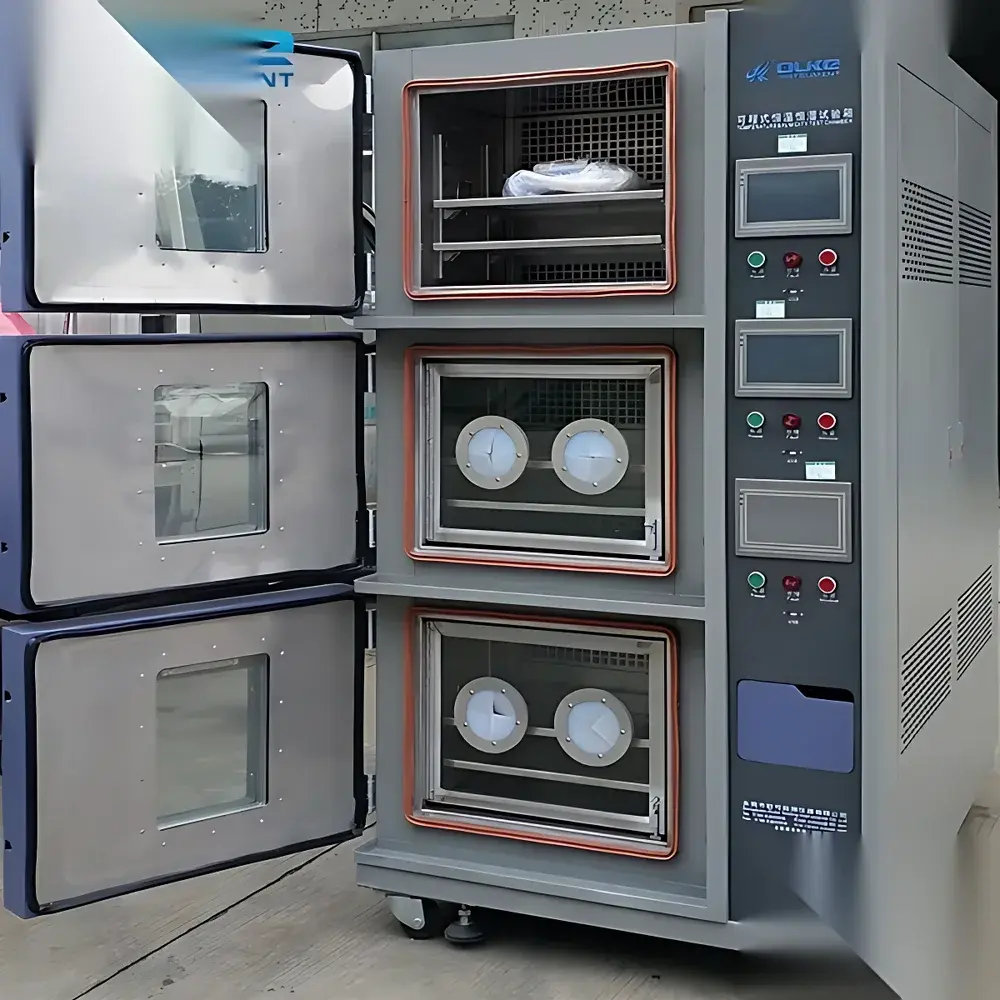
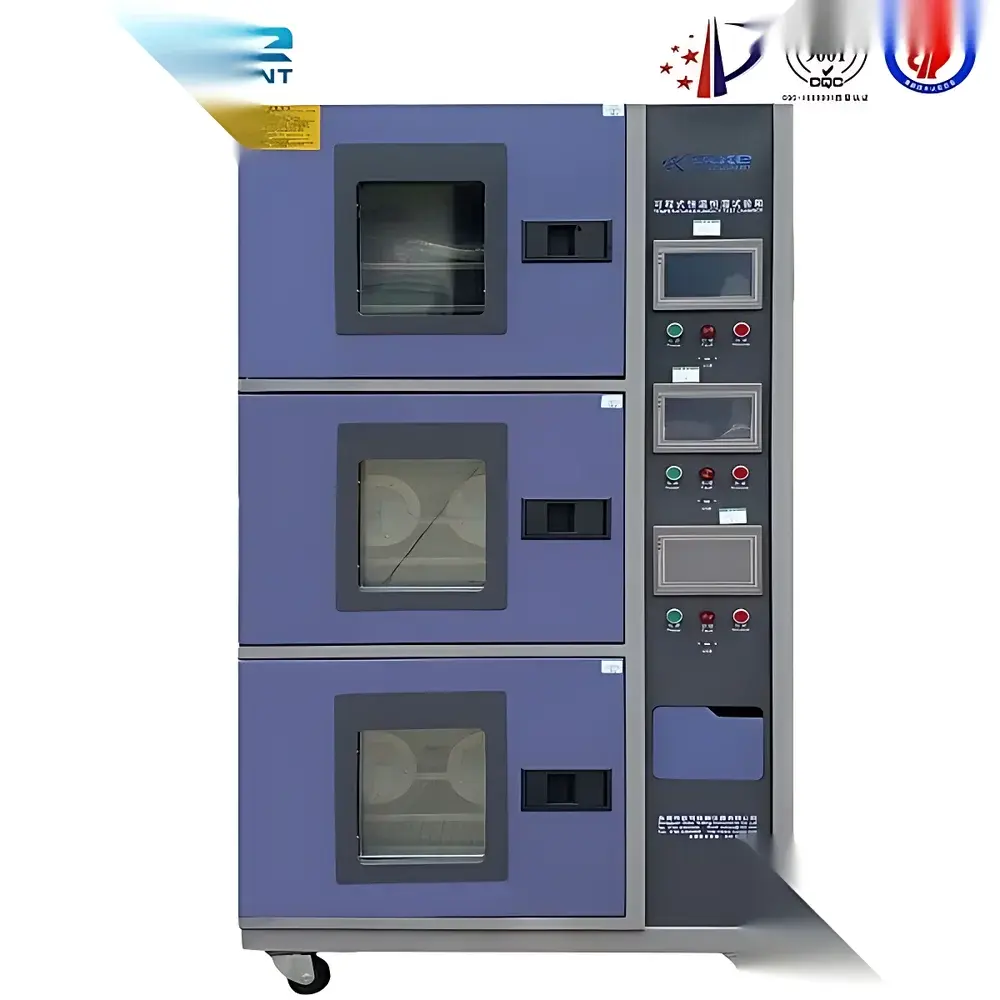
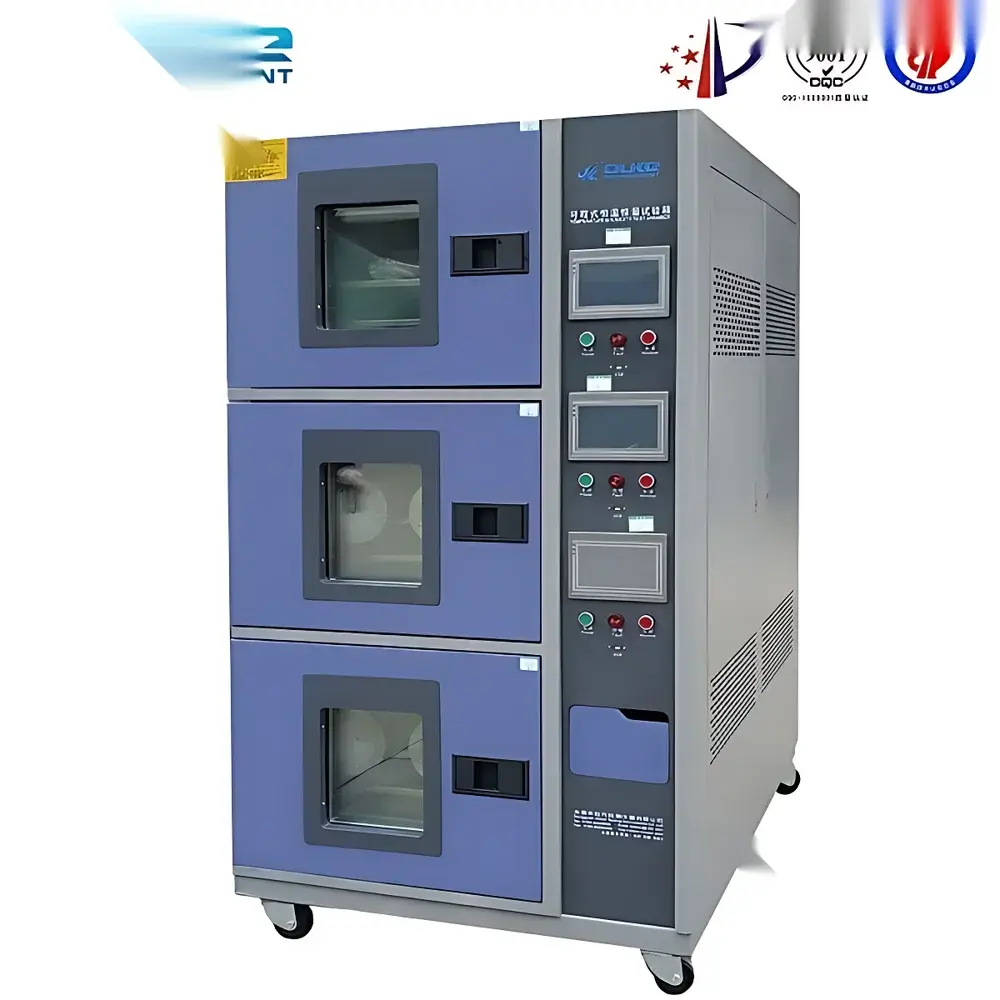
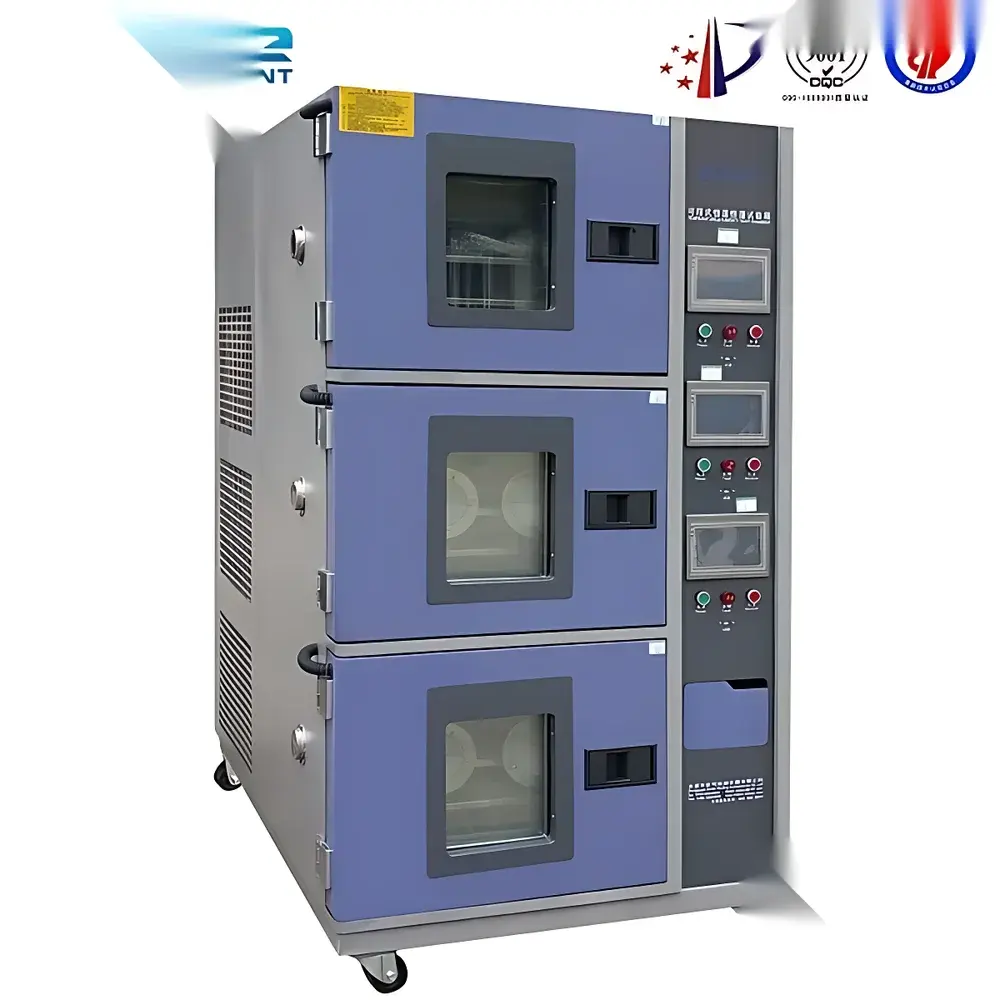
Environmental Test Chamber – Temperature and Humidity Controlled Chamber (General-Purpose Industrial Model)
| Key | Brand: Other Brands |
|---|---|
| Origin | Imported |
| Manufacturer Type | Authorized Distributor |
| Price | USD 7,200 (approx. based on ¥50,000 at 1 USD ≈ ¥6.95) |
| Compliance | GB/T 2423.1–2023, GB/T 2423.2–2023, IEC 60068-2-1, IEC 60068-2-2, GJB 1032A–2021, MIL-STD-2164A |
Overview
The Environmental Test Chamber – Temperature and Humidity Controlled Chamber (General-Purpose Industrial Model) is a precision-engineered climatic simulation system designed for reliable, long-term exposure testing of materials, components, and finished products under controlled thermal and hygrothermal stress conditions. It operates on the principle of balanced temperature and humidity control (BTHC), utilizing proportional-integral-derivative (PID) algorithms to dynamically regulate heating, refrigeration, humidification, and dehumidification subsystems. This ensures that the net thermal and moisture load within the chamber remains in equilibrium with environmental losses—enabling stable setpoint maintenance across wide operating ranges. The chamber is engineered for industrial R&D laboratories, quality assurance departments, and manufacturing facilities requiring repeatable, traceable environmental stress screening per internationally recognized test standards.
Key Features
- Robust stainless-steel interior with seamless welding and corrosion-resistant exterior finish for long-term reliability in high-humidity environments.
- Advanced touch-screen controller with intuitive GUI, multi-segment programmable profiles, real-time trend logging, and password-protected parameter access.
- Balanced Temperature & Humidity Control (BTHC) architecture using solid-state relays (SSRs) for precise P.I.D.-driven modulation of heating, cooling, and steam injection outputs.
- Full capillary tube refrigeration system with automatic capacity adjustment—eliminating mechanical expansion valve hysteresis and improving thermal stability and ramp reproducibility.
- Comprehensive safety architecture: dry-run protection for steam humidifier, independent overtemperature cut-off, low-water-level detection, compressor overload/overheat/overcurrent protection, high-pressure refrigerant switch, circuit breaker, and residual-current device (RCD).
- Optimized air circulation design with adjustable centrifugal blower and ducted airflow distribution to ensure uniform temperature and humidity distribution (±0.5 °C / ±2 % RH typical uniformity, measured at empty chamber under ISO 16750-4 conditions).
Sample Compatibility & Compliance
This chamber accommodates standard test specimens up to 500 L working volume (customizable upon request), supporting both static and semi-dynamic loading configurations. It meets structural and operational requirements defined in GB/T 2423.1–2023 (cold testing), GB/T 2423.2–2023 (dry heat), IEC 60068-2-1 (cold), IEC 60068-2-2 (dry heat), GJB 1032A–2021 (environmental stress screening), and MIL-STD-2164A (electronic equipment ESS). All performance specifications—including temperature range (−40 °C to +150 °C), humidity range (20 % to 98 % RH), and ramp rates—are validated under no-load, ambient-condition reference settings (25 °C ±6 °C). Actual performance may vary depending on specimen mass, thermal mass, surface emissivity, and internal airflow obstruction. Cooling water supply must be maintained between 10 °C and 28 °C at 0.1–0.3 MPa pressure to ensure nominal refrigeration capacity.
Software & Data Management
The integrated controller supports USB data export (CSV format) and optional RS485/Modbus RTU communication for integration into centralized lab management systems. Audit-trail functionality records all parameter changes, alarm events, and operator logins—supporting GLP-compliant documentation workflows. While not natively 21 CFR Part 11 compliant, the system can be configured with external validation-ready software platforms (e.g., LabArchives, LabVantage) when deployed in regulated QA/QC environments. Calibration certificate traceability to NIST or equivalent national metrology institutes is available upon request.
Applications
- Accelerated aging and shelf-life studies for polymers, adhesives, and packaging materials.
- Environmental stress screening (ESS) of printed circuit boards (PCBs), connectors, and embedded electronics per GJB 1032A and MIL-STD-2164A.
- Validation of material dimensional stability under cyclic thermal/hygric loads (e.g., composites, ceramics, optical assemblies).
- Pre-conditioning of samples prior to mechanical, electrical, or chemical testing per ISO 291 and ASTM D618.
- Reliability qualification of automotive components per ISO 16750-4 and GMW3172.
FAQ
What is the standard temperature and humidity operating range?
The chamber is rated for −40 °C to +150 °C and 20 % to 98 % RH, with simultaneous operation achievable across overlapping zones (e.g., −20 °C/40 % RH to +85 °C/85 % RH). Full-range extremes are not concurrently attainable.
Is this chamber suitable for regulatory-compliant validation studies?
Yes—when paired with third-party IQ/OQ documentation packages and calibrated sensors traceable to accredited labs, it supports validation per ISO/IEC 17025, GMP Annex 15, and internal QA protocols.
Can the chamber be customized for non-standard dimensions or interfaces?
Yes—structural modifications, port additions (e.g., electrical feedthroughs, optical viewports), and specialized sensor mounting options are available under engineering review and formal change control.
How is temperature/humidity uniformity verified?
Uniformity is assessed using a 9-point sensor array per IEC 60068-3-5, with results documented in the factory acceptance test (FAT) report supplied with each unit.
What maintenance intervals are recommended?
Routine checks include humidifier tank cleaning (weekly), condensate drain inspection (bi-weekly), air filter replacement (quarterly), and annual calibration verification of temperature/humidity sensors and controller outputs.



