
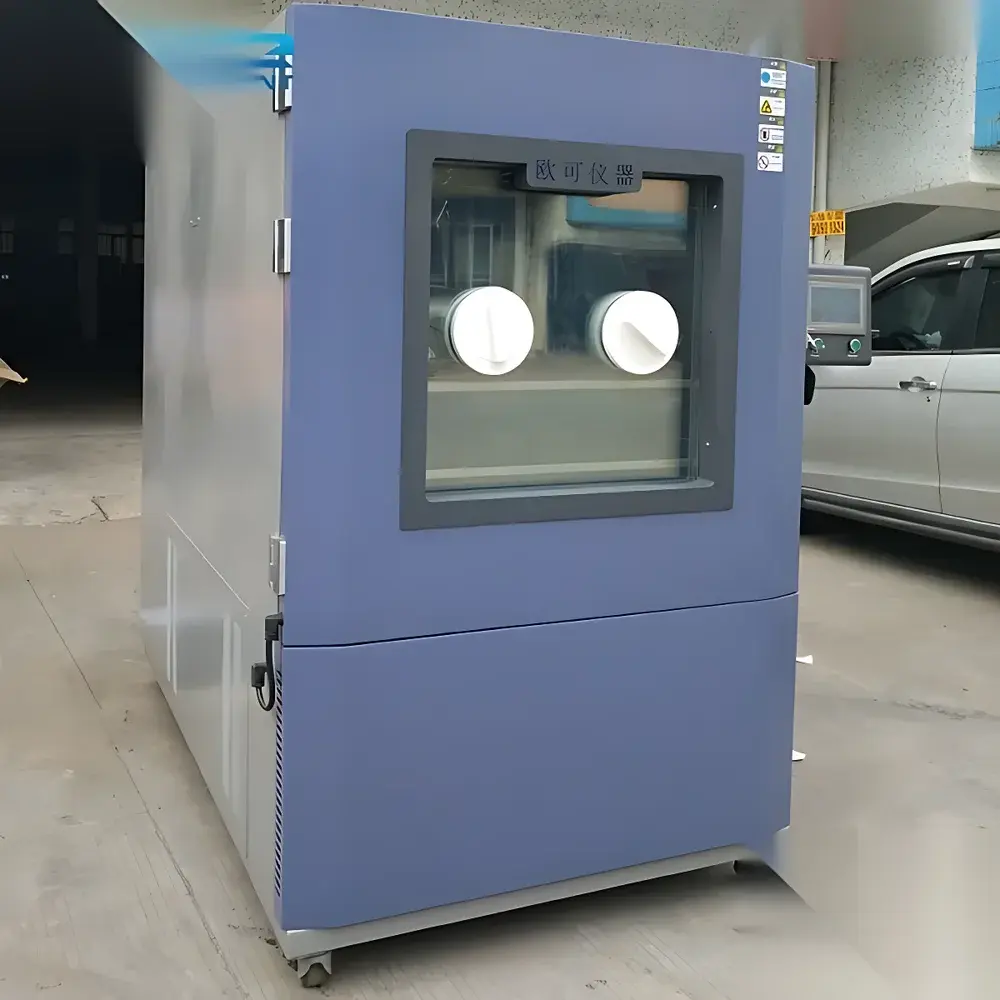
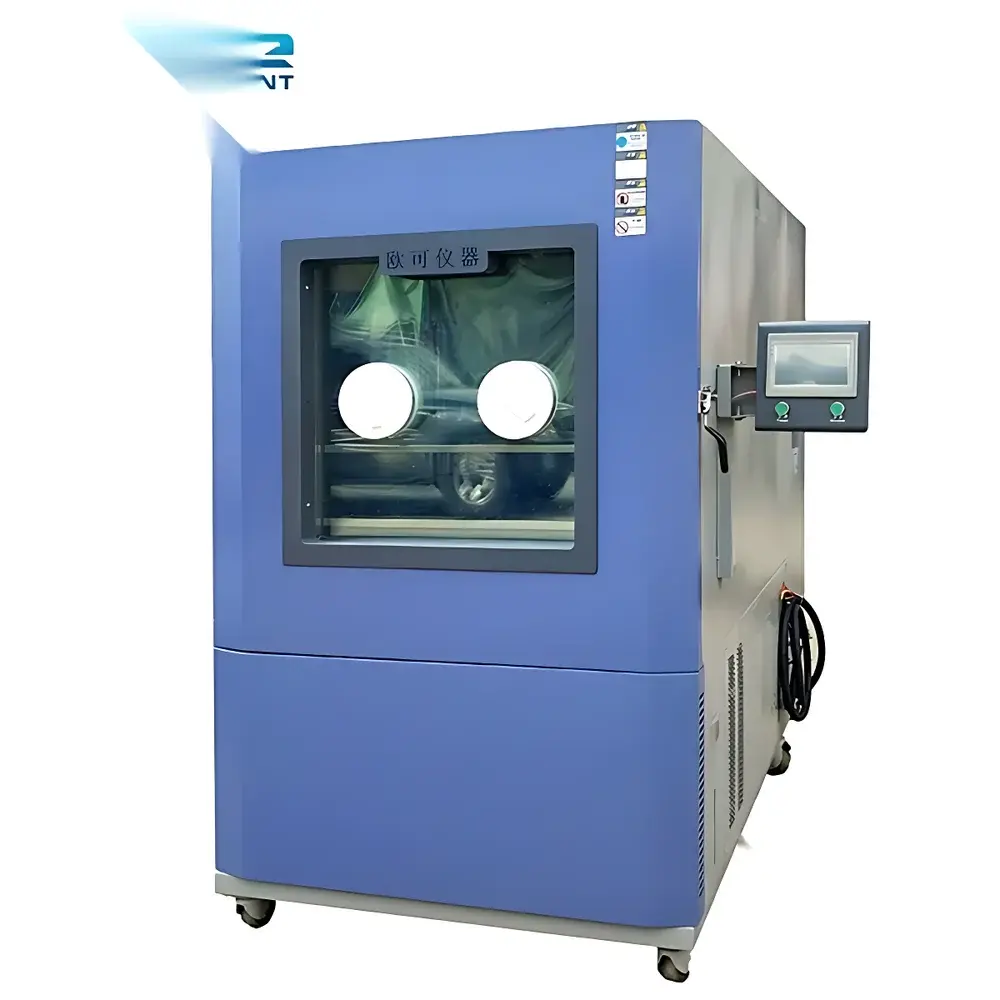
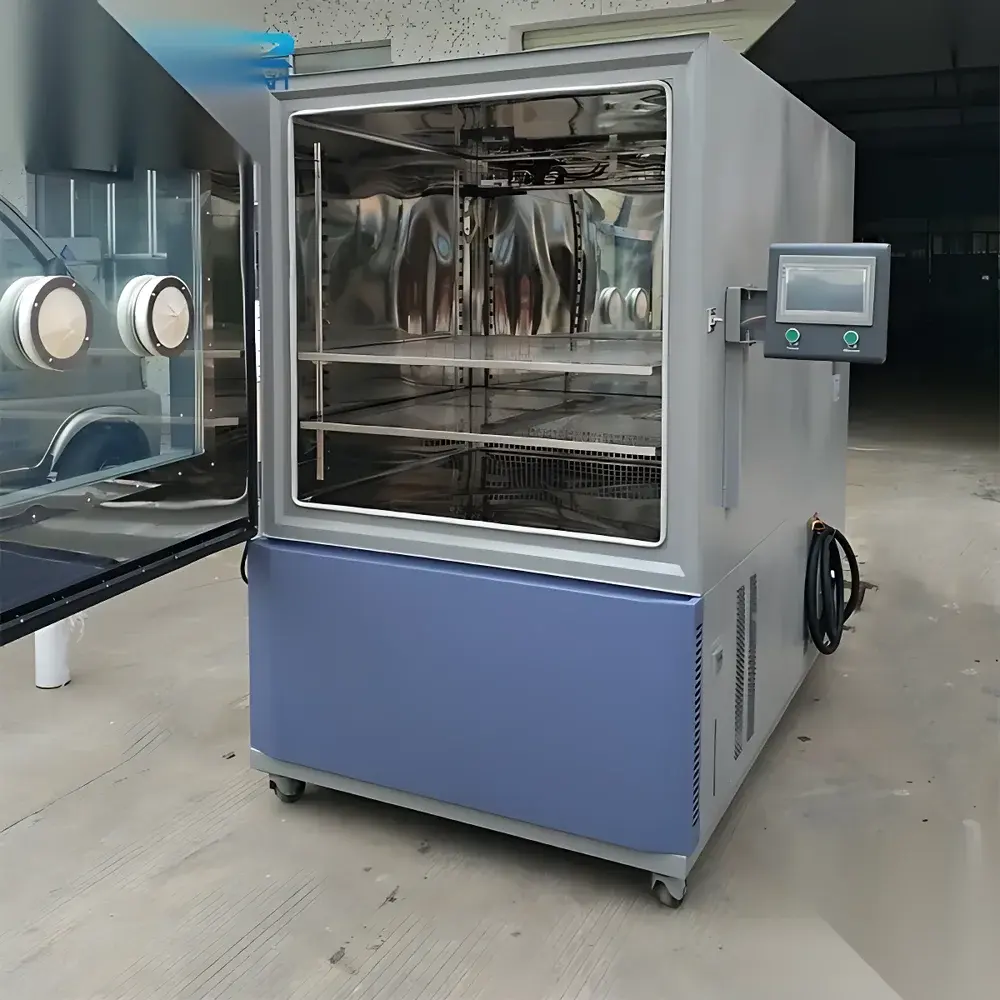
Environmental Test Chamber – Temperature and Humidity Controlled Chamber (Generic Industrial Grade)
| Brand | Other Brands |
|---|---|
| Origin | Imported |
| Manufacturer Type | Authorized Distributor |
| Price | USD 3,100 (FOB) |
| Temperature Range | -40°C to +150°C (typical) |
| Humidity Range | 20–98% RH |
| Control Accuracy | ±0.5°C / ±2.5% RH |
| Uniformity | ±1.5°C / ±3% RH |
| Cooling Water Requirement | 10–28°C, 0.1–0.3 MPa |
| Compliance | GB/T 2423.1–2023, GB/T 2423.2–2023, IEC 60068-2-1, IEC 60068-2-2, GJB 1032A–2021, MIL-STD-2164A |
Overview
The Environmental Test Chamber – Temperature and Humidity Controlled Chamber is an industrial-grade climatic simulation system engineered for precise, repeatable exposure of materials, components, and finished products to defined thermal and hygrothermal stress profiles. Based on the principle of balanced temperature and humidity control (BTHC), the chamber employs a dual-loop P.I.D.-regulated SSR-driven heating/humidification system that dynamically matches energy input to thermal and moisture losses—enabling stable long-term operation at setpoints across its full operational envelope. Its architecture integrates independent refrigeration (capillary tube-based, auto-load-adjusting), electric resistance heating, steam or ultrasonic humidification, and forced-air circulation with multi-point sensor feedback. Designed in accordance with international environmental testing standards, it supports qualification, reliability screening, and accelerated aging protocols under controlled ambient conditions.
Key Features
- Robust stainless-steel interior with seamless welded corners and corrosion-resistant exterior cladding for extended service life in laboratory and production environments.
- Advanced touch-screen controller with intuitive GUI, multi-segment programmability (up to 99 cycles × 99 steps), real-time trend logging, and USB data export capability.
- Capillary-tube refrigeration system with automatic capacity modulation—providing superior stability and faster thermal response compared to conventional thermostatic expansion valve (TXV) configurations.
- Comprehensive safety architecture: dry-run protection for humidifier, independent overtemperature cutoff (mechanical backup), low-water-level detection, compressor overload/overheat/overcurrent monitoring, high-pressure refrigerant cutout, circuit breaker, and residual-current device (RCD) protection.
- Ergonomic curved cabinet design with flat, non-slip door handle and wide-view observation window (tempered glass with anti-fog coating optional).
- Modular construction enables custom external dimensions and internal volume (standard range: 100–1000 L); optional features include RS-485/Modbus RTU interface, Ethernet connectivity, and 21 CFR Part 11-compliant audit trail firmware.
Sample Compatibility & Compliance
This chamber accommodates diverse sample types—including electronic assemblies, polymer components, automotive parts, pharmaceutical packaging, and aerospace composites—within standard test fixtures or custom racks. Internal airflow velocity and distribution are optimized per ISO 16750-4 and IEC 60068-3-5 to ensure uniform stress exposure. All performance specifications (e.g., temperature/humidity uniformity, recovery time, ramp rate) are validated under no-load, ambient conditions of 25°C ± 6°C per GB/T 2423.1–2023 Annex B. The unit complies with national and international environmental stress screening (ESS) requirements, including GJB 1032A–2021, MIL-STD-2164A, and IEC 60068-2-1/-2. Calibration certificates traceable to NIM (China) or NIST (USA) are available upon request.
Software & Data Management
The embedded controller supports local data storage (≥30 days of 1-second interval logs) and configurable alarm thresholds with relay outputs for external SCADA integration. Optional PC-based software provides remote monitoring, report generation (PDF/CSV), deviation analysis, and compliance documentation aligned with GLP and GMP frameworks. Audit trails record user login/logout events, parameter modifications, and manual override actions—meeting FDA 21 CFR Part 11 requirements when paired with electronic signature modules. Data integrity safeguards include write-protected memory partitions and cyclic redundancy check (CRC) validation on all stored records.
Applications
- Environmental stress screening (ESS) of PCBs, connectors, and embedded controllers per MIL-STD-2164A.
- Accelerated aging studies for lithium-ion battery enclosures under combined thermal-hygric cycling.
- Stability testing of medical device packaging per ISO 11607-1 and ASTM F1980.
- Material compatibility assessment of adhesives, sealants, and elastomers under sustained high-RH conditions.
- Qualification of automotive ECUs per ISO 16750-4 and AEC-Q200 temperature-humidity profiles.
- Process validation support for cleanroom-compatible equipment subjected to humidity-induced condensation risks.
FAQ
What does “balanced temperature and humidity control (BTHC)” mean?
BTHC refers to a closed-loop control strategy where the chamber’s heating and humidification power output is continuously adjusted via P.I.D. algorithms to match real-time thermal and moisture losses—achieving zero-net energy drift and exceptional setpoint stability over extended durations.
Are cooling water specifications mandatory for operation?
Yes. To guarantee specified cooling performance—particularly below 0°C—the supply water must be maintained between 10–28°C at 0.1–0.3 MPa pressure. Failure to meet these conditions may result in reduced cooling capacity or compressor shutdown.
Can this chamber be calibrated to ISO/IEC 17025 standards?
Yes. Third-party accredited calibration services are available for temperature (±0.15°C) and relative humidity (±1.5% RH) sensors, with full uncertainty budgets and traceable certificates compliant with ISO/IEC 17025:2017.
Is remote diagnostics supported?
Standard models include Modbus RTU over RS-485; optional Ethernet/Wi-Fi modules enable secure remote access for configuration, live monitoring, and predictive maintenance alerts via TLS-encrypted connections.
How is uniformity verified during factory acceptance testing (FAT)?
FAT includes 9-point sensor mapping (per IEC 60068-3-5) across the working volume at three representative setpoints (–20°C/40% RH, 25°C/60% RH, 85°C/85% RH), with results documented in the final test report.
Related Products



