
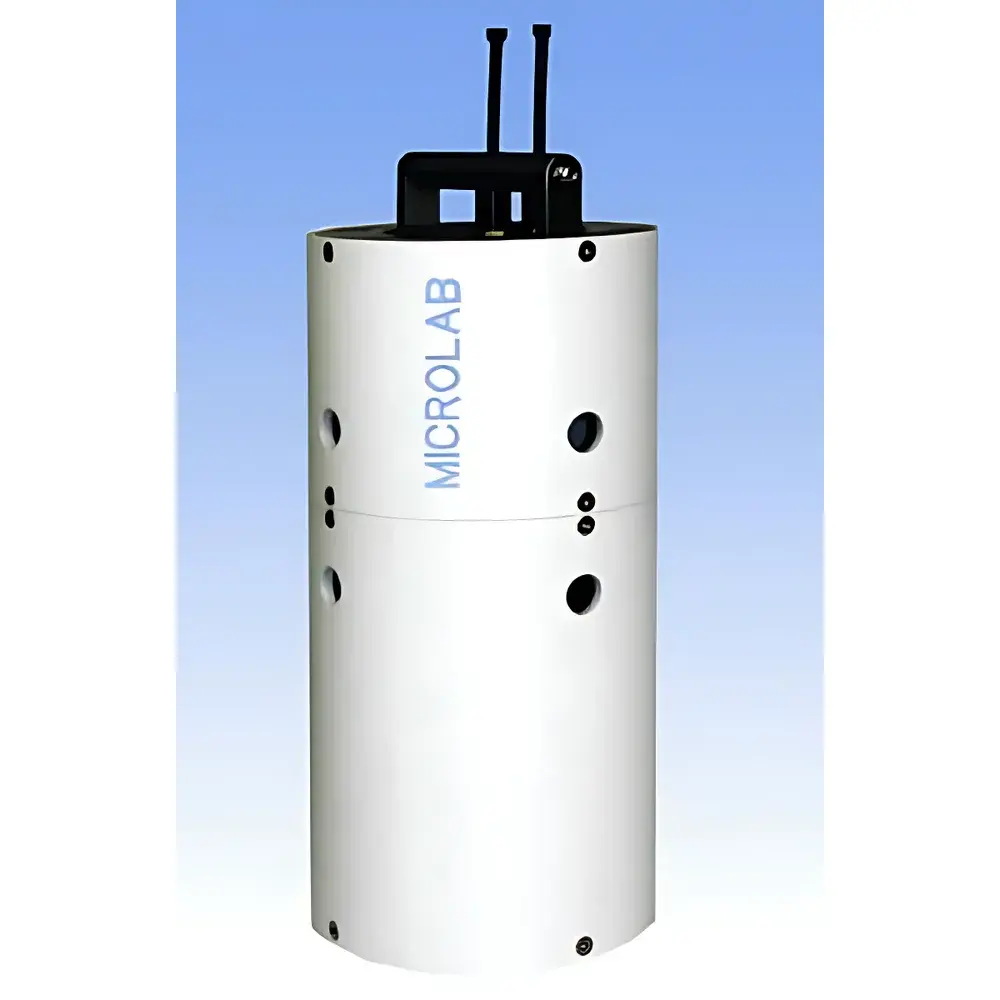
Envirotech MicroLAB/EcoLAB In Situ Nutrient Monitoring System
| Origin | Canada |
|---|---|
| Manufacturer Type | Authorized Distributor |
| Origin Category | Imported |
| Model | MicroLAB/EcoLAB |
| Pricing | Upon Request |
Overview
The Envirotech MicroLAB and EcoLAB In Situ Nutrient Monitoring Systems represent a paradigm shift in aquatic nutrient analysis—bringing standardized wet-chemistry methodologies directly into the water column. Unlike traditional grab-sampling followed by laboratory analysis, these systems perform automated, sequential injection analysis (SIA) underwater, enabling real-time, high-fidelity quantification of key nutrients without sample transport or preservation artifacts. Engineered for long-term deployment in diverse aquatic environments—from oligotrophic lakes to coastal estuaries and open-ocean moorings—the MicroLAB/EcoLAB platforms comply with U.S. Environmental Protection Agency (EPA) approved methods for nitrate, nitrite, phosphate, silicate, and ammonium nitrogen. The core analytical principle relies on SIA: precise metering of micro-volumes of reagents and sample into a programmable flow path, where controlled chemical reactions (e.g., cadmium reduction for nitrate, molybdenum blue for phosphate, indophenol blue for ammonium) generate colorimetric signals measured at specific optical wavelengths. This approach minimizes reagent consumption (<1 mL per analysis), reduces waste generation, and eliminates environmental discharge—critical for sensitive ecosystems and regulatory compliance.
Key Features
- True in situ operation: Fully submersible design rated for continuous deployment up to 200 m standard depth (4000 m optional), with pressure-compensated fluidics and corrosion-resistant titanium housing.
- Low-consumption chemistry: Integrated, user-replaceable reagent cartridges support >40 days of unattended operation per set; onboard waste containment prevents effluent release into the environment.
- Energy-efficient architecture: Operates on 12 V DC (9.0–15.5 V range); average current draw is 22 mA during mixed operational cycles—enabling 8-week battery life with standard marine-grade power packs.
- Dual-platform flexibility: MicroLAB delivers single-parameter monitoring with optimized stability for long-duration nitrate or silicate tracking; EcoLAB supports up to four independent analytical channels, allowing concurrent multi-nutrient profiling.
- Ruggedized construction: Pressure housings fabricated from high-strength PVC and polypropylene (outer shell) and Grade 5 titanium (core instrument module), ensuring mechanical integrity across freshwater, brackish, and full-salinity seawater conditions.
Sample Compatibility & Compliance
The MicroLAB/EcoLAB systems are validated for direct analysis of natural waters—including rivers, reservoirs, lacustrine systems, and marine environments—without pre-filtration or dilution in most cases. Each analyte method aligns with established regulatory frameworks: nitrate and nitrite measurements follow EPA Method 353.2; phosphate adheres to EPA Method 365.1; ammonium conforms to ASTM D1426-15a; and silicate analysis follows ISO 15681-2:2015. All optical detection modules employ narrow-band LED sources and matched photodiode detectors calibrated against NIST-traceable standards. Data output meets GLP/GMP documentation requirements, with timestamped raw absorbance values, calibration coefficients, and diagnostic flags stored internally. Optional integration with external CTD or fluorometer sensors enables synchronized physical-chemical-biological profiling for comprehensive water quality assessment.
Software & Data Management
Instrument control, method sequencing, and data logging are managed via Envirotech’s proprietary LabView-based desktop software (Windows-compatible), supporting remote configuration over RS-232 serial interface (ASCII protocol, default 19.2 kbaud, N81). All measurement cycles—including blank correction, calibration verification, and spike recovery checks—are programmable and auditable. Raw data files are exported in CSV format with embedded metadata (UTC timestamps, temperature, pressure, channel ID, QC status). For networked deployments, optional RS-232-to-Ethernet gateways enable integration into SCADA or IoT telemetry infrastructures. Firmware updates preserve historical calibration history and support FDA 21 CFR Part 11-compliant audit trails when deployed in regulated monitoring programs.
Applications
- Long-term eutrophication monitoring in reservoirs and drinking water source protection zones.
- Real-time nutrient flux quantification across sediment-water interfaces and benthic boundary layers.
- Validation of satellite-derived chlorophyll-a and primary productivity models using co-located in situ nutrient time series.
- Regulatory compliance reporting for wastewater discharge permits and TMDL (Total Maximum Daily Load) assessments.
- Research-grade process studies in mesocosms, aquaculture outflow monitoring, and hypoxia event early warning systems.
FAQ
What is the maximum deployment duration without maintenance?
MicroLAB achieves up to 4 months for nitrate or silicate monitoring; EcoLAB maintains 2–4 months depending on channel utilization and sampling frequency.
Can the system operate in air as well as water?
Yes—both platforms are fully functional in atmospheric conditions, enabling benchtop calibration, field-side validation, and transitional deployment scenarios.
How is data integrity ensured during extended submersion?
Internal non-volatile memory logs all measurements with millisecond-precision timestamps; checksum validation and cyclic redundancy checks prevent data corruption.
Are calibration standards traceable to international references?
All factory calibrations use NIST-certified nutrient stock solutions; field recalibration kits include CRM-certified reference materials compliant with ISO Guide 34.
What communication protocols are supported beyond RS-232?
RS-232 is standard; optional OEM modules provide Modbus RTU, SDI-12, or I²C interfaces for third-party data loggers and telemetry systems.
Related Products







