
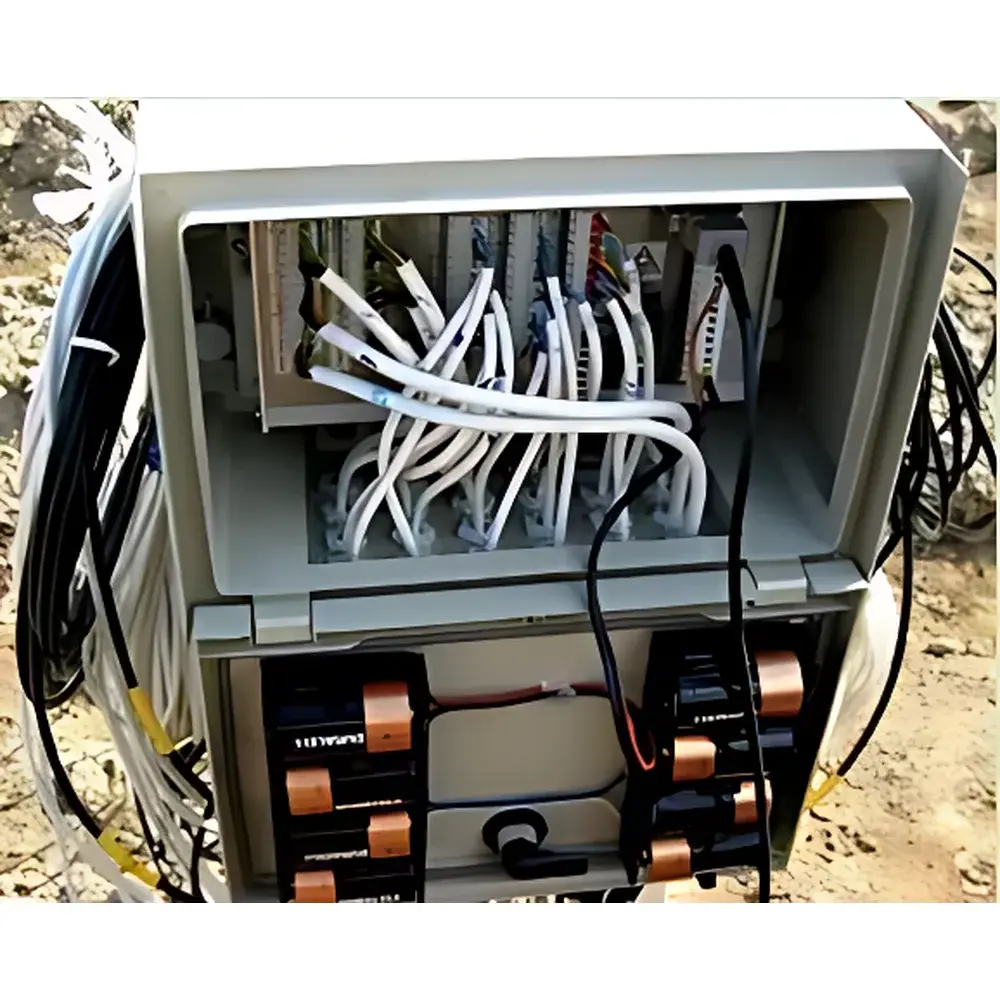
ENVIS Environmental Monitoring System
| (在此处输出精准翻译� | �纯英文产品名称。极其重要:仅输出一行名称,严禁输出备选名、严禁换行重复、严禁包含任何中文字符) |
|---|---|
| [Origin | Beijing, China |
| Manufacturer Type | Authorized Distributor |
| Origin Category | Domestic (China-integrated, European-designed architecture) |
| Model | ENVIS |
| Pricing | Available upon Request] |
Overview
The ENVIS Environmental Monitoring System is a modular, field-deployable data acquisition and sensor integration platform engineered for long-term, unattended monitoring of terrestrial ecological and environmental parameters. Built upon a robust European-influenced hardware architecture and integrated in Beijing, the system employs standardized analog, frequency, resistance, and pulse-counting signal acquisition to support heterogeneous sensor networks across meteorology, pedology, plant physiology, and biogeochemical flux domains. Its core measurement paradigm relies on high-fidelity analog-to-digital conversion (16-bit resolution), precision timing synchronization (internal real-time clock), and deterministic sampling intervals ranging from 3 seconds to 24 hours—enabling compliance with ISO 17025-aligned field data collection protocols. Designed for continuous operation in harsh outdoor environments (–20 °C to +60 °C), the system meets IP68-rated ingress protection for critical sensor components and supports multi-year data retention via non-volatile RAM backed by lithium battery power—ensuring integrity of time-series records under intermittent power conditions.
Key Features
- 36+ configurable input channels supporting voltage (±20 mV to ±2.5 V, 8 ranges), resistance (0–20 kΩ), frequency (15 Hz–100 kHz), and counter signals (up to 100 kHz)
- Onboard 500 kB RAM with capacity for ≥200,000 timestamped records; data retention guaranteed for up to 8 years without power
- Low-power architecture: 0.1 mA standby current; max 50 mA active draw; compatible with 7–16 V DC input
- Modular expansion capability for specialized ecological modules: SCG Soil Carbon Flux Unit (for in situ CO₂ efflux and root respiration quantification), sap flow sensors (Granier-type or thermal dissipation), micro-lysimetric evapotranspiration modules, and customizable plant physiological sensor arrays
- Integrated Windows-based configuration, visualization, and post-processing software with export support for CSV, Excel, and MATLAB-compatible formats
Sample Compatibility & Compliance
The ENVIS system accommodates a broad spectrum of calibrated environmental sensors conforming to internationally recognized metrological standards. Meteorological sensors—including air temperature (±0.1 °C), relative humidity (±2% RH), barometric pressure (±0.5 hPa), wind speed (±1% ±0.01 m/s), and precipitation (0.2 mm resolution)—are traceable to NIST-equivalent calibration references. Radiation sensors (PAR, UV-A/B, UVI, net radiation, lux) feature cosine-corrected optical heads and are certified for spectral responsivity per ISO 9060:2018 Class C specifications. Soil sensors—including TDR/FDR volumetric water content probes (±1% VWC accuracy in standard soils), soil temperature (±0.2 °C), EC (0–6 dS/m), and NDIR-based CO₂ analyzers (0–2000 ppm, ±1.5% full scale)—comply with ASTM D5088–20 and ISO 11274 requirements for field soil characterization. All sensor firmware and data logging routines support audit-ready metadata tagging (sensor ID, calibration date, location coordinates) required under GLP and FDA 21 CFR Part 11-compliant workflows when paired with validated software configurations.
Software & Data Management
Data acquisition, visualization, and preliminary analysis are managed through a native Windows application supporting drag-and-drop channel mapping, real-time telemetry display, and automated report generation. The software enables batch calibration coefficient import, linear/nonlinear sensor equation definition (e.g., polynomial or lookup-table-based conversions), and time-synchronized multi-sensor alignment. Export functions include ASCII-delimited files compatible with R, Python (Pandas), and commercial statistical packages. Optional GPRS telemetry module provides secure, encrypted data transmission to cloud-hosted repositories using TLS 1.2, enabling remote diagnostics and threshold-triggered alerts. All raw and processed datasets retain embedded timestamps, sensor provenance, and environmental context tags—facilitating FAIR (Findable, Accessible, Interoperable, Reusable) data stewardship principles aligned with NSF and Horizon Europe reporting guidelines.
Applications
- Agricultural research: Crop water use efficiency (WUE), irrigation scheduling, phenological response to microclimate gradients
- Forestry and ecology: Canopy-atmosphere exchange modeling, drought stress indices, carbon sequestration validation
- Soil science: Vadose zone moisture dynamics, salinity migration studies, freeze-thaw cycle monitoring
- Climatology and environmental monitoring: Long-term trend analysis of solar radiation balance, UV exposure metrics, and urban-rural microclimate differentials
- Educational and citizen science deployments: Modular scalability allows curriculum-aligned sensor kits for undergraduate hydrology, biometeorology, and ecosystem science laboratories
FAQ
Is the ENVIS system compliant with international data quality standards for publication-grade research?
Yes. Sensor selection, calibration traceability, temporal resolution control, and metadata capture align with ISO/IEC 17025:2017 requirements for environmental testing laboratories. When deployed with documented SOPs and version-controlled software, it supports reproducible data acquisition suitable for peer-reviewed journal submission.
Can the system operate autonomously for over one year without maintenance in remote locations?
Yes. With optional solar charging (20 W panel + charge controller) and IP68-rated enclosures, the system sustains continuous operation across seasonal extremes. Battery backup ensures uninterrupted logging during extended low-light periods, and memory capacity supports >18 months of 15-minute interval sampling before manual download.
Does the system support integration with third-party platforms such as ThingSpeak, FIWARE, or custom IoT dashboards?
Yes. Raw serial output (RS-232/USB) and optional GPRS modules provide Modbus RTU and ASCII protocol support. API documentation and sample Python scripts are provided for RESTful ingestion into external middleware stacks.
Are calibration certificates included with each sensor shipment?
Yes. Each sensor is supplied with a factory calibration certificate indicating reference standard, uncertainty budget, and date of verification. Field recalibration services are available through authorized service centers in APAC and EMEA regions.
Related Products







