
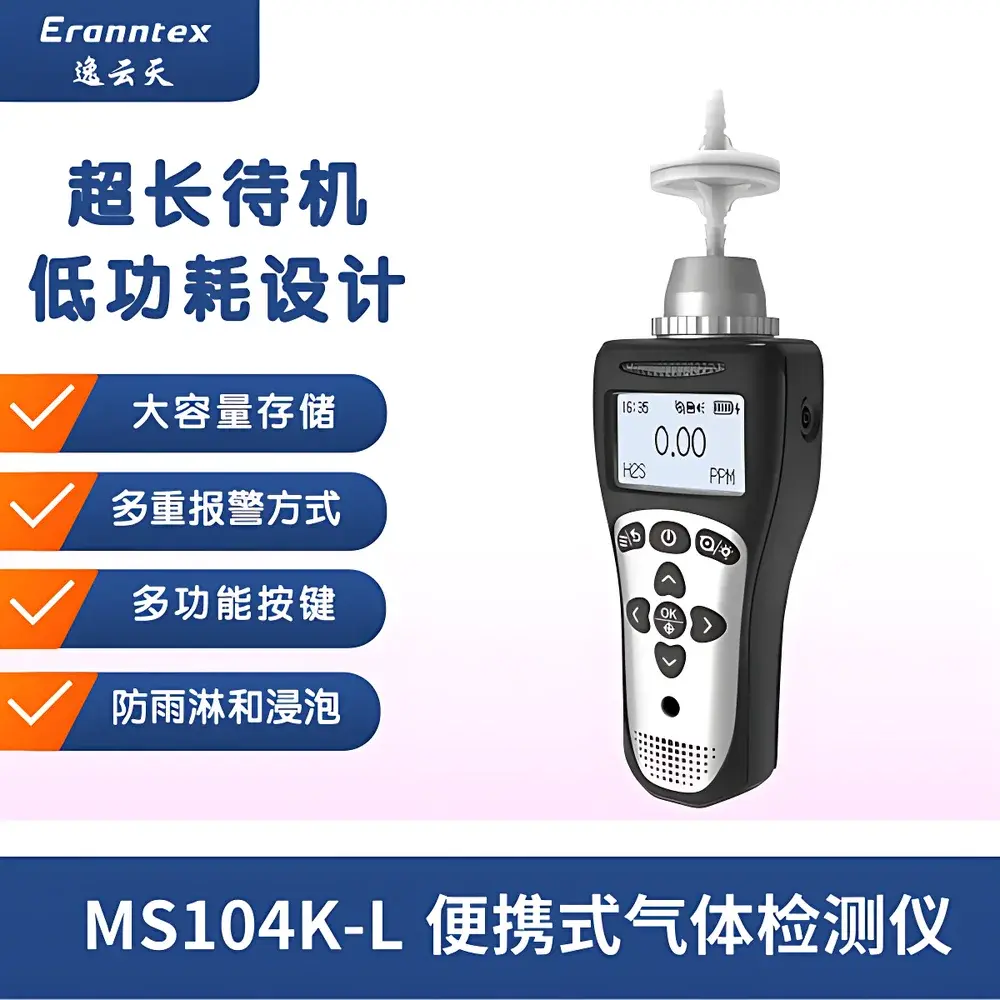
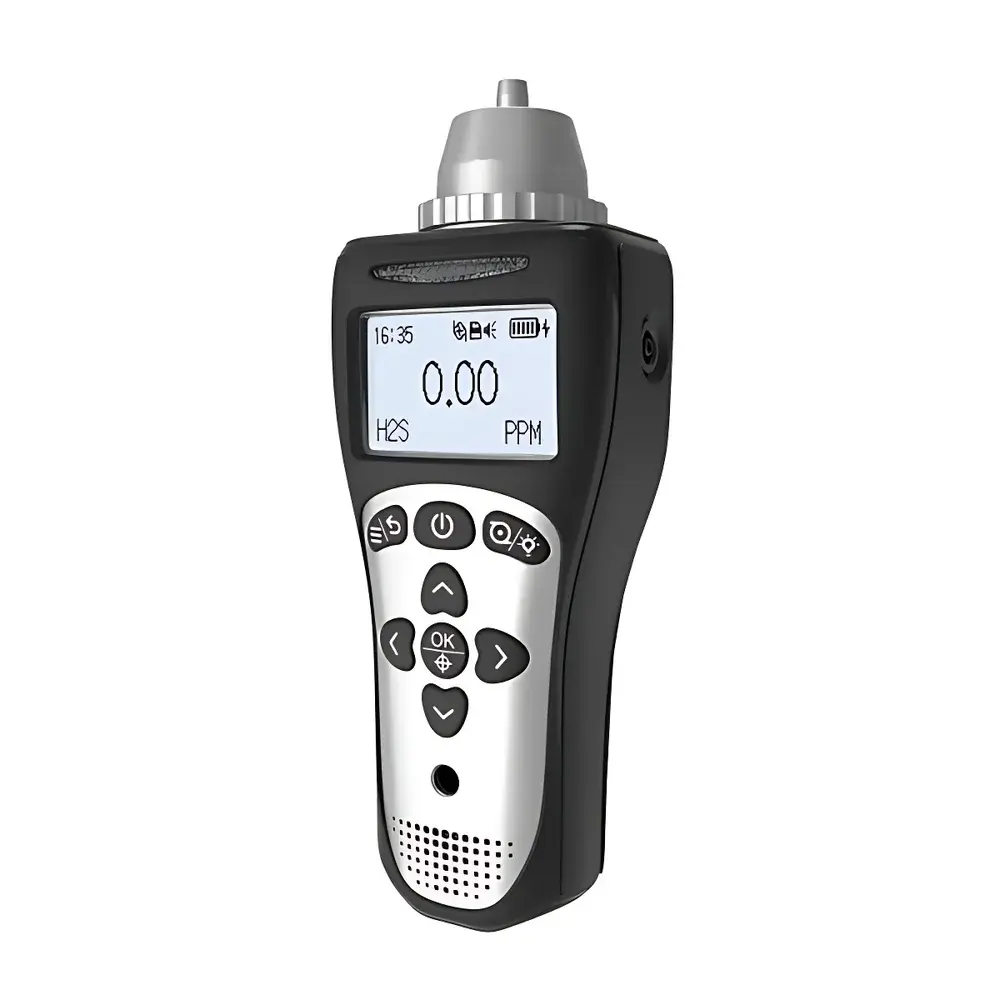
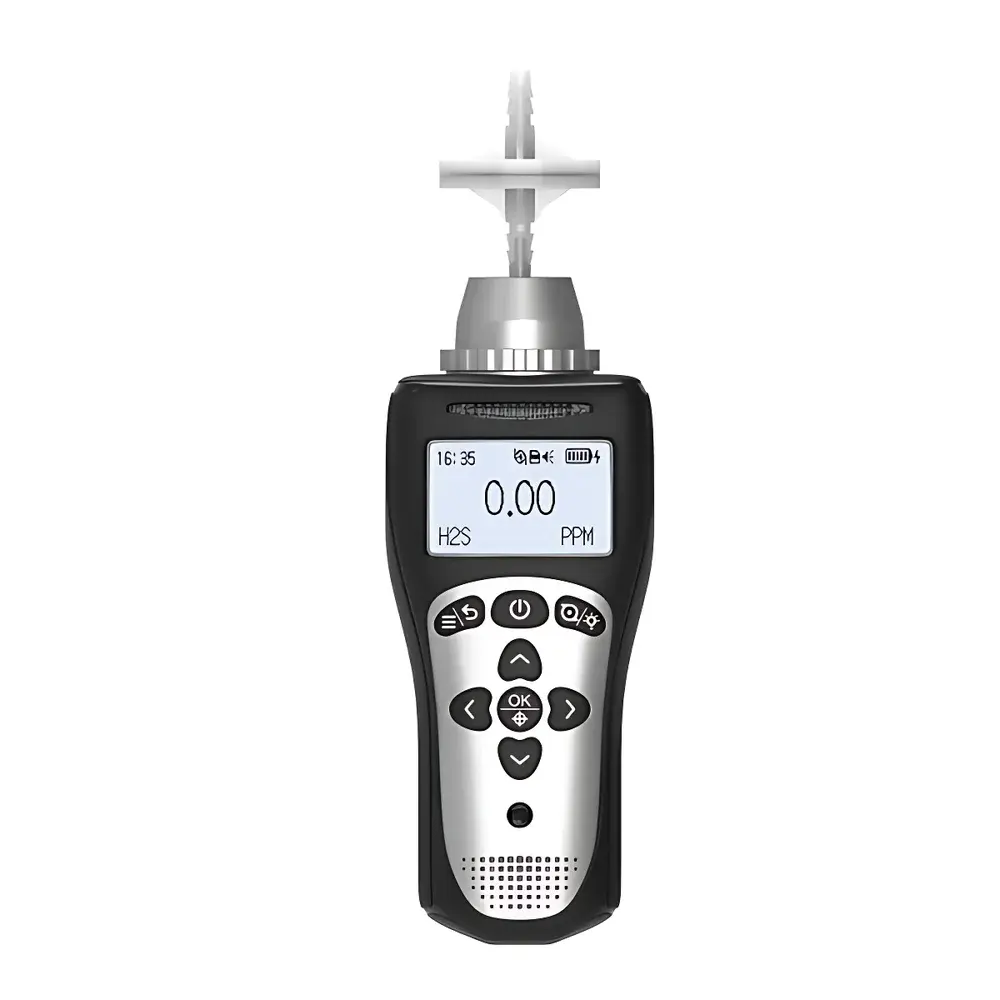
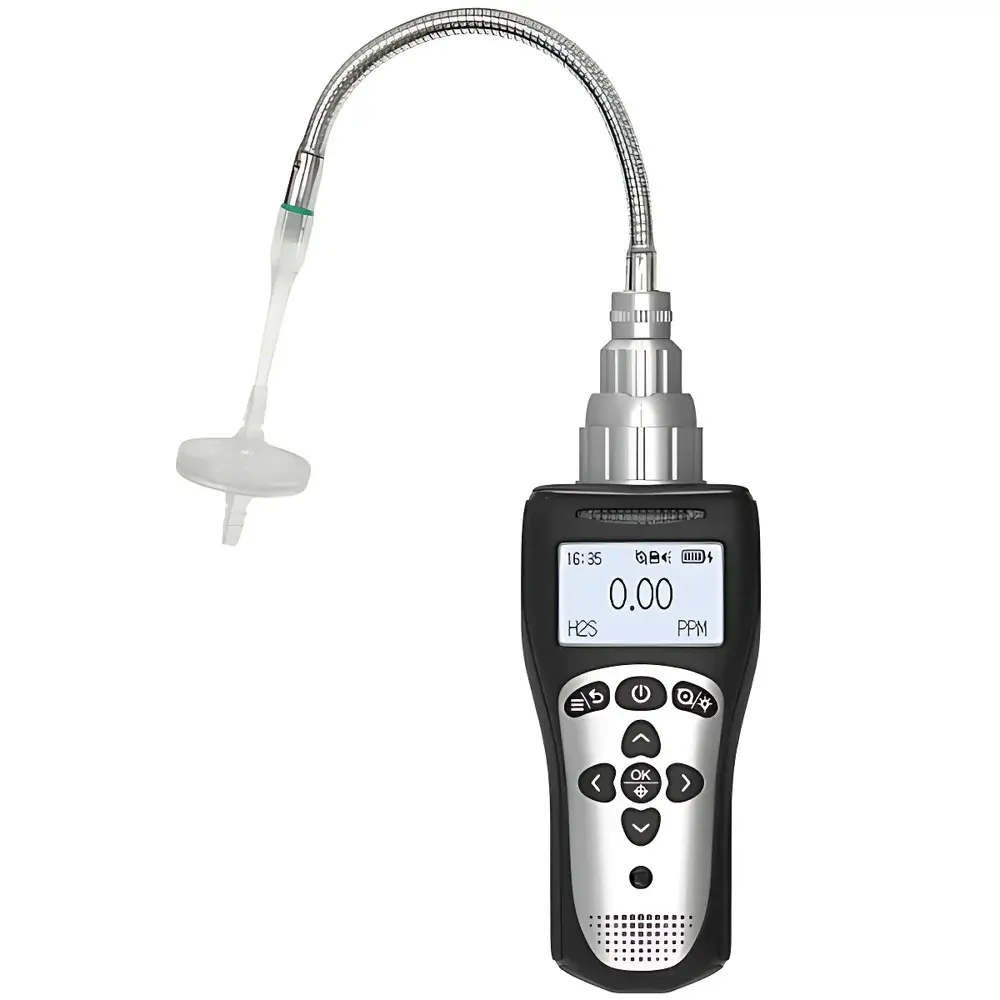
Eranntex MS104K-L-CxHy Portable Total Hydrocarbons (Non-Methane) Analyzer
| Brand | Eranntex |
|---|---|
| Origin | Guangdong, China |
| Manufacturer Type | Manufacturer |
| Country of Origin | China |
| Model | MS104K-L-CxHy |
| Instrument Type | Portable |
Overview
The Eranntex MS104K-L-CxHy is a certified intrinsically safe portable analyzer engineered for real-time quantification of total hydrocarbons excluding methane (NMHC) in ambient air and industrial process environments. It operates on configurable detection principles—including photoionization detection (PID), catalytic combustion (LEL), non-dispersive infrared (NDIR), electrochemical, thermal conductivity, and semiconductor sensing—selected based on target analyte, required sensitivity, and field application constraints. Unlike fixed-station GC-based NMHC analyzers, this instrument delivers rapid response (T90 ≤ 20 s) and field-deployable operation without laboratory infrastructure, making it suitable for leak detection surveys, confined space entry verification, emergency response triage, and regulatory compliance screening per EPA Method 25A and ISO 11890-2 equivalents. Its architecture adheres to fundamental gas detection metrology standards, with traceable calibration paths and documented uncertainty budgets (≤ ±2% of reading) supporting data integrity in auditable workflows.
Key Features
- Intrinsically safe design certified to Ex ia IIC T4 Ga per GB/T 3836.1–2021 and GB/T 3836.4–2021, enabling use in Zone 0/1 hazardous areas.
- Dual sampling modes: integrated micro-pump aspiration (flow-controlled) and passive diffusion—user-selectable via firmware interface.
- IP68-rated enclosure constructed from flame-retardant polycarbonate with elastomeric impact protection; validated for 5 m drop resistance and continuous submersion.
- Multi-parameter display: real-time concentration (with auto-scaling units), gas name, battery status, alarm flags, storage capacity, and time-stamped event logs.
- Configurable alarm hierarchy: programmable low/high, TWA/STEL, interval, and fault-triggered alerts (e.g., pump blockage, low battery, sensor failure) with simultaneous audible (85 dB), visual (dual-color LED), haptic, and voice annunciation.
- On-device data management: ≥100,000 records stored with user-defined logging intervals; supports local review, selective deletion, and bulk export via USB-C interface.
- Zero-point auto-tracking algorithm mitigates baseline drift under variable temperature/humidity conditions (–20 °C to +50 °C; 10–95% RH non-condensing).
- Multi-point span calibration support across up to four reference concentrations, with built-in validation checks to prevent erroneous calibration attempts.
Sample Compatibility & Compliance
The MS104K-L-CxHy accommodates direct sampling of ambient air, stack effluents (with optional heated probe), and headspace vapors from soil or liquid matrices. It is validated for NMHC measurement using isobutylene or propane as surrogate standards, compliant with GB/T 50493–2019 (Petrochemical Gas Detection Design Standard) and GB 15322.3–2019 (Portable Combustible Gas Detectors). Sensor configurations meet OSHA PEL, ACGIH TLV, and EU Directive 2017/164 occupational exposure limits. Device firmware and calibration records comply with GLP/GMP documentation requirements, including electronic audit trails for calibration events, alarm activations, and configuration changes—facilitating 21 CFR Part 11 readiness when paired with validated data management software.
Software & Data Management
Data acquisition and reporting are managed through the Eranntex SmartLink desktop utility (Windows/macOS), which provides encrypted CSV export, graphical trend analysis, and customizable report templates aligned with ISO/IEC 17025 clause 7.7. The embedded USB-C interface enables full device configuration, firmware updates, and high-speed data transfer (no proprietary drivers required). Optional Bluetooth 5.0 module supports wireless telemetry to mobile devices running the Eranntex FieldView app—enabling geotagged measurement logging, remote alarm notification, and team-based incident mapping. All stored data include ISO 8601 timestamps, sensor serial identifiers, and environmental metadata (temperature, humidity, pressure) for metrological traceability.
Applications
- Regulatory compliance monitoring at VOC emission sources (e.g., storage tanks, loading arms, fugitive leaks) per China’s HJ 1012–2018 and US EPA OOOOa.
- Confined space entry pre-screening for hydrocarbon hazards prior to worker deployment (OSHA 1910.146, GBZ/T 205–2007).
- Hazardous materials incident response by fire departments and HAZMAT teams during chemical spills or pipeline ruptures.
- Industrial hygiene assessments in petrochemical refineries, pharmaceutical cleanrooms, and semiconductor fabrication facilities.
- Environmental site assessments (ESAs) for soil vapor intrusion and landfill gas migration studies.
- Preventive maintenance verification of flare efficiency, thermal oxidizer performance, and carbon adsorber breakthrough.
FAQ
What detection technologies are available for NMHC measurement on this platform?
PID (10.6 eV lamp), NDIR, and catalytic bead sensors are factory-configurable for NMHC; selection depends on required range (ppb to %LEL), interference profile, and intrinsic safety certification needs.
Does the device support multi-gas configurations beyond NMHC?
Yes—up to four simultaneous gases may be configured, including CO, H₂S, O₂, CO₂, Cl₂, NH₃, SO₂, VOCs, and combustibles, with independent resolution and alarm thresholds per channel.
How is calibration traceability maintained?
Certified calibration gases (NIST-traceable or CNAS-accredited) are used; each calibration event stores gas lot number, concentration, date/time, operator ID, and pass/fail status in immutable device memory.
Is firmware update capability included?
Yes—field-upgradable firmware via USB-C ensures long-term compatibility with evolving regulatory requirements and sensor technology enhancements.
What accessories are recommended for stack or duct sampling?
Optional 0.9 m telescopic probe with 1 m PTFE-lined hose, high-temperature filter (up to 180 °C), and condensate trap enable representative sampling from exhaust streams without condensation artifacts.







