
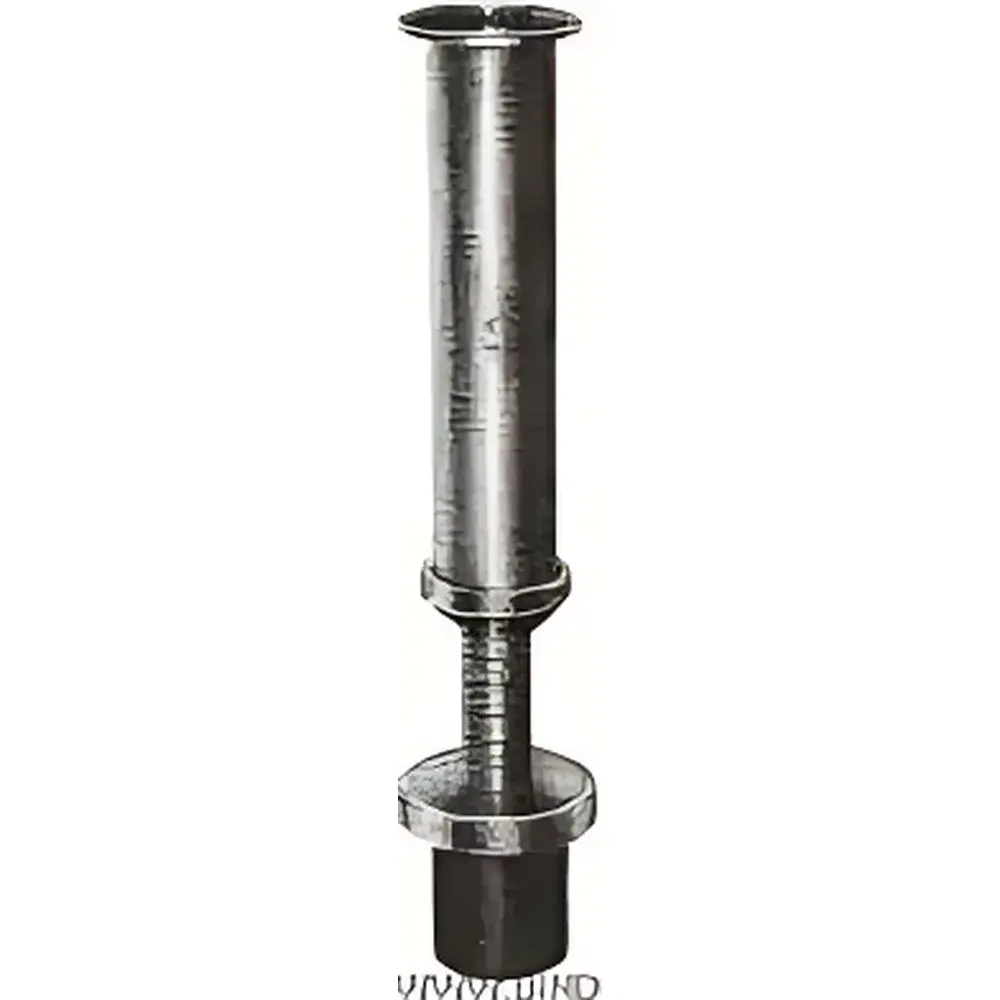
ERICHSEN #241 Chalking Test Instrument
| Origin | Germany |
|---|---|
| Manufacturer Type | Authorized Distributor |
| Origin Category | Imported |
| Model | #241 |
| Pricing | Upon Request |
Overview
The ERICHSEN #241 Chalking Test Instrument is a precision mechanical device engineered for the standardized quantitative assessment of chalking—a surface degradation phenomenon commonly observed in organic coatings, architectural paints, and pigment-stabilized polymer films. Chalking occurs when binder degradation leads to the loosening and surface exposure of pigment particles, which are then mechanically removable under controlled pressure. This instrument implements the principle of controlled mechanical transfer: loosely bound pigment particles are pressed from the coated substrate onto a standardized photographic paper coated with a gelatin emulsion layer. The degree of pigment transfer—quantified visually or photometrically—correlates directly with the extent of binder failure and thus serves as an objective indicator of weathering resistance, formulation stability, and long-term performance. Designed in strict accordance with DIN 53159 and compatible with Kempf visual rating standards (6-grade scale) and the Titangesellschaft (now Kronos Worldwide) Leucometer-based 10-point brightness scale, the #241 provides reproducible, operator-independent results essential for R&D validation, QC release testing, and comparative benchmarking against competitive products.
Key Features
- Robust lightweight aluminum housing with ergonomic handling design for consistent manual operation
- Calibrated helical compression spring delivering a precise, repeatable normal force of up to 250 N (equivalent to 25 kgf / 55 lbf), adjustable via axial ring markings at 50 N increments
- Interchangeable rubber indentor (Ø40 mm, Shore A 60 ± 5) ensuring uniform pressure distribution across the test area
- Optional vertical alignment stand (Accessory #0207.01.32) eliminates angular deviation and guarantees perpendicular load application—critical for inter-laboratory reproducibility
- Modular service design: wear-prone components—including the rubber indentor (Order No. 48760117) and main compression spring (Order No. 220091441)—are field-replaceable without calibration recalibration
- Compact footprint (H 270 mm × Ø 50 mm; net weight ≈ 1.2 kg) and portable stand configuration (H ≈ 450 mm × W ≈ 150 mm × D ≈ 250 mm; net weight ≈ 5.5 kg)
Sample Compatibility & Compliance
The #241 instrument is validated for use on flat, rigid substrates coated with solvent-borne, water-borne, or high-solids architectural and industrial coatings—including acrylics, alkyds, epoxies, and TiO₂-pigmented systems. It supports evaluation across white, light-colored, and chromatic finishes via three standardized assessment pathways: (1) Kempf 6-grade visual comparison (ISO 4628-6 compliant methodology); (2) Titangesellschaft/Kronos 10-point Leucometer brightness scale (photometric quantification per DIN 53159 Annex B); and (3) direct visual comparison against reference panels aged under identical exposure conditions (DIN 53159 core method). To ensure measurement integrity, photographic paper must be sourced consistently from a single qualified supplier and conditioned per ASTM D610 protocol—immersed in deionized water for 4 minutes, surface-dried with lint-free filter paper, and applied gelatin-side-down onto the test surface. For ambiguous cases involving surface contamination vs. true chalking, concurrent testing on both black and white photographic papers is recommended to differentiate extraneous debris from binder-failure-derived pigment release.
Software & Data Management
The ERICHSEN #241 operates as a standalone mechanical tester and does not incorporate embedded electronics or digital data output. However, its design enables seamless integration into GLP- and GMP-compliant quality management systems. When used with calibrated Leucometers (e.g., BYK-mac, Konica Minolta CM-700d), brightness measurements (L* values) from transferred chalking residues can be recorded in laboratory information management systems (LIMS) with full audit trail capability. All test parameters—including applied load, dwell time (though non-critical per DIN 53159), paper batch number, environmental conditions (temperature/humidity per ISO 2812-1), and operator ID—are documented manually in accordance with 21 CFR Part 11–aligned SOPs. The instrument’s mechanical simplicity ensures long-term metrological stability without firmware updates or software licensing dependencies.
Applications
- Formulation optimization: Determining optimal pigment volume concentration (PVC) and binder selection to maximize chalking resistance
- Accelerated and natural weathering correlation: Validating QUV, xenon-arc, or Florida exposure data against field performance
- Competitive benchmarking: Objective comparison of chalking behavior between proprietary and competitor coatings
- Raw material qualification: Screening titanium dioxide grades, extenders, and UV stabilizers for impact on surface integrity
- Contractual warranty validation: Establishing maximum service life expectations for exterior architectural coatings
- Regulatory documentation: Supporting compliance submissions for EN 1062-1 (external wall coatings) and ASTM D4214 (chalking evaluation)
FAQ
What is the recommended photographic paper specification?
Standardized black-and-white gelatin-coated photographic paper meeting DIN 53159 requirements is mandatory. Consistent sourcing from a single vendor is required to avoid inter-batch variability in emulsion thickness and pigment affinity.
Can the instrument be used on curved or flexible substrates?
No. The #241 is validated exclusively for flat, rigid panels (e.g., steel, aluminum, or glass substrates) per DIN 53159. Curved surfaces introduce non-uniform contact pressure and invalidate result comparability.
Is calibration required, and how often?
The mechanical load system is factory-calibrated and requires no periodic recalibration under normal use. Load verification using a certified force gauge is recommended annually or after spring replacement.
Why is the optional alignment stand recommended?
Manual operation introduces angular deviation >±3° in >65% of operators, causing lateral shear and inconsistent pigment transfer. The stand enforces perpendicular loading, improving inter-operator RSD to 18% unassisted).
Does dwell time affect chalking measurement?
Per DIN 53159 Clause 6.3, dwell time has no statistically significant effect on transferred pigment mass within the 1–10 second range. Standard practice uses immediate load application and removal.



