
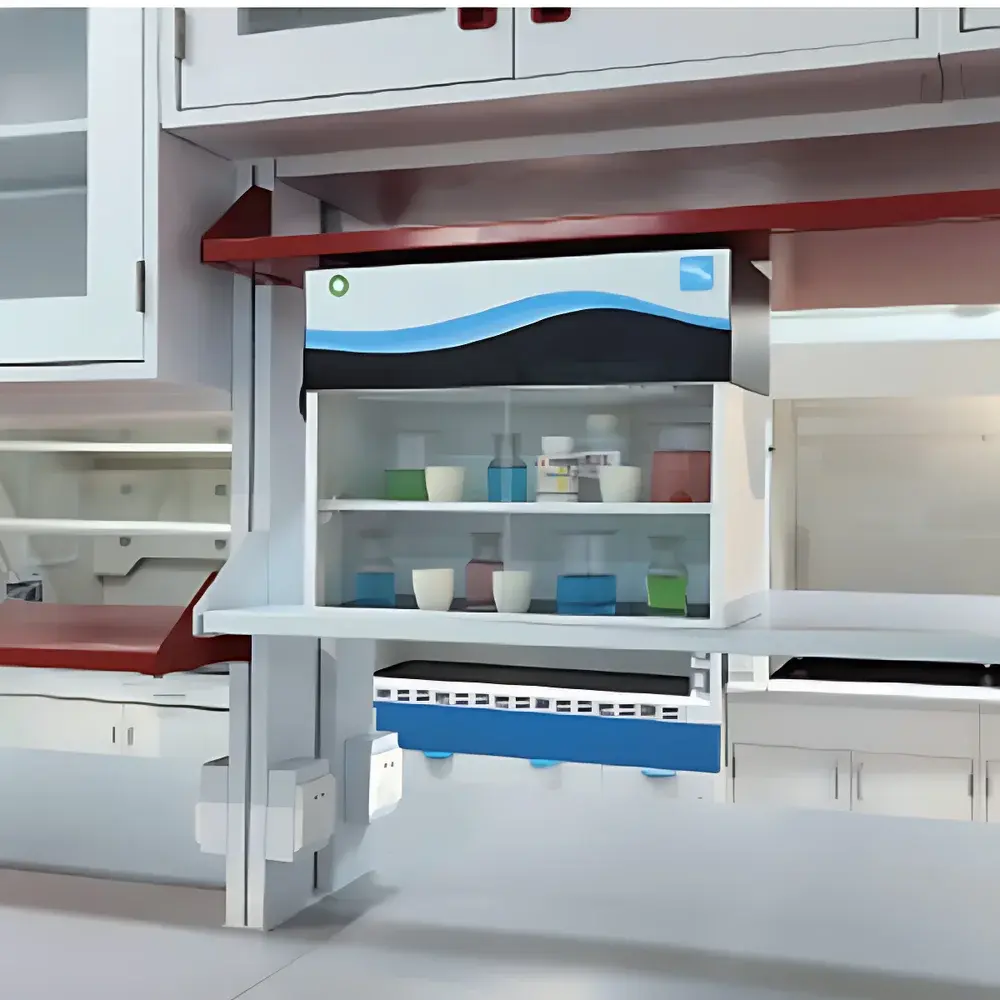
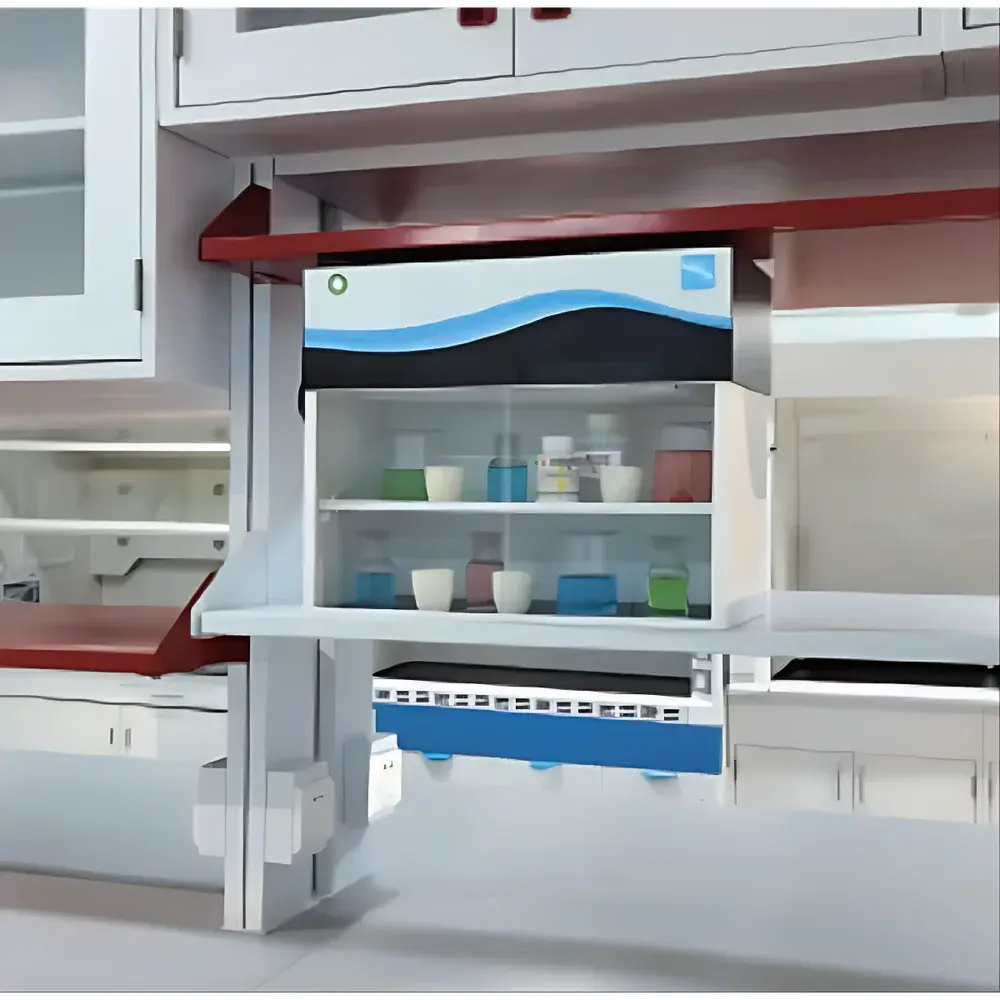
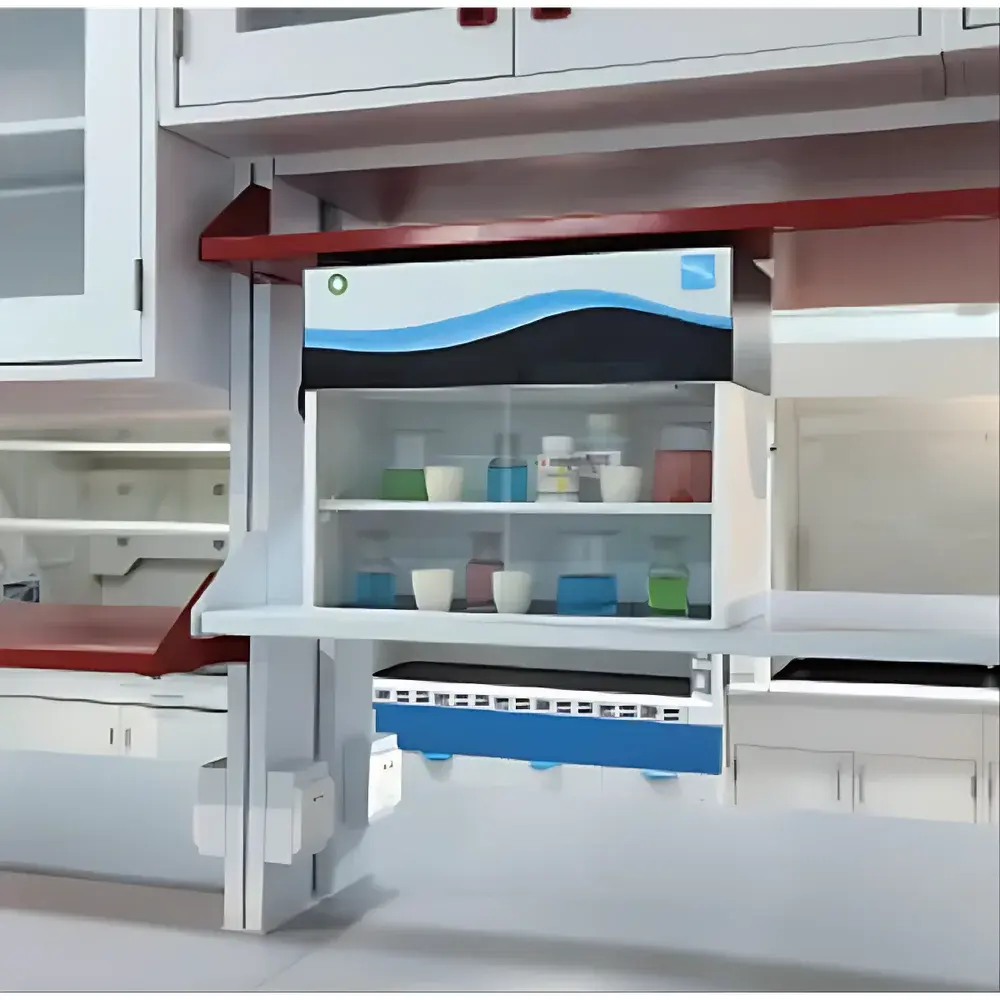
Erlab 531 Benchtop Air-Cleaning Chemical Storage Cabinet
| Brand | Erlab |
|---|---|
| Origin | Shanghai, China |
| Model | 531 |
| Compliance | NFX 15-211 (France), JG/T 385–2012 (China), SEFA 9 (USA), BS 7989 (UK) |
| Filtration Efficiency | <1% of OEL (Occupational Exposure Limit) / PC-TWA |
| Adjustable Shelf Height | Two Configurations — 10 cm clearance (e.g., 72 × 20 mL vials) or 20 cm clearance (e.g., 10 × 500 mL bottles) |
| Installation Type | Benchtop, modular mounting (above/below reagent shelving) |
| Power Supply | Standard 100–240 V AC, 50/60 Hz |
| Airflow | Continuous recirculating airflow with dual-stage molecular filtration |
| Filter Technology | Hybrid adsorption (physical + chemisorption) using activated carbon and impregnated media |
Overview
The Erlab 531 Benchtop Air-Cleaning Chemical Storage Cabinet is an engineered solution for localized containment and real-time air purification of volatile organic compounds (VOCs), acids, bases, and low-molecular-weight solvents in laboratory environments. Unlike conventional ventilated cabinets requiring ducted exhaust infrastructure, the 531 operates via closed-loop recirculation: ambient air is drawn through a dual-stage molecular filtration system—comprising high-surface-area activated carbon and functionally impregnated media—and returned to the workspace at sub-threshold concentrations. This design eliminates the need for external ductwork while maintaining operator exposure below 1% of the applicable Occupational Exposure Limit (OEL), as defined by the time-weighted average (PC-TWA) per ISO 80000-10 and ACGIH TLV® guidelines. The cabinet is intended for placement directly on laboratory benches or integrated into modular reagent storage systems—either above or beneath standard shelving units—enabling rapid deployment without structural modification.
Key Features
- Modular benchtop form factor with zero ducting requirement: installs in under 15 minutes using standard lab furniture interfaces.
- Two-tier adjustable internal configuration: removable mid-height shelf enables flexible height zoning—10 cm clearance supports high-density storage of small-volume containers (e.g., 72 × 20 mL vials); full-height mode (20 cm clearance) accommodates larger primary reagent bottles (e.g., 10 × 500 mL).
- Dual-stage molecular filtration: first stage captures non-polar VOCs via physical adsorption; second stage targets polar and reactive species (e.g., formaldehyde, ammonia, hydrogen sulfide) via chemisorption on tailored impregnated carbon.
- Continuous airflow monitoring with visual status indicator: LED feedback confirms active filtration cycle and alerts to filter saturation thresholds per manufacturer-defined service intervals.
- Compliance-engineered enclosure: constructed from powder-coated steel with seamless welded joints and static-dissipative interior surfaces to mitigate electrostatic discharge risks during solvent handling.
Sample Compatibility & Compliance
The Erlab 531 is validated for safe storage and short-term staging of Class I–III laboratory chemicals—including acetone, ethanol, methanol, chloroform, hydrochloric acid (fuming), sodium hydroxide solutions, and common organometallic precursors—as defined in NFPA 45 and CLSI GP26-A6. Its filtration performance meets or exceeds requirements specified in four internationally recognized standards: NFX 15-211 (France, specifying minimum removal efficiency for 20+ reference compounds), JG/T 385–2012 (China, addressing airflow uniformity and leakage integrity), SEFA 9 (USA, covering material compatibility and user interface safety), and BS 7989 (UK, governing noise emission and electrical safety in recirculating enclosures). All units undergo factory verification per ISO/IEC 17025-accredited test protocols prior to shipment.
Software & Data Management
The Erlab 531 operates as a standalone hardware platform without embedded firmware or cloud connectivity. However, it integrates seamlessly into GLP/GMP-compliant workflows via documented maintenance logs and filter lifecycle tracking. Each unit ships with a serialized filter certificate indicating initial breakthrough testing results against ASTM D5228 and EN 1540. End users are required to record filter replacement dates and operational hours in laboratory logbooks per 21 CFR Part 11 Annex 11 principles—supporting audit readiness for regulatory inspections. Optional QR-coded filter tags enable traceability to batch-specific adsorption capacity data and regeneration history.
Applications
- Short-term staging of reagents prior to analytical sample preparation (e.g., HPLC, GC-MS, ICP-MS workflows).
- Secure interim storage of hazardous intermediates in synthetic chemistry labs where fume hood access is constrained.
- Point-of-use containment for daily-use solvents in QC/QA laboratories performing routine titrations or spectroscopic calibration.
- Supplemental protection in teaching labs where student density limits shared hood availability and exposure control must be decentralized.
- Integration into automated liquid handling suites to isolate volatile reagents from robotic workcells and prevent sensor drift caused by ambient vapor ingress.
FAQ
What types of chemicals can be safely stored in the Erlab 531?
The cabinet is validated for organic solvents, mineral acids (≤37% HCl, ≤70% HNO₃), alkalis (≤50% NaOH), and select halogenated compounds. It is not rated for perchloric acid, hydrofluoric acid, or pyrophoric substances.
How often must the molecular filter be replaced?
Filter service life depends on cumulative VOC load and exposure frequency. Under typical academic lab usage (≤4 hrs/day, 5 days/week), replacement is recommended every 6–12 months; industrial applications may require quarterly changes. Erlab provides a filter saturation indicator and optional RFID-tagged consumables for automated logging.
Does the unit require external ventilation or make modifications to the lab HVAC system?
No. The 531 is fully self-contained and recirculates purified air within the immediate workspace. No ducting, wall penetrations, or HVAC integration are necessary.
Is the cabinet compatible with ISO/IEC 17025 or GLP audit requirements?
Yes—when used with documented filter change records, operational logs, and traceable calibration certificates, the 531 supports compliance with ISO/IEC 17025 Clause 5.5.2 (equipment management) and OECD GLP Principles Section 5.2.1 (facility controls).
Can the unit be mounted vertically or recessed into cabinetry?
Mounting is restricted to horizontal benchtop orientation only. Vertical or built-in installation voids structural integrity certification and compromises airflow uniformity per SEFA 9 Section 5.3.





