
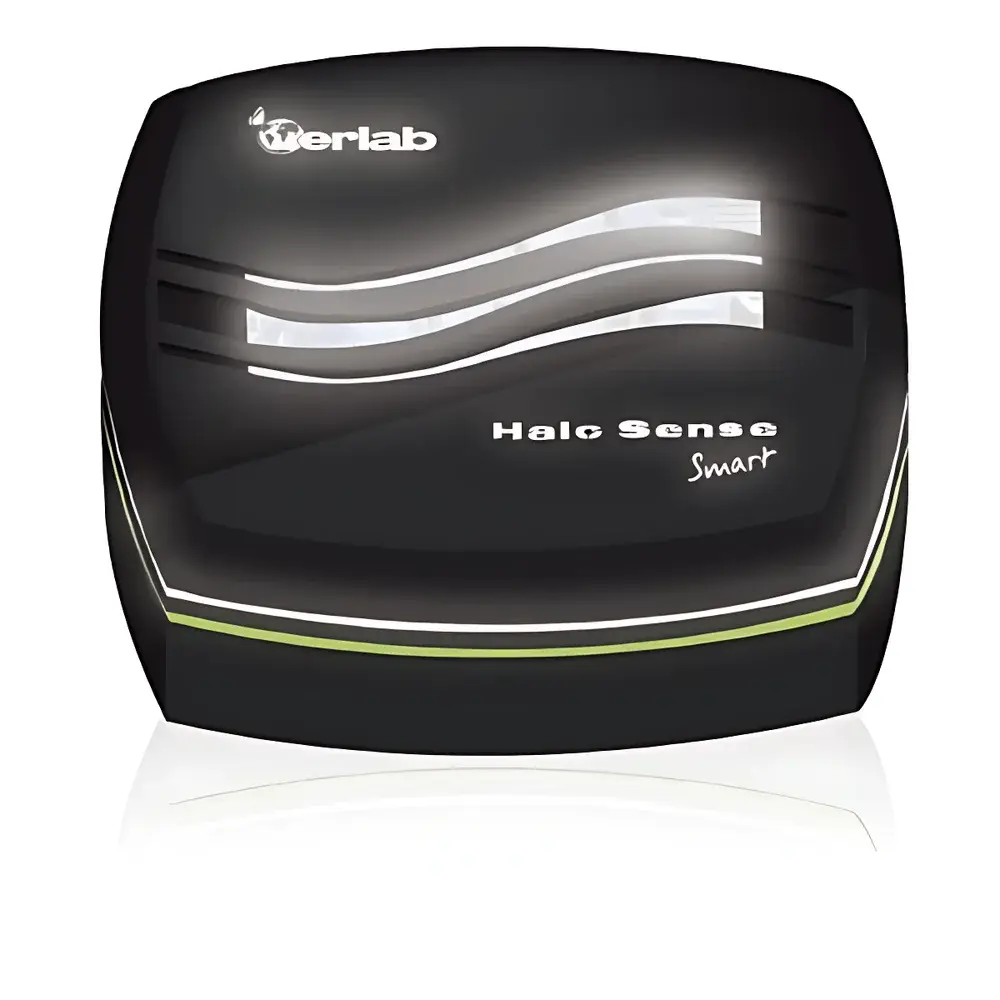
Erlab Halo Sense Laboratory Air Quality Monitor
| Brand | Erlab |
|---|---|
| Origin | Shanghai, China |
| Model | Halo Sense |
| Monitoring Parameters | VOCs, Acid Gases, Formaldehyde |
| Environmental Operating Range | Temperature 10–30 °C, Relative Humidity 30–80 % RH |
| Power Consumption | 10 W |
| Electrical Supply | 100–240 V AC, 50–60 Hz |
| Sensor Technology | Semiconductor & Electrochemical Sensors (gas-specific) |
| Mounting Options | Benchtop or Wall-Mounted |
| Status Indication | Smart RGB Light Band |
| Data Acquisition | eGuard Software (PC & Mobile) |
| Compliance Context | Designed for GLP-aligned lab environments |
Overview
The Erlab Halo Sense Laboratory Air Quality Monitor is an engineered real-time environmental safety instrument designed specifically for continuous, multi-analyte detection of airborne hazardous gases in research and analytical laboratory settings. Utilizing a dual-sensor architecture—comprising semiconductor sensors for broad-spectrum volatile organic compound (VOC) detection and electrochemical sensors calibrated for acid gases (e.g., HCl, HF, NO₂) and formaldehyde—the Halo Sense operates on the principle of selective gas adsorption and electrochemical oxidation or resistance modulation. Its measurement methodology adheres to established sensor-based air quality monitoring conventions used in occupational hygiene and laboratory risk management frameworks. The device is not intended for ambient outdoor air monitoring or regulatory-grade emissions reporting but serves as an early-warning system aligned with institutional health and safety protocols, including OSHA permissible exposure limits (PELs) and ACGIH Threshold Limit Values (TLVs) for target analytes. It is deployed at strategic locations—such as near fume hoods, chemical storage cabinets, synthesis workstations, or sample preparation zones—to provide localized, immediate feedback on transient air contamination events.
Key Features
- Multi-gas detection capability for VOCs, acidic vapors, and formaldehyde—each sensor module independently calibrated and field-replaceable
- Smart RGB status light band providing intuitive, at-a-glance indication of operational mode (green = normal, amber = warning threshold approached, red = alarm active)
- Configurable audible alarm with adjustable volume levels and optional mute function for noise-sensitive environments
- Benchtop or wall-mount installation flexibility, enabling optimal placement in confined or high-traffic lab spaces
- Low-power design (10 W nominal) compatible with universal AC input (100–240 V, 50–60 Hz), eliminating need for dedicated circuits or voltage converters
- Integrated diagnostics and self-test routines verifying sensor responsiveness and communication integrity during startup and periodic operation
Sample Compatibility & Compliance
The Halo Sense is optimized for indoor laboratory air matrices containing low-concentration gaseous pollutants typical of solvent handling, acid digestion, formaldehyde-based fixation, or polymer synthesis workflows. It does not measure particulate matter, CO₂, or inert gases. Its sensor response characteristics are validated against reference gas challenge tests per IEC 60079-29-1 for flammable gas detection systems and align with functional safety expectations outlined in ISO 13849-1 for Category B equipment. While not certified to UL 2075 or EN 50194 for life-safety applications, it meets general-purpose industrial instrumentation requirements under CE marking (EMC Directive 2014/30/EU and RoHS Directive 2011/65/EU). Data logs generated via eGuard software maintain timestamped records suitable for internal GLP documentation and incident root-cause analysis.
Software & Data Management
The eGuard software platform provides secure, encrypted local and remote access to Halo Sense telemetry. Installed on Windows/macOS PCs or accessed via iOS/Android mobile apps, eGuard enables real-time visualization of gas concentration trends, configurable alert thresholds, and user-defined notification rules (email/SMS/push). All configuration changes—including sensitivity tuning, alarm silencing duration, and light-band behavior—are logged with user ID, timestamp, and parameter values, supporting 21 CFR Part 11–compatible audit trails when deployed on validated IT infrastructure. Historical datasets export in CSV or PDF formats, with optional integration into enterprise laboratory information management systems (LIMS) via RESTful API endpoints (available under extended license agreement).
Applications
- Continuous surveillance of fume hood sash zones to verify containment integrity during volatile reagent use
- Monitoring near flammable liquid storage cabinets for hydrocarbon vapor accumulation
- Early detection of formaldehyde leakage from histology or tissue processing areas
- Verification of post-cleaning air quality following acid spill remediation or maintenance of wet chemistry stations
- Supplemental verification tool during HVAC commissioning or ventilation system performance testing
- Supporting institutional chemical hygiene plan (CHP) implementation per ANSI Z9.5 and NIH Guidelines
FAQ
What gases does the Halo Sense detect, and how are detection limits determined?
The Halo Sense detects VOCs (e.g., acetone, ethanol, toluene), acid gases (e.g., HCl, HNO₃ vapors), and formaldehyde using gas-specific sensor modules. Detection limits are defined by sensor manufacturer specifications and verified through calibration against NIST-traceable standard gases; typical ranges span 0.1–100 ppm depending on analyte and sensor type.
Can multiple Halo Sense units be managed from a single eGuard instance?
Yes—eGuard supports concurrent monitoring of up to 32 Halo Sense devices on one network segment, with centralized dashboard views, group-based alerting, and unified report generation.
Is the device suitable for use in Class I Div 1 hazardous locations?
No—the Halo Sense is rated for general laboratory use only and is not intrinsically safe or explosion-proof certified.
How often do sensors require recalibration or replacement?
Sensors are factory-calibrated and typically retain accuracy for 12–18 months under normal operating conditions; annual verification against certified gas standards is recommended. Sensor modules are user-replaceable without specialized tools.
Does the Halo Sense meet any international air quality standards?
It is not a regulatory compliance instrument per se, but its detection capabilities support adherence to occupational exposure guidelines published by OSHA, ACGIH, and EU-OELs, serving as a proactive engineering control within a broader hierarchy of controls framework.
Related Products







