
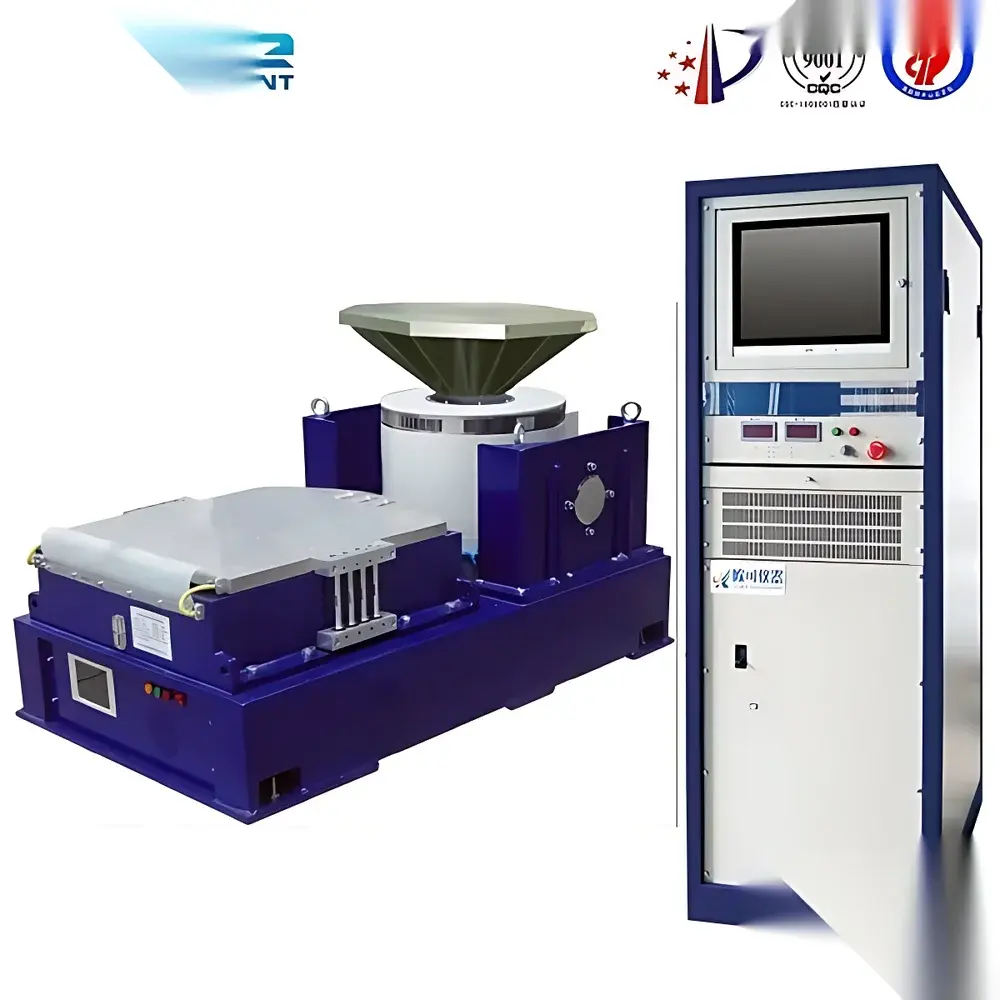
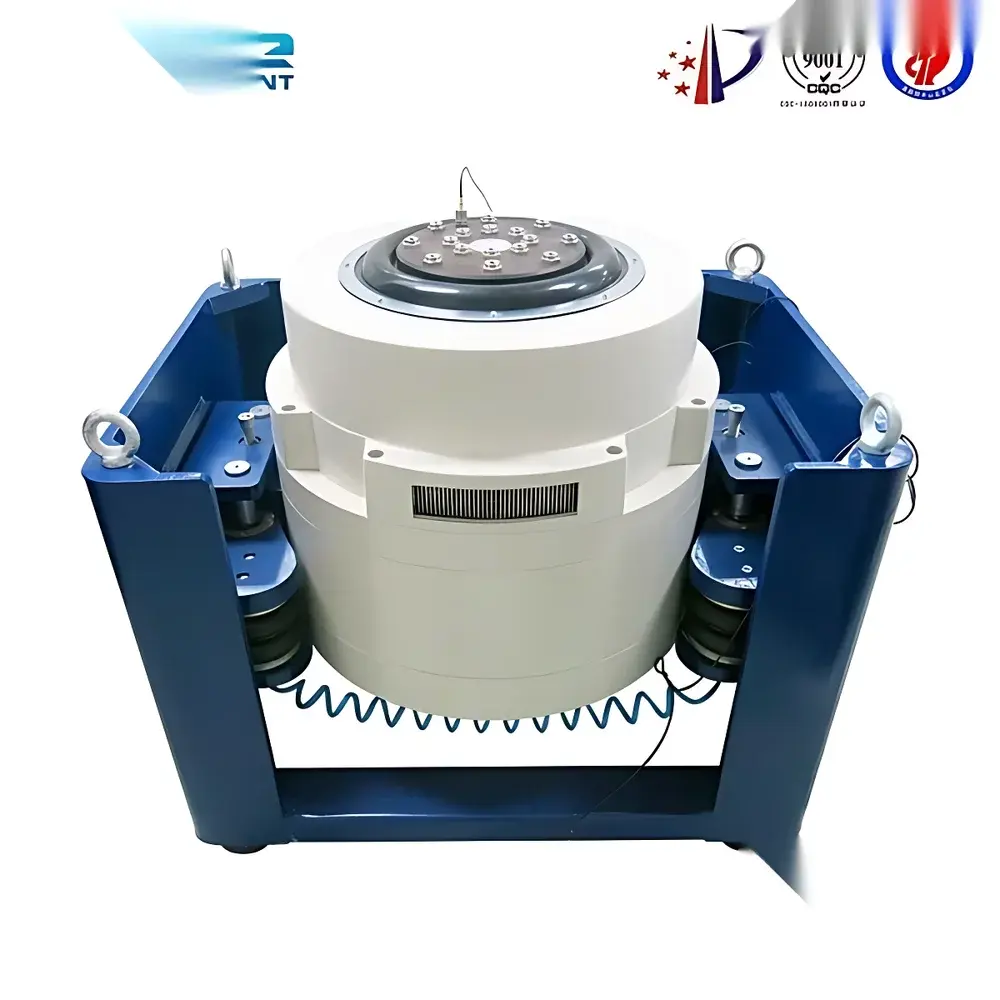
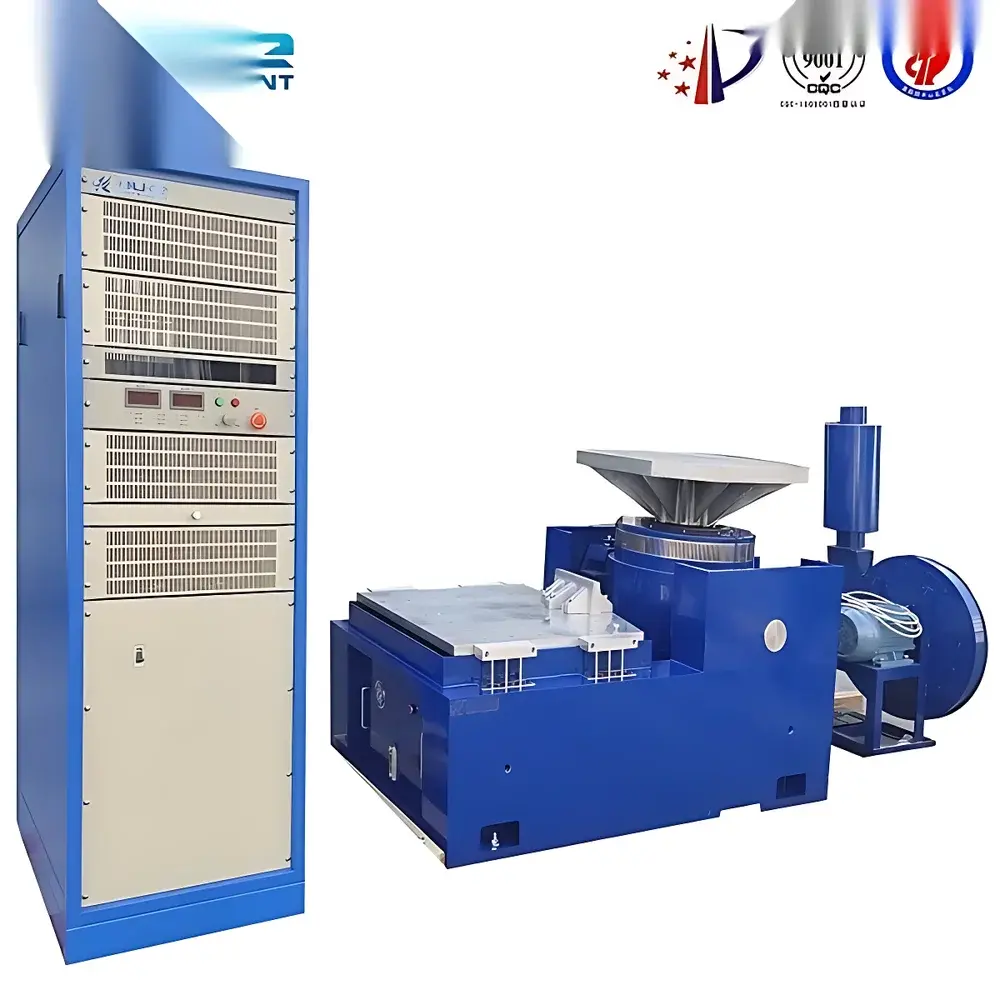
OK-ES-10 Vibration Shaker System for Luggage Impact and Durability Testing
| Brand | Other Brands |
|---|---|
| Origin | Imported |
| Manufacturer Type | Authorized Distributor |
| Price | USD 21,000 (approx.) |
| Motor Power | 1 HP |
| Drive Type | DC Speed Control |
| Input Voltage | 380 V, 50 Hz |
| Max. Load Capacity | 50 kg |
| Effective Table Area | 1.0 m × 1.0 m |
| Stroke (Peak-to-Peak Amplitude) | 25.4 mm |
| Speed Range | 150–300 rpm |
| Speed Resolution | 0.1 rpm |
| Timer Range | 0 s – 99 h |
| Machine Weight | ~300 kg |
| Compliance | EN 15362, ANSI X3.37, UL 991, ASTM D999, ISTA 1A/2A/3A/3E/3H, ISO 2247 |
| Max. Acceleration Limit | 20 g (≈196 m/s²) |
| Amplitude Constraint | ≤5 mm at frequencies >100 Hz |
| Acceleration–Amplitude–Frequency Relationship | a = 0.002 × f² × D (a in g, f in Hz, D in mm) |
Overview
The OK-ES-10 Vibration Shaker System is an electromechanical testing platform engineered for controlled simulation of transportation-induced vibration environments—specifically tailored for evaluating the structural integrity, fastener retention, hinge durability, and packaging resilience of consumer luggage, travel cases, and wheeled carry-ons. Unlike broadband electrodynamic shakers, this system employs a robust eccentric-mass rotary drive mechanism to generate repeatable sinusoidal motion across a defined low-frequency range (150–300 rpm ≈ 2.5–5 Hz), enabling standardized compliance testing per internationally recognized logistics and transit standards. Its mechanical architecture prioritizes stability under dynamic load, with a rigid steel frame, precision-balanced rotating assembly, and reinforced tabletop designed to minimize parasitic modes during sustained operation. The system does not support random or transient shock profiles; it is purpose-built for deterministic sinusoidal excitation, aligning with the physical basis of many transport vibration specifications where harmonic resonance and cumulative fatigue are primary failure mechanisms.
Key Features
- DC-controlled variable-speed motor delivering precise rotational speed adjustment from 150 to 300 rpm with 0.1 rpm resolution—critical for replicating specific road, rail, or conveyor-induced frequency bands.
- Fixed peak-to-peak stroke of 25.4 mm (1 inch), calibrated and mechanically constrained to ensure consistent displacement amplitude across all test durations.
- Large 1.0 m × 1.0 m stainless-steel test surface with T-slot mounting pattern, accommodating full-size suitcases (including 28″–32″ uprights) and multi-unit palletized configurations.
- Digital timer with programmable duration ranging from 0 seconds to 99 hours, supporting both single-cycle and extended endurance protocols required by ISTA 3-series and ASTM D999.
- Integrated overload protection, thermal cut-off, and emergency stop circuitry compliant with IEC 60204-1 safety directives.
- Structural mass of ~300 kg ensures minimal base motion coupling and high inertial stability—even when operating at maximum rated load (50 kg).
Sample Compatibility & Compliance
The OK-ES-10 accommodates rigid and semi-rigid luggage systems—including hard-shell polycarbonate cases, fabric-covered soft-sided bags, wheeled trolleys, and integrated backpack-carry-on hybrids. Mounting is achieved via adjustable clamps or non-slip rubber mats; no adhesive or fixture modification is required. The system is validated against multiple regulatory and industry benchmarks: EN 15362 (luggage durability), ANSI X3.37 (vibration testing methodology), UL 991 (impact resistance of portable enclosures), ASTM D999 (vibration testing of shipping containers), and all applicable ISTA transport simulation protocols (1A, 2A, 3A, 3E, 3H). It supports GLP-aligned test documentation when paired with external data loggers and timestamped video recording—though native data acquisition is not embedded.
Software & Data Management
This unit operates as a standalone hardware platform without proprietary software or onboard data logging. All operational parameters (speed, duration, start/stop time) are set manually via front-panel digital interface. For audit-trail compliance in regulated environments (e.g., ISO/IEC 17025-accredited labs), users integrate third-party instrumentation—such as USB-connected accelerometers (e.g., PCB Piezotronics 352C33), DAQ systems (NI cDAQ-9188 + 9234), and time-synchronized video capture—to record acceleration waveforms, thermal drift, and visual deformation. Configuration files and test reports may be archived in accordance with FDA 21 CFR Part 11 requirements using validated document management systems (e.g., LabWare LIMS or TrackWise QMS).
Applications
- Validation of zipper pull strength and slider retention after repeated vibratory loading.
- Evaluation of wheel axle fatigue life under simulated airport baggage carousel conditions.
- Assessment of handle bracket weld integrity and rivet shear resistance.
- Verification of internal compartment divider adhesion and foam insert compression set.
- Pre-shipment qualification testing for e-commerce fulfillment centers targeting Amazon FBA or Walmart Transport Standards.
- Root-cause analysis of field returns linked to hinge fracture, latch misalignment, or telescopic handle lock failure.
FAQ
What is the theoretical maximum acceleration achievable at 100 Hz?
At 100 Hz, the maximum permissible amplitude is 1 mm (per the constraint a = 0.002 × f² × D ≤ 20 g), yielding a peak acceleration of exactly 20 g (196 m/s²). This limit is enforced by mechanical stroke design—not electronic control.
Can this shaker perform random vibration tests?
No. The OK-ES-10 generates only fixed-frequency sinusoidal motion via rotary eccentric mass. Random or Gaussian spectrum testing requires an electrodynamic shaker with closed-loop controller and power amplifier—this unit lacks those subsystems.
Is calibration certification included with shipment?
Factory calibration data (speed accuracy ±0.1 rpm, timer deviation <±0.5 s/hour) is provided in the user manual. Third-party ISO/IEC 17025 calibration certificates must be obtained separately through accredited metrology laboratories.
Does the system meet ISTA 3H requirements for air cargo simulation?
Yes—when operated at specified speeds (e.g., 220 rpm for 2.5 Hz sine sweep) and durations per ISTA Procedure 3H Section 5.2, the OK-ES-10 satisfies the low-frequency vibration component of that protocol. Full 3H compliance also requires separate drop, compression, and atmospheric conditioning tests.
What maintenance intervals are recommended?
Lubrication of the main drive bearing and eccentric shaft assembly is required every 500 operational hours. Belt tension and electrical grounding continuity should be verified quarterly. A full mechanical inspection is advised annually or after 2,000 test cycles.
Related Products



