
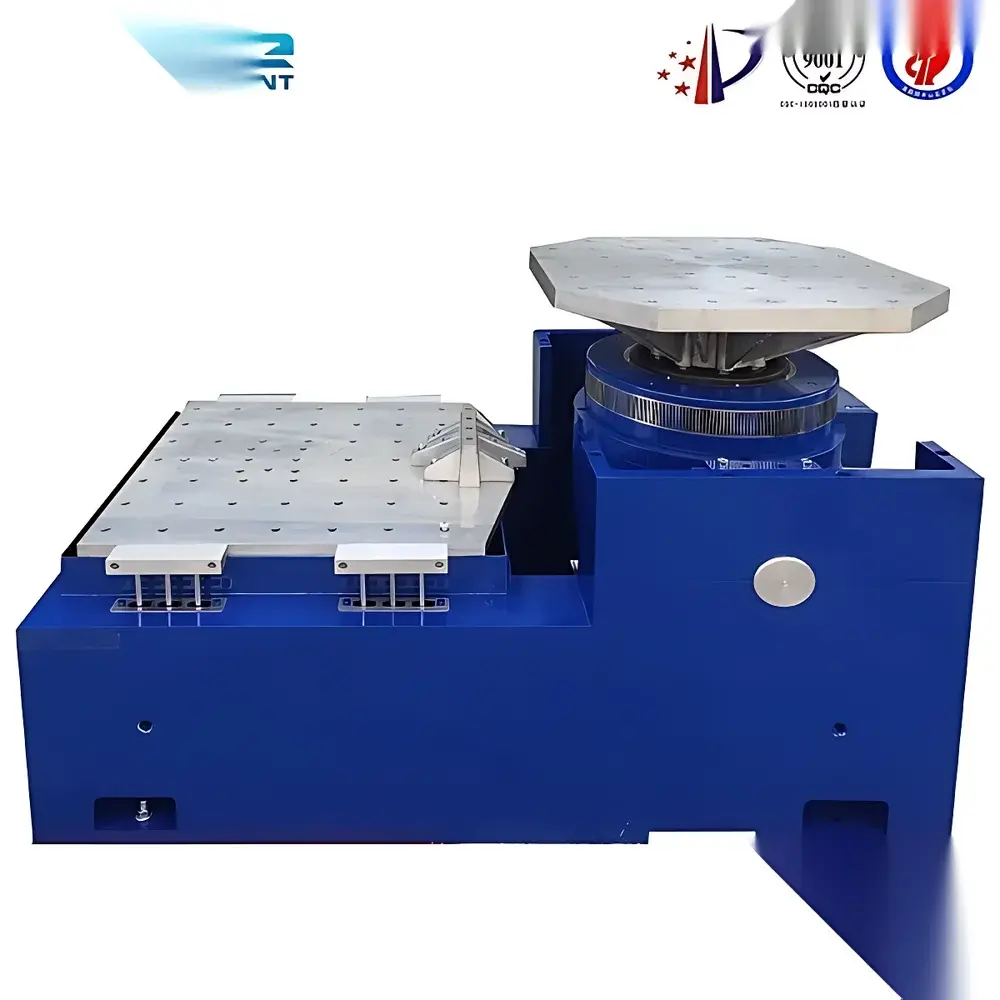
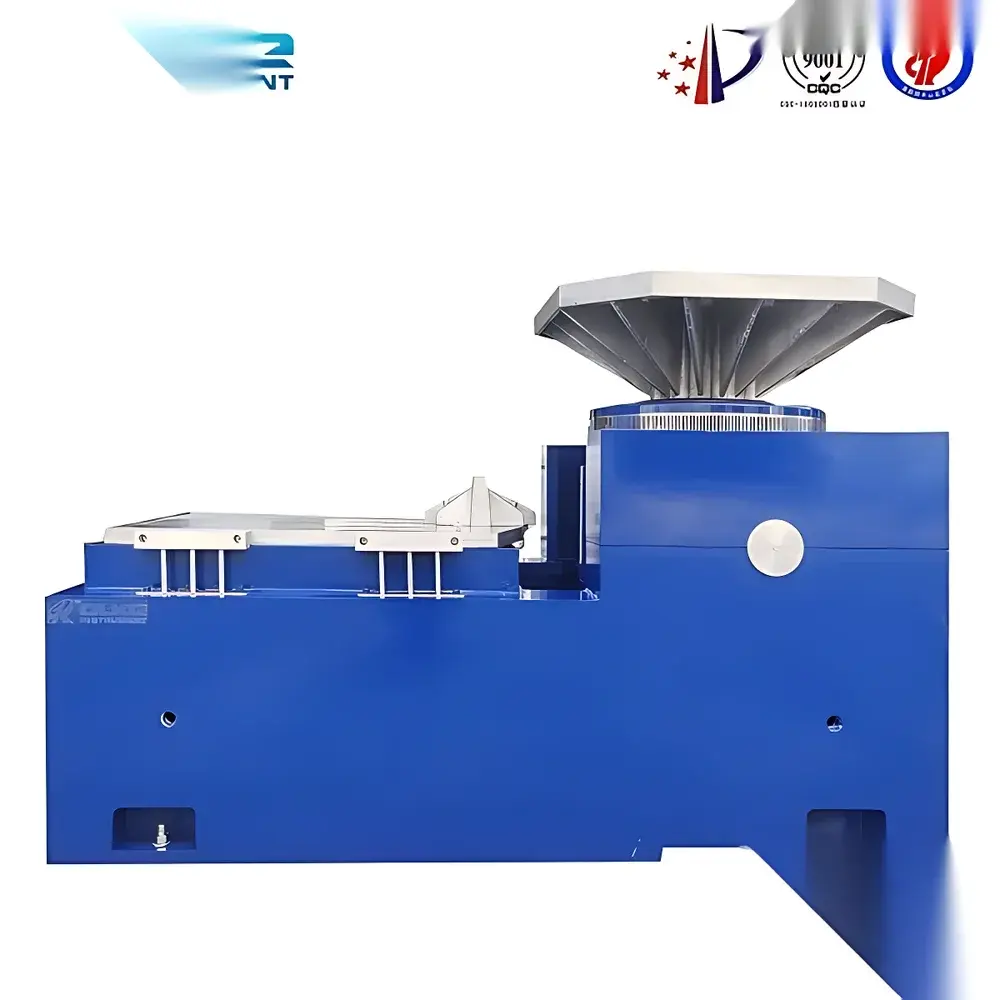
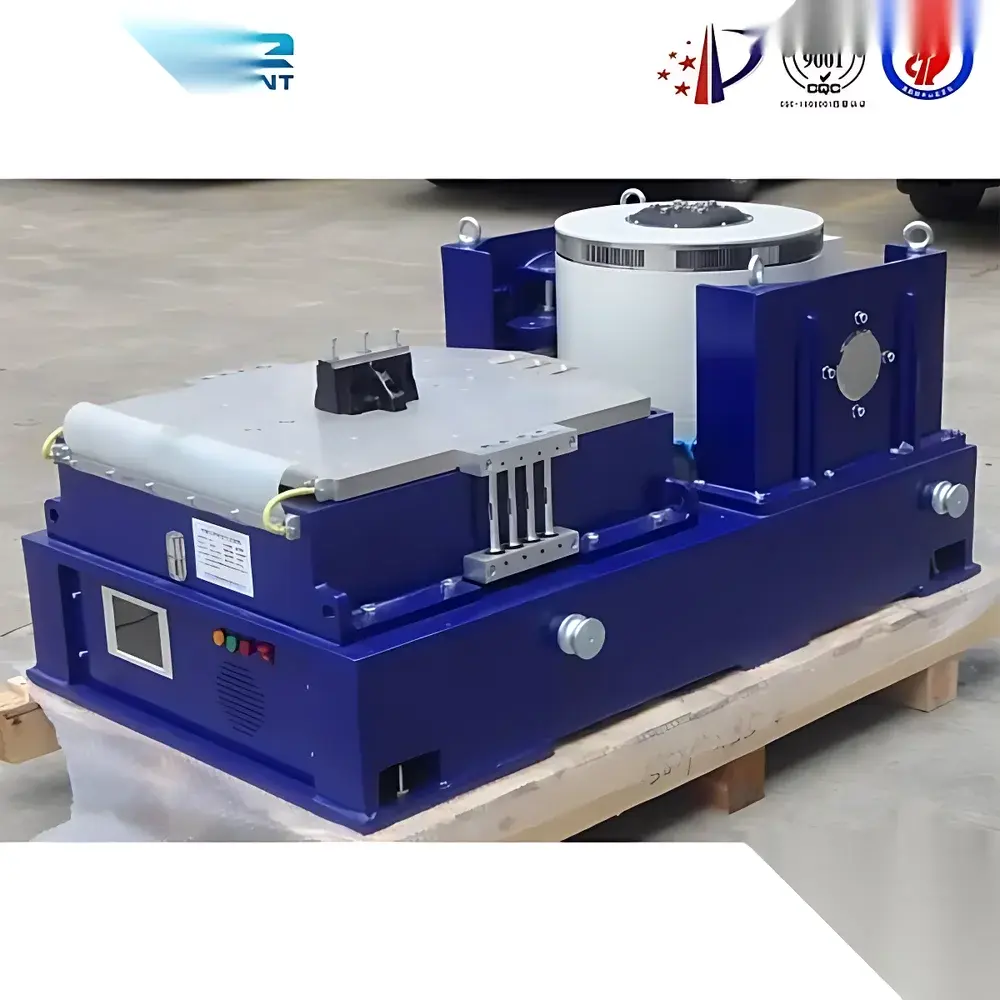
OK-ES-2 Three-Axis Electromagnetic Vibration Shaker System
| Brand | Other Brands |
|---|---|
| Origin | Imported |
| Manufacturer Type | Authorized Distributor |
| Table Top Dimensions | 500 × 500 mm |
| Maximum Load Capacity | 100 kg |
| Frequency Range | 1–400 Hz |
| Sweep Frequency Range | 1–400 Hz |
| Peak Acceleration | 20 g |
| Displacement Amplitude | 0–5 mm (p-p) |
| Vibration Waveforms | Sine, Half-Sine |
| Power Rating | 2.2 kW |
| Input Voltage | 220 V ±10% AC |
| Rated Current | 5 A |
| Frequency Resolution | 0.01 Hz |
| Frequency Accuracy | ±0.1 Hz |
| Time Control Range | 1 second to 365 days |
| Communication Interface | RS-485 |
| Cabinet Dimensions (Vertical Configuration) | 500 × 500 × 160 mm |
Overview
The OK-ES-2 Three-Axis Electromagnetic Vibration Shaker System is an engineered solution for rigorous mechanical shock and sinusoidal vibration testing in compliance with international standards including ISO 10816, IEC 60068-2-6, MIL-STD-810H Method 514.8, and GB/T 2423.10. Unlike single-axis shakers, this system integrates three orthogonal electromagnetic exciters—X, Y, and Z—enabling simultaneous or sequential multi-directional excitation to replicate real-world dynamic environments experienced by aerospace components, automotive ECUs, consumer electronics, and industrial control modules. Its core actuation mechanism employs high-efficiency voice-coil motors with closed-loop force feedback, ensuring stable acceleration output across the full 1–400 Hz operational bandwidth. The system is validated for continuous operation over 2,160 hours (90 days) under rated load conditions, demonstrating thermal stability, mechanical rigidity, and long-term repeatability essential for qualification-level testing.
Key Features
- Triple-axis electromagnetic excitation architecture with independent amplitude, phase, and frequency control per axis
- Programmable waveform generation: sine, half-sine, swept-sine (linear/logarithmic), resonance dwell, and user-defined time-history profiles
- Real-time closed-loop acceleration control using integrated IEPE accelerometers and digital servo amplifiers
- High-fidelity motion control with frequency resolution of 0.01 Hz and accuracy better than ±0.1 Hz (traceable to NIST-calibrated reference sources)
- RS-485 serial interface compliant with Modbus RTU protocol for integration into automated test stands and MES environments
- Robust structural design featuring reinforced aluminum alloy table surface (500 × 500 mm), low-inertia moving coil assembly, and precision-machined suspension system
- Thermal management system with forced-air cooling and temperature monitoring at critical motor and amplifier nodes
Sample Compatibility & Compliance
The OK-ES-2 accommodates test specimens up to 100 kg mass with center-of-gravity height ≤ 150 mm above the table surface. Fixture mounting follows ISO 5344 standard patterns, supporting T-slot, threaded hole, and vacuum-chuck configurations. All hardware complies with CE Machinery Directive 2006/42/EC and RoHS 2011/65/EU requirements. Test reports generated via the system’s data acquisition module support audit readiness for ISO/IEC 17025-accredited laboratories and FDA-regulated device validation (21 CFR Part 820). The shaker meets electromagnetic compatibility (EMC) Class B limits per EN 61326-1 for laboratory use.
Software & Data Management
The system operates with optional PC-based control software compatible with Windows 10/11 (64-bit), offering GUI-driven test sequencing, real-time FFT spectrum analysis, and dual-channel analog input for external sensor synchronization (e.g., strain gauges, acoustic emission transducers). Software features include GLP-compliant electronic signatures, audit trail logging per FDA 21 CFR Part 11, and export to CSV, MATLAB (.mat), and Universal File Format (UFF 58). Raw time-history data is timestamped with microsecond precision and stored locally with cyclic buffer overwrite protection. Remote monitoring via Ethernet-enabled gateway supports SNMP v3 status polling and email alerting on fault events.
Applications
- Environmental stress screening (ESS) of printed circuit board assemblies (PCBAs) and embedded systems
- Vibration fatigue life assessment of solder joints per IPC-9708 and JEDEC JESD22-B103
- Modal survey and resonance mapping for mechanical structure optimization
- Qualification testing of avionics enclosures per DO-160 Section 8
- Automotive component durability validation against ISO 16750-3 and LV-124
- Package integrity evaluation of medical devices during logistics simulation
FAQ
Is the OK-ES-2 capable of performing random vibration testing?
No — this model is optimized for deterministic waveforms (sine, swept-sine, half-sine) and does not include a dedicated random vibration controller or power spectral density (PSD) synthesis capability.
Can third-party accelerometers be used with the system’s feedback loop?
Yes — the control unit provides configurable IEPE bias voltage and accepts standard 10 mV/g to 100 mV/g sensors with user-defined calibration coefficients.
What is the maximum allowable off-center loading condition?
For loads exceeding 50 kg, the center of gravity must remain within ±25 mm of the table’s geometric center to maintain axial alignment and prevent moment-induced bearing wear.
Does the system support harmonic distortion measurement?
Harmonic distortion analysis is available as a post-processing function within the included software suite, calculating THD (%) from acquired acceleration waveforms using IEEE 1057-compliant algorithms.
Is factory calibration documentation provided with shipment?
Each unit ships with a traceable calibration certificate (ISO/IEC 17025 accredited), covering frequency response, acceleration linearity, and displacement amplitude verification across the full operating range.
Related Products



