
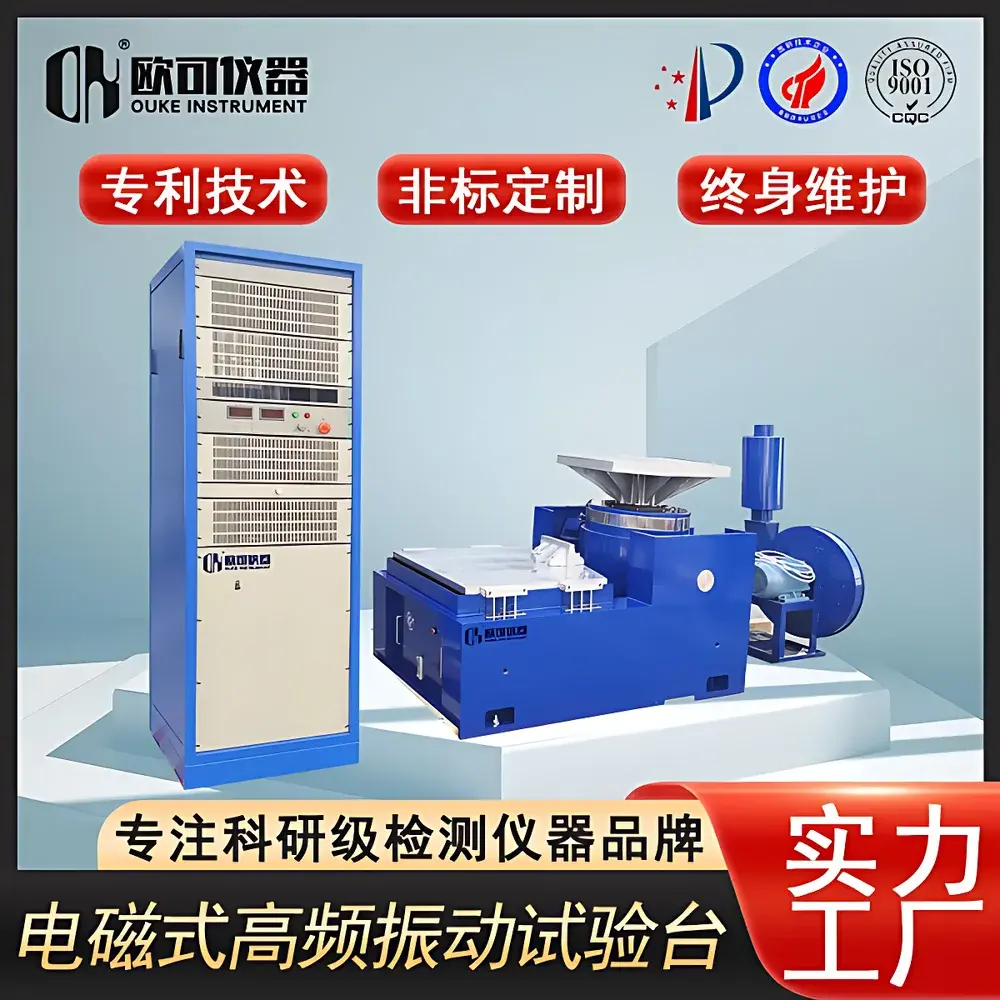
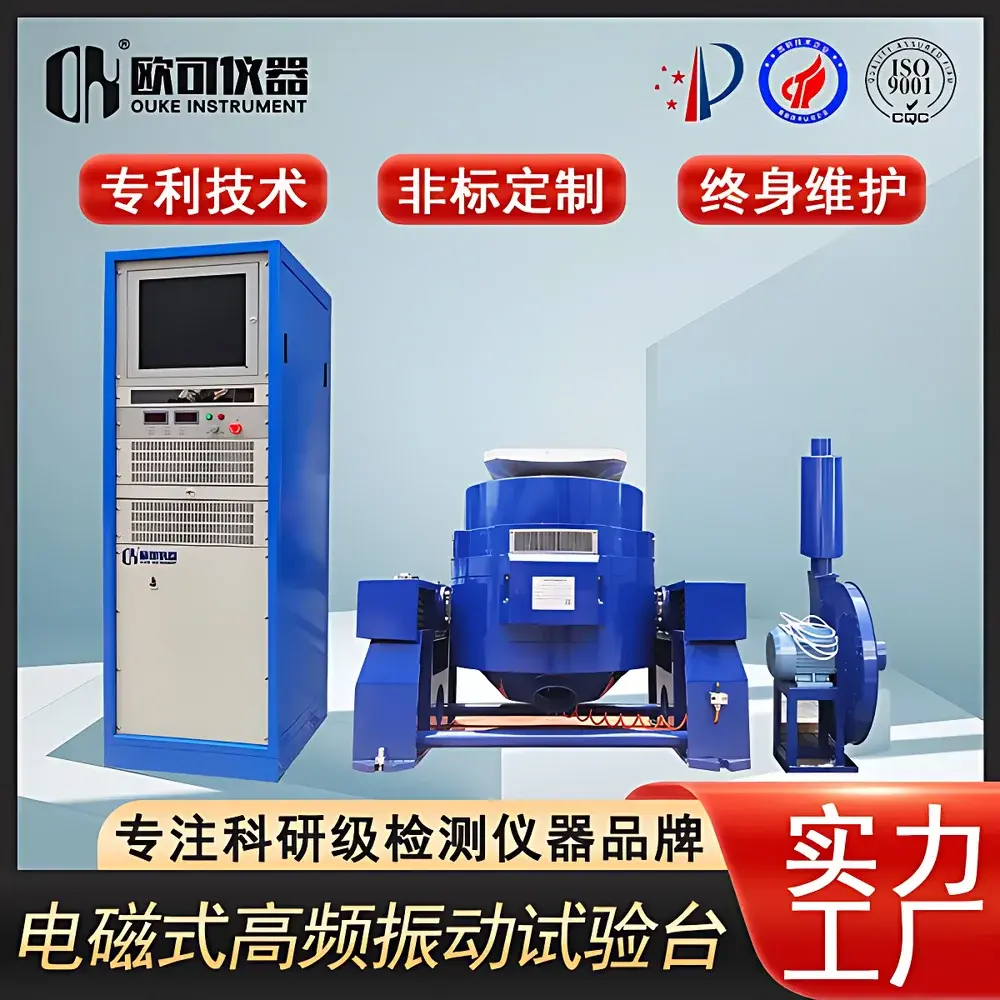
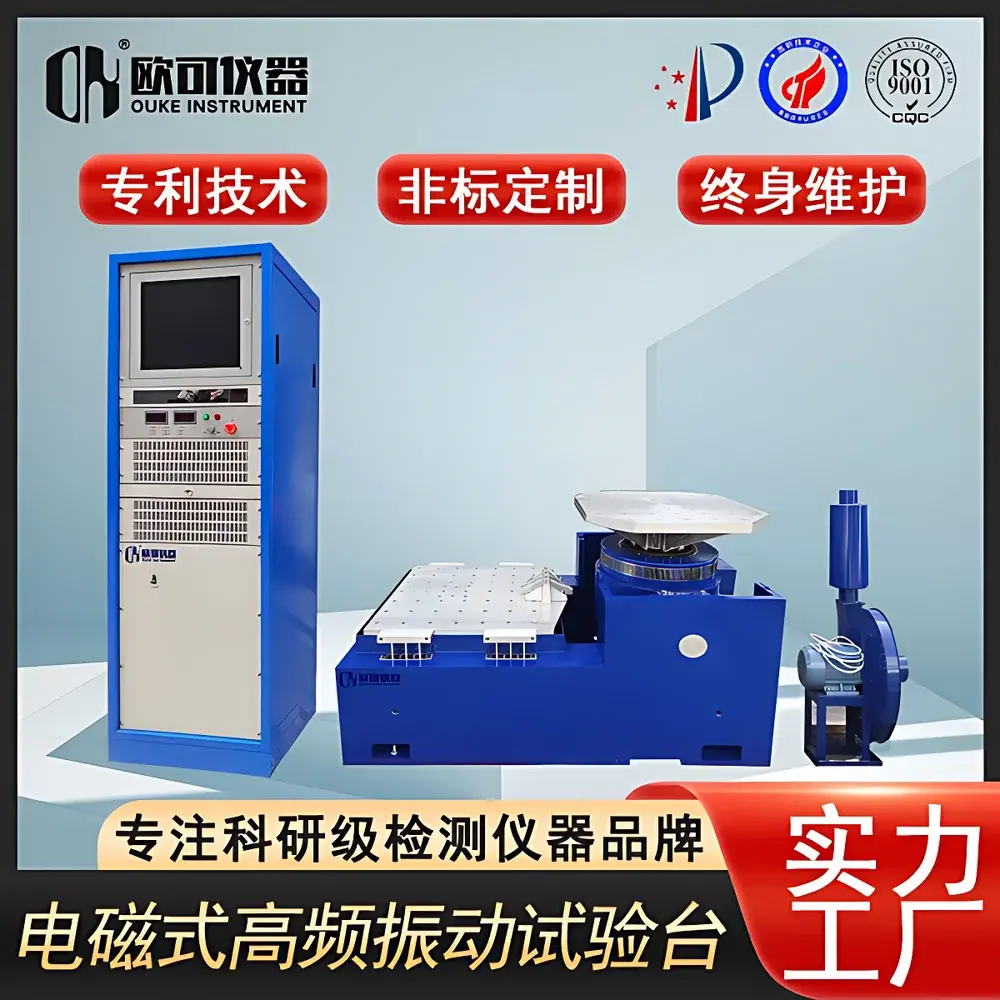
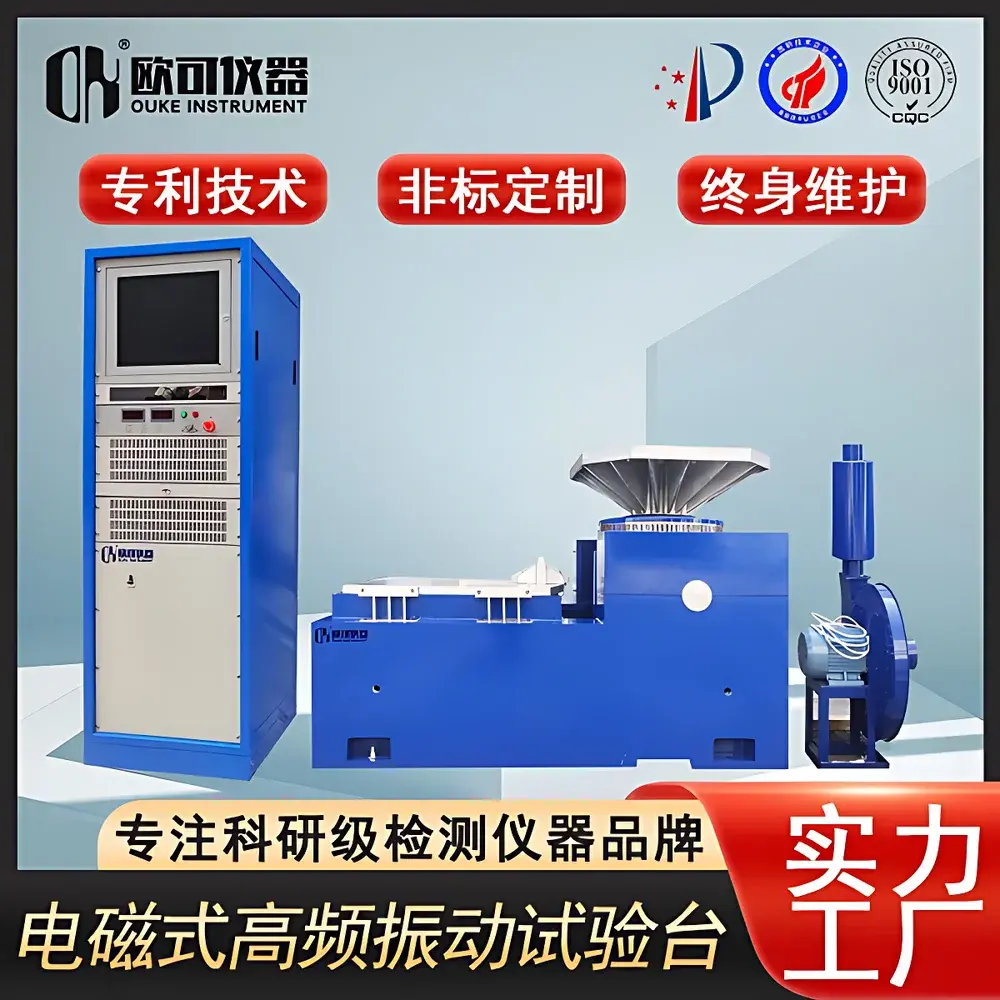
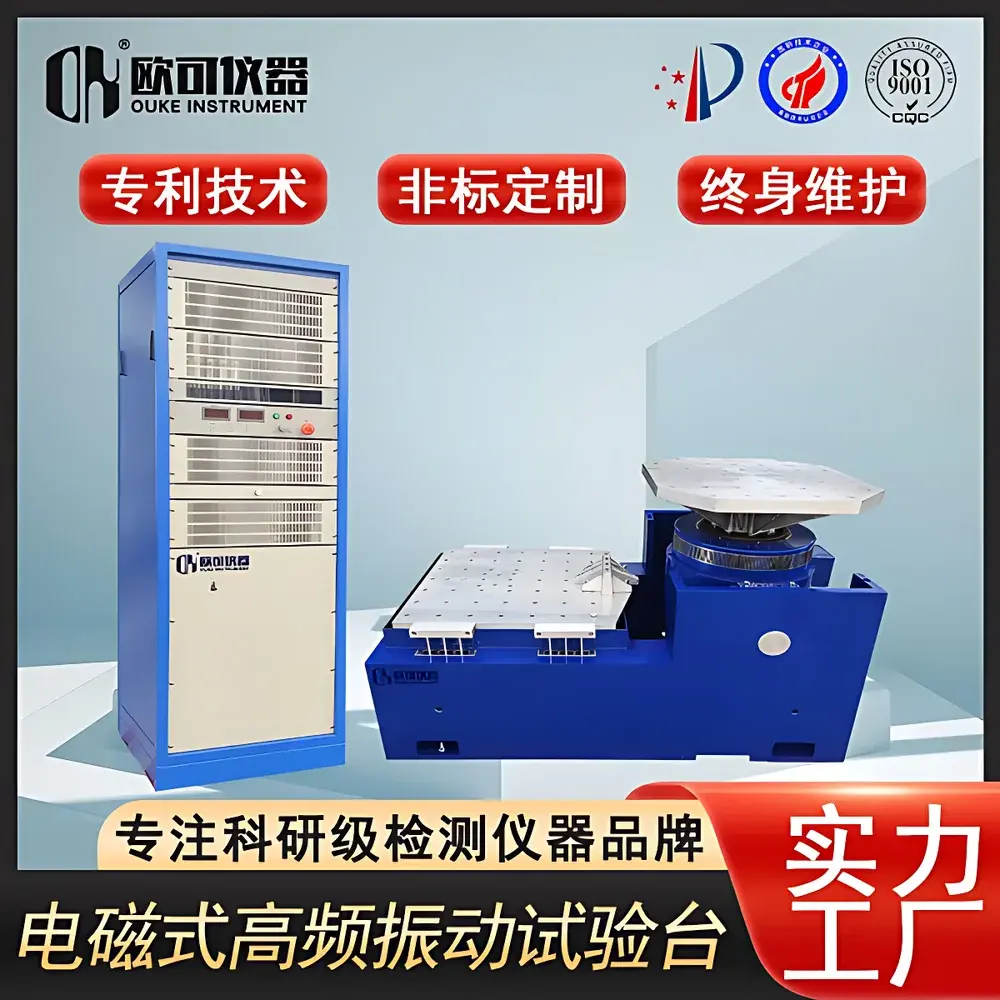
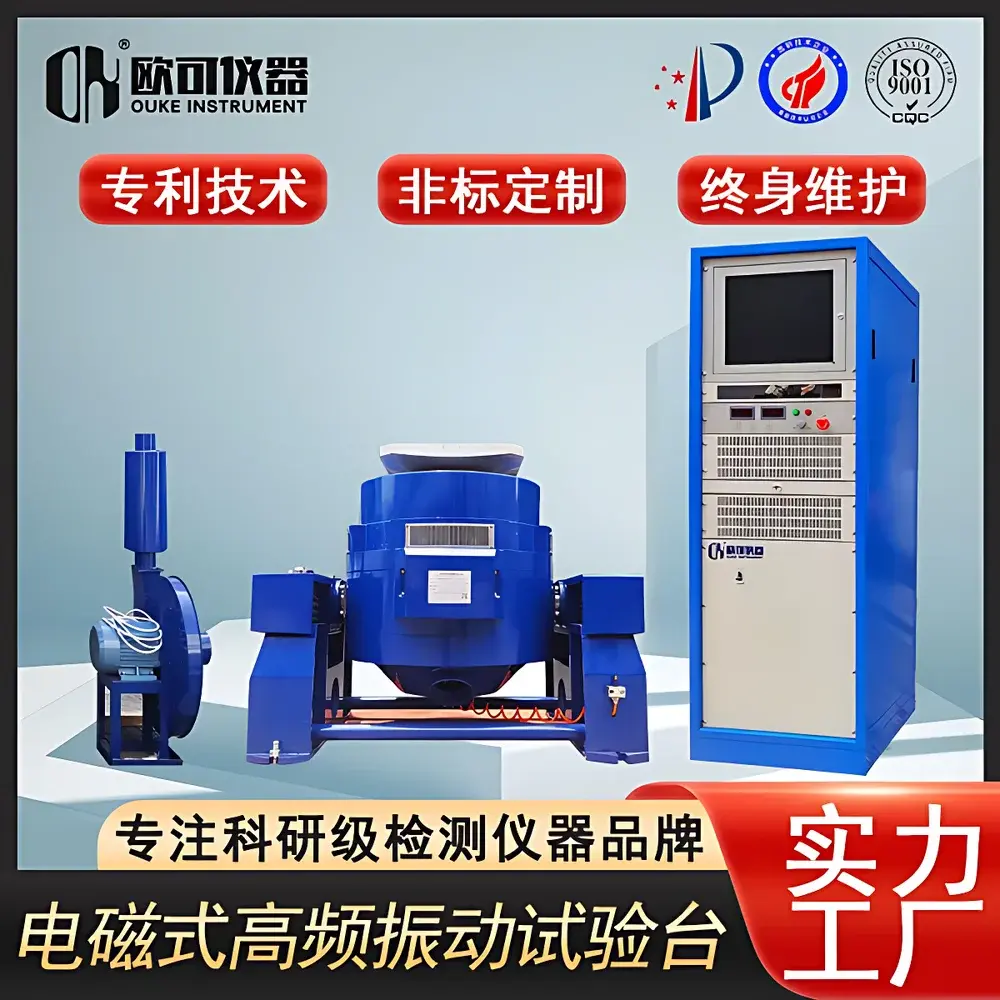
OK-ES-3.125 Electromagnetic High-Frequency Vibration Shaker System
| Brand | OK Instruments |
|---|---|
| Origin | Guangdong, China |
| Manufacturer Type | Direct Manufacturer |
| Country of Origin | China |
| Model | OK-ES-3.125 |
| Instrument Type | Electrodynamic Vibration Shaker |
| Rated Thrust | 1.98 kN |
| Rated Frequency Range | 5–5000 Hz |
| Maximum Test Load | 70 kg |
| Table Dimensions | 300 × 300 × 30 mm |
| Maximum Acceleration | 10 g |
Overview
The OK-ES-3.125 Electromagnetic High-Frequency Vibration Shaker System is an electrodynamic vibration test platform engineered for precision dynamic characterization across research laboratories, quality assurance departments, and industrial R&D environments. Unlike hydraulic shakers, this system employs a high-efficiency electromagnetic actuator principle—based on Lorentz force generation—to convert electrical input into controlled mechanical oscillation without fluid media. It operates within a broad frequency bandwidth (5–5000 Hz), enabling both low-frequency resonance scanning and high-frequency fatigue evaluation. The system is designed to meet the mechanical integrity validation requirements of electronic components, automotive modules, aerospace subsystems, and structural prototypes under controlled sinusoidal, random, or shock excitation profiles.
Key Features
- Electrodynamic actuation architecture delivering high linearity, low harmonic distortion, and excellent phase fidelity across the full operational bandwidth.
- Rated thrust of 1.98 kN enables rigorous testing of medium-mass assemblies up to 70 kg with reproducible acceleration profiles up to 10 g (peak).
- Compact 300 × 300 × 30 mm rigid aluminum table surface with threaded mounting holes (M6, 25 mm pitch grid) ensures secure fixture integration and minimal modal interference.
- Integrated thermal management system maintains coil temperature stability during extended high-duty-cycle operation, supporting sustained performance at rated specifications.
- Low-noise, low-vibration base isolation design minimizes energy coupling to surrounding infrastructure, improving measurement integrity in shared lab spaces.
- Compliance-ready architecture supports traceable calibration per ISO 16063-21 and ASTM D4728 Annex A1 for acceleration transducer verification.
Sample Compatibility & Compliance
The OK-ES-3.125 accommodates a wide range of sample geometries and mounting configurations through standardized table interfaces and optional auxiliary fixtures (e.g., slip tables, head expanders, and inertial mass adapters). It supports test specimens conforming to IEC 60068-2-6 (sinusoidal vibration), IEC 60068-2-64 (random vibration), and MIL-STD-810H Method 514.8. Its control interface and data acquisition architecture are compatible with GLP/GMP documentation workflows, including audit-trail-enabled test logging, user access controls, and electronic signature support when integrated with compliant third-party software platforms.
Software & Data Management
The system operates via a real-time deterministic controller synchronized with host PC-based test sequencing software. Supported functions include closed-loop amplitude/acceleration control, swept-sine, fixed-frequency, random PSD synthesis (with user-defined breakpoints and slopes), and transient shock pulse generation (half-sine, trapezoidal, sawtooth). All test parameters, raw time-history waveforms, and spectral results are timestamped and exportable in CSV, UFF58, or HDF5 formats. Optional FDA 21 CFR Part 11 compliance packages provide electronic record integrity, role-based permissions, and immutable audit logs for regulated industries.
Applications
- Environmental stress screening (ESS) of PCBAs, sensors, and embedded controllers under broadband vibration spectra.
- Modal analysis and resonant frequency mapping of lightweight enclosures and housings using sine sweep and FRF extraction.
- Reliability qualification of consumer electronics per JEDEC JESD22-B103 (mechanical shock) and JESD22-B104 (vibration).
- Vibration fatigue life assessment of automotive infotainment units, ADAS modules, and battery management systems.
- Research-grade dynamic response characterization in academic mechanics labs, particularly for viscoelastic material mounting interfaces and damping validation.
- Pre-compliance testing for CE marking (EN 60068-2 series) and UL safety certification protocols requiring mechanical robustness verification.
FAQ
What is the difference between electrodynamic and electrohydraulic vibration shakers?
Electrodynamic shakers use electromagnetic force generation and are optimized for high-frequency fidelity and rapid response; electrohydraulic systems prioritize high-force, low-frequency displacement but introduce fluid compressibility and thermal lag effects.
Can the OK-ES-3.125 perform random vibration testing?
Yes—it supports real-time closed-loop random vibration control with programmable power spectral density (PSD) profiles, including Gaussian distribution, kurtosis shaping, and SRS synthesis.
Is the system supplied with calibration documentation?
Each unit ships with a factory calibration certificate traceable to NIM (National Institute of Metrology, China), covering acceleration sensitivity, frequency response flatness, and thrust linearity across the rated range.
What auxiliary equipment is required for full operation?
A dedicated 3-phase 380 VAC/50 Hz power supply (min. 32 A), grounded laboratory environment, and compatible signal conditioning hardware (e.g., IEPE accelerometers, charge amplifiers) are required. Optional accessories include climate chamber integration kits and multi-axis shaker controllers.
Does OK Instruments offer application engineering support?
Yes—technical consultation, test protocol development, and on-site installation/commissioning services are available globally through authorized regional partners and direct engineering teams.



