
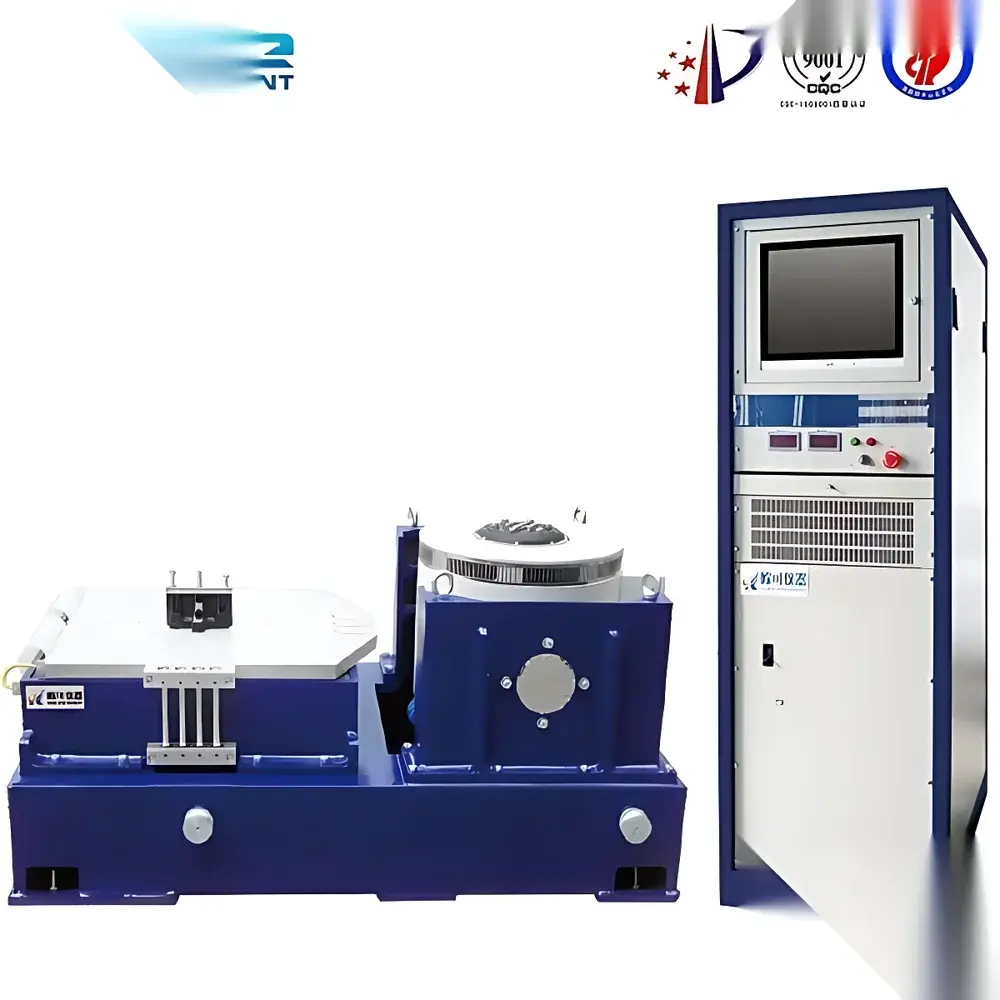
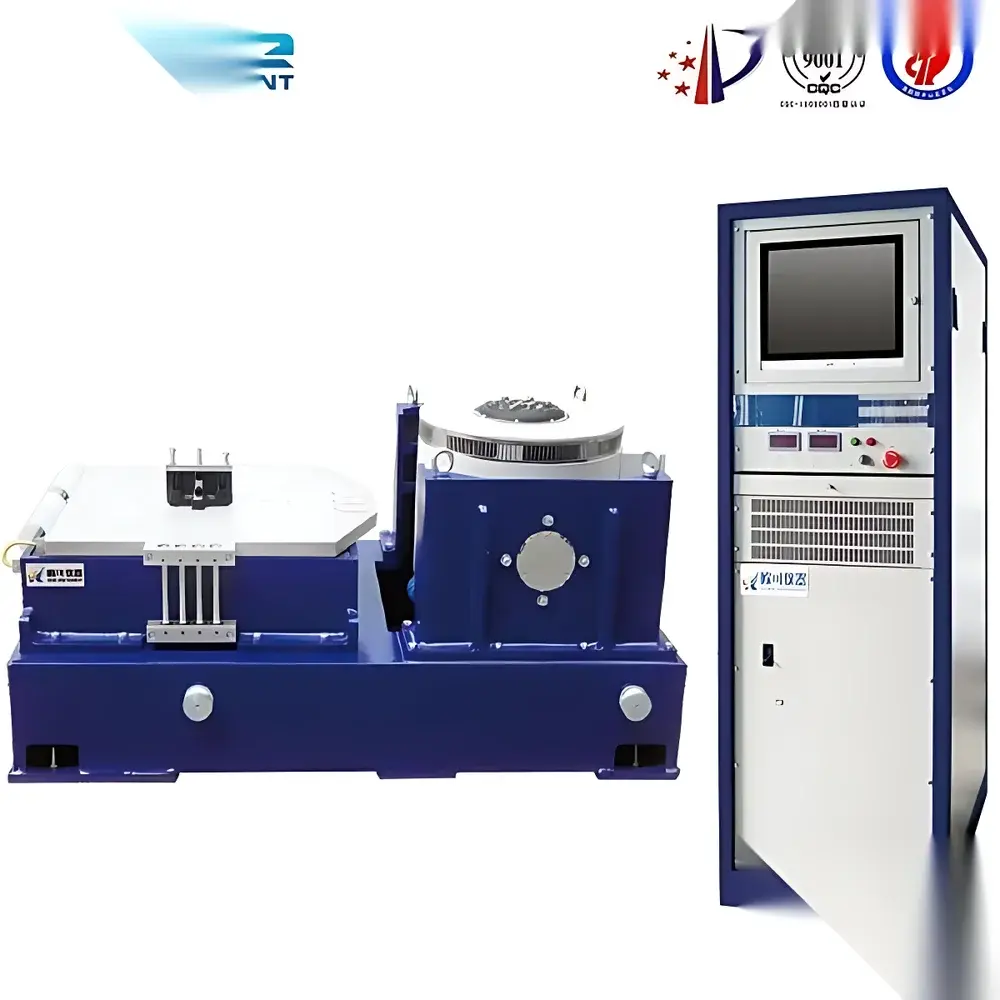
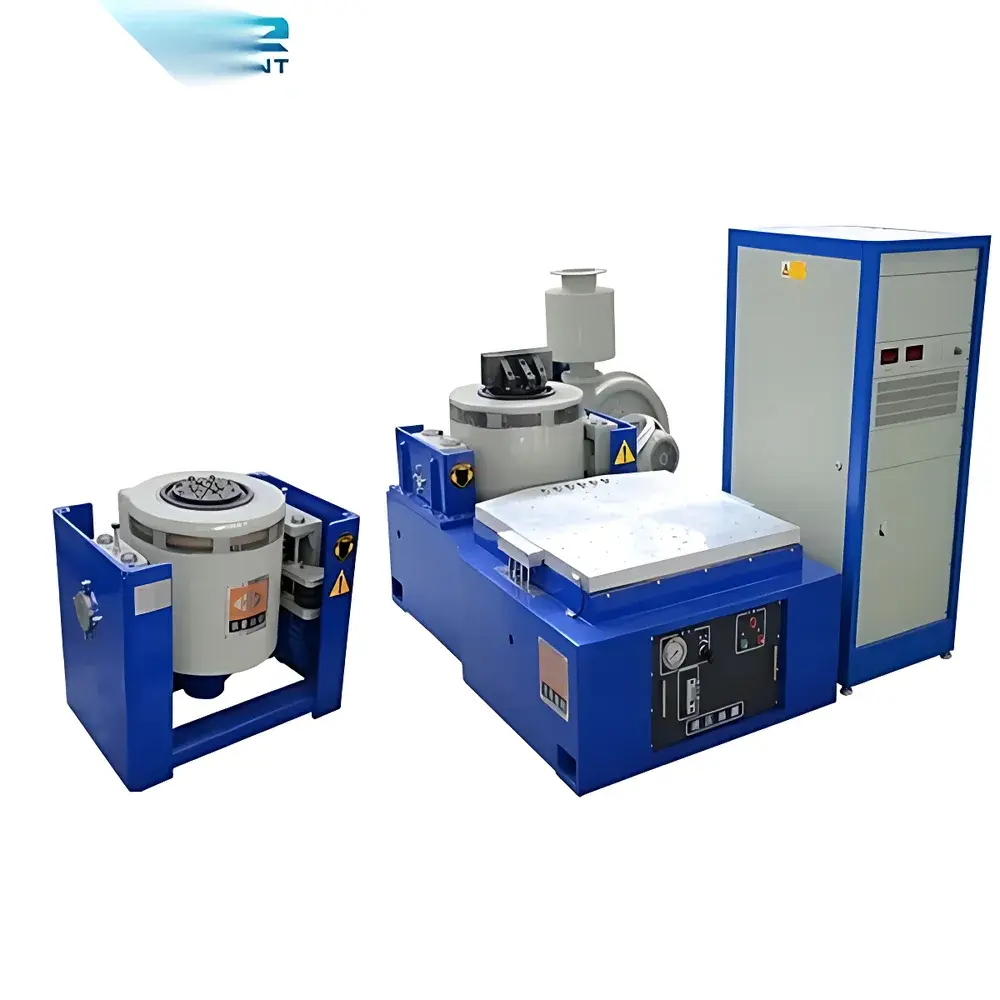
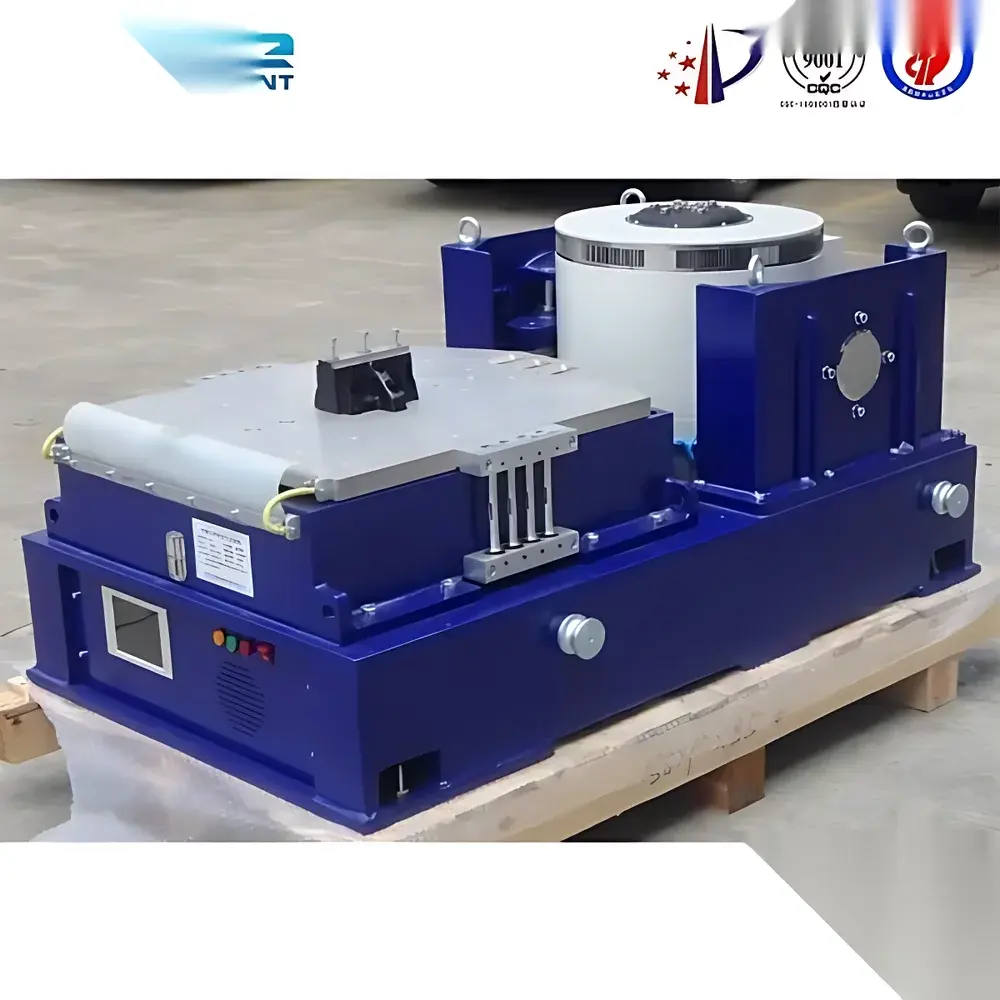
OK-ES Series Electromagnetic Vibration Shaker System
| Brand | Other Brands |
|---|---|
| Origin | Imported |
| Manufacturer Type | Authorized Distributor |
| Speed Range | 60–300 rpm (adjustable) |
| Speed Resolution | ±1 rpm |
| Vibration Mode | Reciprocating |
| Peak-to-Peak Amplitude | 25.4 mm |
| Load Capacity | 70 kg |
| Effective Table Area | 1.2 m × 1.1 m |
| Timer Range | 0 s to 99 h |
| Motor Power | 1 HP (746 W) |
| Drive Method | DC Motor with Synchronous Belt Transmission |
| Table Surface | Stainless Steel |
| Base Structure | Heavy-Duty Channel Steel Frame with Damping Rubber Mounts |
| Weight | 230 kg |
| Power Supply | 220 V, 50 Hz |
| Compliance | Designed for ISTA, ASTM D999, ISO 2247, and GB/T 4857.7 vibration simulation protocols |
Overview
The OK-ES Series Electromagnetic Vibration Shaker System is an industrial-grade electrodynamic shaker engineered for controlled mechanical vibration simulation in packaging integrity validation and product durability assessment. Unlike hydraulic or servo-hydraulic systems, this unit employs a high-inertia DC motor coupled with a precision-machined reciprocating drive mechanism—delivering repeatable sinusoidal motion via a rigid aluminum actuator arm and low-backlash handwheel clamping interface. Its core function is to replicate the broadband, low-frequency vibrational energy profiles encountered during road, rail, and maritime transport—including harmonic resonance at 1–100 Hz and random excitation spectra defined by ISTA 3A and ASTM D4728. The system operates on fundamental principles of forced oscillation under constant acceleration amplitude, enabling deterministic evaluation of structural fatigue, fastener loosening, solder joint integrity, and cushioning performance in packaged goods.
Key Features
- Heavy-duty channel steel base integrated with vibration-damping rubber isolators ensures operational stability under full 70 kg load and minimizes energy transmission to supporting structures.
- 1.2 m × 1.1 m stainless-steel test table offers corrosion resistance, dimensional stability, and ease of cleaning—critical for multi-shift laboratory environments and QC labs handling electronics or medical devices.
- Modular aluminum fixture system with dual-handwheel clamping allows rapid, tool-free repositioning and secure retention of irregularly shaped specimens—including automotive components, consumer electronics enclosures, and furniture assemblies.
- Synchronous timing belt drive eliminates gear backlash and acoustic noise; combined with soft-start DC motor control, total sound pressure level remains below 65 dB(A) at 1 m distance—meeting ISO 7779 acoustic emission requirements for shared lab spaces.
- Digital timer with 1-second resolution supports exposure durations from 0 seconds to 99 hours, enabling both accelerated life testing and long-duration transport simulation per ISO 2247-2 Clause 6.3.
- Front-panel RPM display with ±1 rpm accuracy provides real-time speed verification traceable to NIST-traceable tachometer calibration standards.
Sample Compatibility & Compliance
The OK-ES platform accommodates specimens ranging from small electronic modules (≥50 mm footprint) to large household appliances (up to 70 kg, ≤1.1 m width). Its fixed 25.4 mm peak-to-peak displacement and 60–300 rpm speed range correspond to nominal frequencies of 1–5 Hz—optimized for simulating truck trailer bounce, rail car lateral sway, and container stacking-induced resonance. The system is validated for compliance with international transport simulation standards including ISTA 3A (Section 5.2), ASTM D999 (Method B), ISO 2247:2018 (Clause 7.2), and China’s GB/T 4857.7–2005. It supports GLP-compliant test documentation when paired with external data loggers recording time-stamped RPM, elapsed duration, and ambient temperature/humidity per FDA 21 CFR Part 11 audit trail requirements.
Software & Data Management
While the OK-ES operates as a standalone analog-controlled shaker, its digital timer output (0–10 V TTL signal) enables integration with third-party data acquisition systems such as National Instruments CompactDAQ or Keysight DAQ970A. Users may configure automated start/stop triggers, synchronize with environmental chambers, or log vibration cycles against pass/fail thresholds using LabVIEW or Python-based validation scripts. All operational parameters—including run time, set speed, and cumulative cycle count—are retained in non-volatile memory across power cycles, satisfying ISO/IEC 17025 clause 7.7.2 for instrument configuration traceability.
Applications
- Packaging qualification for e-commerce logistics (e.g., Amazon Frustration-Free Packaging certification)
- Vibration endurance screening of printed circuit board assemblies prior to automotive AEC-Q200 qualification
- Structural integrity validation of lithium-ion battery packs under simulated rail freight conditions
- Ceramic tile glaze adhesion testing per EN 14411 Annex E vibration preconditioning
- Household appliance cabinet resonance mapping for noise, vibration, and harshness (NVH) mitigation
- Validation of child-resistant packaging compliance per ASTM F2200 and ISO 8317
FAQ
What safety certifications does the OK-ES Series hold?
It complies with IEC 61000-6-2 (immunity) and IEC 61000-6-4 (emission) electromagnetic compatibility requirements, and meets CE Machinery Directive 2006/42/EC essential health and safety provisions.
Can the vibration frequency be varied during a single test sequence?
No—the OK-ES operates at fixed RPM per test run. For swept-frequency or random vibration profiles, a servo-controlled electrodynamic shaker (e.g., LDS V875 or TIRA TV 50120) is required.
Is calibration documentation included with shipment?
Yes—a factory calibration certificate verifying timer accuracy, speed display linearity, and mechanical amplitude repeatability is provided with each unit.
What maintenance intervals are recommended?
Belt tension inspection every 500 operating hours; rubber isolator replacement every 36 months or after 10,000 cycles—whichever occurs first.
Does the system support remote operation via Ethernet or RS-232?
Not natively; however, optional PLC interface modules (e.g., Omron CP1E-N20DT-D) can be retrofitted for Modbus RTU communication and SCADA integration.



