
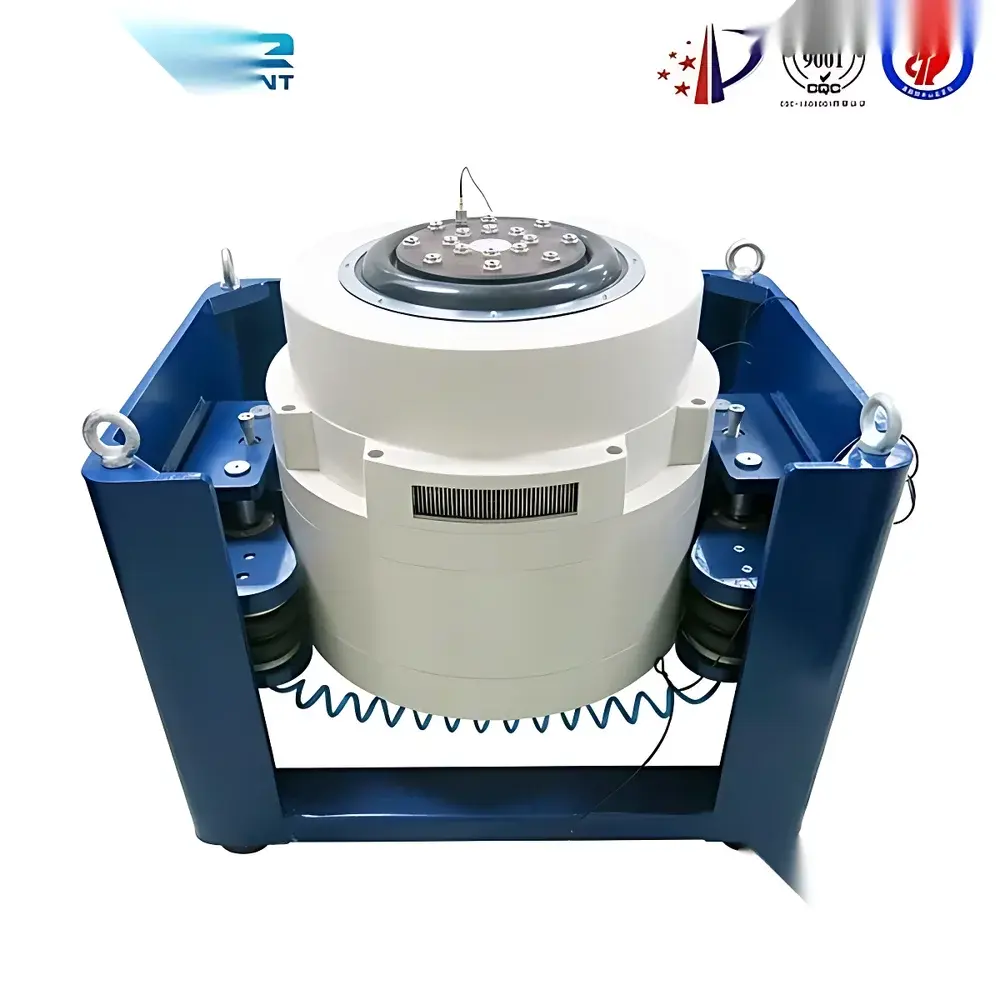
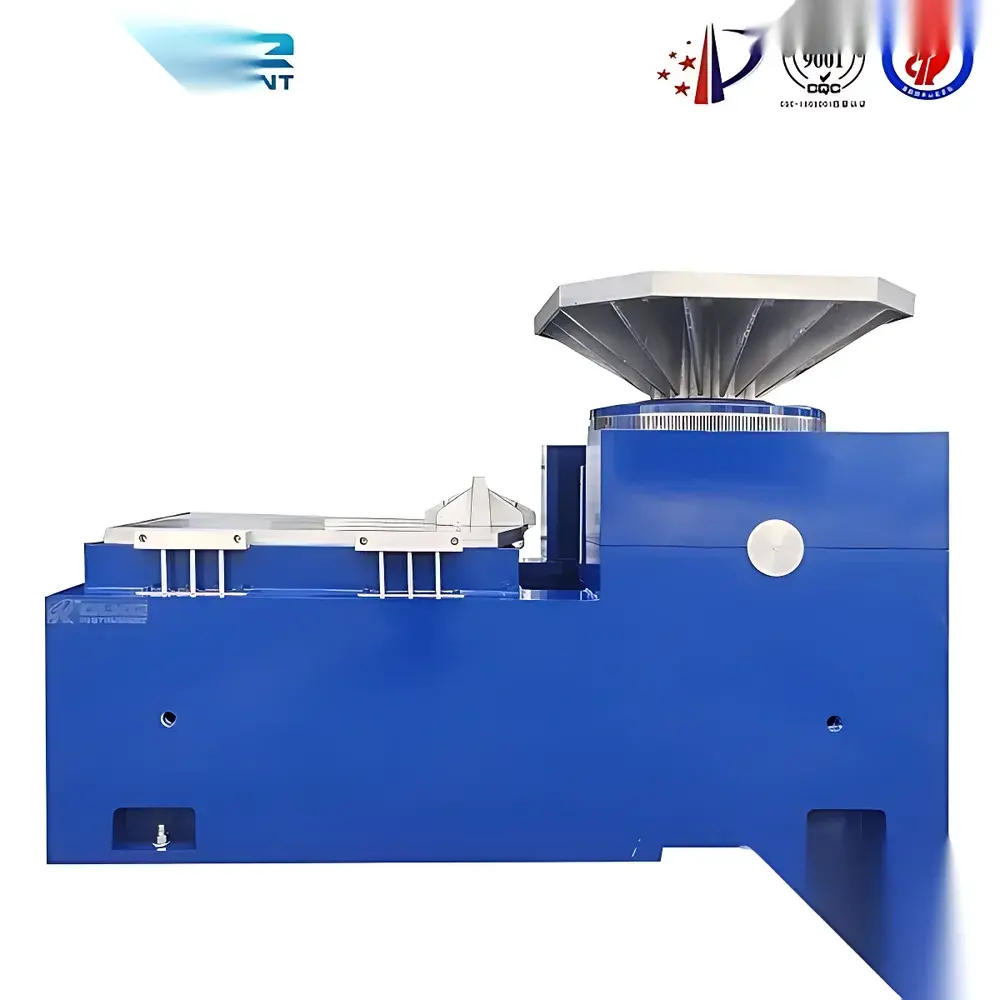
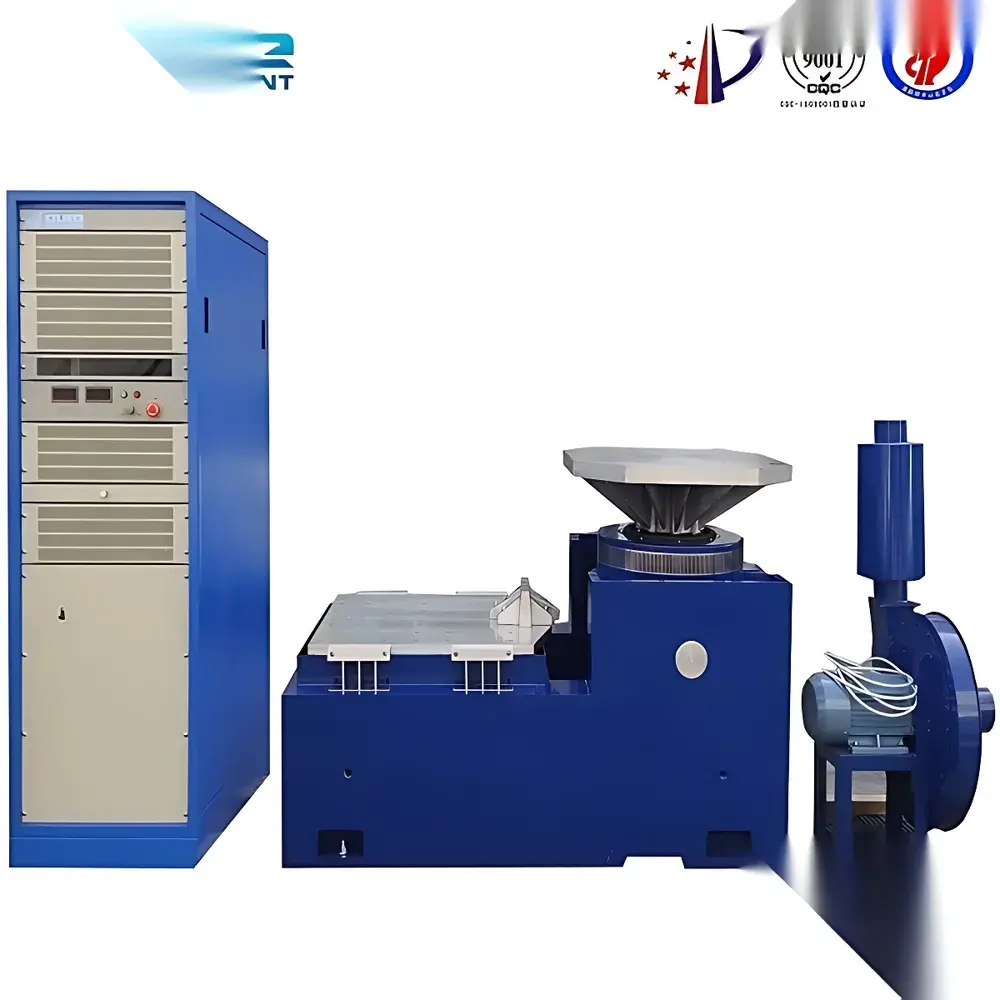
OK-ES Series Sweep-Frequency Electrodynamic Vibration Shaker System
| Brand | OK-ES |
|---|---|
| Origin | Imported |
| Manufacturer Type | Authorized Distributor |
| Price | USD 21,000 (FOB) |
| Max Load Capacity | 25–1000 kg |
| Frequency Range | 5–80 Hz |
| Max Displacement | 5–10 mm peak-to-peak |
| Max Acceleration | 100 m/s² |
| Vibration Axis | Vertical and Horizontal |
| Power Supply | AC 220 V ±10% or AC 380 V ±10% |
| Input Power | 1.6–12 kVA |
| Table Size | 40×40 to 140×140 cm |
| Weight | 500–3600 kg |
Overview
The OK-ES Series Sweep-Frequency Electrodynamic Vibration Shaker System is a precision-engineered platform designed for low-frequency vibration testing of electronic components, electromechanical assemblies, instrumentation, and industrial equipment. Based on electromagnetic excitation principles, the system generates controlled sinusoidal motion across a defined frequency band—enabling sweep-frequency (logarithmic or linear) excitation to identify structural resonances, assess mechanical integrity, and simulate real-world transport or operational vibration environments. Its dual-axis capability (vertical and horizontal) supports both single-axis and orthogonal testing configurations per ISO 10816, IEC 60068-2-6, MIL-STD-810H Method 514.8, and GB/T 2423.10. The shaker’s closed-loop control architecture integrates optical tachometer feedback and real-time amplitude regulation, ensuring traceable, repeatable test profiles essential for reliability qualification and design validation.
Key Features
- Electrodynamic actuator with high-force-to-mass ratio and low harmonic distortion across the 5–80 Hz operating range
- Continuous, stepless frequency sweep with programmable sweep rate (oct/min or Hz/s), start/stop frequencies, and dwell points
- Auto-amplitude regulation via digital signal processing (DSP)-based controller to maintain constant displacement or acceleration during resonance passage
- Optical speed feedback system for precise velocity and phase tracking, enhancing closed-loop stability and reducing settling time
- Adjustable excitation mechanism with precision-aligned suspension and lateral constraint to ensure <±0.1° angular deviation under rated load
- Integrated safety functions including zero-signal detection, over-acceleration cutoff, and “fly-away” (uncontrolled motion) protection with hardware interlock
- Modular table interface with threaded mounting patterns (M6/M8/M10) compatible with standard fixture plates and seismic isolation mounts
Sample Compatibility & Compliance
The OK-ES shaker series accommodates specimens from small PCB modules (<1 kg) to large chassis-mounted systems (up to 1000 kg), provided mass distribution remains within moment-of-inertia limits specified per model. Fixture design must conform to ASTM D999 for packaging vibration simulation and ISO 13373-1 for machinery condition monitoring reference tests. All models meet CE electromagnetic compatibility (EMC) Directive 2014/30/EU and Low Voltage Directive 2014/35/EU. When operated with calibrated transducers and validated controller firmware, test reports comply with GLP documentation requirements—including audit trails, user access logs, and parameter change history—for regulated industries such as aerospace, medical device manufacturing, and automotive Tier-1 suppliers.
Software & Data Management
The system operates with OK-VibControl™ v4.x, a Windows-based application supporting test definition, real-time monitoring, and post-test spectral analysis (FFT, PSD, SRS). It exports ASCII, UFF58, and MATLAB-compatible .mat files. Full 21 CFR Part 11 compliance is available via optional software module, delivering electronic signatures, role-based permissions, and immutable audit logs. Data synchronization supports networked lab environments using OPC UA protocol, enabling integration with LIMS platforms and enterprise quality management systems (QMS). Calibration certificates include traceability to NIST or PTB standards, with annual recalibration intervals recommended per ISO/IEC 17025.
Applications
- Resonance search and mode shape identification for printed circuit board (PCB) assemblies and sensor housings
- Transport simulation testing per ISTA 3A and ASTM D4728 for packaged electronics
- Structural durability evaluation of avionics enclosures, automotive ECUs, and railway signaling equipment
- Qualification of solder joint integrity in high-reliability microelectronics under low-frequency fatigue stress
- Verification of mounting bracket stiffness and damping characteristics prior to field deployment
- Supporting HALT/HASS protocols through controlled ramp-and-hold vibration profiles
FAQ
What is the maximum allowable off-center load for OK-ES-500 when operating in horizontal mode?
For OK-ES-500, the center-of-gravity offset must not exceed ±15 mm from the table centerline in any direction to maintain lateral stability and avoid dynamic coupling effects.
Does the system support random vibration testing?
No—the OK-ES series is optimized exclusively for swept-sine, fixed-frequency, and shock-response spectrum (SRS) synthesis; random vibration requires the OK-RV Series with dedicated power amplifier and controller.
Can third-party accelerometers be used with the OK-VibControl™ software?
Yes—provided the sensor output is IEPE-compatible and its sensitivity (mV/g) and frequency response are registered in the software’s transducer database.
Is thermal derating required for continuous operation above 40 °C ambient?
Yes—continuous operation above 40 °C ambient requires reduction of maximum acceleration by 0.5% per °C above threshold, as specified in the Environmental Derating Appendix of the User Manual.
What maintenance intervals are recommended for the moving coil assembly?
Visual inspection and air gap clearance verification every 500 operational hours; full bearing replacement and voice coil alignment every 5,000 hours or biannually, whichever occurs first.



