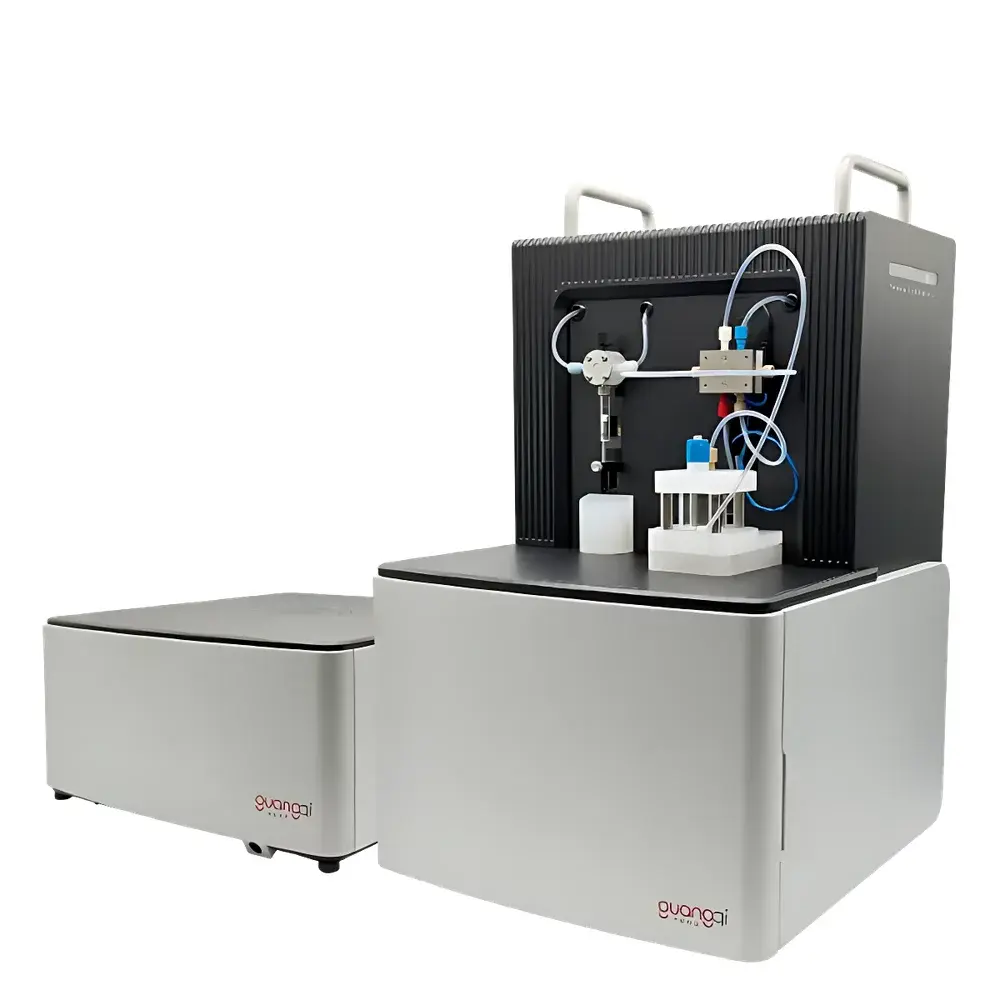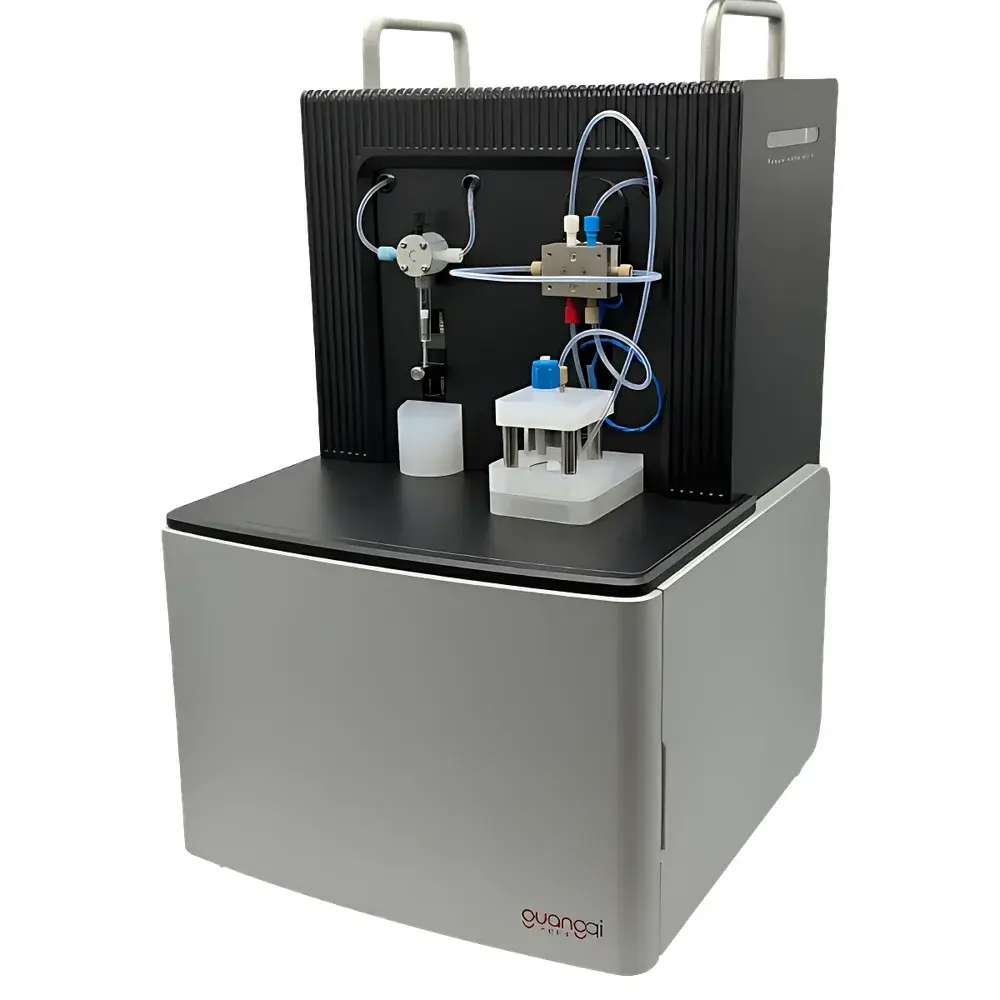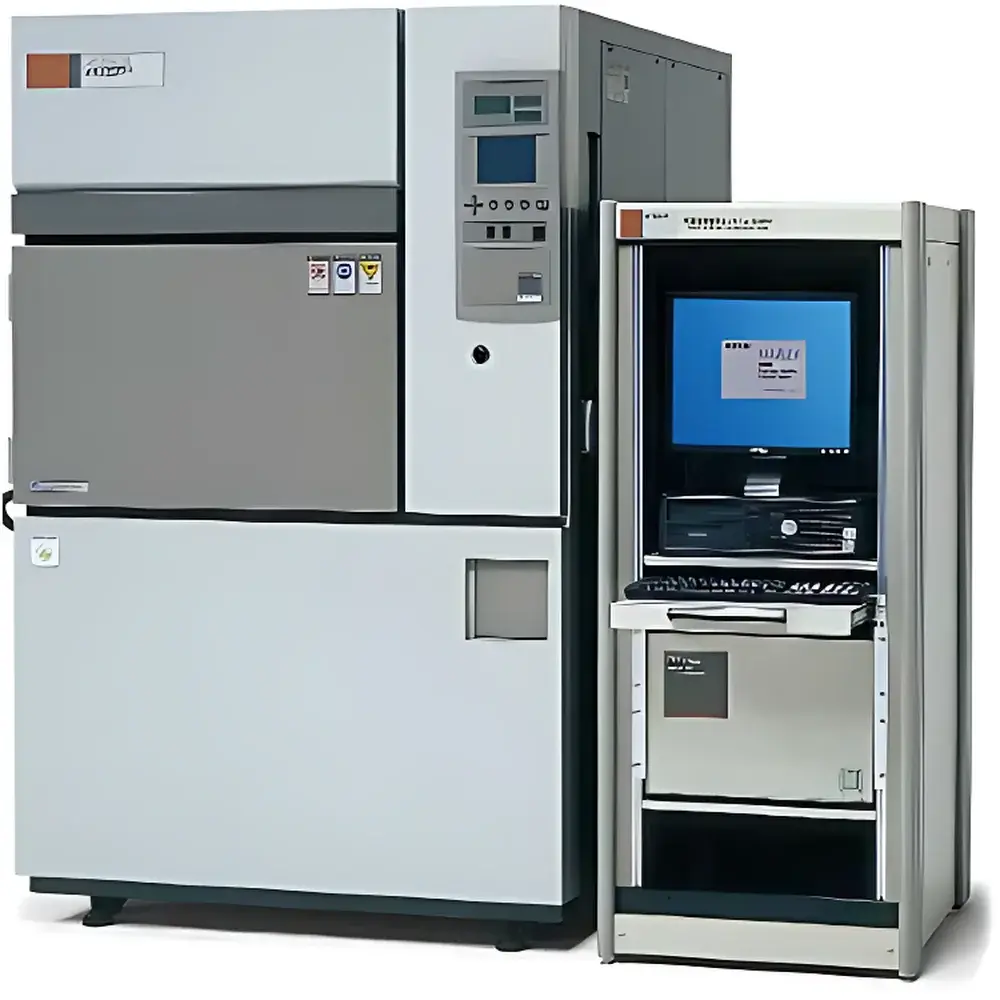
ETAC MLR23 Conductive Reliability Testing System
| Brand | ETAC |
|---|---|
| Origin | Japan |
| Model | MLR23 |
| Measurement Modes | AC & DC |
| AC Resistance Ranges | 2 mΩ, 20 mΩ, 200 mΩ, 2 Ω, 20 Ω, 200 Ω, 2 kΩ |
| DC Resistance Ranges | 200 mΩ, 2 Ω, 20 Ω, 200 Ω, 2 kΩ, 20 kΩ, 200 kΩ |
| Channel Capacity | 32–288 channels |
| Measurement Speed | 10 ms (High-Speed Mode), 200 ms (High-Accuracy Mode) |
| Control Interface | Windows-based application software |
| Compliance | Designed for semiconductor interconnect reliability assessment per JEDEC JESD22-A108, A114, and IPC-9701 guidelines |
Overview
The ETAC MLR23 Conductive Reliability Testing System is a dedicated instrumentation platform engineered for accelerated evaluation of electrical continuity integrity in semiconductor interconnect structures—particularly wire bonds, solder joints, flip-chip bumps, and embedded die attach interfaces. Operating on the principle of four-terminal (Kelvin) resistance monitoring under thermal or mechanical stress conditions, the MLR23 continuously tracks minute resistance deviations over time to quantify degradation onset, failure progression, and statistical lifetime distribution. Its dual-mode architecture—combining high-speed transient capture (10 ms per channel) with high-accuracy steady-state measurement (200 ms)—enables synchronized multi-channel resistance logging during temperature cycling (TC), highly accelerated temperature-humidity stress testing (HAST), or power-cycle testing. The system is not a general-purpose LCR meter; rather, it is purpose-built for time-resolved conductance stability analysis in reliability qualification labs compliant with JEDEC, IPC, and AEC-Q200 frameworks.
Key Features
- Modular channel expansion supporting 32 to 288 independently monitored test points—scalable via daisy-chained mainframes without recalibration overhead.
- Dual-mode resistance measurement engine: High-Speed Mode (10 ms/channel) for detecting abrupt open-circuit events during thermal shock; High-Accuracy Mode (200 ms/channel) with 0.05% basic accuracy for trend analysis of gradual resistivity drift.
- True four-wire (Kelvin) sensing across all ranges, eliminating lead resistance error—critical for sub-10 mΩ bond joint characterization.
- Simultaneous AC and DC resistance acquisition capability: AC mode (1 kHz excitation) suppresses thermoelectric EMF interference; DC mode supports low-noise, long-integration measurements for ultra-stable baseline establishment.
- Integrated scanner circuitry with programmable channel sequencing, auto-zero compensation, and open/short calibration routines executed prior to each test sequence.
- Ruggedized industrial-grade chassis with EMI-shielded analog front-end, designed for continuous operation in Class 10K cleanroom environments and thermal chamber integration.
Sample Compatibility & Compliance
The MLR23 interfaces directly with standard semiconductor reliability test boards (RTBs), burn-in sockets, and custom fixture assemblies equipped with spring-probe or lithographic contact pads. It accommodates both bare-die and packaged devices (QFN, BGA, WLCSP) when mounted on thermally controlled stages. All measurement protocols align with industry-standard reliability test methods: JEDEC JESD22-A108 (Temperature Cycling), JESD22-A114 (Power Cycling), IPC-9701 (Performance Qualification of Solder Attachments), and AEC-Q200 stress profiles for automotive electronics. Data output formats comply with ASTM E2928-22 requirements for resistance-based failure criterion documentation, and audit trails support GLP/GMP traceability when operated under validated Windows OS configurations.
Software & Data Management
Control and analysis are performed via ETAC’s proprietary Windows-based application—MLR-ControlSuite v4.x—deployed on customer-supplied industrial PCs (Windows 10/11 LTSB). The software provides real-time resistance vs. time plotting per channel, configurable pass/fail thresholds with hysteresis logic, automatic event tagging (e.g., “resistance jump >10%”, “open circuit detected”), and statistical summary reports (Weibull α/β, mean time to failure, confidence intervals). Raw data exports to CSV and HDF5 formats; metadata embedding includes timestamp, chamber temperature, cycle count, and operator ID. For regulated environments, optional 21 CFR Part 11 compliance modules are available—including electronic signatures, role-based access control, and immutable audit logs with SHA-256 hashing of all measurement records.
Applications
- Qualification of Cu/Al wire bond reliability under temperature cycling and humidity bias testing.
- Statistical analysis of solder joint fatigue life in PoP (Package-on-Package) and SiP (System-in-Package) assemblies.
- Screening of die-attach voiding impact on thermal-electrical coupling in high-power GaN and SiC modules.
- Process window validation for thermosonic bonding parameters in advanced packaging lines.
- Failure mechanism identification (e.g., intermetallic growth, Kirkendall voiding, electromigration-induced opens) via resistance slope differentiation and noise spectral analysis.
- Supporting ISO/IEC 17025-accredited lab reporting through traceable calibration certificates (NIST-traceable standards included).
FAQ
What is the minimum measurable resistance in AC mode, and how is noise rejection achieved?
The lowest AC range is 2 mΩ with 0.1 µΩ resolution. Noise rejection employs synchronous demodulation at 1 kHz, combined with hardware-based notch filtering and digital averaging over user-defined integration windows.
Can the MLR23 be integrated into an automated thermal chamber system?
Yes—via TTL-level trigger I/O and Modbus TCP interface; full synchronization with chamber temperature ramps, dwell times, and cycle counters is supported through scriptable API calls in MLR-ControlSuite.
Is calibration required before each test run?
No—built-in auto-zero and open/short compensation routines execute automatically at system startup and upon range change. Annual NIST-traceable calibration is recommended per ISO/IEC 17025.
Does the system support statistical process control (SPC) charting?
Yes—real-time X-bar/R charts, Cpk calculation, and out-of-control rule detection (Western Electric rules) are embedded in the reporting module.
Are firmware updates provided, and how are they deployed?
Firmware updates are distributed quarterly via secure ETAC Customer Portal; deployment requires local administrator rights and takes <60 seconds with zero downtime to active test sequences.