
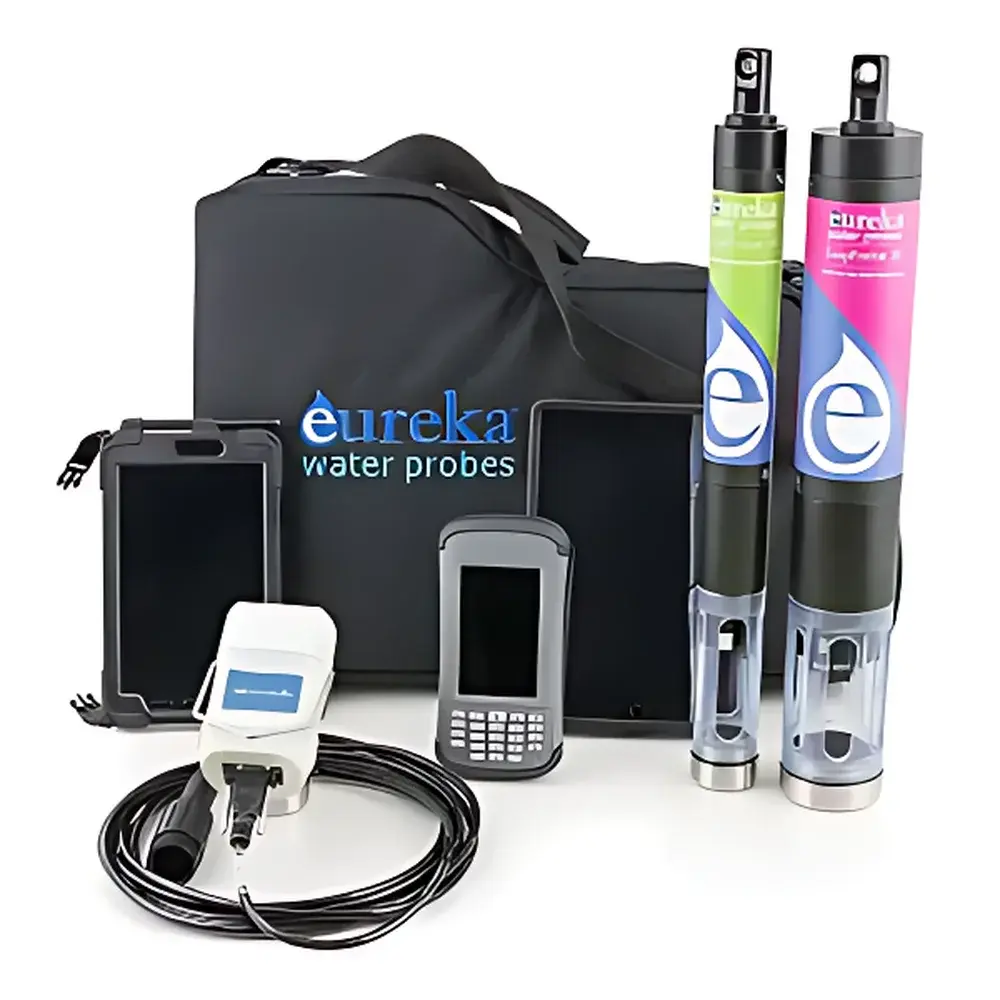
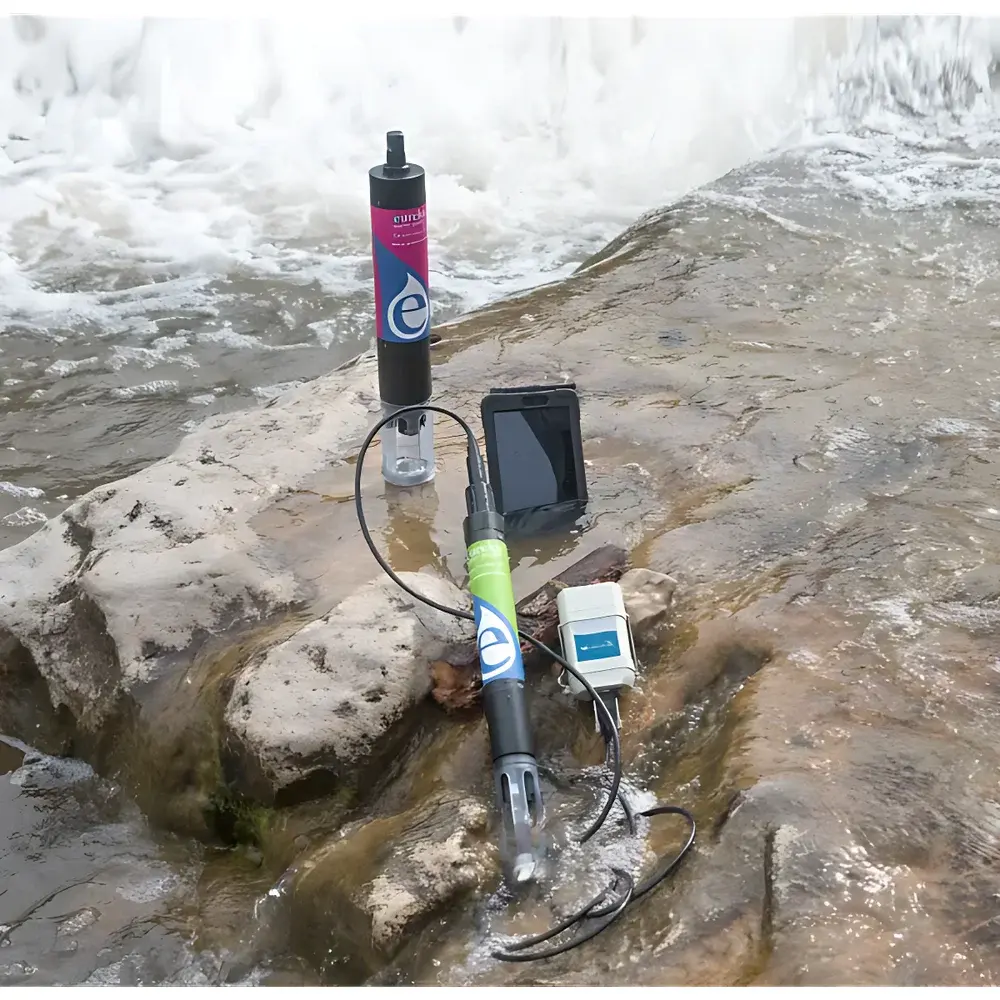
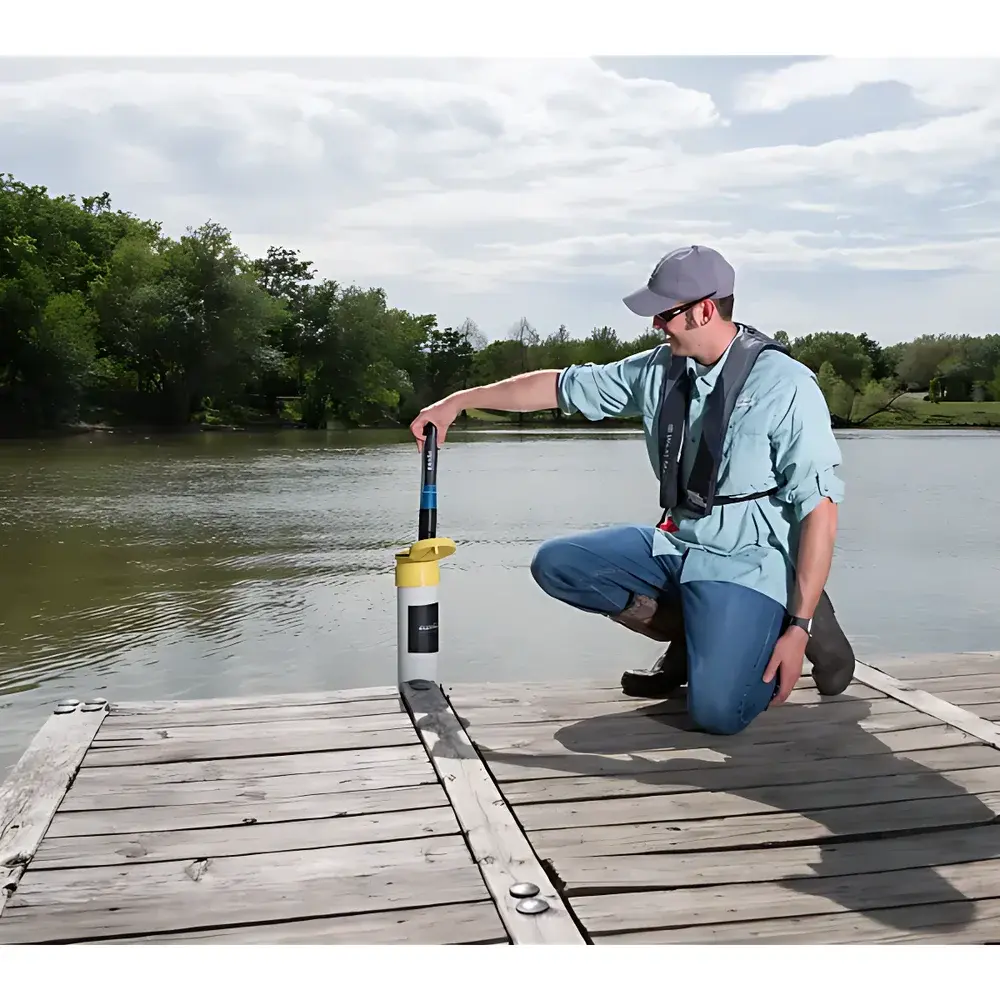
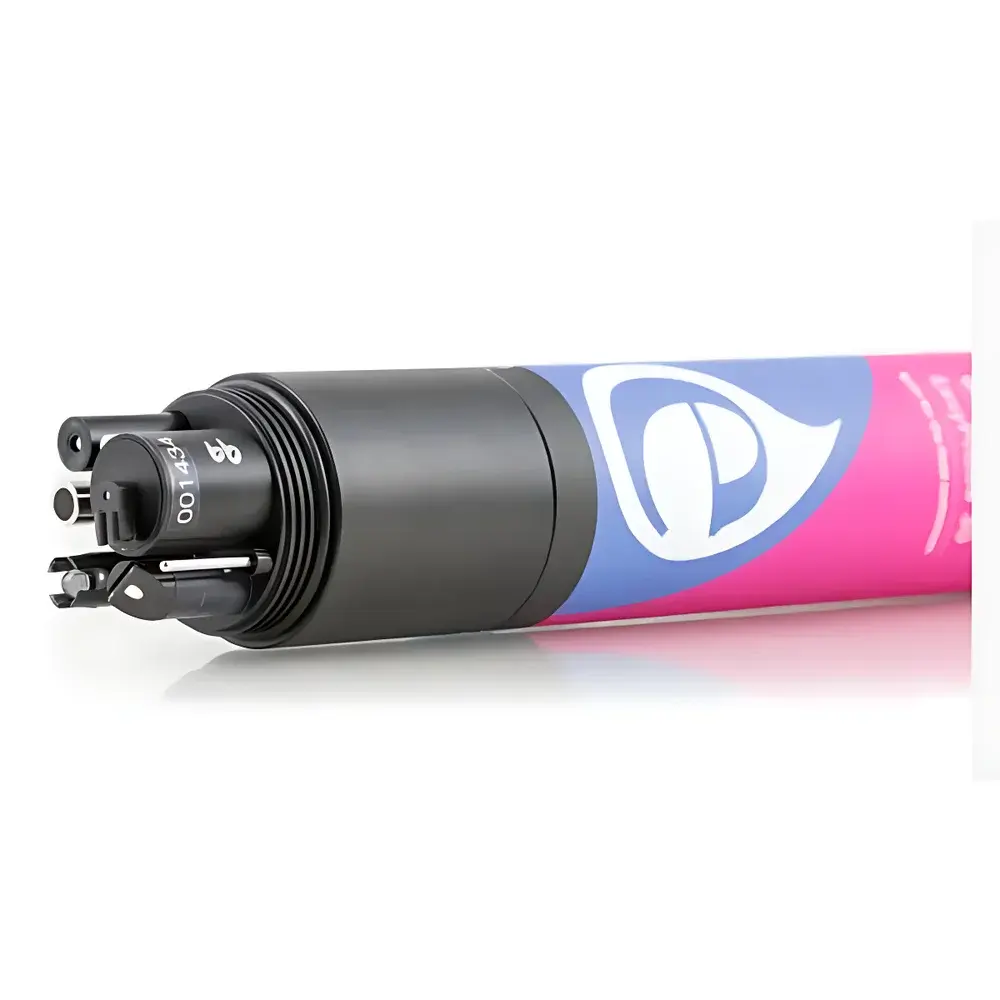
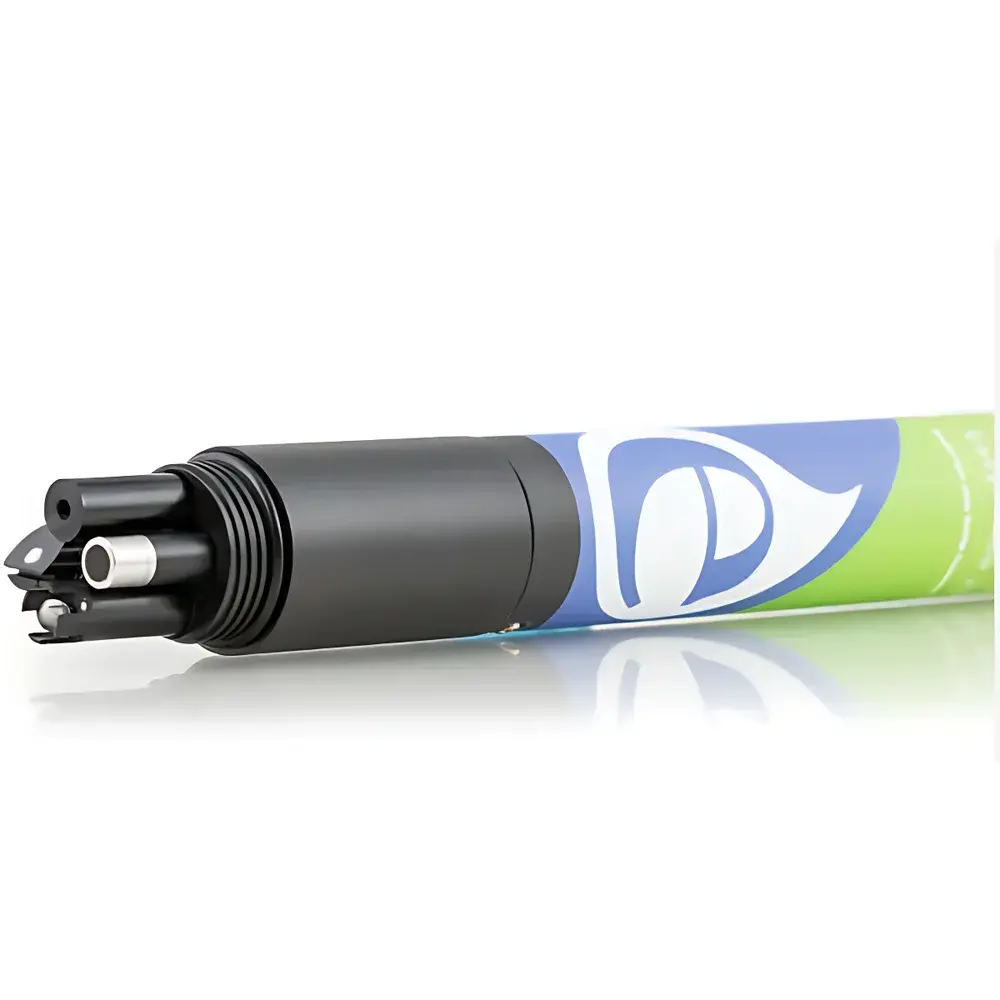
Eureka EP20 Five-Parameter Water Quality Analyzer
| Brand | Eureka |
|---|---|
| Origin | USA |
| Model | EP20 |
| Instrument Type | Portable/Handheld Water Quality Analyzer |
| Measured Parameters | Temperature, pH, ORP, Conductivity, Dissolved Oxygen (DO) |
| Sensor Technology | Thermistor (Temp), Glass Composite Electrode (pH), Platinum Electrode (ORP), Fluorescence-based Optical Sensor (DO), Graphite Electrode (Conductivity) |
| Depth Range | 0–10 m |
| Max Operating Depth | 200 m |
| Communication | Bluetooth 5.0, RS-485, USB, SDI-12 |
| Data Storage | >1,000,000 records |
| Sampling Rate | 1 Hz |
| Operating Temperature | −5 °C to 50 °C |
| Dimensions | Ø4.95 cm × 48 cm |
| Weight | 0.8 kg |
Overview
The Eureka EP20 Five-Parameter Water Quality Analyzer is a field-deployable, multi-sensor instrument engineered for high-fidelity in situ measurement of five fundamental water quality indicators: temperature, pH, oxidation-reduction potential (ORP), electrical conductivity, and dissolved oxygen (DO). Designed on the proven architecture of Eureka’s Manta+ platform, the EP20 integrates laboratory-grade sensor physics—including thermistor-based temperature sensing, glass-composite pH electrodes, platinum redox electrodes, fluorescence-quenching optical DO detection, and graphite-cell conductivity cells—into a compact, submersible probe form factor. Its measurement principles conform to standard methods recognized by ASTM D1129 (pH), ASTM D5391 (conductivity), ASTM D888 (DO), and ISO 7888 (electrical conductivity), supporting traceable data acquisition in environmental monitoring workflows. The EP20 is not intended for permanent immersion but is rated for intermittent deployment up to 200 m depth, making it suitable for profiling in lakes, rivers, estuaries, wells, aquaculture ponds, and groundwater observation wells.
Key Features
- Compact cylindrical housing (Ø4.95 cm × 48 cm; 0.8 kg) optimized for handheld operation and vertical profiling
- Optical dissolved oxygen sensor utilizing phase-fluorometry with automatic temperature and salinity compensation per ISO 5814
- Integrated pressure transducer for depth measurement (0–10 m range, ±0.003 m accuracy, 0.001 m resolution)
- Dual-mode communication: Bluetooth 5.0 for real-time wireless telemetry to iOS/Android devices, plus wired protocols (RS-485, USB, SDI-12) for integration into SCADA or datalogger networks
- Onboard memory storing over one million timestamped records with configurable logging intervals (1 Hz maximum sampling rate)
- Field-replaceable, factory-calibrated sensor modules—no disassembly required for routine maintenance or recalibration
- Ruggedized IP68-rated housing with marine-grade stainless steel and epoxy-sealed electronics for long-term exposure to freshwater and brackish environments
Sample Compatibility & Compliance
The EP20 is validated for use in natural surface waters (lakes, streams, reservoirs), groundwater (monitoring wells, springs), recirculating aquaculture systems, and wastewater effluent channels. It operates within a temperature range of −5 °C to 50 °C and supports salinity compensation for DO and conductivity measurements across 0–70 ppt. All sensors meet material compatibility requirements per NSF/ANSI Standard 61 for drinking water system components. Data integrity complies with GLP-aligned practices: each record includes embedded timestamps, sensor serial numbers, calibration status flags, and environmental metadata (e.g., depth, battery voltage). While not FDA 21 CFR Part 11–certified out-of-the-box, audit trails and exportable CSV/JSON logs support validation under regulated environmental QA/QC programs (e.g., US EPA Method 160.1, ISO 5667 series).
Software & Data Management
Eureka provides cross-platform desktop and mobile applications compatible with Windows 10+, Android 8.0+, and iOS 14+. The software enables real-time parameter visualization, multi-point calibration (2-/3-point pH, 1-/2-point conductivity, air-saturation DO), and firmware updates via USB or Bluetooth. All collected data are stored locally on-device and synchronizable to secure cloud repositories or local network drives. Export formats include time-stamped CSV (with SI units and uncertainty annotations), GeoJSON (for GIS integration), and PDF summary reports compliant with ISO/IEC 17025 documentation requirements. Optional API access allows programmatic ingestion into LIMS or enterprise environmental databases.
Applications
- Regulatory compliance monitoring for NPDES permits and state-level TMDL assessments
- Baseline characterization and longitudinal trend analysis in watershed management studies
- Real-time DO and pH profiling in intensive aquaculture operations to prevent hypoxia events
- Rapid response screening during spill investigations or algal bloom episodes
- Calibration verification and performance auditing of fixed-station multiparameter sondes
- Academic field hydrology instruction and undergraduate environmental science labs
FAQ
Is the EP20 suitable for continuous unattended deployment?
No—the EP20 is designed for intermittent, operator-conducted field measurements. For permanent installation, Eureka recommends the Manta G series or Hydrolab MS5 platforms.
Can the EP20 be calibrated in the field without a laptop?
Yes—Bluetooth-enabled mobile calibration is supported via the Eureka FieldSync app, including single-point DO zeroing and two-point pH adjustment using NIST-traceable buffer solutions.
Does the optical DO sensor require membrane replacement or electrolyte refilling?
No—fluorescence-based DO sensing eliminates consumables; the sensor cap is cleaned mechanically and verified annually against Winkler titration standards.
What is the warranty coverage and service support structure?
The EP20 carries a 24-month limited warranty covering materials and workmanship. Eureka-certified service centers in North America, Europe, and APAC provide sensor recalibration, housing pressure testing, and firmware diagnostics.
Are raw sensor output values (e.g., mV, frequency) accessible for custom algorithm development?
Yes—binary protocol documentation and ASCII command sets for RS-485/SDI-12 interfaces are available under NDA to qualified research and OEM partners.
Related Products







