
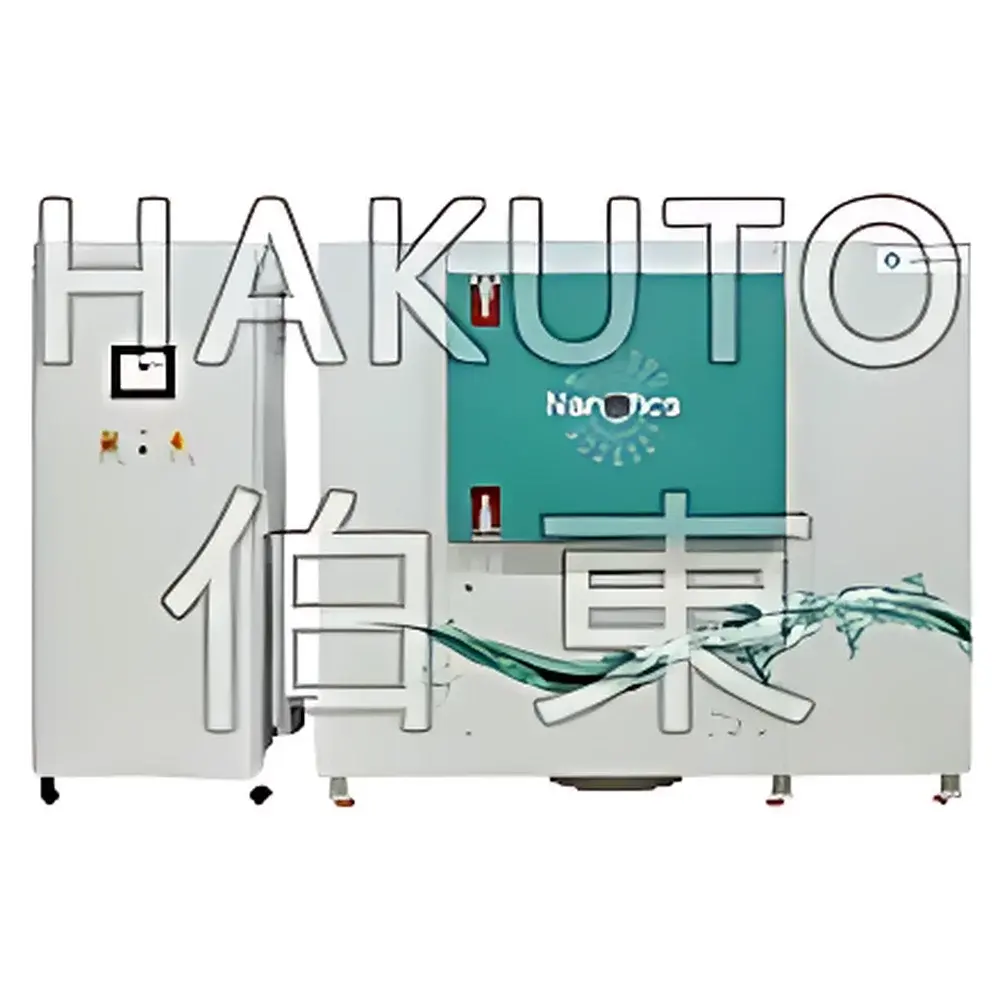
Europlasma CD 600 PLC Low-Pressure Plasma Surface Treater
| Brand | Europlasma |
|---|---|
| Origin | Belgium |
| Model | CD 600 PLC |
| Power | 5 kW |
| Chamber Dimensions | 600 × 600 × 600 mm |
| Chamber Volume | 216 L |
| Chamber Material | Anodized Aluminum |
| Operating Gases | O₂, Ar, N₂, or custom gas mixtures |
| Control System | PLC-based with 17″ HMI touchscreen |
| Vacuum System | Dry scroll pump, 480 m³/h pumping speed |
| Vacuum Measurement | Dual Pirani gauges |
| Gas Delivery | Single MFC-controlled inlet (¼″ BSP, 1 bar max input) |
| Safety Certifications | CE compliant |
| Electrical Supply | 380 V AC, 3-phase, 50 Hz, 40 A |
Overview
The Europlasma CD 600 PLC is a fully automated, low-pressure plasma surface treatment system engineered for high-reproducibility functionalization of delicate and complex substrates in R&D and pilot-scale production environments. Operating under controlled vacuum conditions (typically 0.1–10 Pa), the system utilizes radiofrequency (13.56 MHz) plasma generation to modify surface chemistry without altering bulk material properties. Unlike atmospheric plasma systems, this low-pressure configuration ensures uniform energy distribution, minimal thermal load, and precise control over reactive species density—critical for nanoscale hydrophobic, oleophobic, and anti-corrosion coatings on PCBA, medical polymers, flexible electronics, and porous textiles. The system is not a coating applicator per se; rather, it activates surfaces prior to vapor-phase deposition (e.g., Nanofics® or PlasmaGuard® precursors) or enables direct plasma polymerization, delivering conformal, pinhole-free monolayers with sub-nanometer thickness control.
Key Features
- Robust aluminum chamber (600 × 600 × 600 mm, 216 L volume) with integrated viewing window and five standardized sample trays (552 × 522 × 40 mm each)
- 5 kW RF generator with impedance-matching network, configurable for process-specific power delivery and duty cycling
- High-efficiency dry vacuum system: dual-stage scroll pump (480 m³/h nominal pumping speed) with dual Pirani pressure monitoring for stable process initiation and endpoint detection
- PLC-based automation with 17″ industrial touchscreen HMI—supports recipe storage, parameter logging, and real-time monitoring of vacuum level, gas flow, RF power, chamber temperature, and treatment duration
- Integrated safety architecture: emergency stop, vacuum interlock, overtemperature cutoff, RF emission shielding, and CE-compliant electrical design
- Single-gas inlet with mass flow controller (MFC), calibrated for O₂, Ar, N₂, or process-specific gas blends; exhaust port (28 mm OD) compatible with abatement systems
Sample Compatibility & Compliance
The CD 600 PLC accommodates heterogeneous sample geometries—including densely populated PCBAs, 3D-printed polymer housings, rolled nonwovens, and lumen-containing catheters—without shadowing or edge effects. Its low-temperature plasma environment (<40 °C average surface rise) preserves thermal integrity of heat-sensitive substrates such as polyimide flex circuits, silicone elastomers, and PET films. The system supports process validation under GLP and ISO 13485 frameworks; all operational parameters—including vacuum ramp profiles, gas dosing sequences, and RF ignition timing—are digitally recorded with timestamped audit trails, meeting FDA 21 CFR Part 11 requirements when deployed with compliant software extensions. It is routinely used to meet IPC-A-610 (electronic assembly acceptability), ISO 10993-5 (cytotoxicity screening of treated surfaces), and ASTM D726 (hydrophobicity testing) protocols.
Software & Data Management
The embedded PLC firmware provides deterministic real-time control with <100 ms loop response time. Process recipes—including multi-step sequences (e.g., O₂ activation → Ar sputter cleaning → C₄F₈ polymerization) —are stored locally with user-level password protection and version history. All sensor data (pressure, power, temperature, flow) are logged at 1 Hz resolution and exportable via USB or Ethernet to CSV or SQLite formats. Optional OPC UA integration enables seamless connection to MES platforms (e.g., Siemens Opcenter, Rockwell FactoryTalk) for SPC-driven quality monitoring. Audit logs record operator ID, timestamp, parameter changes, and alarm events—fully traceable for internal audits or regulatory inspections.
Applications
- Electronics manufacturing: Nanoscale waterproofing of Bluetooth earbuds, smartwatch modules, and implantable sensor assemblies via plasma-enhanced deposition of fluorocarbon monolayers
- Medical device processing: Surface activation of polyurethane catheters prior to heparin grafting; hydrophilic modification of mask filter media for improved aerosol capture efficiency
- Battery component engineering: Cleaning and functionalization of separator films (e.g., PE/PP trilayer) to enhance electrolyte wettability and interfacial adhesion
- Technical textiles: Permanent oleophobic finishing of Gore-Tex®-grade laminates without compromising breathability or tensile strength
- PCB fabrication: Removal of oxidation and organic residues from ENIG-finished pads; enhancement of solder mask adhesion on HDI substrates
FAQ
What surface treatments can be achieved using the CD 600 PLC?
It enables plasma cleaning, activation, etching, and thin-film deposition—including hydrophobic, oleophobic, anti-fog, and corrosion-inhibiting functionalities—depending on gas chemistry and precursor selection.
Is the system suitable for ISO Class 7 cleanroom integration?
Yes; its dry pumping architecture, sealed chamber, and zero-oil vacuum system meet cleanroom compatibility requirements when installed with HEPA-filtered purge gas lines and grounded RF shielding.
Can the system be validated for GMP production environments?
Absolutely; full IQ/OQ documentation packages are available, and the PLC control architecture supports 21 CFR Part 11-compliant electronic signatures and data integrity controls.
What maintenance intervals are recommended?
Pirani gauge calibration every 6 months; RF matching network inspection annually; scroll pump oil change (if applicable) every 5,000 operating hours; chamber cleaning after 200 plasma cycles or visible residue accumulation.
Does Europlasma provide application support for new substrate types?
Yes; Europlasma’s technical applications lab offers remote process development services—including plasma parameter optimization, coating durability testing (ISO 2409 cross-hatch, ASTM D3359), and failure mode analysis—prior to system commissioning.



