
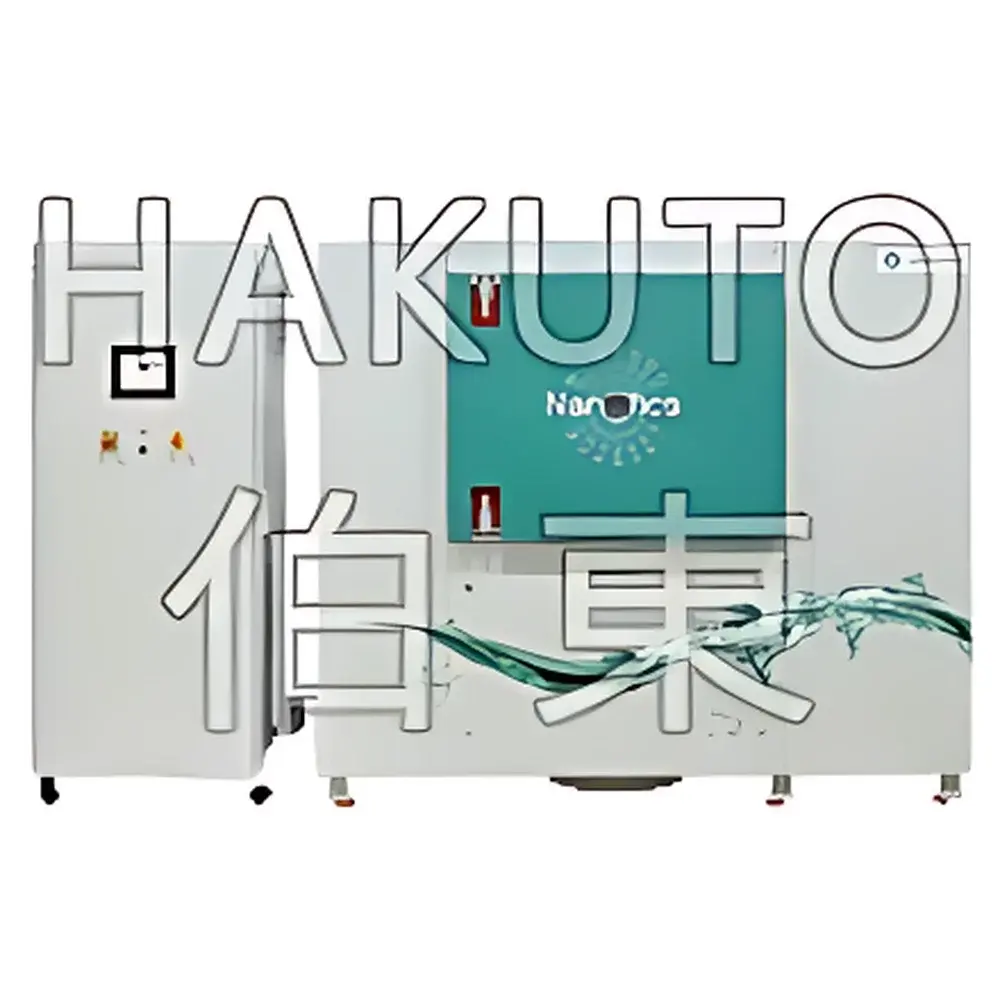
Europlasma CD600PLC Low-Pressure Plasma Surface Treater
| Brand | Europlasma |
|---|---|
| Origin | Belgium |
| Model | CD600PLC |
| Power | 5 kW |
| Chamber Dimensions | 600 × 600 × 600 mm |
| Chamber Volume | 216 L |
| Chamber Material | Aluminum |
| Operating Gases | Oxygen, Argon, etc. |
| Control System | Fully Automated PLC-Based Interface |
| Vacuum System | Dry Pumping Unit (480 m³/h), Dual Pirani Gauges |
| Input Voltage | 380 V AC, 3-Phase, 50 Hz, 40 A |
| Gas Inlet | 1/4″ (6.45 mm) with Mass Flow Controller (MFC) |
| Exhaust Port | 28 mm |
| Safety Certifications | CE Compliant |
| Compliance | Designed for GLP/GMP-aligned lab environments |
Overview
The Europlasma CD600PLC is a fully automated, low-pressure plasma surface treatment system engineered for precision functionalization of material surfaces in R&D and pilot-scale production environments. Operating under controlled vacuum conditions (typically 10–100 Pa), the system utilizes radiofrequency (RF) plasma discharge to generate reactive species—such as atomic oxygen, metastable argon, and free radicals—that modify surface chemistry without altering bulk properties. This enables reproducible, solvent-free deposition or activation of ultra-hydrophilic, super-oleophobic, anti-corrosive, or biocompatible coatings—critical for applications ranging from medical device passivation to battery separator functionalization. Unlike atmospheric plasma systems, the CD600PLC’s sealed aluminum chamber ensures uniform plasma density, minimal thermal load (<40 °C surface rise during standard cycles), and compatibility with oxygen-sensitive processes. Its modular architecture supports both Nanofics® (nanoscale hydrophilic coating) and PlasmaGuard® (halogen-free oleophobic barrier) technologies, delivering traceable, repeatable surface energy shifts (measured via contact angle analysis per ASTM D7334 and ISO 19403-2).
Key Features
- 216 L aluminum vacuum chamber with reinforced viewing window and five standardized sample trays (552 × 522 × 40 mm each), enabling batch processing of heterogeneous geometries.
- 5 kW RF generator with adjustable power output and real-time impedance matching, optimized for stable plasma ignition across varying gas compositions (O₂, Ar, N₂, or mixtures).
- Integrated dry vacuum system rated at 480 m³/h pumping speed, paired with dual Pirani gauges for accurate pressure monitoring between 0.1–1000 Pa.
- 17-inch industrial touchscreen HMI with PLC-based control logic, supporting up to 99 programmable process recipes—including vacuum ramp rate, gas dosing profiles, RF duty cycle, dwell time, and cooldown sequencing.
- Comprehensive safety architecture: hardware interlocks for door access, overtemperature cutoff (≥65 °C), vacuum pump protection lockout, and emergency stop circuit compliant with IEC 60204-1.
- Full audit trail capability: all operational parameters—including chamber pressure, RF forward/reflected power, gas flow rates, temperature readings, and user login events—are timestamped and exportable for 21 CFR Part 11–compatible documentation.
Sample Compatibility & Compliance
The CD600PLC accommodates substrates up to 550 mm in width and 520 mm in depth, including flexible films (e.g., PET, PI, PP), rigid PCBs, porous nonwovens, silicone catheters, and ceramic sensor housings. Its halogen-free processing capability aligns with IPC-4101D (for PCB laminates) and ISO 10993-5 (cytotoxicity screening). All plasma treatments are performed under Class 10,000 cleanroom-compatible conditions; chamber interior meets ISO 14644-1 airborne particle limits when operated with filtered inert gas purge. The system complies with CE marking requirements (2014/30/EU EMC Directive and 2014/35/EU LVD Directive) and supports IQ/OQ validation protocols per GAMP 5 guidelines.
Software & Data Management
Process control and data logging are managed through Europlasma’s proprietary PLC firmware, accessible via Ethernet or local USB export. Each run generates a structured CSV log containing vacuum evolution curves, RF power stability metrics, gas consumption records, and end-point confirmation signals (e.g., optical emission intensity at 777 nm for O-atom detection). Optional integration with LabArchives ELN or Thermo Fisher SampleManager LIMS enables automatic metadata ingestion—including operator ID, sample ID, and SOP version—fulfilling ALCOA+ data integrity principles. Audit trails retain full edit history with immutable timestamps, satisfying FDA 21 CFR Part 11 electronic record requirements.
Applications
- Medical devices: Plasma activation of polyurethane catheters prior to hydrophilic coating; surface decontamination of silicone face masks per ISO 17664.
- Electronics: Hydrophilic pretreatment of flexible OLED encapsulation layers; oleophobic passivation of wearable sensor housings (contact angle >150° against hexadecane).
- Energy storage: Functionalization of lithium-ion battery separators to enhance electrolyte wettability and thermal shutdown response.
- Textiles: Permanent hydrophilicity induction in sportswear membranes without leaching; antimicrobial surface grafting on meltblown nonwovens.
- Automotive: Adhesion promotion on polypropylene bumpers prior to structural bonding; corrosion-resistant barrier deposition on aluminum heat exchangers.
FAQ
What vacuum level is required for stable plasma ignition?
Stable plasma generation is achieved between 10–50 Pa using the integrated dry pump system; optimal process windows are validated per gas type and substrate geometry.
Can the system operate with custom gas mixtures beyond O₂ and Ar?
Yes—up to three independent gas lines (optional upgrade) support precise blending of N₂, CF₄, NH₃, or H₂ with mass flow controllers calibrated per ISO 6326-2.
Is remote monitoring supported?
Standard Ethernet connectivity enables secure remote diagnostics and recipe management via VLAN-isolated network access, configurable to meet ITAR or HIPAA-compliant infrastructure policies.
How is process repeatability verified?
Each chamber undergoes factory calibration using certified reference samples (e.g., Si wafer w/ native oxide); users may perform in-situ verification via contact angle goniometry or XPS surface analysis.
What maintenance intervals are recommended?
Dry pump oil change every 3,000 operating hours; RF matching network inspection annually; Pirani gauge recalibration biannually per manufacturer specifications.
Related Products



