
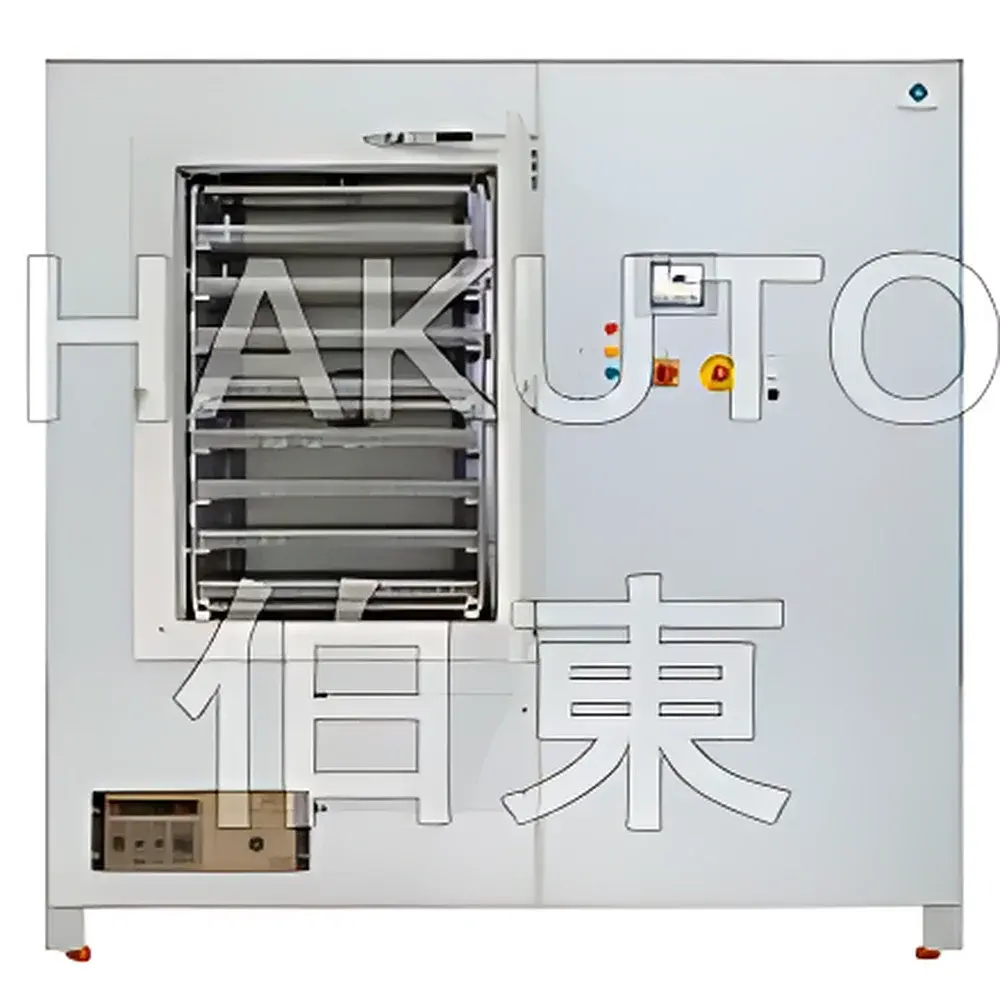
Europlasma Nanofics@10 Plasma Surface Activation System
| Brand | Europlasma |
|---|---|
| Origin | Belgium |
| Model | Nanofics@10 |
| Power | 5 kW |
| Chamber Dimensions | 700 × 700 × 1200 mm |
| Chamber Volume | 490 L |
| Chamber Material | Anodized Aluminum |
| Process Gas | Argon (Ar) |
| Control System | PLC-based Automation with 17″ Touchscreen HMI |
| Vacuum System | Dry Scroll Pump, 480 m³/h Pumping Speed |
| Vacuum Measurement | Pirani Gauge |
| Gas Delivery | Single-Channel MFC (1/4″ Inlet, 1 bar max input pressure) |
| Exhaust Port | 28 mm OD |
| Safety Features | Emergency Stop, Vacuum Interlock, Thermal Overload Protection |
| Certification | CE compliant |
| Electrical Supply | 380 V AC, 3-phase, 50 Hz, 40 A |
Overview
The Europlasma Nanofics@10 Plasma Surface Activation System is an industrial-grade, low-pressure radiofrequency (RF) plasma processing platform engineered for precise, repeatable surface functionalization of polymeric, metallic, and ceramic substrates. Operating under controlled argon plasma conditions, the system generates high-energy electrons and reactive species that chemically modify surface topography and chemistry—without altering bulk material properties. Unlike atmospheric plasma systems, the Nanofics@10 utilizes a vacuum environment (typically 10–100 Pa range), enabling uniform treatment across complex geometries and eliminating oxidation or thermal degradation risks. Its core application lies in introducing stable hydrophilic functionality—achieving water contact angles (WCA) below 10°—via nanoscale surface activation rather than coating deposition. This distinguishes it from PECVD-based tools: Nanofics@10 delivers true surface activation (e.g., –OH, –COOH group generation) rather than film formation, making it ideal for biomedical device pre-treatment where regulatory compliance, leachables control, and long-term stability are critical.
Key Features
- Robust aluminum vacuum chamber (700 × 700 × 1200 mm; 490 L volume) with reinforced anodized interior for corrosion resistance and RF shielding integrity
- 5 kW RF generator with frequency-stabilized output, optimized for Ar plasma ignition and sustained discharge stability under variable load conditions
- Integrated dry scroll vacuum pump system (480 m³/h pumping speed) with Pirani gauge feedback for real-time pressure monitoring and process repeatability
- PLC-based automation architecture with 17″ industrial touchscreen HMI, supporting recipe-driven operation, parameter logging, and password-protected access levels
- Single-gas MFC-controlled Ar inlet (1/4″ stainless steel port, 1 bar max supply pressure) ensuring precise gas dosing and stoichiometric consistency
- Comprehensive safety interlocks: hardware-triggered emergency stop, vacuum chamber door lockout, thermal cutoff at 85°C, and RF power disable on vacuum breach
- CE-marked design conforming to EN 61000-6-2 (EMC immunity) and EN 61000-6-4 (EMC emission) standards
Sample Compatibility & Compliance
The Nanofics@10 accommodates substrates up to 620 × 675 mm on standard trays (8 positions per run), supporting rigid, flexible, and porous materials—including silicone catheters, PET nonwovens, PC housing components, and stainless-steel surgical instruments. Chamber geometry enables uniform treatment of 3D parts with recesses or internal lumens when properly fixtured. All process parameters—including base pressure, gas flow rate, RF power ramp profile, exposure duration, and cooldown phase—are fully programmable and auditable. The system supports GLP/GMP-aligned documentation practices: event logs record timestamped operator actions, sensor readings (pressure, temperature, RF forward/reflected power), and alarm states. While not inherently 21 CFR Part 11 compliant out-of-the-box, its PLC architecture permits integration with validated electronic lab notebook (ELN) or MES platforms for audit-trail-enabled operation in regulated environments (e.g., ISO 13485-certified medical device manufacturing).
Software & Data Management
Control firmware runs on a deterministic real-time PLC kernel, decoupled from the HMI interface to ensure cycle-to-cycle timing integrity. The 17″ resistive touchscreen provides intuitive navigation through setup menus, live parameter dashboards, and historical trend views (last 100 cycles stored locally). Process recipes are saved as encrypted .XML files with checksum validation; each includes vacuum ramp rate, gas fill sequence, RF ignition delay, dwell time, and vent protocol. Data export is supported via USB 2.0 port (CSV format) for offline statistical process control (SPC) analysis. Optional Ethernet/IP or Modbus TCP interfaces enable SCADA-level integration for centralized fleet monitoring and predictive maintenance scheduling based on pump runtime and RF generator duty cycles.
Applications
- Biomedical device manufacturing: activation of polyurethane catheters, silicone implants, and polypropylene mask straps to enhance adhesive bonding, ink adhesion, or hydrogel coating uniformity
- Electronics assembly: surface conditioning of wearables housings (TPE, PC/ABS) prior to conformal coating or EMI gasket bonding
- Energy storage: functionalization of separator films and current collector foils in Li-ion battery production lines
- Functional textiles: permanent wettability enhancement of polyester sportswear membranes without fluorocarbon additives
- PCB fabrication: removal of organic residues and oxide passivation layers from halogen-free laminates prior to solder mask application
FAQ
What surface chemistry changes does Nanofics@10 induce on polymers?
It generates oxygen-containing polar functional groups (e.g., C=O, –OH, –COOH) via electron-impact dissociation of ambient moisture and residual O₂ within the Ar plasma—verified by XPS and contact angle hysteresis analysis.
Can the system operate with gases other than argon?
Yes—though Ar is standard for activation-only processes, N₂, O₂, or air can be substituted using compatible MFCs and revised safety protocols; reactive gas use requires updated risk assessment per IEC 60335-1.
Is chamber cleaning required between different material lots?
No routine cleaning is needed for polymer activation; however, a 5-minute Ar plasma “purge” cycle is recommended after processing silicones or high-plasticizer PVC to prevent cross-contamination.
How is process reproducibility validated?
Via daily WCA verification on certified reference substrates (e.g., HDPE control wafers); statistical control charts track mean WCA ±2σ across ≥30 consecutive batches.
Does the system support IQ/OQ/PQ documentation packages?
Europlasma provides factory-issued IQ templates and calibration certificates; OQ/PQ protocols must be developed per site-specific URS and executed under qualified personnel per ISO/IEC 17025 guidelines.



