
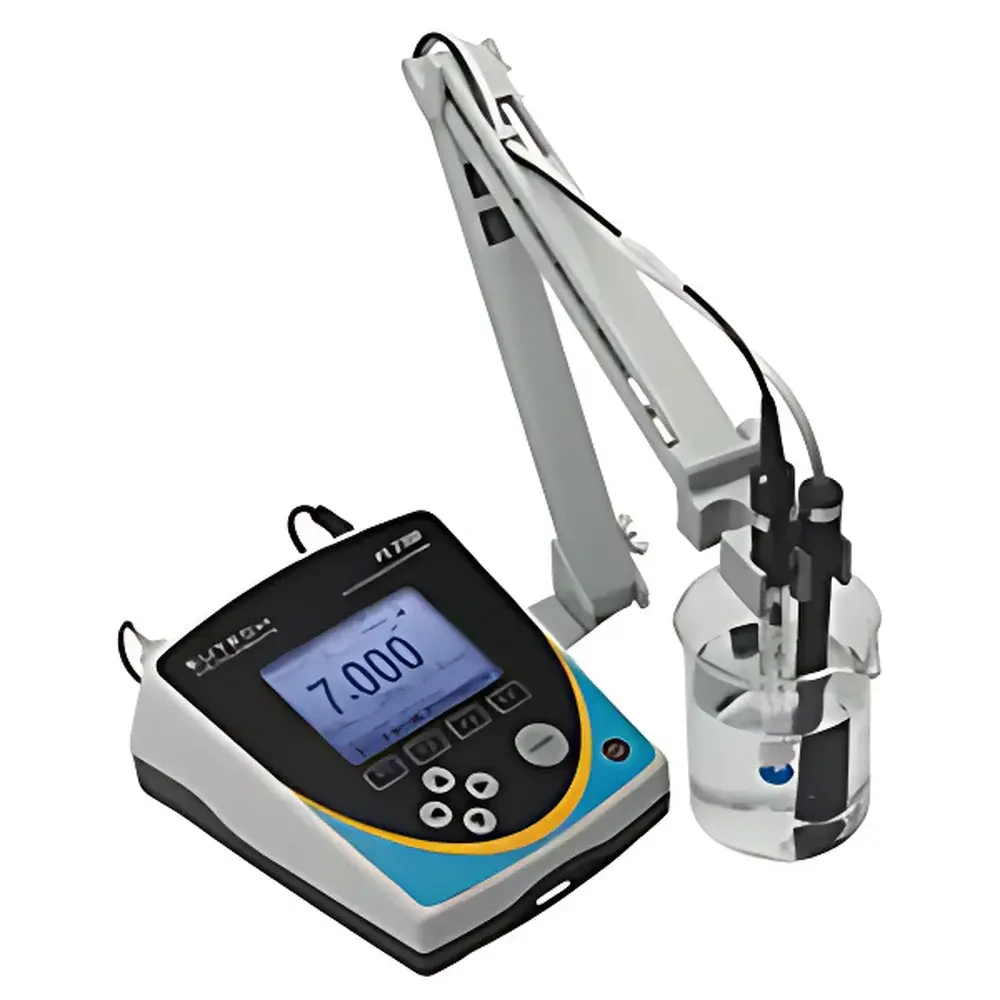
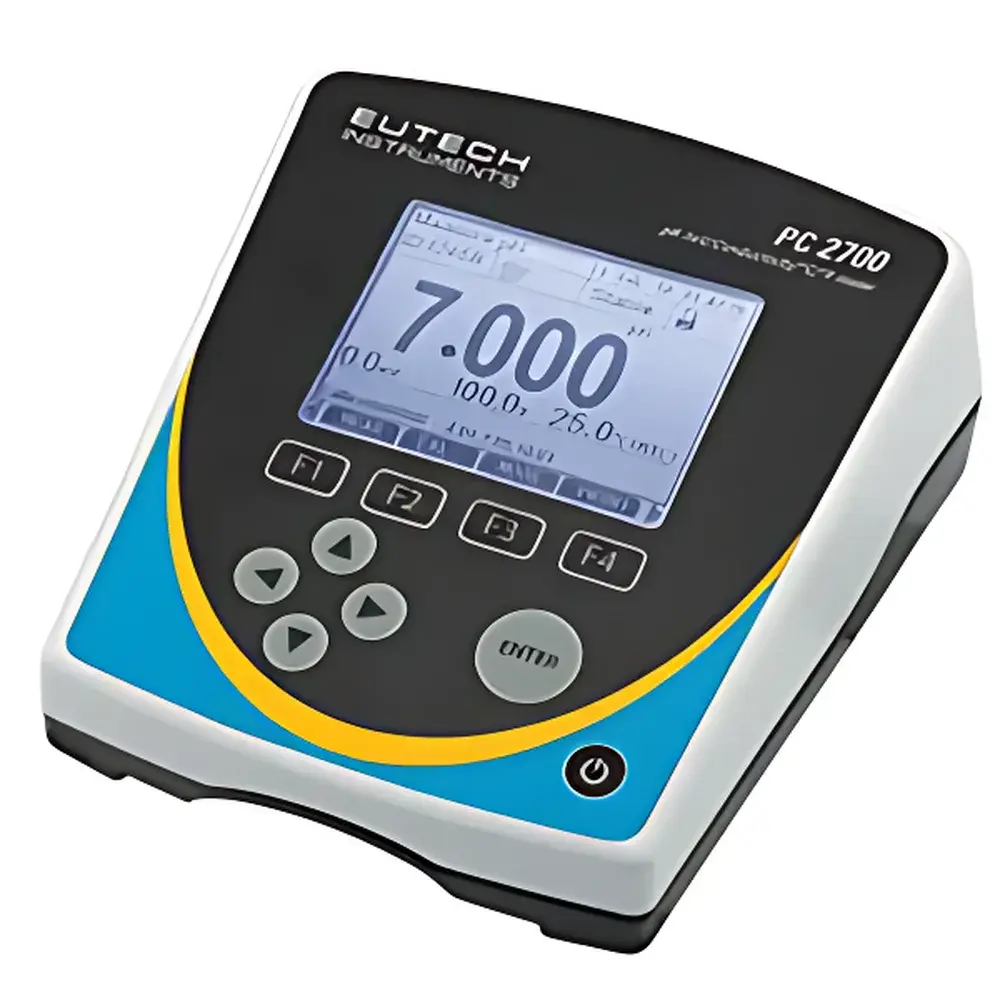
Eutech PC2700 Multi-Parameter Water Quality Analyzer
| Brand | Eutech |
|---|---|
| Origin | Singapore |
| Model | PC2700 |
| Measurement Parameters | pH, ORP, Ion Selective Electrode (ISE), Conductivity, TDS, Salinity, Resistivity, Temperature (°C) |
| pH Range | −2.000 to 20.000 |
| pH Resolution | 0.001 / 0.01 / 0.1 |
| pH Accuracy | ±0.002 |
| Conductivity Range | 0.050 µS/cm to 500.0 mS/cm |
| Conductivity Accuracy | ±1% of full scale |
| TDS Range | 0.050 ppm to 500 ppt (TDS factor = 1.0) |
| Salinity Range | 0.0–80.0 ppt |
| Resistivity Range | 2.000 Ω·cm to 20.0 MΩ·cm |
| ORP Range | ±2000.0 mV |
| Temperature Range | 0.0–100.0 °C |
| Memory Capacity | 500 GLP-compliant data sets with timestamp |
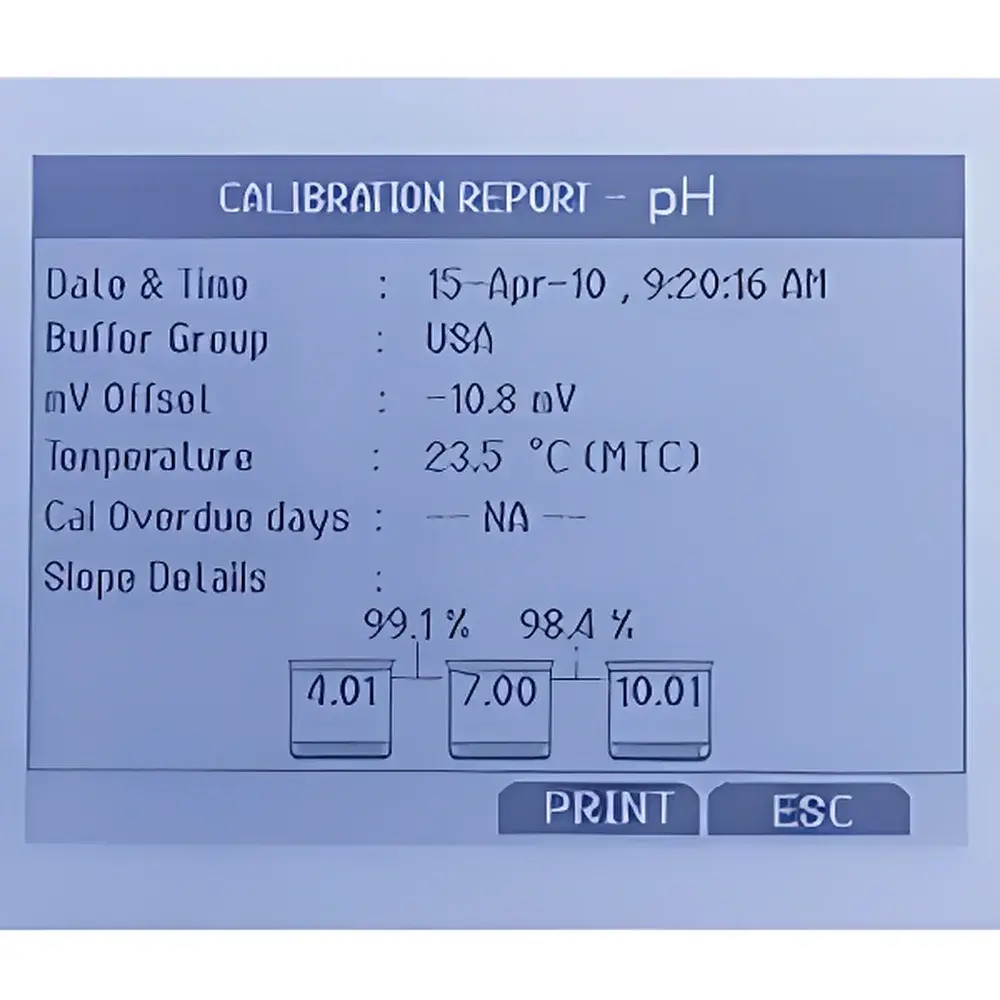
| Calibration Points | up to 6 for pH, 2–8 for ISE, auto-detection of buffer concentrations |
| Electrode Interface | 8-pin DIN (supports 2- or 4-ring conductivity cells), BNC, DC socket |
| Communication | Bidirectional RS232 |
| Power Supply | 9 V DC adapter (100–240 VAC input, SMPS) |
| Dimensions (H×W×D) | 17.5 × 15.5 × 6.9 cm |
| Weight | 650 g |
Overview
The Eutech PC2700 Multi-Parameter Water Quality Analyzer is a laboratory-grade benchtop instrument engineered for precise, traceable, and repeatable measurement of critical water quality parameters in environmental monitoring, municipal water treatment, academic research, and industrial process control laboratories. It integrates potentiometric (pH, ORP, ISE) and conductometric (conductivity, TDS, salinity, resistivity) sensing modalities within a single platform, leveraging standardized electrochemical principles compliant with ASTM D1125, ISO 7888, ISO 10523, and USP . The analyzer operates on a dual-sensor architecture: pH and ORP are measured via high-stability glass and noble-metal reference electrodes; conductivity employs a temperature-compensated four-ring electrode to minimize polarization errors and ensure linear response across five decades of range (0.050 µS/cm to 500.0 mS/cm). Automatic temperature compensation (ATC) follows either NIST or user-defined β-coefficient algorithms, while all measurements adhere to Good Laboratory Practice (GLP) requirements through embedded audit trails, time-stamped calibration logs, and expiration alerts.
Key Features
- Simultaneous real-time display of up to seven parameters: pH, ORP, ISE concentration (ppm/mV), conductivity, TDS, salinity, resistivity, and temperature — all synchronized with a single sample immersion.
- Intelligent multi-point calibration: automatic buffer recognition for pH (up to 6 points) and ISE (2–8 points); one-button conductivity cell constant calculation using certified KCl standards (e.g., 84 µS/cm, 1413 µS/cm, 12.88 mS/cm).
- Integrated 4-ring conductivity probe with diagnostic capability — displays real-time cell constant (K = cm⁻¹) to verify electrode integrity and detect fouling or coating.
- GLP-compliant data management: stores 500 measurement records with date/time stamp, operator ID (via password-protected login), calibration history, and electrode IDs — fully exportable via RS232 to LIMS or spreadsheet software.
- Configurable security framework: password protection for menu navigation, calibration access, and method settings — supports multi-user environments under ISO/IEC 17025 or FDA 21 CFR Part 11 compliance protocols when paired with validated data transfer workflows.
- Robust environmental tolerance: operational range of 0–50 °C ambient temperature; IP20-rated enclosure; stable performance under variable line voltage (100–240 VAC) via integrated switched-mode power supply.
Sample Compatibility & Compliance
The PC2700 accommodates aqueous samples across diverse matrices including freshwater, seawater, wastewater effluents, boiler feedwater, pharmaceutical rinse solutions, and electroplating baths. Its pH electrode supports low-ionic-strength (<100 µS/cm) and high-alkalinity (up to 20 pH) samples via specialized low-drift glass formulations. Conductivity measurements comply with ASTM D5391 (standard test method for conductivity of water) and ISO 7888 (electrical conductivity of water), with automatic linearization applied per IEC 60746-3. All calibrations meet NIST-traceable reference material requirements. The instrument’s firmware enforces mandatory calibration verification before measurement initiation and flags expired calibrations per configurable intervals (e.g., 24 h, 7 days), ensuring continuous adherence to ISO 17025 clause 7.7 and EPA Method 120.1 for conductivity validation.
Software & Data Management
Data acquisition and reporting are executed via bidirectional RS232 serial interface, supporting ASCII-based command protocols compatible with common laboratory data acquisition systems (e.g., LabVIEW, MATLAB, custom Python scripts). No proprietary software is required; raw output includes parameter values, units, timestamps, and calibration status flags. Each stored record contains metadata: sample ID (user-definable), electrode serial numbers, calibration dates, temperature at measurement, and operator code. Exported files conform to CSV format with UTF-8 encoding, enabling direct import into ELN platforms or statistical analysis tools. Audit trail logs retain all configuration changes, calibration events, and memory overwrites — essential for GLP audits and regulatory submissions under 21 CFR Part 11 when combined with institutional electronic signature policies.
Applications
- Environmental laboratories performing routine compliance testing per EPA Clean Water Act (CWA) and EU WFD directives — particularly for pH stability assessment in surface water bodies and conductivity-based total dissolved solids estimation in groundwater monitoring wells.
- Pharmaceutical QC labs verifying purified water (PW) and water-for-injection (WFI) conductivity against USP , where the PC2700’s ±1% full-scale accuracy and NIST-traceable calibration support Stage 1–3 testing protocols.
- Academic research groups conducting ion speciation studies (e.g., nitrate, fluoride, ammonium) using ISE modules with Gran plot or standard addition methods — enhanced by the instrument’s 0.5% full-scale accuracy for monovalent ions.
- Municipal drinking water facilities validating disinfection efficacy via ORP monitoring during chlorination or ozone treatment, with millivolt resolution down to 0.1 mV and drift compensation over extended measurement periods.
- Industrial process control in food & beverage, semiconductor, and power generation sectors — where resistivity measurements above 1 MΩ·cm serve as proxy indicators for deionized water purity in rinse cycles.
FAQ
Does the PC2700 support automatic temperature compensation for all parameters?
Yes — ATC is applied to pH, conductivity, TDS, salinity, and resistivity using either built-in NIST polynomial coefficients or user-defined β-values. ORP and ISE measurements default to manual temperature entry unless interfaced with a thermistor-equipped probe.
Can the instrument store calibration data for multiple electrodes independently?
Yes — each electrode (pH, ORP, ISE, conductivity) can be assigned a unique identifier; calibration logs retain electrode-specific constants, dates, and buffer references for traceability.
Is the RS232 interface compatible with modern Windows/macOS systems without legacy serial ports?
Yes — when used with a certified USB-to-RS232 adapter (e.g., FTDI chipset), the PC2700 communicates reliably with current OS versions using standard terminal emulators or custom scripts.
What is the recommended maintenance interval for the 4-ring conductivity cell?
Cleaning with mild detergent or 0.1 M HNO₃ is advised after every 20–50 measurements in high-fouling matrices; cell constant verification should occur prior to each calibration session or at least daily in regulated environments.
Does the PC2700 meet FDA 21 CFR Part 11 requirements out-of-the-box?
The hardware and firmware provide foundational controls (audit trail, password protection, electronic signatures via operator ID), but full Part 11 compliance requires site-specific validation of the entire data workflow — including RS232 transmission integrity, file storage security, and backup retention policies.







