
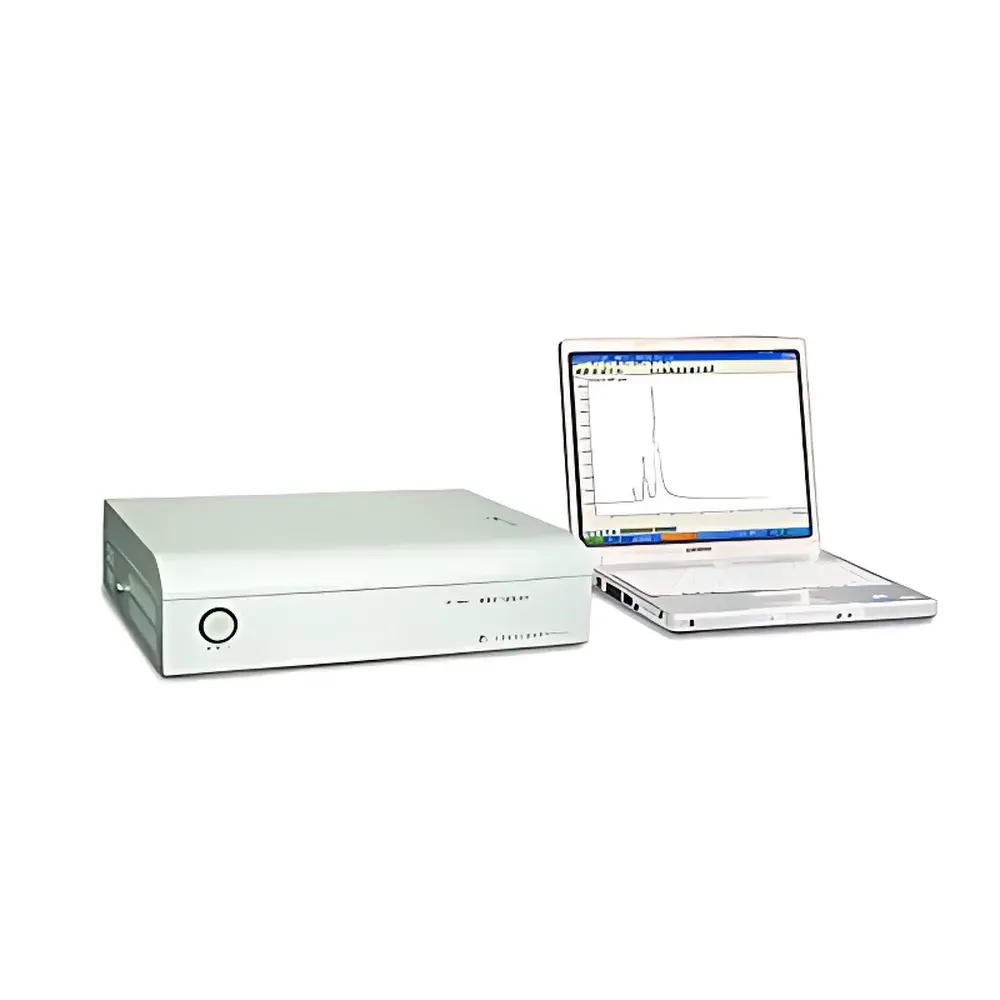
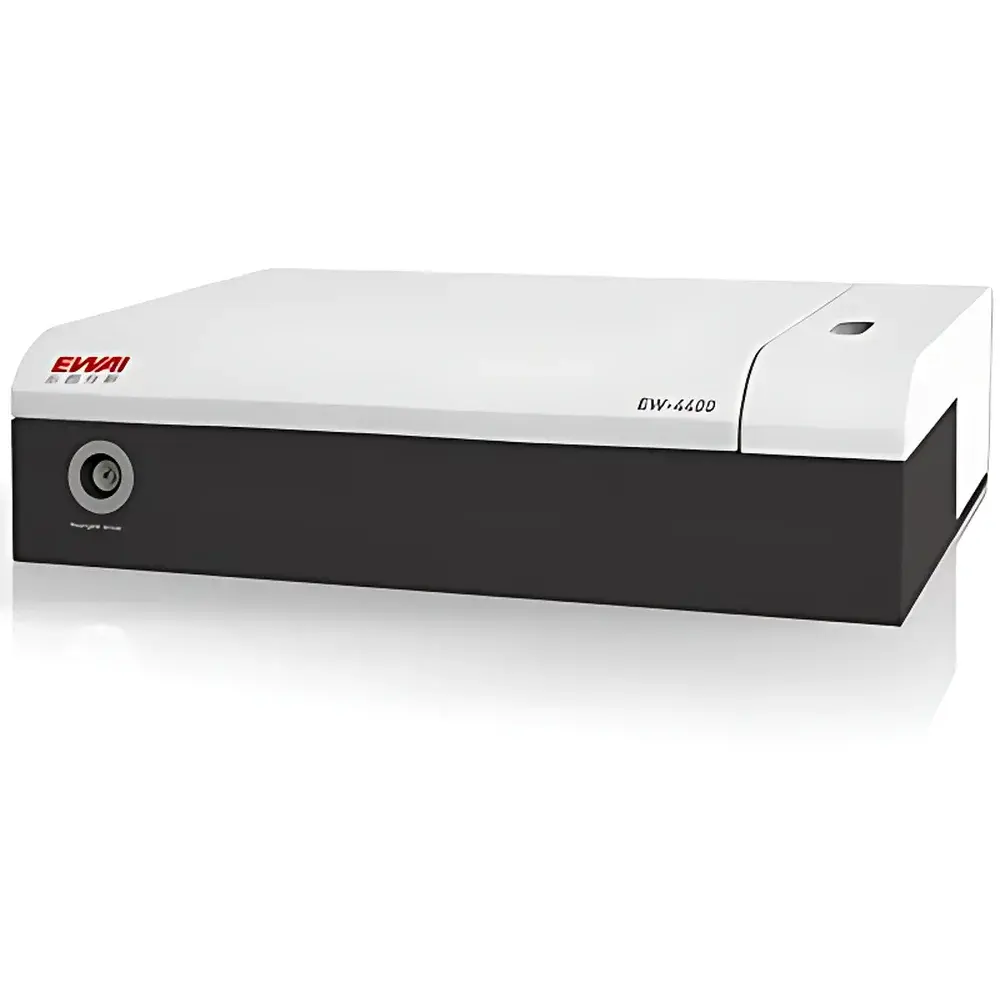
EW-4400 Portable Photoionization Detector (PID) Gas Analyzer by East & West Analytical Instruments
| [Brand | East & West Analytical Instruments |
|---|---|
| Origin | Beijing, China |
| Manufacturer Type | OEM Manufacturer |
| Instrument Type | Portable PID Gas Analyzer |
| Detection Principle | Vacuum Ultraviolet (VUV) Photoionization |
| Configuration | Multi-compound VOC Analyzer |
| Compliance | Designed for field-deployable environmental and occupational safety monitoring] |
Overview
The EW-4400 Portable Photoionization Detector (PID) Gas Analyzer is an engineered solution for real-time, on-site detection and semi-quantitative analysis of volatile organic compounds (VOCs) and select inorganic gases. Unlike gas chromatography–mass spectrometry (GC–MS) or flame ionization detector (FID)-based systems, the EW-4400 employs a proprietary 10.6 eV vacuum ultraviolet (VUV) lamp to induce photoionization of analytes with ionization potentials (IP) below this energy threshold. This non-radioactive, non-destructive ionization mechanism eliminates reliance on radioactive β-sources (e.g., 3H or 63Ni), aligning with IEC 61000-4-3 EMC standards and global radiation safety regulations. The instrument operates with ambient air as the sole carrier gas—no hydrogen, compressed nitrogen, or auxiliary combustion gases are required—making it intrinsically safe for use in confined spaces, indoor environments, and emergency response scenarios. Its design integrates vacuum electronics, precision quartz optics, low-power microcontroller architecture, and thermally stabilized lamp control—reflecting multidisciplinary convergence of photoelectron physics, vacuum science, and embedded signal processing.
Key Features
- 10.6 eV VUV lamp with extended operational lifetime (>5,000 hours), enabling detection of >95% of common VOCs including benzene, toluene, xylene (BTX), chlorinated ethanes, aldehydes (e.g., formaldehyde, acetaldehyde), sulfur-containing species (e.g., H2S, methanethiol), and light organophosphorus compounds (e.g., phosphine, arsine)
- Real-time response with typical T90 < 3 seconds for most target analytes under standard sampling conditions
- Lightweight portable form factor (< 2.8 kg including battery), IP54-rated enclosure, and ergonomic handheld design optimized for field deployment and incident-level screening
- No consumables required: zero reliance on calibration gases, sorbent tubes, thermal desorption units, or chemical reagents
- Direct headspace sampling capability for aqueous matrices—eliminates need for purge-and-trap, SPME, or solvent extraction prior to analysis
- Integrated data acquisition module with USB-C interface, compatible with Windows-based laptops and third-party LIMS via ASCII/CSV export
Sample Compatibility & Compliance
The EW-4400 is validated for direct gas-phase analysis across ambient air, workplace breathing zones, indoor air, soil vapor, and headspace above aqueous samples. It complies with fundamental performance expectations outlined in ISO 16000-22 (indoor air—determination of VOCs using PID), ASTM D5728 (standard practice for PID-based field screening), and OSHA Method 1018 (for benzene and other aromatic hydrocarbons). While not certified to ATEX or IECEx for Zone 0/1 hazardous area use, its air-only carrier operation and absence of ignition sources support Class I, Division 2 suitability per NEC Article 500 when deployed with appropriate site risk assessment. The system supports GLP-aligned documentation through timestamped, operator-ID-tagged measurement logs—meeting foundational traceability requirements for environmental compliance reporting and industrial hygiene recordkeeping.
Software & Data Management
Data acquisition and visualization are managed via a dedicated Windows application that provides real-time concentration trending (ppb–ppm range), peak integration, alarm threshold configuration (user-definable high/low limits), and batch export to CSV or PDF report templates. Raw signal outputs include analog voltage (0–5 V), digital serial stream (RS-232/USB virtual COM), and optional Bluetooth 5.0 telemetry for remote monitoring. Audit trails record instrument ID, firmware version, lamp operating hours, calibration history, and user-initiated events—supporting basic 21 CFR Part 11 readiness when paired with controlled network access and electronic signature protocols. No cloud dependency; all processing occurs locally to preserve data sovereignty and operational continuity in offline environments.
Applications
The EW-4400 serves mission-critical roles across multiple regulated domains: environmental site assessments (Phase I/II ESAs), indoor air quality (IAQ) audits in residential/commercial buildings, leak detection in petrochemical facilities, post-remediation verification at brownfield sites, first-responder hazmat triage, food packaging emissions screening, and laboratory method development for rapid VOC profiling. Its ability to detect sub-ppb levels of ethylene oxide and chloroethane supports sterilant residue monitoring in medical device manufacturing—a key requirement under ISO 10993-7 and FDA guidance. In research settings, it functions as a front-end prescreening tool prior to confirmatory GC–MS or GC–ECD analysis, reducing analytical throughput bottlenecks.
FAQ
Does the EW-4400 require routine calibration with certified gas standards?
Yes—while stable over short intervals, periodic calibration (recommended daily or per shift in regulatory applications) using isobutylene or benzene standard gas ensures traceable accuracy per ISO 6141.
Can the instrument distinguish between isomers such as o-, m-, and p-xylene?
No—PID detection is non-selective by compound identity; it responds to total ionizable VOC mass. Compound identification requires coupling with a separation technique (e.g., pre-concentrator + micro-GC module, sold separately).
What maintenance is required beyond lamp replacement?
Annual inspection of inlet filter, sensor cell cleanliness, and battery health is advised. Lamp replacement is the only scheduled consumable service.
Is the EW-4400 compatible with explosion-proof enclosures for refinery use?
Not natively—but third-party certified explosion-proof housings (e.g., NEMA 4X/IP66 with purging) may be integrated subject to end-user hazard classification and certification authority review.
Does the system support automated data upload to enterprise environmental management platforms?
Yes—via configurable REST API endpoints or OPC UA server integration, contingent upon customer-specific middleware implementation.
Related Products







