
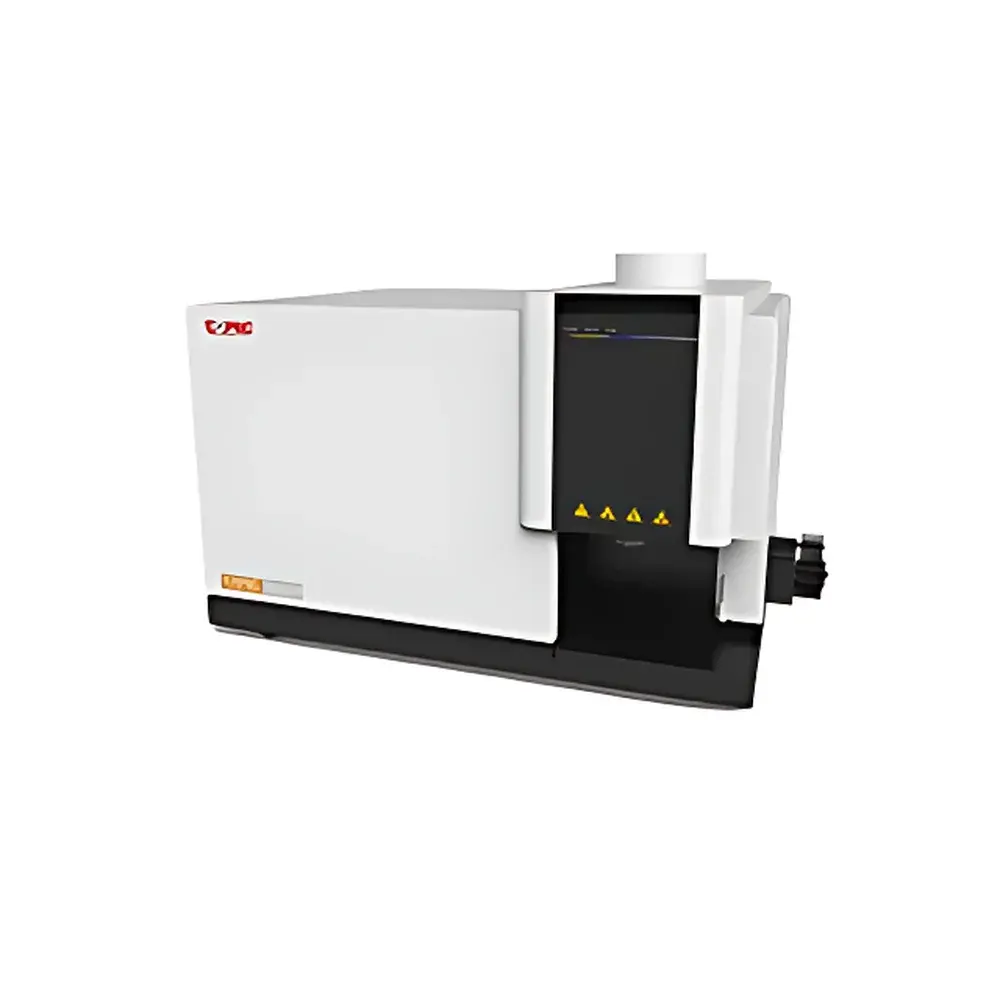
EXPEC 6000 Inductively Coupled Plasma Optical Emission Spectrometer (ICP-OES)
| Brand | EXPEC/SpectrumLab |
|---|---|
| Origin | Zhejiang, China |
| Manufacturer Type | Authorized Distributor |
| Product Origin | Domestic (China) |
| Model | EXPEC 6000 |
| Pricing | Upon Request |
| Instrument Type | Full-Spectrum Direct-Reading ICP-OES |
| Detection Limit | µg/L-level |
| Repeatability | <0.5% RSD |
| Stability | <1% RSD over 4 h |
| Wavelength Range | 165–870 nm |
| Optical Resolution | <7 pm at 200 nm |
Overview
The EXPEC 6000 Inductively Coupled Plasma Optical Emission Spectrometer (ICP-OES) is a full-spectrum direct-reading analytical instrument engineered for multi-element trace metal quantification in liquid samples. It operates on the principle of inductively coupled plasma excitation—where sample aerosols are atomized, ionized, and excited within a high-temperature (~6,000–10,000 K) argon plasma torch—and emitted characteristic wavelengths are dispersed and resolved using a robust echelle grating-based optical system. The instrument integrates a thermoelectrically cooled, back-illuminated CCD detector with high quantum efficiency across the UV–VIS–NIR range (165–870 nm), enabling simultaneous acquisition of all elemental emission lines without mechanical scanning. Designed for routine laboratory environments—including environmental monitoring labs, metallurgical QA/QC facilities, pharmaceutical development units, and food safety testing centers—the EXPEC 6000 delivers consistent performance under GLP-compliant workflows and supports method validation per ISO/IEC 17025 requirements.
Key Features
- Stable echelle grating two-dimensional dispersion optics with sealed, temperature-controlled optical bench to minimize thermal drift and wavelength shift
- Digitally controlled, self-excited solid-state RF generator (700–1600 W continuous power output) with adaptive frequency tuning for real-time plasma impedance matching and water-cooled thermal management
- Back-illuminated, high-speed CCD detector operating at −30 °C (thermoelectric cooling), preventing signal saturation and dark current accumulation during extended integrations
- Precision sample introduction system featuring four-channel, 12-roller peristaltic pump with ±0.5% volumetric accuracy and integrated digital mass flow controllers for auxiliary, nebulizer, and plasma gases (Ar) with 0.01 L/min resolution
- Modular, fully detachable torch assembly with auto-aligning center tube design—enabling rapid exchange of quartz or sapphire injector tubes for organic solvent or high-salt matrix applications
- FSC (Flexible Spectral Calibration) proprietary algorithm for dynamic wavelength calibration correction, compensating for long-term optical drift without manual recalibration
Sample Compatibility & Compliance
The EXPEC 6000 accommodates aqueous solutions, diluted acid digests (HNO₃, HCl, HF), organic solvents (with optional oxygen ashing or micro-nebulization), and suspended particulates (following ultrasonic homogenization and filtration). Its hardware architecture and software logic support audit-ready data integrity: full electronic signatures, time-stamped raw spectra archives, and immutable audit trails compliant with FDA 21 CFR Part 11 when deployed with validated Element V software configurations. All optical and RF subsystems meet CE electromagnetic compatibility (EMC) directives and IEC 61010-1 safety standards. Method development aligns with ASTM D1976, ISO 11885, USP /, and EPA Methods 200.7 and 6020B for environmental and regulatory testing.
Software & Data Management
Element V is a fully localized Chinese-language software platform with English UI toggle capability, built on a modular, object-oriented architecture. It includes pre-validated method templates for >70 elements across environmental, geochemical, and industrial matrices; supports internal standardization, standard addition, interference correction (e.g., spectral overlap deconvolution via peak fitting), and semi-quantitative survey scans. Its adaptive integration engine dynamically adjusts exposure times per wavelength region—ensuring optimal signal-to-noise for both major (e.g., Ca, Mg) and trace (e.g., As, Cd, Pb) analytes in a single run. Data export conforms to ASTM E1382-compliant .csv and .xlsx formats; optional ODBC connectivity enables direct integration with LIMS platforms such as Thermo Fisher SampleManager and LabWare LIMS. Remote diagnostics and firmware updates are supported via TLS-secured client-server architecture.
Applications
- Environmental analysis: Quantification of regulated metals (As, Cr, Cu, Ni, Zn, Pb) in drinking water, wastewater, soil extracts, and airborne particulate filters per EPA and EU WFD guidelines
- Geochemical prospecting: Multi-element profiling of rock digests and sediment cores for exploration geochemistry and rare earth element (REE) mapping
- Metallurgy & materials science: Alloy composition verification, inclusion analysis, and coating thickness validation in Fe-, Al-, Cu-, and Ti-based alloys
- Food & agriculture: Monitoring toxic elements (Cd, Hg, Sn) in cereals, dairy products, infant formula, and herbal medicines per Codex Alimentarius and China GB standards
- Petrochemical QA: Trace metal screening (V, Ni, Na, Ca) in crude oil, lubricants, and catalyst residues to assess refining efficiency and corrosion risk
- Pharmaceutical excipient testing: Elemental impurity profiling aligned with ICH Q3D thresholds and USP /
FAQ
What sample introduction accessories are compatible with the EXPEC 6000?
The system supports standard concentric glass nebulizers, PFA microflow nebulizers, cyclonic spray chambers, and optional hydride generation modules (for As, Se, Sb, Bi, Te), organic solvent nebulizers (with oxygen plasma enhancement), and autosamplers (up to 240-position trays).
Does the EXPEC 6000 support regulatory-compliant reporting for ISO 17025-accredited labs?
Yes—when operated with validated Element V software configurations, it provides full audit trail logging, electronic signatures, data immutability controls, and method versioning required for ISO/IEC 17025 accreditation.
How is wavelength calibration maintained over time?
The FSC algorithm performs real-time correction using reference emission lines from internal Ar plasma and optional external Hg/Ne lamp sources, eliminating need for frequent manual recalibration.
Can the instrument analyze high-salt or organic matrices without clogging?
Yes—the modular torch design allows quick replacement of center tubes (quartz or sapphire), and the digital gas flow control ensures stable plasma conditions even with variable aerosol loadings.
Is remote software support available outside mainland China?
Yes—secure remote desktop sessions and firmware update delivery are supported globally via encrypted channels, subject to local data residency policies.
Related Products







