
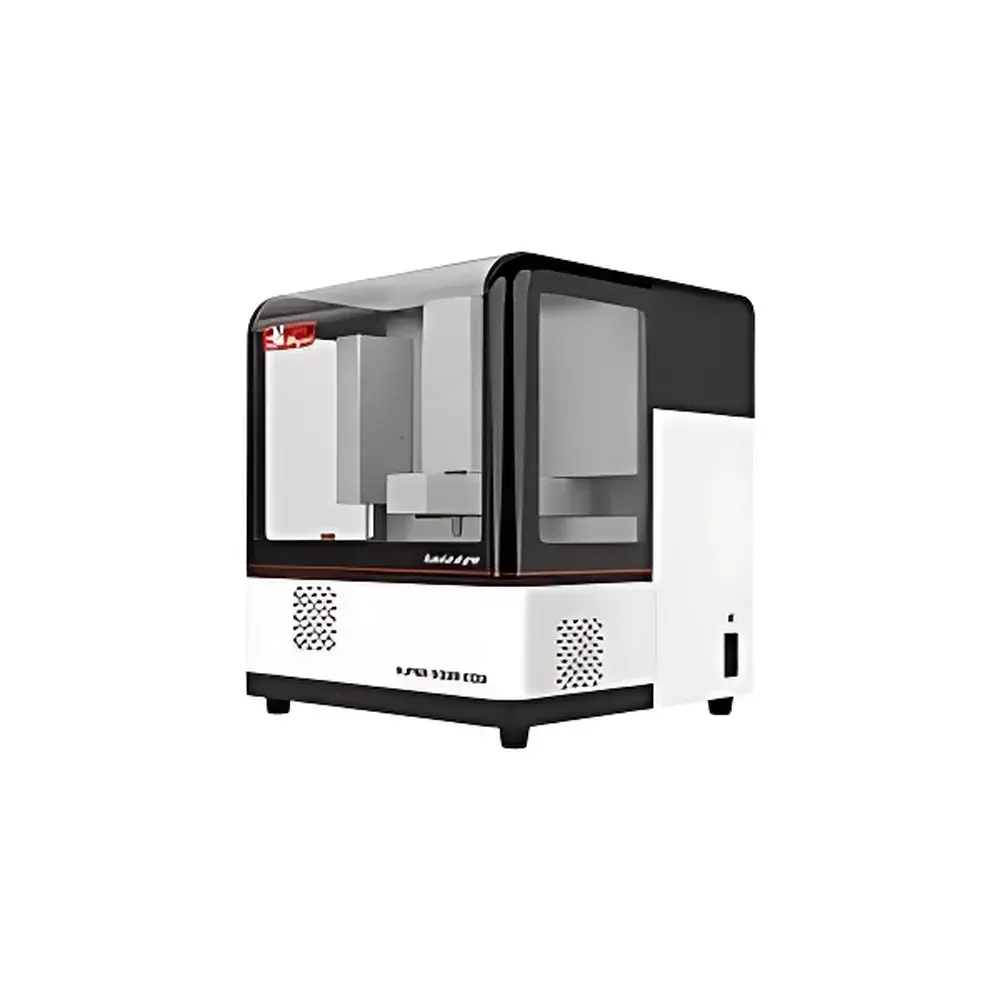
EXPEC SUPEC 5000 Automated Laboratory COD Analyzer
| Brand | EXPEC |
|---|---|
| Origin | Zhejiang, China |
| Model | SUPEC 5000 Series |
| Instrument Type | Benchtop Laboratory Analyzer |
| Measurement Principle | Rapid Digestion Spectrophotometry (in accordance with HJ/T 399–2007) |
| Sample Throughput | Fully Automated Batch Processing |
| Automation Scope | Integrated Digestion, Cooling, Tube Handling, Mixing, and Photometric Measurement |
| Reagent Delivery | Precision Syringe Pump System |
| Optical Detection | Fixed-Wavelength Photometry (Compliant with Standard Method Requirements) |
| Compliance | HJ/T 399–2007 |
Overview
The EXPEC SUPEC 5000 Automated Laboratory COD Analyzer is an integrated benchtop system engineered for precise, reproducible, and operator-independent determination of Chemical Oxygen Demand (COD) in aqueous environmental samples. It implements rapid digestion spectrophotometry—a standardized alternative to classical reflux titration—by thermally accelerating the oxidation of organic matter using potassium dichromate under strongly acidic conditions, followed by quantitative photometric detection of the reduced Cr3+ species. Designed explicitly to meet the procedural and performance criteria defined in China’s national standard HJ/T 399–2007, the SUPEC 5000 delivers method-validated results without reliance on manual titration, glassware calibration, or subjective endpoint interpretation. Its architecture eliminates inter-operator variability inherent in traditional workflows while maintaining full traceability to reference methods used in regulatory compliance testing.
Key Features
- Fully automated sample handling: Robotic arm manipulates digestion tubes across dedicated stations—digestion, air-cooling, cap actuation, vortex mixing, and optical measurement—minimizing human intervention after initial sample loading.
- Fixed-wavelength photometric detection: Optimized optical path and stable light source ensure high signal-to-noise ratio and long-term baseline stability, consistent with HJ/T 399–2007 spectral requirements.
- Precision reagent dispensing: Dual-channel syringe pumps deliver exact volumes of sulfuric acid, silver sulfate catalyst, and potassium dichromate solution—eliminating pre-formulated kit dependency and enabling cost-efficient, on-demand reagent preparation.
- Integrated digestion module: Heated aluminum block with PID-controlled temperature regulation ensures uniform thermal profiles across all sample positions, supporting consistent 15-minute digestion cycles at 165 °C.
- Single-flow-cell measurement design: All samples pass through a common quartz flow cell, removing inter-cuvette absorbance variance and enhancing measurement repeatability.
- Benchtop footprint with safety interlocks: Includes fume containment during digestion, overtemperature cutoff, and lid-sensor–activated motion halting to comply with laboratory safety protocols.
Sample Compatibility & Compliance
The SUPEC 5000 accepts untreated or filtered liquid samples within standard environmental matrices—including drinking water, surface water, groundwater, municipal and industrial wastewater, aquaculture effluents, and agricultural runoff. Sample volume requirement is fixed at 2.00 mL per analysis, compatible with standard 16-mm digestion tubes. The system supports dilution protocols for high-COD samples and accommodates turbid or colored matrices via built-in blank correction routines. Regulatory alignment extends beyond HJ/T 399–2007 to support cross-method verification against ISO 6060 and APHA Standard Methods 5220 D. Data integrity safeguards include audit-trail logging of all instrument events, user actions, and calibration history—facilitating GLP-compliant documentation and internal QA/QC review.
Software & Data Management
Controlled via EXPEC’s proprietary Windows-based analytical software, the SUPEC 5000 provides intuitive workflow configuration, real-time status monitoring, and automated report generation in PDF and CSV formats. Software modules support multi-user authentication, method version control, electronic signature capability, and configurable data retention policies. Raw absorbance values, calculated COD concentrations (mg/L O2), digestion temperature/time logs, and reagent consumption records are stored in a local SQL database with exportable metadata fields. Optional integration with LIMS platforms is available via ASTM E1384-compliant interface protocols, ensuring seamless data transfer into enterprise laboratory informatics environments.
Applications
- Regulatory compliance monitoring for municipal wastewater treatment plants (WWTPs) discharging to surface waters.
- Environmental impact assessment (EIA) studies requiring batch-wise COD profiling across seasonal sampling campaigns.
- Quality assurance in drinking water distribution systems and source-water vulnerability analysis.
- Process control in food processing, pharmaceutical manufacturing, and pulp/paper industries where organic load tracking is critical.
- Research applications in limnology, biogeochemistry, and wastewater microbiology involving high-throughput sample screening.
- Accredited environmental testing laboratories seeking ISO/IEC 17025-compliant automation for routine COD analysis.
FAQ
Does the SUPEC 5000 require certified reference materials for daily calibration?
Yes—traceable COD standards (e.g., potassium hydrogen phthalate solutions) are required for initial calibration and periodic verification per HJ/T 399–2007 Section 7.2.
Can the system handle suspended solids without filtration?
Samples with particulate matter >50 mg/L should be pre-filtered (0.45 µm membrane) prior to analysis to prevent flow-cell clogging and ensure optical clarity.
Is remote operation or unattended overnight runs supported?
The system supports scheduled batch runs and auto-shutdown; however, active supervision is recommended during digestion due to exothermic reaction management and reagent handling safety protocols.
What maintenance intervals are specified for the syringe pumps and digestion block?
Syringe pump tubing requires replacement every 6 months under typical usage; digestion block calibration verification is advised quarterly using NIST-traceable temperature probes.
Does the software comply with FDA 21 CFR Part 11 requirements?
The current software version supports electronic signatures and audit trails but requires on-site validation and configuration by the end user to achieve full Part 11 compliance.
Related Products







